

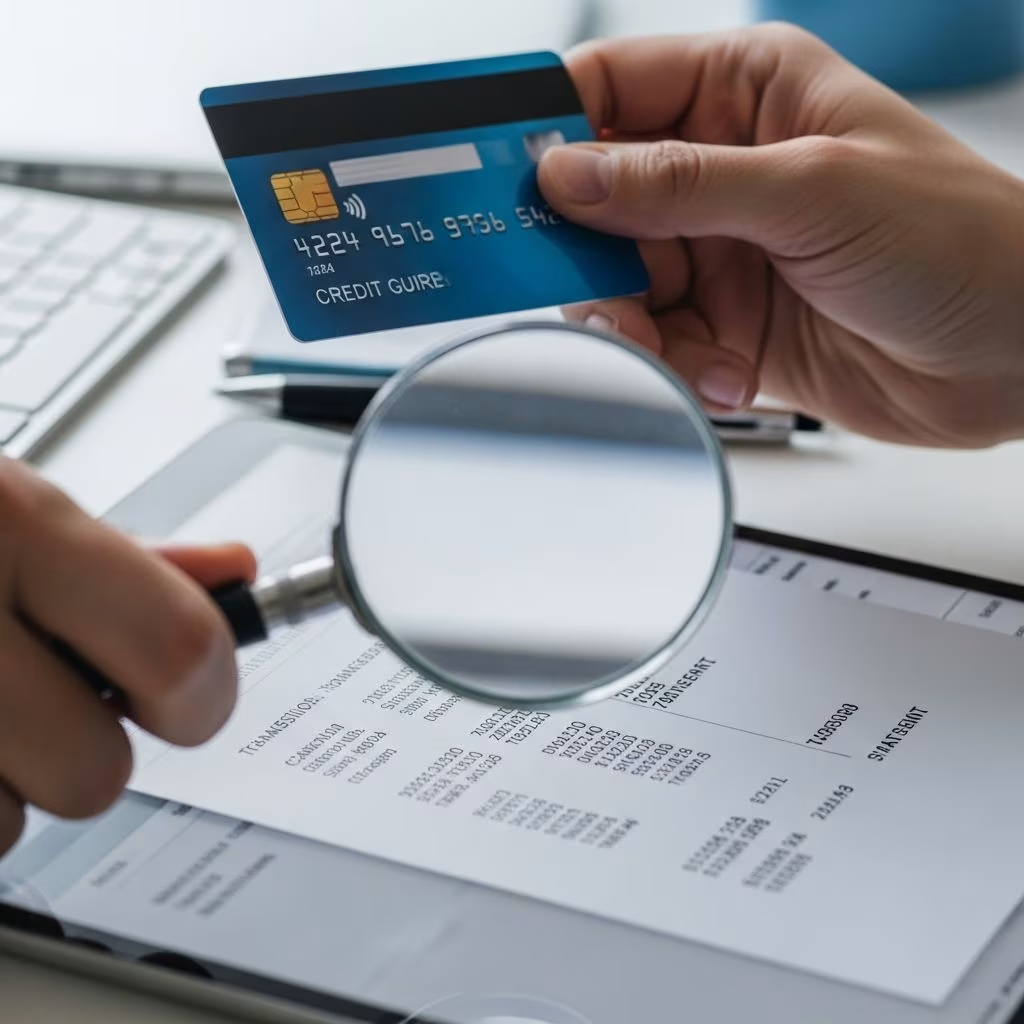
Challenging an unauthorized or incorrect charge on your credit card empowers you to recover funds when merchants fail to deliver. This process, known as a chargeback, involves your card issuer investigating the transaction on your behalf.12
Understanding Chargebacks and Their Role in Consumer Protection
A chargeback reverses a credit card transaction after you report an issue to your issuer. It protects against fraud, poor service, or billing errors by temporarily crediting your account while the dispute is reviewed.3 Unlike refunds from merchants, chargebacks bypass the seller and go directly through your bank and card network.
Card networks like Visa and Mastercard standardize this to ensure fairness. Issuers often provide provisional credits quickly, giving you immediate relief.45 However, merchants can fight back with evidence, so strong documentation from you strengthens your case.
Common Triggers for Filing a Dispute
Not every dissatisfaction qualifies for a chargeback. Valid reasons align with card network rules and include:
- Fraudulent transactions: Charges from stolen cards or unauthorized use.1
- Non-delivery of goods: Items never arrive despite payment.
- Item not as described: Significant quality mismatches from the listing.
- Billing mistakes: Duplicate charges or incorrect amounts.
- Failed services: Subscriptions canceled but billed anyway.
Review your statement monthly to spot issues early. Time limits typically range from 60 to 120 days from the statement date, varying by issuer and network.27
Step-by-Step Process to Initiate Your Dispute
Follow these structured steps to launch a chargeback effectively:
- Review your statement: Confirm the charge details, merchant name, date, and amount.
- Contact the merchant first: Attempt resolution directly; document all communications.
- File with your issuer: Use their app, online portal, or phone. Provide transaction ID and reason.4
- Receive provisional credit: Most issuers credit you temporarily within days.13
- Submit supporting documents: Upload receipts, emails, or photos promptly.
Act swiftly—delays can forfeit your rights. Track status via your issuer’s dispute portal.
| Network | Dispute Window | Response Time |
|---|---|---|
| Visa | 120 days | 30-45 days |
| Mastercard | 120 days | 45 days |
| American Express | 120 days | 90 days |
Data synthesized from network guidelines; confirm with your issuer.57
Gathering Powerful Evidence to Support Your Claim
Your success hinges on evidence. Issuers assign reason codes (e.g., 10.4 for fraud) and forward details to the merchant’s bank.1 Compelling proof includes:
- Order confirmations and tracking numbers showing non-delivery.
- Photos of defective items compared to advertised descriptions.
- Communication logs with the merchant refusing refunds.
- IP logs or AVS mismatches for fraud claims.2
Organize files clearly. Weak evidence leads to reversals favoring merchants.
Behind the Scenes: How Banks and Networks Handle Disputes
Once filed, your issuer notifies the card network, which alerts the merchant’s acquirer.36 The merchant has 20-45 days to respond with counter-evidence like delivery proofs or transaction histories.
If unsatisfied, merchants enter representment, submitting rebuttals. Your issuer reviews and decides.2 Unresolved cases escalate to pre-arbitration or arbitration, where networks rule—often with fees.5
Provisional credits protect you initially, but final outcomes vary: you keep the credit or repay if the merchant prevails.
Potential Pitfalls and How to Avoid Them
Chargebacks aren’t foolproof. Common errors include:
- Filing too late: Missing deadlines voids claims.
- Insufficient evidence: Vague complaints get denied.1
- Merchant retaliation: Repeated disputes may flag your account.
- Friendly fraud risks: Disputing legitimate charges can backfire.
Always try merchant resolution first—many issuers require it. Understand “friendly fraud,” where customers dispute known charges.6
Merchant Perspectives: When and How They Fight Back
Merchants lose funds plus fees (average $25 per chargeback), so they invest in defenses.3 They gather transaction data, signed receipts, and customer histories to prove legitimacy.2 Effective representment reverses 40-50% of chargebacks.
As a consumer, anticipate this by building an airtight case upfront.
Alternatives to Chargebacks for Faster Resolutions
Before disputing:
- Request merchant refunds—often quicker.
- Use PayPal or platform protections for online buys.
- File complaints with BBB or state AG for leverage.
- Leverage section 75 of consumer credit acts (UK) or FCBA (US) for added rights.7
Chargebacks suit unresolved cases but escalate tensions.
Impact on Credit Scores and Long-Term Effects
Filing doesn’t directly harm your score—provisional credits are neutral. However, if reversed, you owe the amount, potentially affecting utilization.4 Excessive disputes might signal risk to issuers.
Frequently Asked Questions
Can I dispute a debit card charge?
Yes, similar protections apply under Regulation E, though timelines differ (60 days).8
What if the merchant goes out of business?
Chargebacks often succeed as issuers pursue networks regardless.1
Do chargebacks work for small amounts?
Yes, but issuers may prioritize larger sums; file anyway.
How long until I know the outcome?
Typically 30-90 days, with updates along the way.5
Can merchants ban me after a chargeback?
Possible for patterns, but rare for one-offs.
Best Practices for Preventing Future Disputes
Minimize risks by:
- Using virtual cards for online shopping.
- Saving all receipts and tracking info.
- Monitoring statements via apps.
- Choosing reputable merchants with return policies.
Proactive habits reduce the need for chargebacks.
References
- A Step-By-Step Guide for Understanding the Credit Card Chargeback Process — Ethoca. 2023. https://www.ethoca.com/blog/a-step-by-step-guide-for-understanding-the-credit-card-chargeback-process
- The Complete Guide to the Chargeback Process — Chargeback Gurus. 2024. https://www.chargebackgurus.com/blog/chargeback-process
- Chargeback 101: Credit Card Chargebacks Explained — Square. 2024. https://squareup.com/us/en/the-bottom-line/managing-your-finances/what-is-a-chargeback-what-makes-it-happen
- What Is a Chargeback? — American Express. 2025. https://www.americanexpress.com/en-us/credit-cards/credit-intel/what-is-a-chargeback/
- How Can Merchants Dispute Credit Card Chargebacks — Mastercard. 2024-06-01. https://www.mastercard.com/us/en/news-and-trends/Insights/2024/how-can-merchants-dispute-credit-card-chargebacks.html
- Explanation of the Chargeback Process & Flow — Kount. 2023. https://kount.com/blog/explanation-chargeback-process-flow
- Chargeback: Debit & Credit Card Purchase Disputes — Visa. 2025. https://www.visa.co.uk/how-you-pay-matters/chargeback-purchase-disputes.html
- Chargeback Guidance for Stanford Merchants — Stanford University Fingate. 2024. https://fingate.stanford.edu/receipts-gifts/resource/chargeback-guidance-stanford-merchants
This article is general information, not personal financial advice. Consider your own situation, or speak with a licensed adviser, before acting on it.


