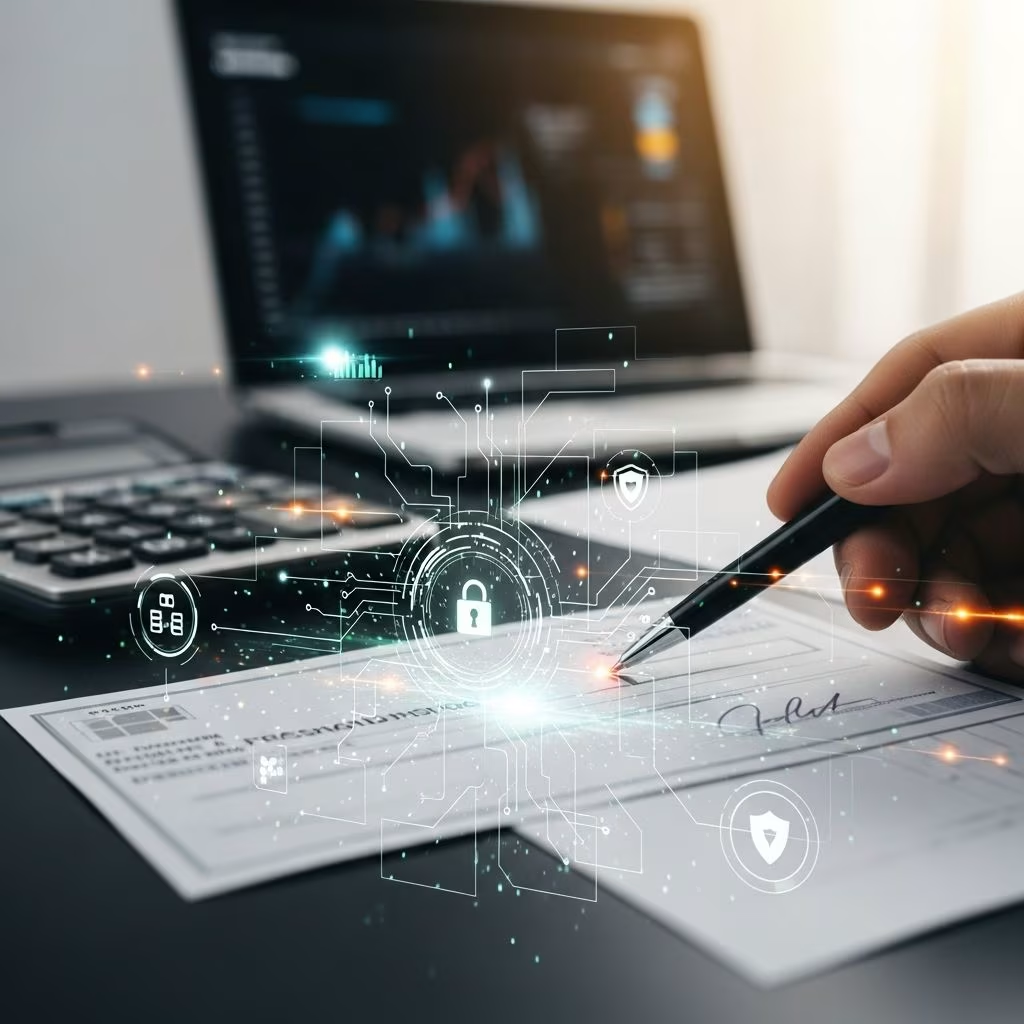
Check fraud remains a persistent threat in the financial landscape, targeting both individuals and businesses through deceptive manipulation of paper-based payments. Criminals exploit vulnerabilities in check processing to siphon funds, causing substantial losses annually. This comprehensive guide examines the mechanics of check fraud, outlines prevalent schemes, and delivers actionable strategies to fortify defenses, drawing on established banking practices and regulatory insights.
The Growing Prevalence of Check Fraud
Despite the rise of digital payments, checks continue to be widely used, particularly in commercial transactions. Fraudsters adapt quickly, employing sophisticated methods to bypass traditional safeguards. According to banking analyses, check-related crimes have surged with remote deposit technologies, amplifying risks for account holders. Businesses face heightened exposure due to higher transaction volumes, while consumers encounter scams via mail theft or online deception.
Key drivers include the ease of check interception, advancements in counterfeiting technology, and insider threats within organizations. Vigilance is essential, as delays in detection can lead to irreversible financial damage.
Core Types of Check Fraud Schemes
Check fraud manifests in diverse forms, each exploiting specific weaknesses in the payment chain. Recognizing these patterns is the first step toward mitigation.
- Check Forgery: Criminals replicate legitimate checks using stolen account details, often sourced from data breaches or discarded documents. Forged signatures and payee information enable unauthorized withdrawals.
- Alteration and Washing: Fraudsters chemically erase original ink from checks, rewriting amounts or payees. This method thrives on low-quality paper lacking reactive security features.
- Counterfeiting: High-resolution printers produce fake checks mimicking authentic designs, complete with magnetic ink character recognition (MICR) lines.
- Identity Assumption: Thieves pose as account holders, using pilfered personal data to open accounts or cash stolen checks.
- Fake Check Scams: Victims receive counterfeit overpayments, instructed to wire back excess funds before the check bounces.
- Mail Theft and Endorsement Fraud: Stolen mail yields checks altered via improper endorsements or mobile deposits.
These schemes often intersect, compounding risks. For instance, a stolen blank check can be counterfeited and endorsed fraudulently.
Why Checks Remain Vulnerable
Checks’ physical nature exposes them to interception during mailing or storage. Banks process millions daily, creating opportunities for discrepancies to slip through. Remote deposit capture (RDC) via apps has introduced new vectors, where manipulated images evade initial scrutiny. Internal lapses, like poor employee oversight, further erode protections.
| Fraud Type | Common Method | Typical Target | Average Loss |
|---|---|---|---|
| Forgery | Stolen blanks + printer | Businesses | $5,000+ |
| Alteration | Chemical washing | Individuals | $1,000-$10,000 |
| Counterfeit | Advanced printing | Both | $10,000+ |
| Fake Scam | Overpayment ploy | Consumers | $2,000-$5,000 |
This table summarizes prevalent threats based on industry reports, highlighting loss scales.
Robust Strategies for Prevention
Proactive measures significantly curtail check fraud risks. Banks and account holders must collaborate on layered defenses.
Adopt Advanced Banking Tools
Positive Pay Systems: Businesses upload issued check details to their bank. Presented items are matched against this file; mismatches trigger alerts for approval or rejection. This automated verification halts counterfeits and alterations at the point of payment.
Payee Verify: Enhances Positive Pay by confirming payee names, thwarting endorsement fraud.
Enhance Physical Security
- Use secure check stock with watermarks, microprinting, holograms, and chemical-reactive paper that reveals tampering attempts.
- Write checks in permanent blue or black ink, filling voids to prevent alterations.
- Store blanks in locked safes, limiting access to vetted personnel.
Implement Internal Controls
Segregate duties: Separate check writing, reconciliation, and approvals among staff. Conduct daily account reconciliations to spot anomalies swiftly. Enforce clean desk policies to prevent unauthorized access to documents.
Shift to Digital Alternatives
Minimize check usage with ACH transfers, wire services, online bill pay, or apps like Zelle. If checks are unavoidable, have banks issue them directly. These methods eliminate physical handling risks.
Employee and Vigilance Training
Regular sessions on red flags—unusual endorsements, sequence gaps, or large round amounts—empower teams. Monitor mail promptly and follow up on deliveries.
Detecting Suspicious Activity
Early detection hinges on routine monitoring. Review cleared check images online for tampering signs like faint ink or mismatched endorsements. Track issued check logs meticulously. AI-driven tools now analyze patterns in real-time, flagging outliers for review.
Watch for employee red flags: reluctance to vacation or delegate tasks, signaling potential insider fraud.
Immediate Response to Fraud Incidents
Speed is critical upon discovery. Contact your bank instantly to stop payment and freeze accounts. File a police report for official documentation, then notify the FTC via their portal.
- Secure accounts: Change credentials and review recent activity.
- Gather evidence: Collect check images, statements, and communications.
- Collaborate with authorities: Banks investigate alongside law enforcement, tracing MICR lines or chemical residues.
- Recover funds: UCC laws may shift liability if negligence is absent; Positive Pay users often fare better.
Regulatory and Industry Safeguards
U.S. regulators like the OCC mandate robust controls for banks, including loss trend analysis and customer education. The ABA provides fraud reporting tools, fostering collective defense.
Businesses benefit from treasury management services offering Positive Pay and fraud analytics. Stay updated via bank advisories.
FAQs on Check Fraud Protection
What should I do if I suspect a forged check?
Notify your bank immediately, do not endorse or deposit, and report to police. Review account activity closely.
Is Positive Pay available for personal accounts?
Primarily for businesses, but some banks offer similar retail protections like image review.
How effective is chemical-reactive paper?
It discolors upon washing attempts, making alterations evident under scrutiny.
Can AI fully prevent check fraud?
AI excels in pattern detection but requires human oversight for final decisions.
What if mail theft leads to fraud?
Prompt collection and digital alternatives reduce risks; hold mail when away.
Future-Proofing Against Evolving Threats
As checks decline, hybrid threats emerge blending paper with digital exploits. Embrace RTP networks and blockchain-ledgers for verifiable payments. Continuous education and tech adoption ensure resilience in 2026’s dynamic environment.
By integrating these practices, individuals and firms transform vulnerability into strength, preserving financial integrity.
References
- Understanding and Preventing Commercial Check Fraud — Union State Bank. 2023. https://www.myunionstate.bank/commercial-check-fraud
- Check Fraud: a Guide to Avoiding Losses — Office of the Comptroller of the Currency (OCC). 2006. https://www.occ.gov/publications-and-resources/publications/banker-education/files/pub-check-fraud.pdf
- Tips to Minimize Check Fraud — Simmons Bank. 2024. https://www.simmonsbank.com/learning-center/tips-to-minimize-check-fraud
- What Is a Check Fraud, its types & how to Prevent It? — HighRadius. 2024. https://www.highradius.com/resources/Blog/what-is-a-check-fraud-and-how-to-prevent-it/
- Check Fraud Prevention: Essential Tips for Small Businesses — FSB Bank. 2023. https://www.fsbbank.net/fraud-tips/are-checks-outdated/
- 8 Ways to Help Prevent Check Fraud — City National Bank. 2024. https://www.cnb.com/personal-banking/insights/check-fraud-prevention.html
- Essential Check Fraud Prevention Tips — J.P. Morgan. 2024. https://www.jpmorgan.com/insights/payments/security-trust/essential-check-fraud-prevention-tips
This article is general information, not personal financial advice. Consider your own situation, or speak with a licensed adviser, before acting on it.