Starting a cleaning business can be an accessible way to become your own boss, earn steady income, and scale into a full-time operation if you choose. With relatively low startup costs and flexible scheduling, you can begin small and grow as demand increases.
This guide walks you through 15 practical steps to launch a cleaning business, from choosing your niche and setting your prices to finding clients, managing finances, and expanding your team.
Why Start A Cleaning Business?
Cleaning services are in demand in both residential and commercial settings, and many customers are willing to pay a premium for reliable, trustworthy service. The sector is expected to keep growing as more households outsource chores and businesses prioritize sanitation.
- Low startup costs: Basic supplies, transportation, and insurance are often enough to begin.
- Flexible hours: You can schedule work around another job, school, or caregiving.
- Scalable model: Start solo, then hire employees or subcontractors as you grow.
- Recurring income potential: Weekly, biweekly, or monthly clients provide predictable revenue.
Before you start buying supplies or printing business cards, it helps to understand the main types of cleaning services and the niche that makes the most sense for you.
Step 1: Decide What Type Of Cleaning Business To Start
Cleaning businesses generally fall into two broad categories: residential and commercial. Within those, you can specialize further to stand out in a competitive market.
| Type | Typical Clients | Pros | Considerations |
|---|---|---|---|
| Residential (homes, apartments) | Homeowners, renters, landlords | Flexible scheduling, relationship-based, lower equipment needs | Often evenings/weekdays; strong trust and privacy expectations |
| Commercial (offices, retail, clinics) | Businesses, property managers | Larger contracts, recurring work, daytime or nighttime slots | May require more staff, specialized equipment, and insurance |
| Specialized niches | Move-out, post-construction, eco-friendly, short-term rentals | Higher rates, less price competition | More intensive labor, more detailed expectations |
Common niches include:
- Routine home cleaning
- Deep cleaning and move-in/move-out cleaning
- Short-term rental (Airbnb-style) cleaning and turnover
- Office or clinic cleaning
- Eco-friendly or non-toxic cleaning
Choose a starting point based on your experience, local demand, and schedule. You can always expand into new niches once your business is stable.
Step 2: Clarify Your Business Model And Services
Once you choose your niche, define your service menu clearly. This helps you set expectations, avoid underpricing your work, and create simple packages for clients.
Decide:
- What is included in a standard clean (e.g., bathrooms, kitchen, dusting, vacuuming)?
- What counts as a deep clean (e.g., baseboards, inside appliances, detailed scrubbing)?
- Which add-ons you will offer (e.g., fridge/oven interiors, interior windows, laundry)?
- Which services you will not offer (e.g., exterior windows, biohazard cleanup, hoarding situations)?
Clear boundaries protect your time and ensure clients understand what they are paying for before you arrive.
Step 3: Create A Simple Business Plan
You do not need a 50-page document, but you should outline your goals, market, and financial projections. Small business agencies recommend keeping a concise plan that you can update as you grow.
Your basic plan should cover:
- Vision and goals: Are you creating a side income, replacing a full-time job, or building a company with employees?
- Target customer: Describe your ideal clients, budget level, and neighborhood or city.
- Services and pricing model: What you will offer and how you will charge.
- Startup costs: Supplies, licenses, insurance, marketing, and a cash cushion.
- Income projections: Rough estimates of jobs per week, average price, and monthly revenue.
A written plan keeps you focused and makes it easier to track whether your business is meeting your expectations over time.
Step 4: Register Your Business And Choose A Legal Structure
Next, formalize your business so you can open a business bank account, sign contracts, and comply with local rules. In the U.S., you typically choose between a sole proprietorship, limited liability company (LLC), or another legal structure.
- Sole proprietorship: Easiest and cheapest to start, but your personal assets are not separated from business liabilities.
- LLC: Creates a legal separation between you and the business, which may help protect your personal property and can provide tax flexibility in some cases.
Key setup tasks usually include:
- Choosing a business name and checking that it is available locally.
- Registering your business with your state or local authority, if required.
- Applying for an Employer Identification Number (EIN) from the IRS if you will hire staff or want a separate federal ID.
- Checking local licensing rules for cleaning or janitorial services.
Because regulations vary by location, follow guidance from your local small business agency or a qualified professional.
Step 5: Get Licenses, Permits, And Insurance
Many cities require a general business license, and some may have specific rules for cleaning services. Review your city or county government website to understand what is needed.
At a minimum, most cleaning businesses consider:
- Business license: To operate legally in your city or county.
- General liability insurance: Helps cover property damage or bodily injury claims related to your services.
- Bonding: Sometimes used to reassure clients that they are financially protected if theft or damage occurs.
- Workers’ compensation insurance: Usually required if you have employees, to cover workplace injuries.
Insurance and bonding also work as marketing tools, because they signal professionalism and reliability.
Step 6: Open A Business Bank Account And Separate Your Finances
Keeping your business and personal finances separate makes it easier to track income, manage taxes, and understand profitability. The U.S. Small Business Administration recommends opening a separate business bank account as soon as you formally establish your business.
- Use your business account for all income and expenses.
- Pay yourself a set “owner draw” or paycheck from that account.
- Track your cash flow monthly so you know whether rates or costs need adjusting.
Consider using simple accounting software or a spreadsheet to monitor revenue, expenses, and estimated taxes.
Step 7: Price Your Cleaning Services Strategically
Choosing your prices is one of the most important steps. If you undercharge, you will burn out and struggle to pay yourself. If you price thoughtfully, you can build a sustainable business with room to grow.
Common pricing models include:
- Hourly rates: Clients pay per hour per cleaner. Straightforward, but can penalize you as you become more efficient.
- Flat fees: Set price per job (for example, a 2-bedroom apartment). Encourages efficiency but requires accurate estimating.
- Per-square-foot pricing: Often used for commercial or post-construction work.
When setting rates, factor in:
- Your labor time (including travel and setup).
- Supplies and equipment costs.
- Insurance, licensing, and administrative time.
- Profit margin and room for discounts or promotions.
Research local competitors to understand the general range, but do not race to the bottom. You can justify higher prices with reliable service, better communication, eco-friendly products, or flexible scheduling.
Step 8: Buy Essential Equipment And Supplies
You can start with a small, efficient kit and upgrade over time as revenue grows. Many cleaning businesses keep their initial equipment simple to keep overhead low.
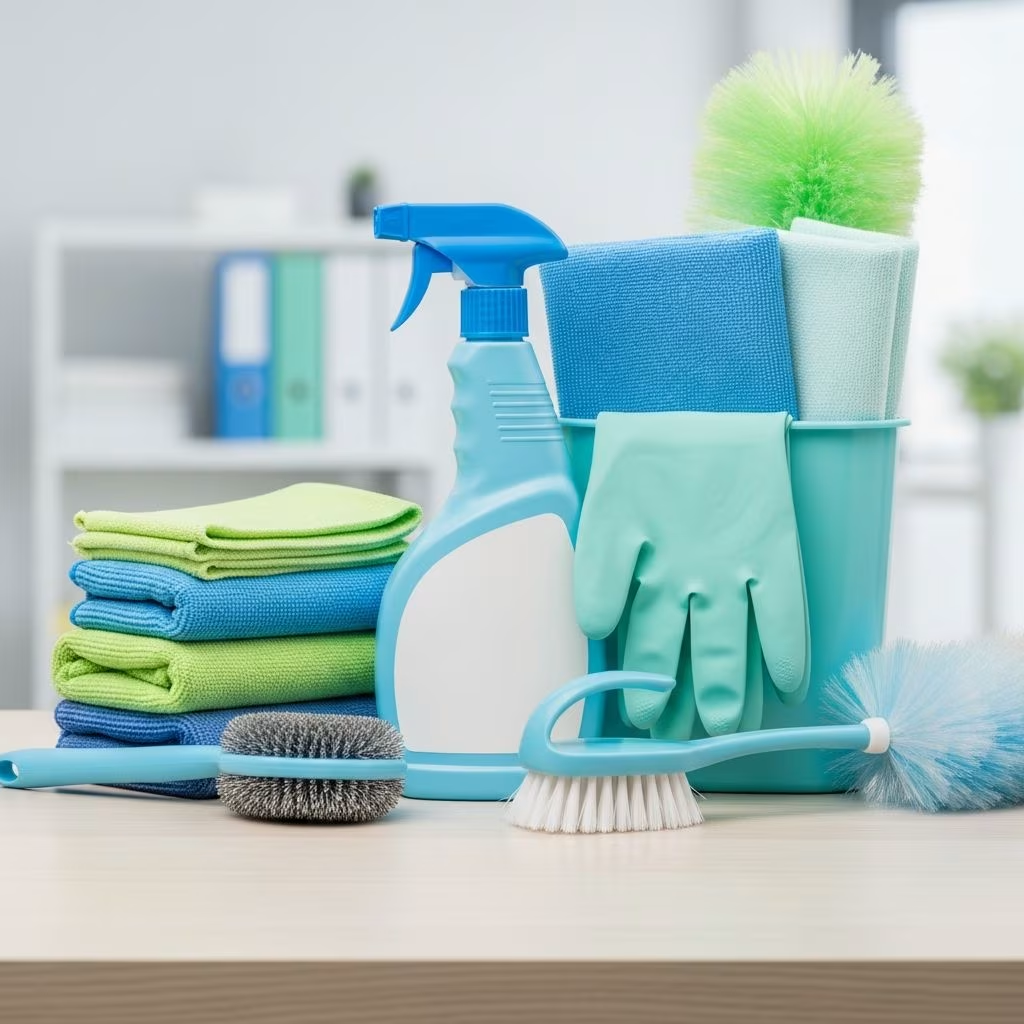
Basic supplies might include:
- Vacuum cleaner suited to your typical flooring.
- Microfiber cloths and mop heads.
- All-purpose cleaner, bathroom cleaner, glass cleaner, and floor cleaner.
- Sponges, scrub brushes, and gloves.
- Trash bags, duster, and a caddy for organizing tools.
Some cleaners ask residential clients to provide large items (like vacuum cleaners or mops) to reduce cross-contamination between homes. Whatever you decide, communicate it clearly before each job.
Step 9: Define Your Policies And Client Expectations
Written policies help prevent misunderstandings and protect both you and your clients. Clarify your procedures before you begin marketing or accepting bookings.
Key policies to consider:
- Cancellations and rescheduling: How much notice you require, and whether late cancellations incur a fee.
- Access to the property: Key lockboxes, doorman instructions, or client presence during cleaning.
- Payment terms: Due at booking, on the day of service, or via invoice; accepted payment methods.
- Breakage and damage: How clients should report issues and how you will respond.
- Satisfaction guarantee: Whether you offer a re-clean window or partial refund.
Include your policies in quotes, confirmations, and your website so clients know what to expect from the start.
Step 10: Create Your Brand And Online Presence
Your brand does not need to be fancy at first, but it should be consistent and professional. Think about how you want clients to feel when they see your name or interact with you.
Foundations of your brand:
- Business name and logo: Simple, readable, and relevant to cleaning or freshness.
- Colors and tone: Clean, calm, and trustworthy; use the same on all materials.
- Website or landing page: Even a basic page that lists services, areas served, prices or quote process, and contact information helps clients find and trust you.
- Social media profiles: Platforms where your ideal clients spend time; share before-and-after photos, tips, and client testimonials.
Make sure your contact details and service area are easy to find, and encourage happy customers to leave online reviews.
Step 11: Market Your Cleaning Business
Marketing does not need to be expensive. Focus on consistent, simple strategies to reach the clients most likely to hire you.
Effective low-cost tactics include:
- Word of mouth: Tell friends, family, neighbors, and colleagues about your services; ask for referrals.
- Local listings: Add your business to local directories and maps so people can find you when searching for cleaners.
- Flyers and business cards: Share them in community spaces (where allowed) and with complementary businesses like real estate agents or property managers.
- Referral incentives: Offer a discount or free add-on service for clients who refer new customers.
- Online reviews: Encourage satisfied customers to leave honest reviews; many people rely heavily on ratings when choosing a cleaner.
Track which methods bring in the most bookings and gradually invest more time and money in those channels.
Step 12: Create Simple Systems And Checklists
Consistent, high-quality cleaning is easier when you rely on systems rather than memory. Standard checklists help ensure every job meets your promised standard and make it simpler to train future staff.
Useful systems include:
- Room-by-room cleaning checklists for standard and deep cleans.
- Opening and closing routines (inventory checks, loading supplies, end-of-day cleaning of tools).
- Client intake forms to capture preferences, pets, allergies, and access instructions.
- Scheduling and reminder processes, possibly aided by simple software or calendars.
Documenting your processes may feel tedious at first, but it saves time later and helps you deliver a consistent experience.
Step 13: Manage Your Finances And Taxes
Healthy finances are just as important as getting more clients. Many small business owners benefit from learning the basics of budgeting, bookkeeping, and tax planning early.
Financial best practices:
- Track every expense and every payment in a spreadsheet or accounting app.
- Set aside a percentage of each payment for taxes in a separate savings account.
- Review your income and expenses monthly to spot trends and adjust pricing if needed.
- Consider consulting a tax professional to understand deductions related to vehicles, home offices, supplies, and insurance.
Good financial habits from the beginning can prevent stress during tax season and help you decide when to reinvest in growth.
Step 14: Hire Help Or Use Contractors (When You Are Ready)
Once your schedule is full and you are turning away work, it may be time to bring on help. You can either hire employees or work with independent contractors, but laws about classification and payroll are strict, so seek guidance if you are unsure.
Planning for a team involves:
- Writing clear job descriptions and expectations.
- Creating training materials based on your checklists and standards.
- Registering for state and federal employer accounts, if required.
- Setting up payroll and understanding your obligations for withholding and reporting taxes.
- Updating your insurance and workers’ compensation coverage.
Start small with one or two helpers, refine your systems, and then scale gradually as demand grows.
Step 15: Grow Sustainably And Protect Your Time
Growth is exciting, but expanding too quickly without systems can lead to burnout and unhappy clients. Focus on sustainable growth that aligns with your personal goals.
Strategies for healthy scaling:
- Raise prices periodically to reflect experience, demand, and increased costs.
- Refine your niche to focus on your most profitable or enjoyable jobs.
- Automate tasks like appointment reminders, invoicing, and follow-up messages when possible.
- Schedule time off and boundaries for communication so your business does not consume every hour.
Revisit your original business plan annually and adjust your goals as your life and priorities evolve.
Cleaning Business FAQs
Q: How much does it cost to start a cleaning business?
A: Startup costs can be relatively low compared to many other businesses. Depending on your location and scope, you may be able to begin with a few hundred to a few thousand dollars for supplies, licensing, insurance, and basic marketing. Keeping your initial equipment simple helps you stay within budget.
Q: Do I need formal training or certification to start?
A: Most general residential and small commercial cleaning services do not require formal certification, though some specialized niches (such as healthcare or biohazard cleaning) may have additional requirements. Many owners learn through experience, online resources, and industry best-practice guides.
Q: How should I decide between hourly and flat-rate pricing?
A: Hourly pricing is simple when you are beginning and still learning how long jobs take. Flat-rate pricing rewards efficiency and gives clients predictable costs, but it requires accurate estimates. Some owners start hourly and switch to flat fees once they have enough experience with typical job times.
Q: Do I need insurance if I am working alone?
A: Even solo cleaners often carry general liability insurance to help protect against claims of property damage or injury. Some clients or commercial contracts require proof of coverage before booking, so insurance can serve as both protection and a trust-building signal.
Q: How can I get my first few clients?
A: Start by letting your existing network know you are open for business, and offer a clear description of your services, locations served, and availability. Combine word-of-mouth with simple local marketing, such as online listings and reviews, and consider a small introductory offer to encourage people to try your services.
References
- Job Openings and Labor Turnover – November 2023 — U.S. Bureau of Labor Statistics. 2024-01-03. https://www.bls.gov/news.release/jolts.nr0.htm
- Occupational Outlook Handbook: Janitors and Building Cleaners — U.S. Bureau of Labor Statistics. 2024-04-17. https://www.bls.gov/ooh/building-and-grounds-cleaning/janitors-and-building-cleaners.htm
- Write your business plan — U.S. Small Business Administration. 2023-10-26. https://www.sba.gov/business-guide/plan-your-business/write-your-business-plan
- Choose a business structure — U.S. Small Business Administration. 2023-09-21. https://www.sba.gov/business-guide/launch-your-business/choose-business-structure
- Small Business and Self-Employed Tax Center — Internal Revenue Service. 2024-03-22. https://www.irs.gov/businesses/small-businesses-self-employed
- Small Business Insurance — National Association of Insurance Commissioners. 2023-06-15. https://content.naic.org/consumer.htm
This article is general information, not personal financial advice. Consider your own situation, or speak with a licensed adviser, before acting on it.