

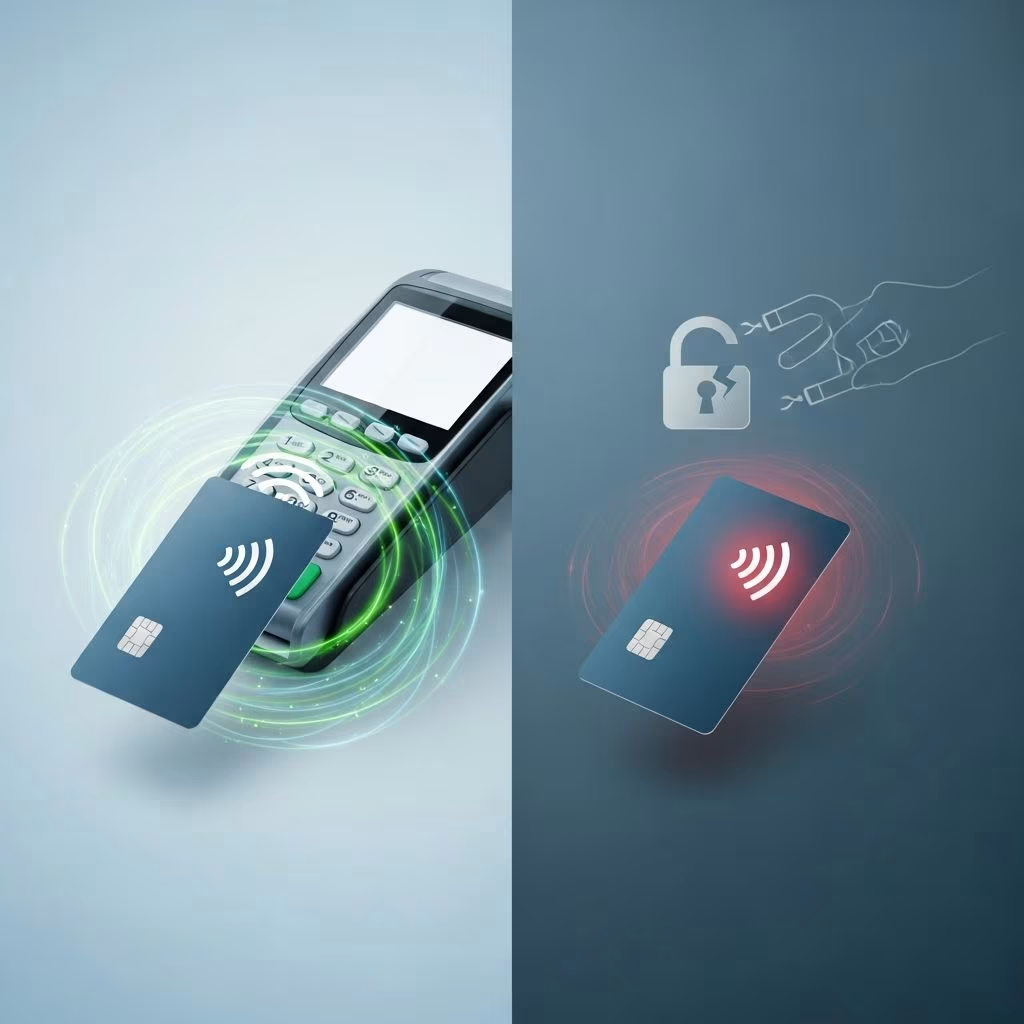
Contactless cards enable users to complete purchases by simply tapping their card on a payment terminal, leveraging near-field communication (NFC) technology for swift and secure transactions.
Understanding the Core Technology Behind Tap-to-Pay
At the heart of contactless cards lies NFC, a short-range wireless technology that facilitates data exchange between the card and a compatible reader when held within a few inches. This differs from traditional methods like swiping a magnetic stripe or inserting a chip, as no physical contact is required. The card’s embedded chip generates a unique, one-time code for each transaction, which is transmitted securely to the terminal.
The process unfolds rapidly: the terminal detects the card, sends transaction details to the processing network, which forwards them to the issuer for verification of credit availability and identity. Approval or denial happens in seconds, making it ideal for busy environments like retail checkout lines.
Key Advantages of Adopting Contactless Payments
Contactless technology streamlines everyday spending with several compelling benefits.
- Lightning-Fast Transactions: Tapping completes payments up to 10 times quicker than chip insertion or cash handling, reducing wait times at stores and transit points.
- Hygiene and Convenience: No need to touch shared surfaces minimizes germ exposure, a boon in public settings.
- Durability Boost: Less handling spares magnetic stripes and chips from wear, extending card lifespan.
- Integration with Mobile Wallets: Cards link seamlessly to apps like Apple Pay, allowing phone-based taps with biometric authentication for added layers of protection.
Merchants benefit too, as quicker throughput handles higher customer volumes efficiently.
Potential Limitations and Risks to Consider
Despite their appeal, contactless cards have notable downsides that users should weigh.
- Transaction Limits: Many regions cap contactless payments at low amounts (e.g., under $100) to curb fraud, requiring PIN entry for larger sums.
- Skimming Vulnerabilities: Unauthorized readers could potentially intercept signals if cards are not shielded, though proximity requirements (1-2 inches) limit this.
- Compatibility Gaps: Not all terminals support NFC, forcing fallback to swipe or chip methods.
- Accidental Charges Myth: While safeguards prevent double-tapping fees, vigilance is key in crowded areas.
How to Spot and Use a Contactless Card Effectively
Identifying a contactless card is straightforward—look for the iconic symbol of four curved lines resembling a sideways Wi-Fi icon on the front or back. Usage is simple: locate the matching symbol on the terminal, hold the card flat within 1-2 inches for 1-2 seconds, and wait for approval.
| Step | Action | Tip |
|---|---|---|
| 1. Look | Find the contactless symbol | Check terminal screen or sides |
| 2. Tap | Hold card near reader | Keep steady for 1-2 seconds |
| 3. Go | Await beep/confirmation | Verify amount before leaving |
For security, store cards in RFID-blocking wallets and review statements regularly.
Security Features That Make Contactless Reliable
Far from being insecure, contactless cards employ EMV chip technology to produce transaction-specific cryptograms, thwarting counterfeit attempts. Unlike static magnetic stripes, this dynamic authentication ensures data is useless if intercepted. Mobile integrations add biometrics like fingerprints, further fortifying defenses.
Proximity limits prevent remote hacks, and issuers monitor for anomalies in real-time.
Global Adoption and Future Trends
Contactless payments have surged worldwide, with widespread use in transit, retail, and travel. Innovations like Tap to Add simplify wallet provisioning by tapping cards to phones. As terminals upgrade, expect even broader acceptance and higher limits, blending with wearable tech for seamless experiences.
Comparing Contactless to Traditional Payment Methods
| Method | Speed | Security | Convenience | Durability |
|---|---|---|---|---|
| Contactless Tap | Very Fast | High (EMV + Token) | Excellent | High |
| Chip Insert | Moderate | High (EMV) | Good | Moderate |
| Magnetic Swipe | Slow | Low | Fair | Low |
| Cash | Slow | Physical Risk | Poor | N/A |
This comparison underscores why contactless is gaining traction for its balance of speed and safety.
Frequently Asked Questions (FAQs)
Are contactless cards safe from fraud?
Yes, they use one-time codes and EMV chips, making replication difficult. Proximity and issuer checks add protection.
What’s the maximum amount for tap payments?
Limits vary by region and issuer, often $50-$100 without PIN; check your card terms.
Can I use contactless cards internationally?
Most are globally compatible where NFC terminals exist.
Do contactless payments work with all phones?
Via digital wallets on NFC-enabled devices like iPhones or Androids.
How do I protect against skimming?
Use RFID sleeves, avoid crowded pockets, and enable transaction alerts.
Best Practices for Maximizing Contactless Card Value
To leverage this tech fully:
- Opt for cards from issuers offering rewards on taps.
- Enable mobile wallet for versatility.
- Update apps and monitor via banking portals.
- Educate on limits to avoid checkout surprises.
By understanding both strengths and caveats, users can integrate contactless payments into a smarter financial routine.
References
- What Is a Contactless Credit Card? Tap-to-Pay Explained — Citi. 2023. https://www.citi.com/credit-cards/understanding-credit-cards/what-is-a-contactless-credit-card
- What Is a Contactless Credit Card/Debit Card & Why You Should Tap & Go — First National Bank of Omaha. 2023-10-01. https://www.fnbo.com/insights/personal-finance/2023/what-contactless-credit-card-debit-card-and-why-you-should-tap-go
- What Is a Contactless Card & How Does It Work? — Capital One. 2024. https://www.capitalone.com/learn-grow/privacy-security/contactless-credit-cards/
- Tapping into the future: A guide to contactless payments — Marqeta. 2024. https://www.marqeta.com/blog/tapping-into-the-future-a-guide-to-contactless-payments
- Contactless payment — Wikipedia (informed by EMVCo standards). 2024. https://en.wikipedia.org/wiki/Contactless_payment
- What is a Contactless Credit Card — Chase. 2024. https://www.chase.com/personal/credit-cards/education/basics/what-is-a-contactless-credit-card
- Contactless 101: What you need to know about tap and go — Mastercard. 2025. https://www.mastercard.com/us/en/news-and-trends/Insights/2025/what-you-need-to-know-about-tap-and-go.html
This article is general information, not personal financial advice. Consider your own situation, or speak with a licensed adviser, before acting on it.


