

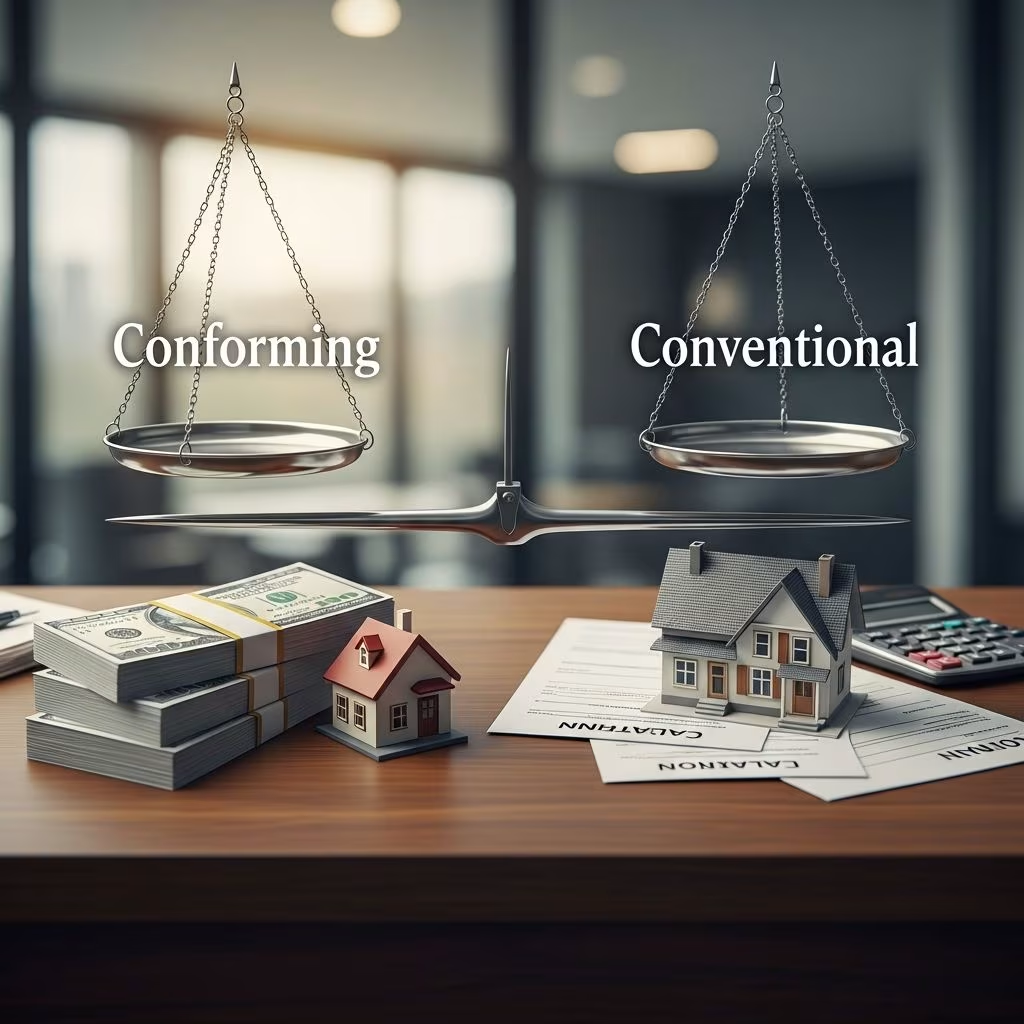
Navigating mortgage options requires understanding key terms like **conforming** and **conventional loans**. All conforming loans fall under the conventional category, but not every conventional loan qualifies as conforming. This guide breaks down their distinctions, eligibility rules, benefits, and strategies for selecting the best fit.
Defining Conventional Mortgages
Conventional mortgages represent home loans issued by private lenders without government insurance or guarantees. These include a broad spectrum, from standard fixed-rate options to adjustable-rate products. Lenders originate these loans and often sell them on the secondary market to free up capital for more lending.
Key traits of conventional loans include flexibility in terms, such as 15-year or 30-year durations, and options for fixed or variable interest rates. They appeal to borrowers with solid financial standings, offering competitive rates when qualifications align.
- Private lender backing, no federal agency involvement.
- Available in fixed-rate or adjustable-rate mortgage (ARM) formats.
- Suitable for primary residences, second homes, or investment properties.
Understanding Conforming Loans
**Conforming loans** are a specific subset of conventional mortgages that meet strict guidelines established by Fannie Mae and Freddie Mac, government-sponsored enterprises (GSEs) regulated by the Federal Housing Finance Agency (FHFA). These criteria ensure the loans can be purchased and securitized by the GSEs, promoting liquidity in the housing market.
To conform, loans must adhere to annual limits on amounts, borrower credit profiles, and debt obligations. For 2023, the baseline limit stood at $726,200 for single-family homes in most areas, rising to $1,089,300 in high-cost regions.
| Criteria | Conforming Loan Standards |
|---|---|
| Loan Limit (2023 baseline) | $726,200 (higher in select counties) |
| Minimum Down Payment | 3% of purchase price |
| Credit Score | Typically 620+ |
| Debt-to-Income (DTI) Ratio | Max 45-50% |
Core Differences Between the Two
While overlapping, conforming and conventional loans diverge in oversight and accessibility. Conforming loans follow GSE protocols for standardization, leading to predictable processes and often lower rates due to reduced lender risk. Non-conforming conventional loans, like jumbo mortgages, exceed these limits and carry higher scrutiny.
- **Regulation**: Conforming tied to FHFA/GSE rules; broader conventional lacks such uniformity.
- **Loan Size**: Conforming capped; jumbo conventional exceeds caps.
- **Rates and Terms**: Conforming generally cheaper; non-conforming demands stronger profiles.
Borrowers eyeing high-value properties often pivot to non-conforming options, facing steeper down payments (10-20%) and elite credit thresholds (700+).
Eligibility Requirements Breakdown
Credit and Income Standards
Lenders assess **credit scores**, employment history, and **DTI ratios** rigorously. Conforming loans favor scores above 620, with optimal rates for 700+. DTI caps at 45%, measuring monthly debts against pretax income.
Down Payment Expectations
Conforming options allow 3% down, far below jumbo requirements. Less than 20% down triggers private mortgage insurance (PMI), adding to costs until equity builds.
- First-time buyers: 3% viable for conforming.
- High-end purchases: 20%+ for non-conforming to offset risk.
Advantages of Each Loan Type
Benefits of Conforming Loans
These shine for affordability and ease:
- Lower entry barriers with minimal down payments.
- Competitive interest rates from GSE backing.
- Abundant lender choices and swift closings.
Strengths of Conventional Loans
Broad conventional options extend beyond conforming limits:
- Access to larger financing for premium homes.
- Customizable terms for diverse needs.
- No PMI if 20%+ down, saving long-term.
Potential Drawbacks to Consider
No option is flawless. Conforming loans restrict borrowing in pricey markets, demanding solid credit (620 minimum). Conventional non-conforming variants impose harsher terms: elevated rates, bigger down payments, and rigorous underwriting.
| Aspect | Conforming Drawbacks | Non-Conforming Conventional Drawbacks |
|---|---|---|
| Loan Amount | Capped by FHFA | No cap but higher costs |
| Credit Needs | 620+ required | Often 700+ for best rates |
| Down Payment | PMI if under 20% | 10-20%+ standard |
Financial Implications and Costs
Interest rates for conforming loans trend lower, reflecting GSE purchase guarantees that mitigate lender exposure. Non-conforming loans, viewed as riskier, command premiums—potentially 0.5% higher annually on million-dollar sums.
PMI applies to low-equity conforming loans, typically 0.5-1% of the balance yearly until 20% equity. Closing costs average 2-5% across both, but jumbo processes extend timelines.
Who Qualifies Best for Conforming Loans?
Ideal candidates boast stable income, moderate debt, and homes within limits. First-timers leverage 3% down programs, while strong-credit buyers (740+) secure top rates.
- DTI under 36%: Prime positioning.
- Recent pay stubs and tax returns essential.
When to Choose Non-Conforming Conventional
Opt for these in luxury markets or when conforming caps fall short. High earners with assets compensate for stricter rules, avoiding government-backed alternatives like FHA.
Steps to Apply Successfully
- Check credit reports via annualcreditreport.com; dispute errors early.
- Calculate DTI: (Debts / Income) x 100.
- Secure pre-approval from multiple lenders.
- Compare APRs, not just rates, including fees.
- Gather docs: W-2s, bank statements, asset proofs.
Current Market Trends (2026 Insights)
As of 2026, FHFA adjusts limits yearly per median prices. High-cost areas see escalations, easing conforming access. Rate volatility favors locking fixed terms amid economic shifts.
Frequently Asked Questions
Are all conventional loans conforming?
No. Only those meeting GSE criteria qualify as conforming; others like jumbos do not.
What is the 2023 conforming limit?
$726,200 baseline for most U.S. counties, up to $1,089,300 in high-cost zones.
Can I avoid PMI on conforming loans?
Yes, with 20%+ down payment.
Which has lower rates: conforming or non-conforming?
Conforming typically offers lower rates due to standardization.
Do conventional loans require perfect credit?
No, but 620+ unlocks conforming; jumbos prefer 700+.
Strategies for Strong Approval Odds
Boost profiles by paying down debt, avoiding new credit, and saving aggressively. Shop lenders during rate dips; consider points to buy down rates. Consult advisors for personalized fits.
Understanding these loans empowers informed decisions, aligning financing with goals whether buying modestly or ambitiously.
References
- Conventional, Conforming, & Jumbo Loans: What’s The Difference? — American Express. 2023. https://www.americanexpress.com/en-us/credit-cards/credit-intel/conventional-conforming-jumbo-loans/
- Conforming vs. Nonconforming Loans: What to Know — Chase Bank. 2023. https://www.chase.com/personal/mortgage/education/financing-a-home/conforming-vs-nonconforming-loan
- Conforming Loans: What They Are And How They Work — Bankrate. 2023. https://www.bankrate.com/mortgages/conforming-loan/
- Conforming vs Conventional Loans: Which Is Best? — Experian. 2023. https://www.experian.com/blogs/ask-experian/conforming-vs-conventional-loans/
- Conforming vs. Non-Conforming Loans Explained — Academy Bank. 2023. https://www.academybank.com/article/conforming-vs-non-conforming-loans-explained
- Get to Know the Types of Mortgage Loans — Fannie Mae. 2023. https://yourhome.fanniemae.com/buy/get-know-types-mortgage-loans
This article is general information, not personal financial advice. Consider your own situation, or speak with a licensed adviser, before acting on it.


