

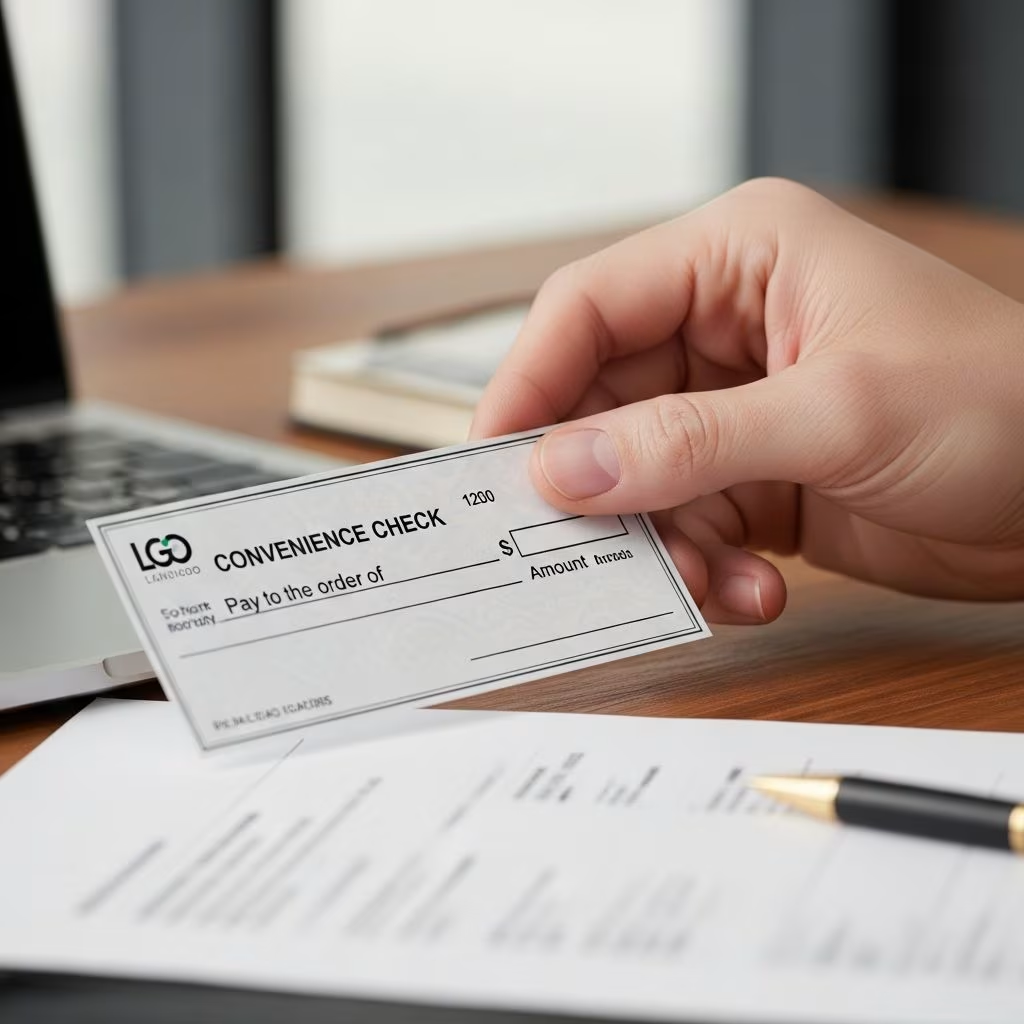
Credit card convenience checks offer a way to tap into your available credit using blank checks provided by your issuer, functioning like cash advances or balance transfers but with specific costs and limitations.
Understanding the Basics of Convenience Checks
Credit card issuers occasionally mail out blank checks tied directly to your credit account. These allow you to write any amount up to your credit limit, treating the transaction as a draw on your line of credit. Unlike standard checks from a bank account, these pull funds from your card’s balance, often appearing as cash advances on your statement.
The primary appeal lies in their flexibility: deposit them into your bank for quick cash, pay a vendor who doesn’t take cards, or shift debt from another card. However, they bypass the grace period for purchases, meaning interest accrues immediately upon clearing. Issuers send them during promotional periods or to pre-approved customers to boost usage, but always review the accompanying terms for rates and fees.
How Do Convenience Checks Actually Work?
To use one, simply fill out the check like a personal one: name the payee (yourself, a merchant, or another creditor), amount, and sign. Deposit at your bank, cash at a check-cashing service, or hand to the recipient. The funds deduct from your credit limit instantly, and the charge posts to your card.
Key mechanics include:
- Immediate posting: Treated as cash equivalents, no billing cycle delay for interest.
- Limit capped: Cannot exceed your card’s cash advance limit, often lower than purchase limit.
- Promotional variants: Some offer 0% intro APR for balance transfers, but standard use reverts to high cash advance rates.
Track them carefully, as lost or stolen checks pose fraud risks similar to card theft, requiring issuer notification.
Key Advantages of Using Convenience Checks
Despite drawbacks, they serve niche needs effectively. Here’s a breakdown:
| Benefit | Description |
|---|---|
| Fast Cash Access | Write to yourself and deposit for quicker funds than many loans, ideal for emergencies. |
| Cardless Payments | Pay landlords or vendors rejecting plastic, expanding payment options. |
| Debt Consolidation | Transfer high-interest balances via promo rates, potentially saving on APR. |
| No Application Hassle | Pre-approved; no credit check or paperwork needed. |
These perks shine in urgent scenarios where alternatives like personal loans take days to fund.
Significant Drawbacks and Hidden Pitfalls
High costs often outweigh convenience. Cash advance APRs typically range 25%-30%, far above purchase rates of 15%-25%. No grace period means interest from day one, compounding daily.
Additional fees compound expenses:
- Cash advance fee: 3%-5% or flat $10 minimum.
- Balance transfer fee: 3%-5% of amount.
- Potential ATM or check-cashing fees from banks.
Impact on credit utilization rises immediately, potentially hurting scores if nearing limits. Promos may exclude cash advances, triggering standard high rates unexpectedly. Experts advise against routine use, favoring debit or savings withdrawals.
Comparing Costs: Convenience Checks vs. Alternatives
To evaluate wisely, compare against common options:
| Option | Typical APR | Fees | Grace Period | Funding Speed |
|---|---|---|---|---|
| Convenience Check (Cash Advance) | 25%-30% | 3%-5% + $10 min | None | Immediate |
| Credit Card Purchase | 15%-25% | None | 21-25 days | Instant |
| Personal Loan | 6%-36% | Origination 1%-8% | None | 1-7 days |
| 0% Balance Transfer Card | 0% intro (12-21 mo) | 3%-5% | Intro period | Immediate |
| Home Equity Line | 8%-10% | Closing costs | Variable | Days |
Data drawn from issuer averages; personal loans via prime borrowers score best for larger sums. Convenience checks excel in speed but lag in affordability.
When Should You Consider Using a Convenience Check?
Reserve for targeted scenarios:
- Promo Balance Transfers: If 0% APR covers the transfer and you can repay within promo window, net savings after fees.
- True Emergencies: Short-term cash when bank accounts are dry and ATMs unavailable.
- Non-Card Merchants: Rare cases like certain rentals, post-fee comparison.
Avoid for everyday buys or habitual cash needs; build emergency funds instead. Calculate total cost: (Amount x Fee %) + (Amount x APR x Days/365).
Steps to Use Convenience Checks Safely
If proceeding:
- Read Fine Print: Confirm APR, fees, promo applicability per transaction type.
- Verify Limits: Check cash advance sub-limit via app or call.
- Plan Repayment: Pay off ASAP to minimize interest; set auto-payments.
- Secure Storage: Shred unused checks; report losses immediately.
- Monitor Statement: Watch for posting and utilization spikes.
Frequently Asked Questions (FAQs)
Do convenience checks affect my credit score?
Indirectly yes, by increasing utilization. High balances over 30% of limit can drop scores; timely payments mitigate.
Can I get more convenience checks?
Request from issuer, but approval varies; not guaranteed.
Are there fees for all uses?
Typically yes for cash advances; promo transfers may waive but charge separately.
What’s the difference from a standard cash advance?
Form factor only; both treated identically on statements.
Should I destroy unsolicited checks?
Often wise if high-cost; opt out via issuer to stop mailings.
Strategic Alternatives to Convenience Checks
Build financial buffers:
- Emergency Savings: 3-6 months expenses in high-yield account.
- 0% APR Cards: Dedicated balance transfer products.
- Peer Lending: Platforms like LendingClub for lower rates.
- Credit Union Loans: Member perks often beat card terms.
Long-term, improve credit for better rates across options.
References
- What Is a Convenience Check? — Experian. 2024-03-28. https://www.experian.com/blogs/ask-experian/what-is-a-convenience-check/
- Convenience checks definition — CreditCards.com. N/A. https://www.creditcards.com/glossary/term-convenience-checks/
- Chapter 03 – Government Convenience Checks — VA Department of Financial Policy (.gov). N/A. https://department.va.gov/financial-policy-documents/financial-document/chapter-03-government-convenience-checks/
- What Are Convenience Checks? — Bankrate. N/A. https://www.bankrate.com/credit-cards/advice/understanding-convenience-checks/
- What Is a Convenience Check, and Should I Use One? — NerdWallet. N/A. https://www.nerdwallet.com/credit-cards/learn/credit-card-convenience-checks-when-to-use
- What Is a Convenience Check? Should You Use One? — Credit Karma. N/A. https://www.creditkarma.com/credit-cards/i/credit-card-convenience-check
- Check Cash Advance Meaning & Definition — Credit One Bank. N/A. https://www.creditonebank.com/articles/glossary/check-cash-advance
This article is general information, not personal financial advice. Consider your own situation, or speak with a licensed adviser, before acting on it.


