

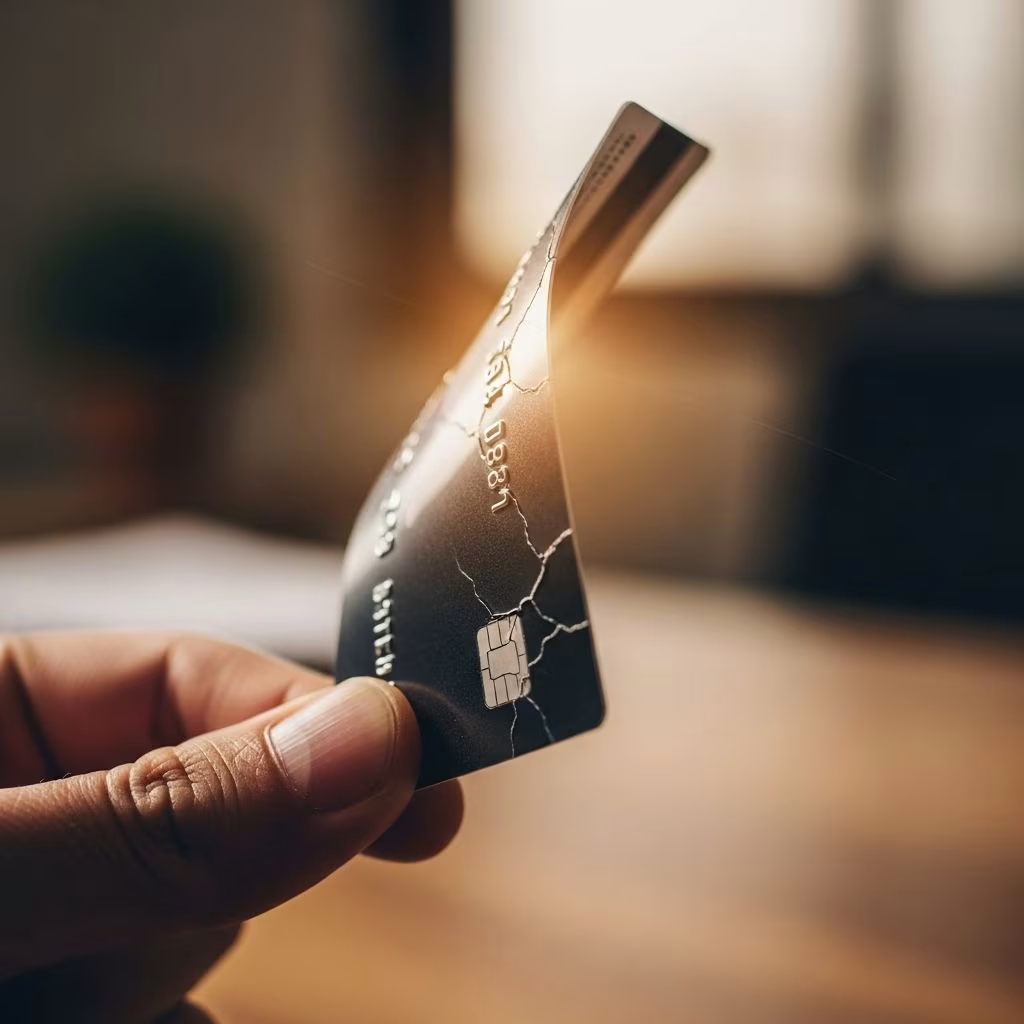
Credit card debt affects millions of Americans, with billions owed collectively at staggering interest rates that perpetuate a vicious cycle. Understanding the root causes—ranging from socioeconomic factors to psychological triggers—is essential for breaking free. This article examines why people, particularly low-income individuals, young adults, and those in debt-heavy social circles, rack up balances they struggle to repay.
Low Income: The Primary Driver of Debt Accumulation
Low-income households are disproportionately burdened by credit card debt due to limited financial buffers and reliance on credit for essentials. When earnings barely cover necessities, unexpected expenses force borrowing, leading to high-interest balances.
Statistics reveal that Americans owe billions in revolving credit card debt, with average rates around 15% but often exceeding 20% for subprime borrowers. Low earners face higher rates, trapping them in debt spirals where minimum payments barely dent principal.
- Insufficient savings: No emergency fund means turning to cards for car repairs or medical bills.
- Income volatility: Gig economy or irregular paychecks exacerbate gaps bridged by credit.
- High cost of living: Rent, groceries, and utilities consume budgets, leaving credit as the only option for shortfalls.
Research from the Federal Reserve indicates lower-income quartiles carry significantly higher debt-to-income ratios, with credit cards filling the void left by stagnant wages.
Youth and Inexperience: Why Young People Fall into the Trap
Young adults, especially millennials and Gen Z, enter the credit market with optimism but lack experience managing revolving debt. Surveys show they are warier post-financial crises yet still accumulate balances due to life transitions.
College tuition, first apartments, and entry-level jobs coincide with aggressive credit card marketing. New users overlook terms like APRs climbing above 20%, leading to unintended carryover balances.
| Age Group | Avg. Credit Card Debt | Common Pitfall |
|---|---|---|
| 18-24 | $2,500 | High utilization from student expenses |
| 25-34 | $5,800 | Lifestyle inflation post-graduation |
| 35+ | $6,900 | Established but chronic balances |
Data adapted from TransUnion and Bankrate surveys highlight millennials’ caution but vulnerability. Paying in full avoids fees, yet even diligent users hit limits during downturns.
Social Influences: Debt Contagion in Your Circle
Surrounded by debtors, individuals normalize high balances, viewing credit as essential for social parity. Peer pressure manifests in keeping up appearances—dinners out, gadgets, vacations—funded by plastic.
Behavioral economics explains this ‘contagion’: Seeing friends max cards desensitizes risk perception. Low-income groups with dense social networks amplify this, as shared norms prioritize consumption over saving.
- Family modeling: Parents in debt teach reliance on credit.
- Friend groups: Group spending (trips, events) splits bills via apps, but uneven repayments linger.
- Social media: Curated lifestyles fuel FOMO-driven purchases.
Studies confirm proximity to indebted peers correlates with personal debt levels, underscoring environment’s role.
Psychological Factors: The ‘Painless’ Spending Illusion
The Credit Card Effect: Spending More Without Feeling It
Credit cards decouple spending from immediate pain, leading to 8-12% higher expenditures than cash. Plastic feels abstract; swiping lacks the tactile regret of handing over bills.
MIT research (via cited studies) shows consumers overspend with cards due to reduced ‘pain of paying.’ This subconscious bias explains impulse buys snowballing into debt.
Instant Gratification Over Long-Term Planning
Humans prioritize dopamine hits from purchases, discounting future interest costs. Behavioral traps like ‘just this once’ for minimum payments extend debt lifespans dramatically.
Example: A $2,000 balance at 14% with declining 2% minimums takes 20+ years; fixed $40 payments clear it in 6.
Convenience and Accessibility: Too Easy to Use
Credit’s ubiquity—online, in-store, apps—enables seamless overspending. Rewards and perks lure with points, masking true costs until statements arrive.
Millennials wisely compare rates but succumb to ‘pay later’ convenience during pinches. High limits tempt utilization spikes, hurting scores (30% of FICO tied to utilization).
Lifestyle Inflation and Unexpected Expenses
Raises or bonuses often fuel lifestyle creep, where credit bridges expanded habits. Job loss, illness, or repairs hit hardest without buffers, turning necessities into debt.
Acknowledge the problem first: Stop digging, then strategize. Debt isn’t an ‘expense’—principal is internal transfer; only interest outflows.
Breaking the Cycle: Strategies to Avoid and Escape Debt
Armed with causes, implement preventives:
- Budget ruthlessly: Track via Mint; prioritize high-interest debt (avalanche) or motivational wins (snowball).
- Negotiate rates: Loyal customers often secure lowers; consider 0% balance transfers cautiously.
- Pay fixed amounts: Above minimums accelerates payoff.
- Avoid pitfalls: No cash advances, 401(k) loans, or settlement scams—use cash windfalls instead.
Slow, steady repayment beats bankruptcy, preserving credit for 7-10 years. Millennials: Embrace cards for rewards but pay full, on time, low utilization.
Frequently Asked Questions (FAQs)
Why do low-income people have more credit card debt?
Limited savings and high living costs force reliance on high-interest credit for essentials, creating spirals.
Do young people spend more on credit cards?
Yes, inexperience and life transitions lead to higher balances, though recent generations are more cautious.
Can social circles influence my debt?
Absolutely—debt normalizes in peer groups, encouraging spending to match lifestyles.
How much more do we spend with cards vs. cash?
Studies show 8-12% more due to painless transactions.
What’s the fastest way to pay off debt?
Fixed payments above minimums, avalanche method, plus expense cuts.
Final Thoughts on Conquering Credit Card Debt
Debt stems from intertwined socioeconomic, psychological, and habitual factors. Awareness empowers change: Build buffers, spend cash-like, surround with savers. Consistent action yields freedom.
References
- 5 Strategies To Wipe Out Your Credit Card Balance — Wise Bread. 2023-05-15. https://www.wisebread.com/5-strategies-to-wipe-out-your-credit-card-balance
- Acknowledge You Have a Problem with Debt — Wise Bread. 2023-07-20. https://www.wisebread.com/acknowledge-you-have-a-problem-with-debt
- The Millennials Guide to Avoiding Credit Card Debt — Wise Bread. 2024-02-10. https://www.wisebread.com/the-millennials-guide-to-avoiding-credit-card-debt
- Debt Repayment is Not an Expense — Wise Bread. 2023-11-05. https://www.wisebread.com/debt-repayment-is-not-an-expense
- 10 Worst Ways to Pay Off Your Credit Card Debt — Wise Bread. 2024-01-18. https://www.wisebread.com/10-worst-ways-to-pay-off-your-credit-card-debt
- Slow and Steady Wins the Debt Race — Wise Bread. 2023-09-12. https://www.wisebread.com/slow-and-steady-wins-the-debt-race
- Why We Spend More When We Pay With Credit Cards — Wise Bread. 2023-12-03. https://www.wisebread.com/why-we-spend-more-when-we-pay-with-credit-cards
This article is general information, not personal financial advice. Consider your own situation, or speak with a licensed adviser, before acting on it.


