

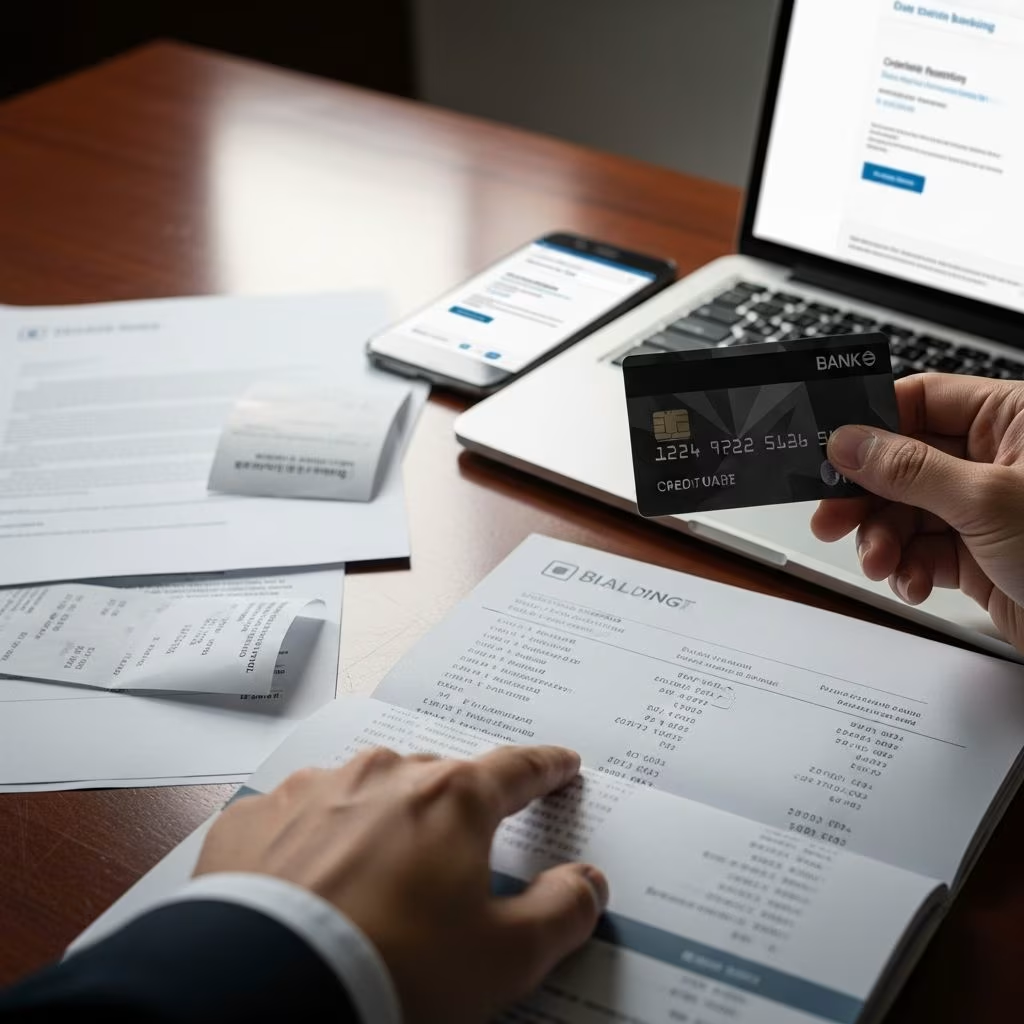
Challenging questionable charges on your credit card statement is a fundamental consumer right protected by federal regulations. The Fair Credit Billing Act (FCBA) empowers cardholders to contest billing errors, unauthorized transactions, and faulty goods or services without facing penalties during the investigation process.
Understanding Your Legal Protections
Federal law mandates that credit card issuers must resolve disputes within specific timelines. Under the FCBA, you have 60 days from the date the charge appears on your statement to notify your issuer in writing, ensuring full legal safeguards. Issuers must acknowledge receipt within 30 days and complete their review within 90 days. During this period, you can withhold payment on the disputed amount without it affecting your credit score, provided the rest of your bill is paid on time.
Key protections include:
- Prohibition on late fees or negative credit reporting for the disputed amount until resolution.
- Provisional credits often issued within days to cover the charge while investigated.
- Written explanations required if the dispute is denied, allowing for appeals.
Common Reasons to Dispute a Charge
Not every unfamiliar charge warrants a dispute, but several scenarios qualify under federal guidelines. Billing errors encompass unauthorized purchases, double charges, incorrect amounts, or computations. Claims related to merchandise or services can extend up to one year if the issue involves non-delivery, defective items, or failure to meet advertised standards.
| Dispute Type | Examples | Time Limit |
|---|---|---|
| Billing Error | Unauthorized charge, math error, duplicate billing | 60 days from statement date |
| Quality Issue | Non-delivered goods, defective product, poor service | Up to 1 year |
| Fraud | Stolen card use, unrecognized merchant | 60 days, often faster with zero liability |
Step-by-Step Process to File a Dispute
Begin by reviewing your statement carefully upon receipt. Contact the merchant first if possible, as direct resolution is often quickest. Document all communications, including emails, receipts, and photos of goods.
- Notify Your Issuer Promptly: Call the number on your card’s back or use the online portal/app. For credit cards, disputes can start digitally, but follow up in writing for FCBA protection.
- Gather Evidence: Compile receipts, invoices, shipping confirmations, and correspondence proving your case.
- Submit Written Notice: Mail a detailed letter to the billing inquiries address (not payments) via certified mail. Include your name, account number, charge details, dispute reason, and supporting docs.
- Track Progress: Note all dates, reference numbers, and follow up if no acknowledgment within 30 days.
Sample dispute letter structure:
- Account details and charge specifics.
- Clear explanation of the error.
- Request for investigation and credit.
- Copies of evidence (never originals).
Timelines and What to Expect
Expect a temporary credit on your account shortly after filing, especially for fraud claims. Full resolution varies: simple errors resolve in weeks, complex chargebacks involving networks like Visa or Mastercard may take 90 days. If approved, the charge is reversed permanently; if partial, adjusted accordingly.
Issuer responsibilities:
- Confirm receipt in writing within 30 days.
- Resolve or explain denial within 90 days.
- Refund any payments made on disputed amounts if upheld.
Handling Denials and Appeals
If your issuer rules against you, they must provide a written explanation with supporting documents. You have 10 days (or the payment due date, whichever is later) to appeal by submitting additional evidence. Common denial reasons include missed deadlines or insufficient proof.
Escalation options:
- File a complaint with the Consumer Financial Protection Bureau (CFPB).
- Contact your state attorney general for persistent issues.
- Seek arbitration if outlined in card terms.
Debit Card vs. Credit Card Disputes
While similar, debit disputes lack the same FCBA protections since funds are withdrawn immediately. Regulation E provides safeguards, but resolutions can take longer without provisional credits. Always dispute posted transactions, waiting 1-3 business days for pendings.
Preventing Future Disputes
Proactive habits reduce issues:
- Enable transaction alerts via app.
- Review statements monthly.
- Retain receipts for 60+ days.
- Use virtual card numbers for online purchases.
- Monitor credit reports annually via AnnualCreditReport.com.
Frequently Asked Questions (FAQs)
Can I dispute a charge after paying it?
Yes, but refunds depend on the outcome. Withhold future payments on similar issues.
What if 60 days have passed?
You may still try informally, but lose FCBA protections. Merchants or goodwill gestures sometimes apply.
Does disputing affect my credit score?
No, if you pay undisputed portions on time.
How long for fraud disputes?
Often faster with zero-liability policies; up to 90 days max.
Can merchants fight back?
Yes, via representment with evidence, but networks decide.
Advanced Strategies for Complex Cases
For international transactions or recurring disputes, involve the card network directly after issuer denial. Track chargeback cycles: issuer review, network arbitration, potential pre-arbitration. Maintain a dispute file with timestamps for leverage in escalations.
Statistics highlight success rates: Over 70% of consumer disputes favor cardholders when properly documented, per CFPB data. Always prioritize evidence over emotion in communications.
References
- How to Dispute a Credit Card Charge — Experian. 2023-10-15. https://www.experian.com/blogs/ask-experian/how-to-dispute-credit-card-charge/
- How do I dispute a charge on my credit card bill? — Consumer Financial Protection Bureau. 2024-05-20. https://www.consumerfinance.gov/ask-cfpb/how-do-i-dispute-a-charge-on-my-credit-card-bill-en-61/
- Credit Cards – Disputing A Charge — California Department of Justice. 2023-11-01. https://oag.ca.gov/consumers/general/credit-cards-dispute-charge
- Using Credit Cards and Disputing Charges — Federal Trade Commission. 2024-02-10. https://consumer.ftc.gov/articles/using-credit-cards-and-disputing-charges
- Disputing a Charge — Chase. 2025-01-15. https://www.chase.com/personal/credit-cards/dispute
- Credit card dispute process — Capital One. 2024-08-05. https://www.capitalone.com/help-center/fraud-disputes/dispute-credit-charge/
This article is general information, not personal financial advice. Consider your own situation, or speak with a licensed adviser, before acting on it.


