

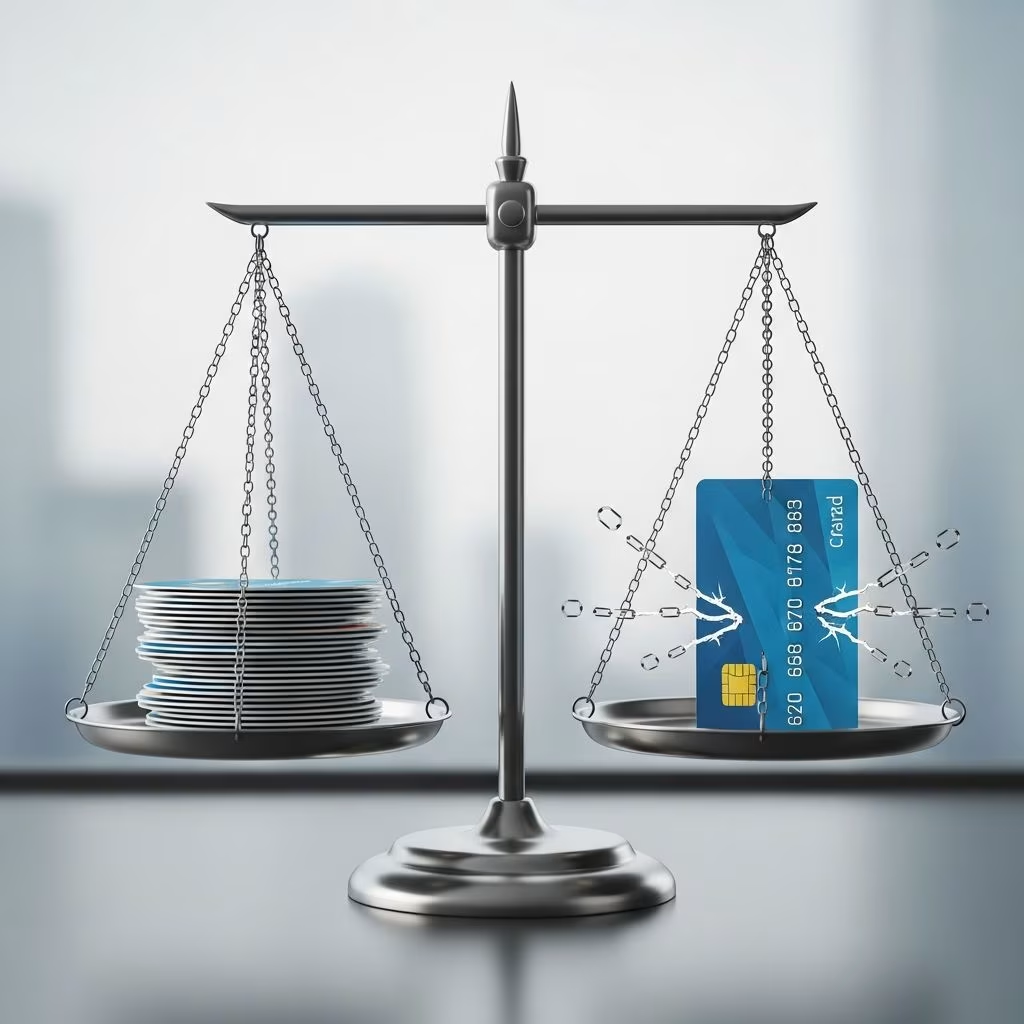
Credit cards can be powerful financial tools when you understand how they work, but they can also create long-term money stress if you use them carelessly. This guide breaks down the main advantages and disadvantages of credit cards, how they impact your day-to-day finances and credit score, and practical tips to help you use them wisely rather than letting them control your budget.
What is a Credit Card and How Does it Work?
A credit card is a revolving line of credit issued by a bank or other lender that allows you to borrow money up to a preset limit to make purchases, pay bills, or withdraw cash. Instead of money leaving your bank account immediately (like with a debit card), you receive a monthly statement and then decide how much to repay.
Each month, you are required to pay at least the minimum payment, but you are allowed to pay the full balance or any amount in between. If you do not pay the full balance by the due date, the remaining balance is carried over and charged interest, usually at a relatively high annual percentage rate (APR).
Credit cards also typically come with a grace period, which is the time between the end of your billing cycle and the due date for payment. When you pay your balance in full by the due date, you usually avoid interest on new purchases.
Key Features of Credit Cards
- Credit limit: The maximum amount you are allowed to borrow on the card.
- APR (Annual Percentage Rate): The yearly cost of borrowing, including interest and some fees.
- Minimum payment: The lowest amount you must pay each month to keep the account in good standing.
- Grace period: The interest-free period for new purchases when the previous statement balance is paid in full.
- Fees: May include annual fees, late fees, balance transfer fees, and foreign transaction fees.
Advantages of Credit Cards
Used thoughtfully, credit cards offer several benefits that can make managing your finances easier and more secure.
1. Convenience and Flexibility
Credit cards are widely accepted online and in person, making them extremely convenient for everyday spending, travel, and emergencies. They allow you to make purchases even when you do not have cash on hand, then repay later within your billing cycle.
- Quick and easy payments at stores, restaurants, and online retailers.
- Ability to reserve hotels, rental cars, and travel reservations where a credit card is often required.
- Consolidated monthly statement that shows all transactions in one place for easier tracking.
2. Increased Security and Fraud Protection
Credit cards generally provide stronger protection against fraud than cash or many debit cards. In the United States, the Fair Credit Billing Act (FCBA) limits cardholders’ liability for unauthorized charges, typically to a small amount (often $50) and many issuers waive even that.
- Unauthorized charges can be disputed and reversed by the issuer.
- Your own cash is not taken directly from your bank account during an investigation.
- Many cards have real-time alerts and monitoring to detect suspicious transactions.
3. Opportunity to Build and Improve Your Credit
Responsible credit card use is one of the most common ways to build a credit history. Payment information from most credit cards is reported to major credit bureaus, which helps shape your credit score.
- Paying on time each month can help you establish a positive payment history, a major factor in credit scores.
- Keeping your balance low relative to your credit limit helps your credit utilization ratio, another key factor.
- Over time, strong credit can help you qualify for better loan products and lower interest rates on mortgages, auto loans, and other credit.
| Credit Behavior | Impact on Credit Score |
|---|---|
| Paying on time, every time | Builds positive history and can improve your score |
| Carrying high balances close to your limit | Raises utilization and can lower your score |
| Maxing out cards or missing payments | Can significantly hurt your score and remain on your report for years |
4. Rewards, Cash Back, and Perks
Many credit cards offer rewards programs that give you cash back, travel miles, or points for every dollar you spend. While these rewards can be valuable, they only truly benefit you if you avoid interest by paying your balance in full.
- Cash back: A percentage of your spending returned as statement credits or bank deposits.
- Travel rewards: Points or miles you can redeem for flights, hotels, or other travel purchases.
- Other perks: Extended warranties, purchase protection, rental car coverage, or airport lounge access, depending on the card.
Because credit card interest rates are typically much higher than savings or investment returns, carrying a balance usually wipes out any benefit from rewards.
5. Helpful in Emergencies (With Caution)
When you face an unexpected expense and do not have cash available, a credit card can provide short-term relief. For example, it may help you cover an urgent repair, medical bill, or travel cost while you arrange funds.
However, relying on credit cards for emergencies is risky if you do not have a realistic plan to pay the balance off quickly. Building an emergency fund in a savings account is generally safer and cheaper because it does not involve interest charges.
Disadvantages of Credit Cards
Despite their benefits, credit cards carry serious risks if they are not handled carefully. Many people struggle with credit card debt because it is easy to overspend and expensive to carry a balance.
1. High-Interest Rates and Costly Debt
One of the biggest disadvantages of credit cards is their relatively high interest rates. Average credit card APRs often exceed the rates on personal loans, auto loans, or home equity loans. If you only make the minimum payment each month, it can take years to pay off even modest balances, and you may end up paying far more than the original cost of your purchases in interest.
- Carrying a balance triggers interest charges that accumulate daily.
- Introductory 0% APR periods usually expire after a set time, after which the rate can increase sharply.
- Cash advances often have even higher rates plus additional fees.
2. Temptation to Overspend
Because you do not see money leaving your bank account immediately, it is easy to feel like you have more to spend than you really do. Research and educational materials emphasize that credit cards can give a false sense of security and encourage purchases beyond your budget.
- Impulse purchases are easier when you can “pay later” instead of using cash.
- Online shopping and subscription services can cause spending to add up quickly.
- Retail promotions, such as discounts for opening a store card, may lead to extra debt.
Without a clear budget and spending plan, credit card use can gradually turn into a growing balance that becomes hard to manage.
3. Fees and Penalties
Beyond interest, credit cards often come with various fees that can raise the cost of borrowing.
- Annual fees: Some cards charge a yearly fee, especially those with premium rewards or travel benefits.
- Late payment fees: Charged when you miss the due date or pay less than the minimum.
- Balance transfer fees: A percentage of any balance you move from another card.
- Foreign transaction fees: Often 1%–3% of the transaction amount when you use your card abroad.
- Cash advance fees: Added on top of interest for withdrawing cash from your card.
These fees, combined with interest, can significantly increase the total amount you repay.
4. Potential Damage to Your Credit Score
Just as credit cards can help build your credit, they can also damage it if misused. Your credit score is affected by your payment history, amounts owed, length of credit history, new credit, and mix of credit types.
- Missing payments or paying late can lead to negative marks on your credit report that may remain for years.
- Using a large portion of your available credit (high utilization) can lower your score, even if you make payments on time.
- Applying for multiple new cards in a short period can result in several hard inquiries and may also affect your score.
A lower credit score can make it more expensive or difficult to get future loans, rent housing, or even qualify for certain jobs or insurance products, depending on local regulations.
5. Complex Terms and Fine Print
Credit card agreements often contain detailed terms and conditions that can be difficult to fully understand. Important details, like how interest is calculated, when promotional rates expire, or how fees are assessed, may be buried in fine print.
- Some issuers may charge interest on the full statement balance if you do not pay in full, not just the remaining portion.
- Promotional offers can change after introductory periods, leading to higher costs if you are not prepared.
- Different types of transactions (purchases, balance transfers, cash advances) can each have their own rate and rules.
Reading your cardholder agreement and monthly statements carefully is essential to avoid unexpected charges.
How to Use Credit Cards Wisely
If you decide to use credit cards, the goal is to enjoy the benefits while minimizing the risks. These strategies can help you manage your cards responsibly.
1. Pay Your Balance in Full and On Time
- Whenever possible, pay the full statement balance by the due date to avoid interest.
- If you cannot pay in full, pay more than the minimum and create a plan to eliminate the balance as quickly as you can.
- Set up automatic payments or calendar reminders so you never miss a due date.
2. Keep Your Utilization Low
Try to keep your balances well below your credit limits. Many consumer education sources recommend keeping your utilization under about 30% of your available credit, and lower is generally better.
- A lower utilization ratio can help your credit score.
- It provides a buffer in case you need to use more of your limit temporarily.
3. Choose Cards That Match Your Habits
- Compare APRs, fees, and rewards structures before applying.
- If you are a student or new to credit, consider beginner-friendly or student cards that are designed for building credit.
- Pick rewards that you will actually use, such as simple cash back, rather than chasing complicated points schemes.
4. Limit the Number of Cards You Carry
Having several cards may make tracking spending and due dates more complicated and increase the temptation to overspend. Limiting the number of cards can help you stay organized and reduce the risk of missing payments.
5. Use a Budget and Track Your Spending
- Include your anticipated credit card payments in your monthly budget.
- Review transactions regularly through your card’s app or website.
- Separate needs from wants to avoid impulse purchases.
6. Avoid Using Credit Cards for Non-Essential Debt
Whenever possible, avoid putting everyday expenses you cannot afford—such as entertainment or frequent dining out—on a credit card unless you know you can pay them off right away. For large purchases, plan ahead and save, or consider lower-cost forms of credit if you truly need to borrow.
Who Should Be Careful With Credit Cards?
Credit cards are not a good fit for everyone at every stage. You may want to use them cautiously or avoid them altogether if:
- You struggle with impulse spending or sticking to a budget.
- You already have high-interest debt and find it difficult to make more than the minimum payments.
- You do not have a stable income to reliably cover your monthly obligations.
- Managing multiple bills and due dates feels overwhelming.
In these situations, focusing on cash, debit, or prepaid products, and building an emergency fund, may be safer until your financial situation stabilizes.
Summary: Balancing the Pros and Cons
| Advantages | Disadvantages |
|---|---|
| Convenient and widely accepted payment method | High-interest rates on carried balances |
| Strong fraud and purchase protection | Temptation to overspend and impulsive buying |
| Helps build credit history and score when used responsibly | Possible damage to credit score from missed payments or high utilization |
| Access to rewards, cash back, and travel perks | Fees such as annual, late, balance transfer, and foreign transaction fees |
| Short-term help in emergencies (with a plan to repay) | Complex terms and fine print that can be confusing |
Frequently Asked Questions (FAQs)
Q: Is it better to use a credit card or a debit card?
A: It depends on your situation. Credit cards often provide better fraud protection and can help build your credit score, but they also carry the risk of high-interest debt if you do not pay your balance in full. Debit cards draw directly from your bank account, which can help you limit spending but may not offer the same level of consumer protections.
Q: How many credit cards should I have?
A: There is no single “right” number for everyone. Many people manage well with one or two cards that fit their needs. Having too many cards can make tracking payments harder and may encourage overspending, while having at least one well-managed card can support your credit history.
Q: Will closing a credit card hurt my credit score?
A: Closing a card can affect your score because it may reduce your total available credit and potentially shorten your average account age. The impact depends on your overall credit profile. If you are considering closing an account, it can be helpful to pay down other balances first so your utilization remains low.
Q: What is the safest way to pay off credit card debt?
A: Start by making at least the minimum payments on all cards, then direct extra money to the card with the highest interest rate or, alternatively, the smallest balance if you need quick wins to stay motivated. Avoid adding new charges while you are paying down debt, and consider a lower-rate balance transfer or personal loan only after carefully reviewing fees and terms.
Q: Should I use a credit card for emergencies?
A: A credit card can be a short-term emergency backup if you do not have enough savings, but it is not a replacement for an emergency fund. Aim to build a cash cushion in a savings account so that future emergencies do not force you into high-interest debt.
References
- Understanding Credit Cards — Yale University, Financial Literacy Initiative. 2023-01-01. https://finlit.yale.edu/planning/understanding-credit-cards
- Credit cards and your credit score — Consumer Financial Protection Bureau (CFPB). 2022-06-15. https://www.consumerfinance.gov/ask-cfpb/how-do-credit-cards-affect-my-credit-score-en-1431/
- How do credit card balances and interest rates work? — Consumer Financial Protection Bureau (CFPB). 2022-02-10. https://www.consumerfinance.gov/ask-cfpb/how-do-credit-card-balances-and-interest-rates-work-en-29/
- 27 Tips for How to Pay Off Credit Cards Fast — Clever Girl Finance. 2024-01-01. https://www.clevergirlfinance.com/pay-off-credit-card-debt-fast/
- Using Credit Cards — Federal Trade Commission (FTC). 2021-09-01. https://www.consumer.ftc.gov/articles/0219-using-credit-cards
This article is general information, not personal financial advice. Consider your own situation, or speak with a licensed adviser, before acting on it.


