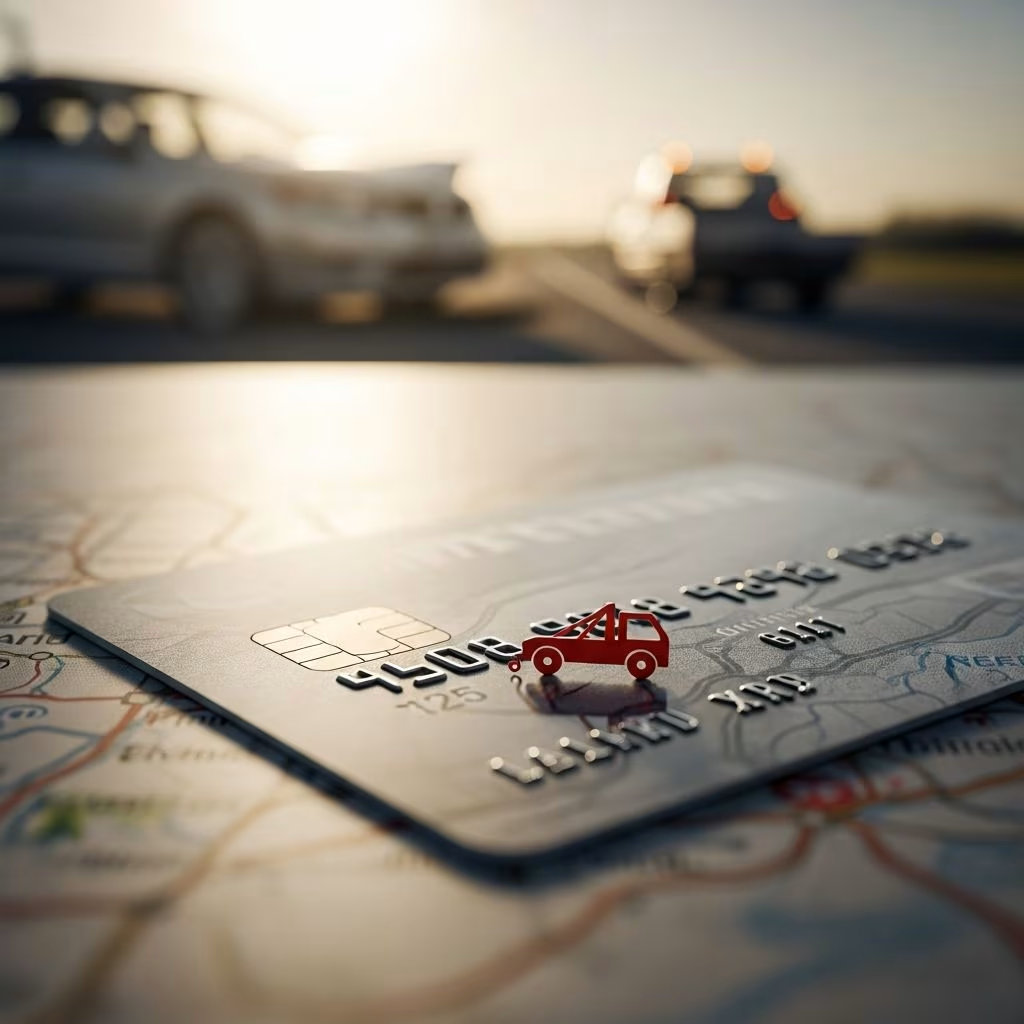
Credit cards frequently bundle roadside assistance as a perk, granting access to help for issues like flat tires, dead batteries, or lockouts without needing a separate membership. This benefit operates on a pay-per-use model, where services dispatch via a dedicated hotline, often covering personal vehicles up to certain weights.
Understanding Roadside Assistance Perks on Credit Cards
Roadside assistance through credit cards provides a safety net for drivers facing unexpected breakdowns. Unlike annual memberships, these perks activate only when needed, potentially saving money for infrequent users. Services typically include towing short distances, battery jumps, fuel delivery, tire changes, and lockout help, available 24/7 across the U.S. and sometimes Canada.
Eligibility hinges on your card’s network—Visa, Mastercard, or issuer-specific programs—and often applies to any non-commercial vehicle under 10,000 pounds. No enrollment is required; simply call the provided number during an emergency.
How to Confirm Your Card’s Coverage
To verify if your credit card includes this benefit, start by reviewing your online account dashboard or mobile app under benefits sections. Download the official benefits guide for detailed terms. If unclear, contact customer service using the number on your card’s back—they can confirm availability and hotline details instantly.
- Log into your issuer’s portal and search for “roadside” or “dispatch.”
- Check card network perks (e.g., Visa Signature includes standard dispatch).
- Call support for verbal confirmation and service phone number.
Step-by-Step Process for Using the Service
Activation is straightforward: dial the dedicated roadside hotline (e.g., 1-800-847-2869 for many Visa cards or Chase-specific lines). Provide your card details, location, vehicle info, and issue description. A provider from the network arrives, performs the service, and charges a flat fee to your card—no upfront payment needed.
- Park safely and note your exact location (use GPS if possible).
- Call the hotline and verify eligibility with your card number.
- Describe the problem; dispatch confirms service type and estimated time.
- Service completes; fee posts later (typically $50–$80 per incident).
Keep your card handy, as providers verify benefits on-site. Coverage excludes key replacement or fuel costs beyond delivery.
Core Services Typically Provided
Most programs offer a standard set of emergency responses, with limits to keep costs predictable. Here’s a breakdown:
| Service | Common Coverage | Typical Limits |
|---|---|---|
| Towing | Up to 5 miles to a repair shop | $50–$100 per call |
| Battery Jump | Boost for dead battery | Included in flat fee |
| Tire Change | Swap with spare (must have one) | Requires good spare tire |
| Fuel Delivery | Up to 2–5 gallons | Fuel cost extra |
| Lockout | Unlock vehicle | No key making |
| Winching | Extract from ditch (within 100 ft of road) | County-maintained roads only |
Premium cards like Chase Sapphire Reserve® extend to 4 uses/year up to $50/incident via Cross Country Motor Club, covering rentals too.
Top Credit Card Issuers Offering These Benefits
Chase Cards
Chase provides tiered roadside perks. Premium options like Sapphire Reserve include complimentary dispatches (up to $50 x4/year) for jumps, tires, fuel, towing, and lockouts via 1-866-860-7978. Basic Visa cards charge per use (~$59.95 base + service) via 1-800-847-2869, covering up to 5-mile tows and 10,000 lb vehicles.
Capital One
Eligible Capital One cards link to network dispatch without enrollment. Call the card-back number or benefits-specific line for towing, tire help, or fuel. Fees are pay-per-use but negotiated lower than street rates, ideal for travelers.
Visa and Bank of America
All Visa Signature cards feature Roadside Dispatch®: pay-per-use for standard services. Bank of America integrates this for many cards, emphasizing convenience over subscriptions.
Other Providers
Wells Fargo and Mastercard cards often include similar dispatch, with 5-mile tows for mechanical failures. Always check your benefits guide.
Costs and Limitations Explained
These benefits shine for occasional needs: no annual fees, just per-incident charges ($50–$80 average). However, frequent users may exceed value vs. memberships. Exclusions: commercial vehicles, off-road winching beyond limits, parts/labor beyond basics, or international use outside specified areas.
Premium cards cap free uses (e.g., Chase’s 4/year), reverting to fees afterward. Fees post to your statement; track via app.
Comparing to AAA, Insurance, and Standalone Plans
| Option | Cost Structure | Best For | Drawbacks |
|---|---|---|---|
| Credit Card | Pay-per-use ($50–$80/call) | Infrequent drivers | |
| AAA Membership | $50–$150/year | Frequent travel, extras like discounts | Upfront cost even if unused |
| Auto Insurance Add-on | $10–$30/year | Policy bundlers | Limited to insured vehicle |
Credit perks suit low-mileage or backup needs, avoiding subscriptions. AAA excels for perks like trip interruption. Use cards for rentals or second cars.
Who Benefits Most from Card-Based Services
- Commuters driving 20+ miles daily.
- Vacation drivers without AAA.
- Owners of older vehicles prone to breakdowns.
- Rental car users needing quick dispatch.
- Those avoiding membership fees.
If you’re mechanically unskilled or travel solo, this perk adds security without commitment.
Pro Tips for Maximizing Value
- Save hotlines in your phone (e.g., Visa: 1-800-847-2869).
- Carry a spare tire/jumper cables as backups.
- Combine with insurance for comprehensive coverage.
- Track usage to avoid premium caps.
- For internationals, confirm Canada/Mexico extension.
Frequently Asked Questions
Does every credit card have roadside assistance?
No, but many Visa Signature, premium Chase, and Capital One cards do. Check your benefits guide.
Is it free with my card?
Usually pay-per-use; some premium cards offer limited free incidents.
Can I use it for rentals?
Yes, for eligible vehicles under weight limits.
What if I’m out of network?
Coverage is nationwide via partners like Cross Country.
How much are typical fees?
$50–$80 base + service add-ons.
Final Thoughts on Leveraging Card Perks
Credit card roadside assistance turns everyday plastic into an emergency lifeline, balancing cost and convenience for modern drivers. Review your card today to ensure you’re prepared for the road ahead.
References
- How to use your credit card’s roadside assistance — Wells Fargo. 2023. https://creditcards.wellsfargo.com/how-to-use-credit-card-roadside-assistance/
- Credit Cards with Roadside Assistance: What to Know — NerdWallet. 2024-02-01. https://www.nerdwallet.com/travel/learn/roadside-assistance-benefits-from-your-credit-card
- Capital One Roadside Assistance Benefits — Capital One. 2023. https://www.capitalone.com/learn-grow/more-than-money/roadside-assistance-101-capital-one/
- Roadside Dispatch® — Visa. 2022. https://usa.visa.com/content/dam/VCOM/global/support-legal/documents/roadside-dispatch-card-benefit.pdf
- How to Get Roadside Assistance with a Credit Card — Chase. 2024. https://www.chase.com/personal/credit-cards/education/rewards-benefits/how-to-get-roadside-assistance-with-a-credit-card
- Roadside Dispatch® — Bank of America. 2023. https://business.bofa.com/content/dam/boamlimages/documents/PDFs/visa_roadside_assistance.pdf
- Roadside Dispatch® | Visa — Visa. 2023. https://usa.visa.com/content/dam/VCOM/global/support-legal/documents/roadside-dispatch-card-benefit.pdf
This article is general information, not personal financial advice. Consider your own situation, or speak with a licensed adviser, before acting on it.