

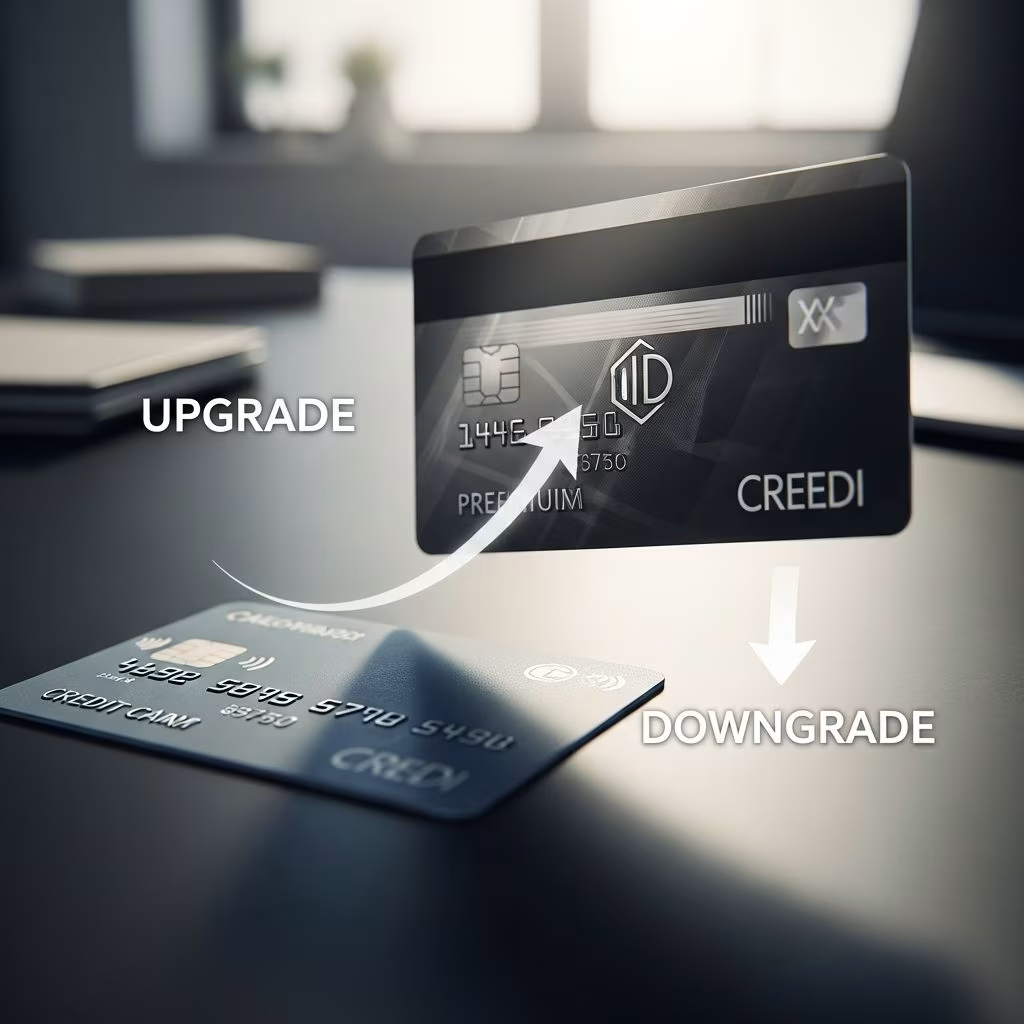
Adjusting your credit card through an upgrade or downgrade allows you to align your card with changing financial needs while preserving your credit history. This approach avoids the drawbacks of applying for new cards or closing accounts abruptly.
Understanding Credit Card Product Changes
Credit card issuers offer product changes as a way to switch between cards in the same family without opening a new account. An **upgrade** typically involves moving to a higher-tier card with enhanced features, such as superior rewards rates or exclusive benefits, often paired with a higher annual fee. Conversely, a **downgrade** shifts you to a basic version with fewer perks but lower or no annual fees.
These changes maintain your account’s age, credit limit, and payment history, which are crucial for credit scoring models like FICO. No hard inquiry appears on your credit report, unlike new applications.
Key Benefits of Upgrading Your Card
Upgrading makes sense when your spending habits evolve toward categories that yield higher value from premium cards. For instance, frequent travelers might benefit from lounge access or travel credits on upgraded versions.
- Enhanced Rewards: Switch to cards offering better cash back, points, or miles on groceries, dining, or flights.
- Premium Perks: Gain purchase protections, extended warranties, or concierge services not available on basic cards.
- Credit Preservation: Retain your credit line to keep utilization low, supporting a strong score.
However, upgrades often require the account to be open for at least 12 months, especially if fees increase.
When Downgrading Pays Off
Downgrading is ideal if premium features no longer justify costs, such as when travel plans diminish or budgets tighten. It helps retain account longevity without fee burdens.
- Fee Reduction: Move to no-fee cards and potentially get refunds on prepaid annual fees.
- Simplified Portfolio: Consolidate to cards matching current spending without closing accounts.
- Avoid Closure Risks: Prevent score dips from reduced available credit or shorter history.
Issuers may allow downgrades sooner than upgrades, but check for perk forfeitures like intro APRs.
Potential Drawbacks to Watch For
While product changes are low-risk, they come with trade-offs. Upgrades forfeit new welcome bonuses, which can be substantial. Downgrades might strip valuable protections or limit future bonus eligibility within the card family.
| Action | Pros | Cons |
|---|---|---|
| Upgrade | Better rewards, perks; no inquiry | No bonus; higher fees; limited options |
| Downgrade | Lower fees; history preserved | Lost perks; no bonus; points transfer issues |
Always verify if rewards points transfer seamlessly, as some ecosystems require action before changes.
Impact on Your Credit Score
Product changes generally do not harm credit scores. Your account stays open, preserving average age of accounts (15% of FICO) and credit mix. Utilization remains stable without new credit lines from fresh approvals.
Closing a card instead reduces available credit, potentially raising utilization (30% of FICO). New applications add inquiries (10% of FICO), temporary dips of 5-10 points.
- Open accounts help length of history.
- No hard pulls mean no inquiry ding.
- Stable limits control utilization.
Step-by-Step Guide to Requesting a Change
Contact your issuer via phone, app, or online chat. Be polite and specific about desired card.
- Review Eligibility: Confirm account age and available options in your family.
- Call Customer Service: Ask for upgrade/downgrade options; mention reasons like fee concerns.
- Compare Offers: Evaluate fees, rewards, APRs.
- Confirm Details: Ensure points transfer, fee refunds, new card arrival.
- Monitor Account: Update autopay if needed; track score post-change.
Expect a new card in 7-14 days, sometimes with updated number.
Strategic Timing for Changes
Time changes around annual fee dates for refunds. Wait 12 months post-opening to avoid bonus clawbacks. Align with spending shifts, like post-travel or budget cuts.
Avoid if chasing new bonuses elsewhere, as issuers track family holdings.
Alternatives to Product Changes
- Apply New: For bonuses, but accept inquiry and history reset.
- Cancel: Last resort; hurts if high utilization.
- Negotiate: Waive fees via retention offers.
Real-World Scenarios
Scenario 1: High-fee travel card unused? Downgrade to cash back no-fee version, refund fee, keep history.
Scenario 2: Basic card for heavy diners? Upgrade to 4% grocery rewards, justify fee with value.
Scenario 3: Multiple premiums? Downgrade extras to streamline, focus on best fits.
Frequently Asked Questions
Does upgrading trigger a credit inquiry?
No, product changes within families avoid hard pulls.
Can I downgrade immediately after signup?
Often yes for lower-fee cards, but risk losing intro offers; wait 12 months ideally.
What if no downgrade options exist?
Consider cancellation or new application, weighing score impacts.
Do points carry over?
Usually yes, but confirm with issuer to avoid losses.
Is there a bonus for upgrades?
Rare; uncommon for downgrades.
Making the Right Choice for Your Wallet
Evaluate fees vs. benefits annually. Calculate net value: if perks exceed costs, upgrade; otherwise, downgrade. Tools like rewards calculators help quantify.
Regular reviews prevent fee traps, optimize rewards, safeguard scores.
References
- How to Upgrade Your Credit Card (But Should You?) — Daily Drop. 2024. https://www.dailydrop.com/pages/upgrading-your-credit-card
- How to know when to upgrade or downgrade your credit card — Credit Karma. 2024. https://www.creditkarma.com/credit-cards/i/credit-card-downgrade-upgrade
- When & How To Downgrade Your Credit Cards (Without Hurting Your Credit) — The Maxwells Travel. 2025-06-03. https://themaxwellstravel.com/2025/06/03/when-how-to-downgrade-your-credit-cards-without-hurting-your-credit/
- Should You Upgrade or Downgrade Your Credit Card? — Experian. 2024. https://www.experian.com/blogs/ask-experian/should-you-upgrade-or-downgrade-credit-card/
- When can you downgrade your credit card? — The Points Guy. 2024. https://thepointsguy.com/credit-cards/downgrade-card-when/
- How to Upgrade or Downgrade Your Credit Card — NerdWallet. 2024. https://www.nerdwallet.com/credit-cards/learn/how-to-upgrade-downgrade-your-credit-card
- Does Upgrading Your Credit Card Hurt Your Credit Score? — Bankrate. 2024. https://www.bankrate.com/credit-cards/advice/does-a-credit-card-upgrade-hurt-score/
This article is general information, not personal financial advice. Consider your own situation, or speak with a licensed adviser, before acting on it.


