

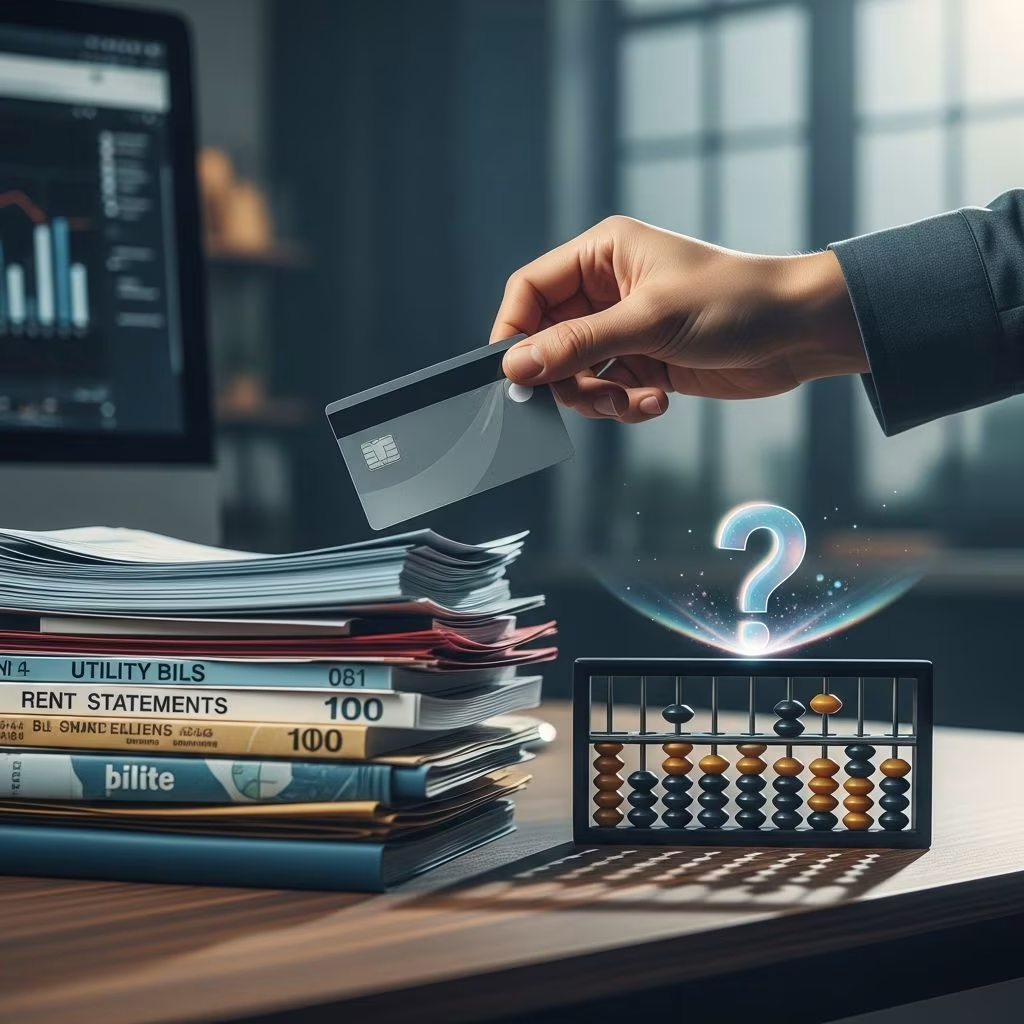
Using credit cards exclusively for bills and recurring payments offers a structured approach to managing finances, potentially earning rewards while building credit history. However, this strategy requires discipline to avoid debt accumulation and maximize benefits.
Understanding Recurring Payments on Credit Cards
Recurring payments involve authorizing merchants to automatically charge a credit card at set intervals, such as monthly for utilities or subscriptions. This setup ensures timely payments without manual intervention, reducing late fees and simplifying budgeting.
The process starts with customer authorization, where card details and consent for regular charges are provided. Businesses then schedule automated billing through payment processors, notifying users post-transaction for transparency. Common examples include streaming services, gym memberships, and phone bills.
Advantages of Dedicating Cards to Automatic Charges
Limiting a credit card to bills concentrates activity, making it easier to monitor statements for anomalies. Designate one card solely for these transactions to streamline review and detect unauthorized charges promptly.
- Convenience: Automation eliminates forgetfulness, ensuring consistent payments.
- Rewards Accumulation: Earn cashback or points on predictable expenses without extra spending.
- Credit Score Boost: On-time payments improve payment history, a key factor in credit scoring models.
- Fraud Protection: Credit cards offer dispute rights superior to debit, safeguarding against billing errors.
Businesses benefit too, with steady cash flow and lower administrative costs, often passing value via discounts.
Potential Drawbacks and Hidden Risks
While convenient, this approach can lead to unchecked spending if balances aren’t paid fully monthly. Recurring charges might exceed budgets, especially with variable amounts like utilities.
| Pros | Cons |
|---|---|
| Automated payments prevent lapses | Risk of overspending on autopilot |
| Stronger buyer protections | Interest accrues if not paid in full |
| Rewards on essentials | Potential for forgotten subscriptions |
| Simplified tracking | Card expiration disrupts if not updated |
Expired cards pose issues; without updates, payments fail, incurring fees. Account updater tools from networks like Visa help mitigate this.
Building and Maintaining Strong Credit
Consistent on-time payments via automation positively impact credit utilization and history. Aim to keep utilization under 30% by paying balances fully before statements close. Using one card for bills demonstrates reliability to lenders.
However, sole reliance on recurring charges limits credit mix diversity. Incorporating occasional non-recurring use can strengthen profiles, but avoid if discipline is lacking.
Maximizing Rewards from Everyday Bills
Select cards with bonuses on utilities, telecom, or subscriptions. For instance, cards offering 2-5% back on these categories turn necessities into earnings. Track rewards to redeem optimally, offsetting annual fees.
- Compare flat-rate vs. category-specific cards.
- Pair with sign-up bonuses for amplified value.
- Monitor expiration on points to avoid waste.
Best Practices for Safe Implementation
To succeed, set alerts for charges and review statements monthly. Use a dedicated card, update details promptly upon renewal, and schedule payments to pay full balances automatically.
Choose billing dates post-payday to ensure funds availability. For variable bills, opt for plans covering minimums only, paying extras manually.
- Authorize only trusted merchants.
- Enable transaction notifications.
- Review and cancel unused subscriptions quarterly.
- Use secure processors compliant with PCI DSS.
Comparing Credit Cards to Other Payment Methods
Debit via ACH avoids debt but lacks rewards and robust disputes. Bank debits reduce churn from expired cards, with lower failure rates (0.5% vs. 5-10% for cards).
| Method | Protection | Rewards | Automation Ease |
|---|---|---|---|
| Credit Card | High (disputes easy) | Yes | High |
| ACH/Debit | Medium | No | High |
| Bank Direct | High | No | Medium |
Credit shines for rewards seekers, while debit suits debt-averse users.
Managing Multiple Recurring Transactions
Centralize via apps tracking all subscriptions. Categorize by priority: essentials first. Negotiate with providers for card acceptance if limited.
Handle failures with retry logic in processors, minimizing disruptions.
Fraud Prevention in Automated Billing
Monitor for anomalies; recurring nature aids spotting irregularities. Use virtual cards for high-risk subscriptions, limiting exposure. Networks’ fraud tools add layers.
Long-Term Financial Planning
Integrate into budgets allocating fixed percentages to bills. Scale up as income grows, paying aggressively to free cards for larger rewards. Periodically reassess strategy amid life changes.
This method fosters habits like full payments, indirectly boosting savings via rewards reinvestment.
Frequently Asked Questions
Is it safe to use credit cards for all bills?
Yes, with monitoring and full payments; protections exceed debit.
Does this improve my credit score?
Yes, via on-time history and low utilization.
What if my card expires?
Update manually or use account updaters.
Can I earn rewards on utilities?
Many cards offer bonuses; shop for best fits.
How to cancel recurring charges?
Contact merchant and block via issuer if needed.
Conclusion
Dedicating credit cards to bills balances convenience, rewards, and credit health when managed proactively. Weigh personal discipline before adopting.
References
- How Recurring Credit Card Payments Work: A Step-by-Step Guide — Wise. 2023. https://wise.com/us/blog/recurring-credit-card-payments
- Recurring Credit Card Payments 101: How Businesses Can Use Them Strategically — Stripe. 2024. https://stripe.com/resources/more/recurring-credit-card-payments-101-how-businesses-can-use-them-strategically
- Best Practices When Processing Recurring Payments — Chargeback Gurus. 2023. https://www.chargebackgurus.com/blog/best-practices-when-processing-recurring-payments
- How to Use Recurring Credit Card Billing for Your Small Business — PaySimple. 2023. https://paysimple.com/blog/how-to-use-recurring-credit-card-billing/
- Recurring Billing: Best Practices for Subscription Models — Solidgate. 2024. https://solidgate.com/blog/recurring-billing-101-how-to-get-it-right/
- Best Practices for Taking Recurring Payments — GoCardless. 2024. https://gocardless.com/en-us/guides/posts/recurring-payments-guide-subscriptions/
This article is general information, not personal financial advice. Consider your own situation, or speak with a licensed adviser, before acting on it.


