

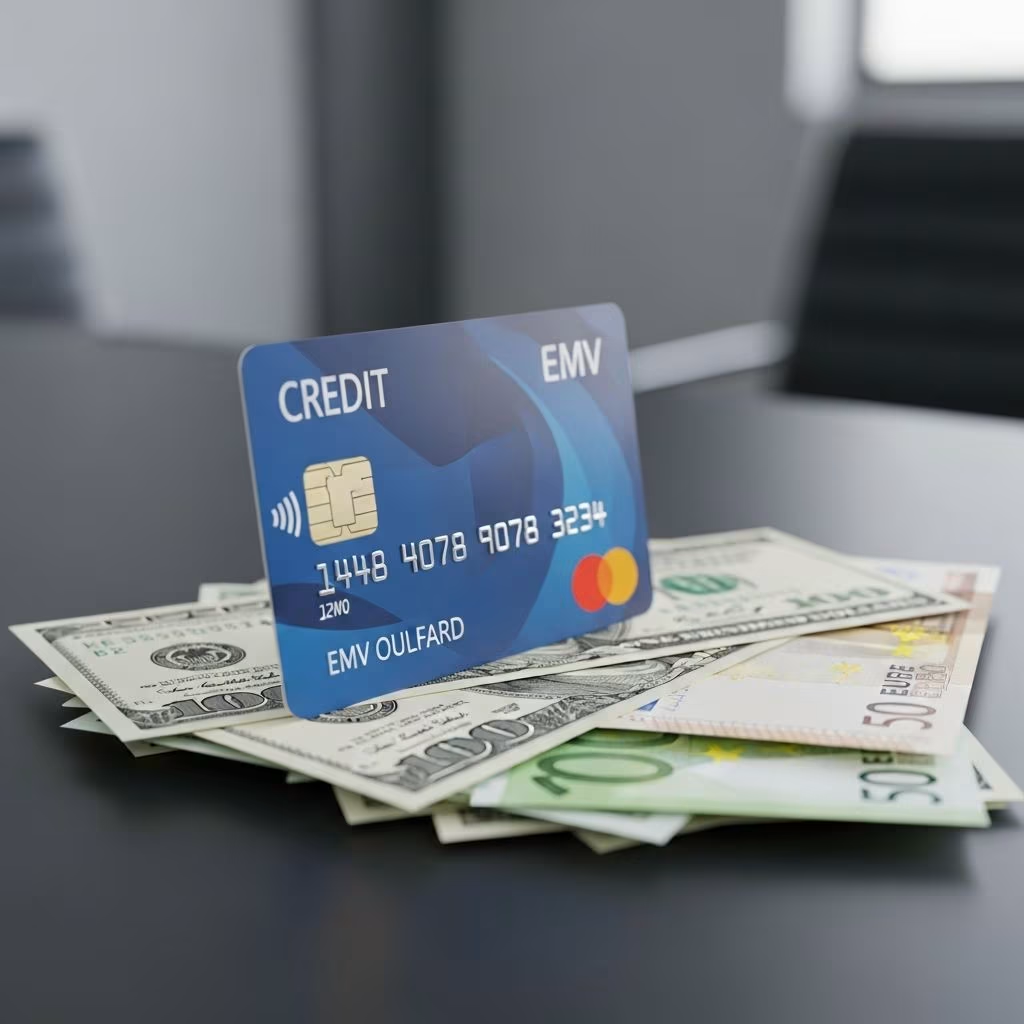
Credit cards serve as versatile financial instruments that enable purchases on credit, with repayment terms that can include interest if balances linger. They offer convenience for transactions while aiding in credit history development when managed prudently. This guide delves into their core mechanics, classifications, advantages, pitfalls, and selection strategies.
Core Mechanics of Credit Cards
At their essence, credit cards grant a revolving line of credit from issuers like banks or financial entities. Users receive a physical card with a magnetic stripe or chip for swiping or tapping at merchants. The issuer sets a credit limit based on factors such as income, credit score, and history.
When a purchase occurs, the issuer pays the merchant, and the cardholder owes that amount. Monthly statements detail transactions, minimum payments, due dates, and any accrued interest. Paying the full balance by the due date avoids interest; otherwise, the annual percentage rate (APR) applies to the remaining balance.
- Credit limit: Maximum borrowing amount, often $500 to $20,000+ depending on profile.
- APR: Annual interest rate, typically 15-30% variable, tied to prime rate.
- Grace period: 21-25 days interest-free if full payment made.
- Minimum payment: Usually 1-3% of balance plus interest/fees.
Fees include annual charges ($0-$550), late payments ($25-$40), cash advances (3-5% + higher APR), and foreign transactions (1-3%). Understanding these prevents unexpected costs.
Primary Categories of Credit Cards
Credit cards diversify into types tailored to user profiles, from beginners to high spenders. Each emphasizes distinct benefits like rewards or low costs.
Secured Credit Cards for Credit Builders
Secured cards require a refundable deposit matching the credit limit, ideal for those with limited or poor credit. This collateral mitigates issuer risk. Responsible use—timely payments, low utilization—can lead to unsecured card upgrades.
- Deposits: $200-$2,500, refundable upon closure in good standing.
- Best for: Newcomers, rebuilders; reports to bureaus like Experian.
- Drawbacks: Lower limits, potential fees.
Unsecured Credit Cards for Established Users
These dominate without deposits, relying on creditworthiness for approval. They span basic to premium, offering higher limits and perks. Good credit (670+ FICO) unlocks better terms.
Low-Interest and 0% Introductory Cards
Designed for debt management, these feature below-average APRs or promotional 0% periods (12-21 months) on purchases/balance transfers. Savings accrue by paying off before promo ends.
| Card Type | Typical APR | Best Use Case |
|---|---|---|
| Low-Interest | 10-15% | Carrying balances |
| 0% Intro | 0% for 12-21 mos | Big purchases/debt consolidation |
| Standard | 15-25% | Everyday spending (paid off) |
Rewards-Driven Credit Cards
Rewards cards incentivize spending via cash back, points, or miles redeemable for value. They suit disciplined users who pay balances monthly to maximize gains.
Cash Back Cards
Earn 1-5% back on purchases, flat-rate or tiered (e.g., 3% groceries, 2% gas). Redemption: statement credits, checks, deposits. Example: 2% on all like Citi Double Cash.
Travel Rewards Cards
Accumulate points/miles for flights, hotels, rides. Perks: lounge access, no foreign fees, insurance. Co-branded (airline/hotel) boost category earnings.
- Visa tiers: Traditional (basic), Signature (enhanced), Infinite (premium).
- Hotel cards: Free nights, upgrades (e.g., Marriott Bonvoy).
Other Rewards Variants
Store cards offer retailer discounts but higher APRs, limited use. Premium cards charge annual fees ($95+) for elite perks like event access.
Business and Specialized Cards
Business cards track expenses, integrate accounting, offer higher limits. Student cards ease entry for young adults.
Advantages and Risks of Credit Cards
Key Benefits
- Convenience: Contactless payments, online shopping.
- Credit building: Positive history boosts scores.
- Protections: Fraud liability ($0), purchase guarantees.
- Rewards: Free money/perks on spending.
Potential Downsides
High interest erodes savings; overspending leads to debt cycles. Fees compound issues. Average household debt: $6,000+. Mitigation: Pay full, track utilization under 30%.
Selecting Your Ideal Credit Card
Match to habits: Rewards for payers-off, low-APR for carriers. Assess fees vs. perks, credit needs.
- Review score via free reports.
- Compare APR, rewards, fees.
- Check issuer reputation.
- Avoid too many applications (hard inquiries).
| Spending Habit | Recommended Type |
|---|---|
| Groceries/Dining | Cash back tiered |
| Frequent Travel | Travel rewards |
| Building Credit | Secured |
| Debt Paydown | 0% intro |
Best Practices for Responsible Usage
Automate payments, review statements monthly, redeem rewards timely. Dispute errors promptly. Diversify cards sparingly for coverage.
Frequently Asked Questions (FAQs)
What raises my credit limit?
Timely payments, low utilization, income growth; request via issuer.
Are rewards worth annual fees?
Yes if perks exceed fee; calculate yearly value.
How to avoid interest?
Pay full balance within grace period monthly.
What’s a balance transfer?
Moving debt to lower-APR card, often 0% promo.
Do prepaid cards build credit?
No; they lack reporting unlike secured cards.
Conclusion: Empower Your Finances
Credit cards amplify financial flexibility when wielded wisely. Choose based on goals, monitor usage, and evolve with needs for lasting benefits.
References
- 9 Types of Credit Cards You Should Know — Citizens Bank. 2023. https://www.citizensbank.com/learning/which-credit-card-should-you-get.aspx
- Find and compare Visa Credit cards — Visa. 2025-02-01. https://www.visa.com/en-us/personal/cards/credit
- Different Types Of Credit Cards — Bankrate. 2025-01-15. https://www.bankrate.com/credit-cards/advice/different-types-of-credit-cards/
- 7 Different Types of Credit Cards — Experian. 2024-11-20. https://www.experian.com/blogs/ask-experian/what-are-the-different-types-of-credit-cards/
- What Are The Types of Credit Cards — TD Bank. 2024-12-10. https://www.td.com/us/en/personal-banking/learning/types-of-credit-cards
This article is general information, not personal financial advice. Consider your own situation, or speak with a licensed adviser, before acting on it.


