

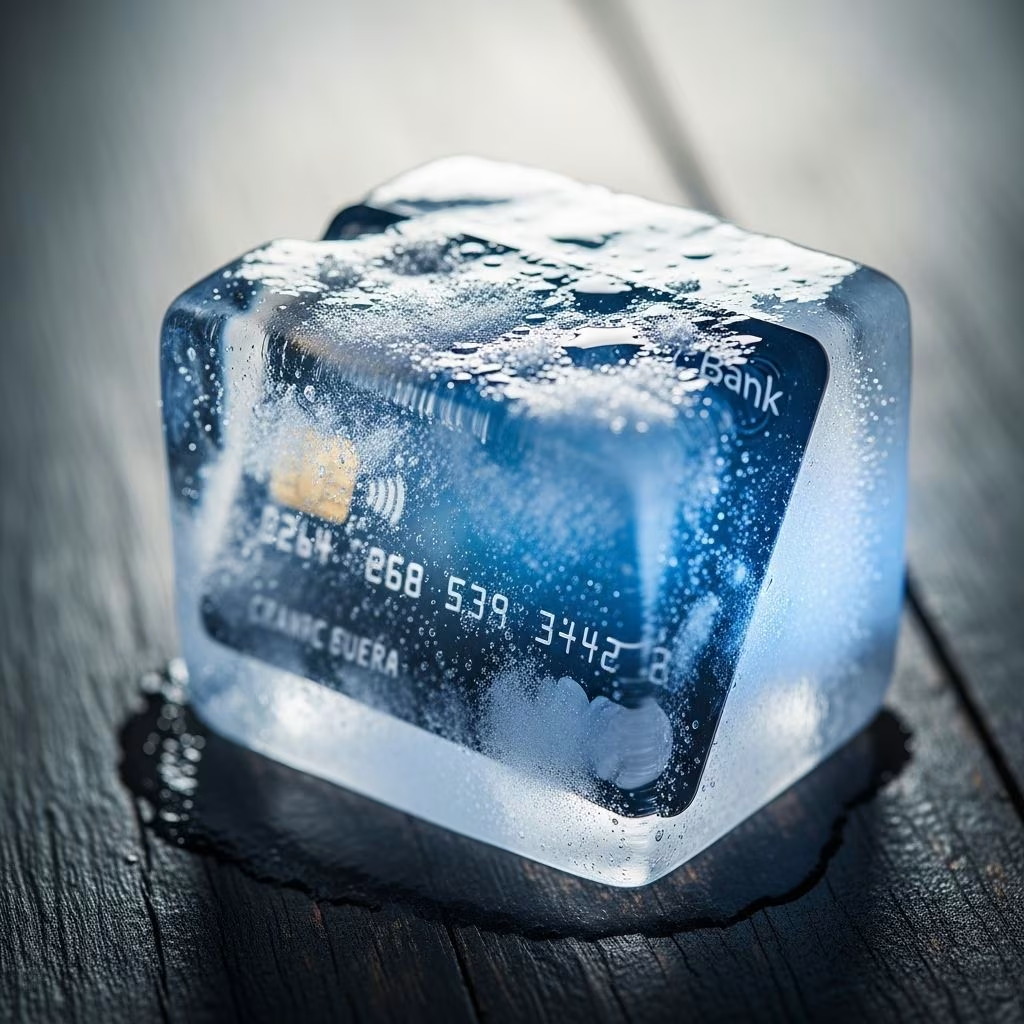
A credit freeze is one of the most effective ways to protect your credit from identity thieves who might try to open new accounts in your name. By freezing your credit reports at the three major credit bureaus—Equifax, Experian, and TransUnion—you prevent lenders from accessing your credit history, making it nearly impossible for fraudsters to get approved for credit using your information. This service is completely free nationwide and can be done online, by phone, or mail. It’s especially crucial after data breaches like the 2017 Equifax incident that exposed 147 million Americans’ data.
Freezing your credit doesn’t affect your credit score, and you can temporarily lift the freeze whenever you need to apply for credit, a loan, or even rent an apartment. Everyone—from parents protecting minors to seniors safeguarding their finances—should consider this simple security measure. This guide covers everything you need to know, including differences from credit locks and fraud alerts, step-by-step instructions, and pro tips.
What Is a Credit Freeze?
A credit freeze, also known as a security freeze, restricts access to your credit report. When a freeze is in place, the bureaus will not release your credit report to most third parties, such as banks, credit card issuers, or auto lenders, without your explicit permission. This blocks new account fraud but allows existing creditors to view your report for account management.
- Key benefits: Free, indefinite until lifted, doesn’t impact your score, highly effective against synthetic identity fraud.
- Limitations: Doesn’t stop access for background checks on employment or insurance (use fraud alerts for that), and you must manage freezes separately at each bureau.
Since 2018, federal law mandates that credit freezes are free for consumers, eliminating previous state-varying fees up to $10. Credit freezes remain active until you lift them, unlike fraud alerts which expire.
Credit Freeze vs. Credit Lock vs. Fraud Alert
Understanding the differences helps you choose the right protection. Here’s a comparison:
| Feature | Credit Freeze | Credit Lock | Fraud Alert |
|---|---|---|---|
| Cost | Free | May have fees for extras | Free |
| Duration | Indefinite | Indefinite, app-managed | 1 year (initial), 7 years (extended) |
| Access Method | Separate per bureau | Often app-based, extras like alerts | Request at one bureau, shared |
| Blocks Credit Pulls | Yes, fully | Yes, similar | No, requires verification |
| Extras | None standard | ID theft insurance, scores | Identity verification by businesses |
Credit locks function like freezes but are often app-enabled with bells and whistles like daily scores or fraud support. They’re bureau-specific and may cost for premium features. Fraud alerts notify businesses to verify your identity before extending credit but don’t block report access. Types include initial (1 year), extended (7 years for victims), and active-duty military.
Why You Should Freeze Your Credit
Identity theft affects millions annually, with criminals using stolen data to rack up debt in victims’ names. The FTC reports over 1 million identity theft complaints yearly, many credit-related. Freezing is proactive: post-Equifax breach, freezes surged as a top recommendation.
- Prevents new fraudulent accounts.
- Free and reversible.
- Ideal for children (minors get free freezes via parent) and seniors.
- Combines well with monitoring services.
Even if you’ve never been a victim, data breaches make everyone vulnerable. Freezing adds a critical layer beyond chip cards or passwords.
How to Freeze Your Credit with Equifax
Equifax offers online, phone, and mail options. Create a myEquifax account for easiest management.
- Online: Visit equifax.com, sign up, verify identity, and select freeze.
- Phone: Call 1-800-349-9960 (888-298-0045 for lifts). Provide personal info for PIN.
- Mail: Download form, include ID copies, mail to Equifax Information Services LLC, P.O. Box 105788, Atlanta, GA 30348.
Receive a confirmation PIN for lifts. Track status via app.
How to Freeze Your Credit with Experian
Experian emphasizes quick online freezes.
- Online: Go to experian.com/freeze, create account, answer questions, freeze instantly.
- Phone: 1-888-397-3742 (888-397-3743 lifts). 4-digit PIN issued.
- Mail: Form to Experian Security Freeze, P.O. Box 9554, Allen, TX 75013.
Get a freeze confirmation number immediately online.
How to Freeze Your Credit with TransUnion
TransUnion provides a user-friendly portal.
- Online: transunion.com/credit-freeze, register, verify, add freeze.
- Phone: 1-888-909-8872 (800-916-8800 lifts). Security PIN sent.
- Mail: Form to TransUnion, P.O. Box 160, Woodlyn, PA 19094.
Manage multiple freezes via one dashboard.
How to Freeze Credit for a Minor or Incapacitated Adult
Parents/guardians can freeze for kids under 18 (or up to 25 if dependent students). Submit proof of authority and child’s docs.
- Equifax: Mail with birth certificate, parent ID.
- Experian/TransUnion: Similar, online options for parents.
For incapacitated adults, legal guardians use court orders. Free and vital since kids’ clean credit is prime theft target.
How to Lift a Credit Freeze (Temporarily or Permanently)
Lift for legit needs like mortgages. Options:
- Temporary: 1 hour online (most bureaus), or specific dates. Provide PIN.
- Permanent: Online/phone/mail with verification.
- Tiers: Some allow ‘partial’ lifts for select creditors via PIN sharing.
Plan ahead: lifts can take up to 3 days by mail/phone. Refreeze immediately after approval.
Credit Freeze FAQs
Does freezing my credit affect my score?
No, freezes don’t impact scores or existing credit lines.
How long does a freeze last?
Indefinitely, until you lift it.
Can I freeze online?
Yes, all three bureaus offer instant online freezes.
What if I’m a victim of identity theft?
Freeze plus file FTC report for extended alert.
Do I need to freeze at all three bureaus?
Yes, they’re independent.
Tips for Managing Your Credit Freeze
- Freeze all three immediately.
- Store PINs securely (password manager).
- Monitor reports free weekly at annualcreditreport.com.
- Combine with locks if you want app alerts.
- Update addresses/phone with bureaus.
- Refreeze post-application.
Regular checks catch issues early. Services like Credit Karma offer free monitoring alongside freezes.
Additional Protections Beyond Freezing
Layer defenses:
- Place fraud alerts.
- Sign up for free credit monitoring.
- Use strong, unique passwords; enable 2FA.
- Shred sensitive docs.
- Report breaches to FTC at identitytheft.gov.
References
- Credit Freeze vs. Credit Lock: Know the Difference — Marine Bank. 2023. https://www.marinebank.bank/credit-freeze-vs-credit-lock
- Good News for Consumers: Free Credit Freezes — Consumer Reports. 2018-05-24. https://www.consumerreports.org/credit-protection-monitoring/credit-freezes-are-now-free/
- Financial News | Wise Bread — Wise Bread. Accessed 2026. https://www.wisebread.com/topic/personal-finance/financial-news
This article is general information, not personal financial advice. Consider your own situation, or speak with a licensed adviser, before acting on it.


