

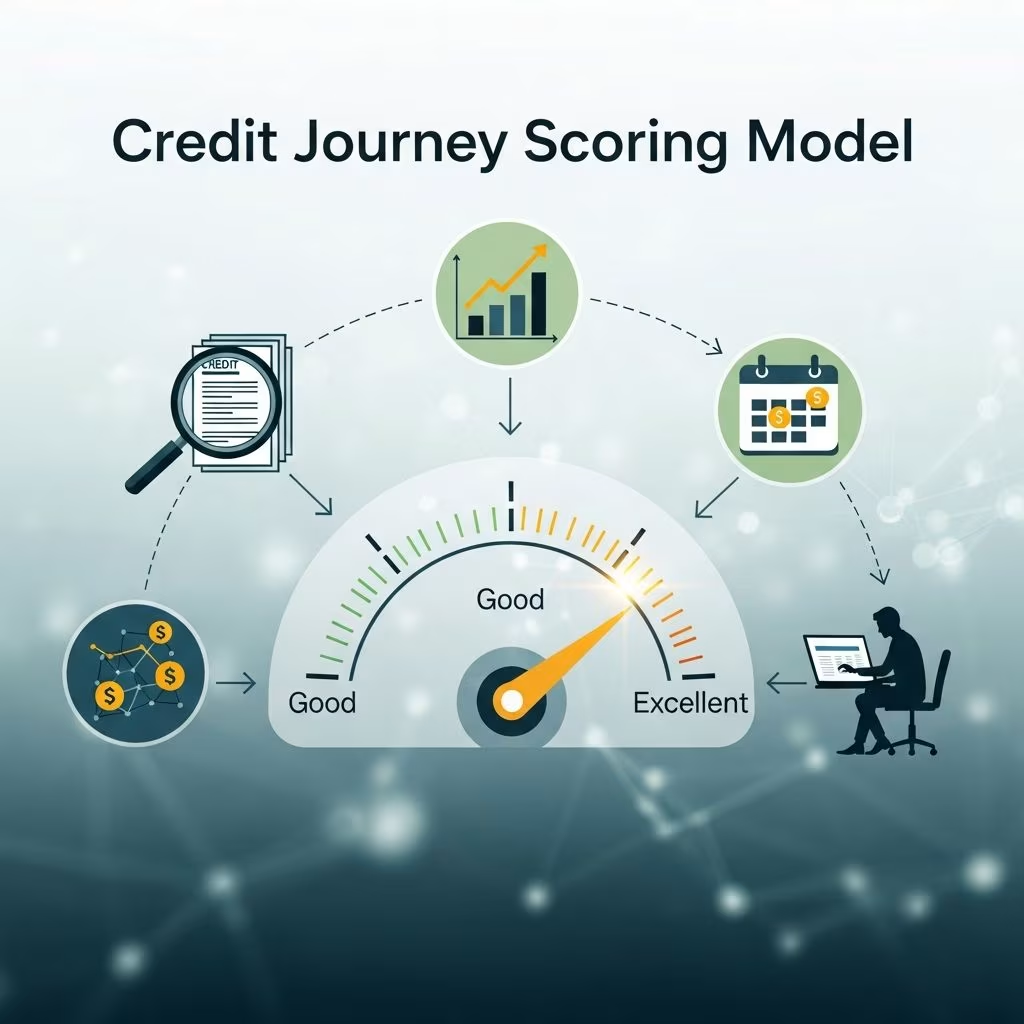
The Credit Journey scoring model serves as a vital tool for assessing creditworthiness, drawing from established frameworks like FICO and VantageScore to predict lending risk. This model analyzes credit reports from major bureaus such as Experian, Equifax, and TransUnion, generating scores typically between 300 and 850, where higher values signal lower risk to lenders.
Core Elements Driving Your Score
Understanding the foundational components of the Credit Journey model empowers users to make informed financial choices. These elements mirror industry standards, emphasizing responsible credit behavior over time.
- Payment Reliability: Consistent on-time payments form the cornerstone, accounting for the largest influence in most models.
- Debt Levels: Balancing owed amounts against available credit is crucial for maintaining a healthy profile.
- Account Age: Longer histories demonstrate sustained management skills.
- Credit Variety: A diverse mix of account types shows versatility in handling finances.
- Recent Activity: Limiting new applications prevents temporary dips in scores.
Deep Dive into Payment Reliability
Payment reliability stands out as the dominant factor, often comprising 35% or more of your total score in models like FICO. Lenders prioritize this because it directly reflects your commitment to obligations. On-time payments build trust, while delays—even by 30 days—can linger on reports for years, potentially dropping scores significantly.
Public records such as bankruptcies amplify negative impacts, as they indicate severe financial distress. To strengthen this area, set up automatic payments and reminders for due dates. If a lapse occurs, bring accounts current promptly to mitigate long-term damage.
| Payment Status | Impact on Score | Duration on Report |
|---|---|---|
| On-Time | Positive Boost | Indefinite (positive) |
| 30 Days Late | Moderate Drop | Up to 7 Years |
| Bankruptcy | Severe Decline | 7-10 Years |
Managing Debt and Utilization Effectively
Amounts owed rank second in importance, focusing on credit utilization—the ratio of balances to limits on revolving accounts like credit cards. Ideal utilization stays below 30%, as high ratios suggest overextension. For instance, if total limits are $10,000 and balances reach $4,000, utilization is 40%, which may harm scores.
Calculate yours by summing balances and dividing by total limits, then multiplying by 100. Pay down high-balance cards first and request limit increases judiciously to lower ratios without new inquiries. Installment debts like mortgages contribute less aggressively but still factor into overall debt load.
The Value of Credit History Length
A prolonged credit history signals experience and stability, with models examining average account age and the age of your oldest account. New users face challenges here, but patience pays off as histories grow. Avoid closing old accounts, as this shortens averages and reduces available credit.
Those building from scratch can start with secured cards, gradually transitioning to unsecured options to establish positive longevity.
Balancing Credit Mix for Optimal Results
Credit mix evaluates your handling of revolving (e.g., cards) and installment (e.g., loans) accounts. A healthy blend—say, one card and an auto loan—demonstrates broad competency, positively influencing 10-15% of scores. Over-reliance on one type limits this benefit.
Lenders appreciate diversity because it mirrors real-life borrowing scenarios. However, don’t open accounts solely for mix; natural progression through life events suffices.
Navigating New Credit Inquiries
Recent credit applications trigger hard inquiries, which temporarily lower scores and signal potential risk if frequent. Multiple inquiries in a short span, like shopping for a mortgage, are often treated as one, but unrelated pulls add up.
Soft inquiries, such as checking your own score, don’t affect calculations. Space out applications and use prequalification tools to minimize impacts.
Variations Across Scoring Models
Credit Journey incorporates elements from FICO and VantageScore, but weights differ slightly. FICO emphasizes payment history at 35% and utilization at 30%, while VantageScore balances factors more evenly, including trended data like payment patterns over 24 months.
Scores vary by bureau due to reporting differences; monitor all three regularly. Industry shifts, like including alternative data, continue evolving models for fairness.
Practical Strategies to Elevate Your Score
Improving under Credit Journey involves targeted actions:
- Automate payments to perfect reliability.
- Reduce balances to under 30% utilization monthly.
- Retain veteran accounts for history depth.
- Maintain a natural mix without forced openings.
- Limit inquiries to essential needs.
Track progress via free tools from bureaus. Positive changes appear within months, though negatives fade over years.
Common Myths and Realities
Myth: Checking your score hurts it. Reality: Soft pulls are harmless.
Myth: Closing cards boosts scores. Reality: It often raises utilization.
Myth: Rent/utilities don’t count. Reality: Newer models may include them.
Frequently Asked Questions
What is the range for Credit Journey scores?
Scores span 300-850, with 670+ deemed good for most lenders.
How often do scores update?
With credit report changes, typically monthly, though daily for some services.
Can I remove negative items early?
Dispute inaccuracies; valid negatives require time.
Does paid debt vanish immediately?
Accounts stay for 7-10 years, but status updates positively.
Are all models identical?
No, FICO dominates lending; VantageScore offers alternatives.
Long-Term Financial Wellness
Mastering Credit Journey fosters not just higher scores but enduring habits like budgeting and saving. Pair score monitoring with overall planning for loans, housing, and insurance advantages. Consistent effort yields compounding benefits, opening doors to premium rates and opportunities.
References
- How Is Your Credit Score Calculated? — Experian. 2023-10-15. https://www.experian.com/blogs/ask-experian/how-is-your-credit-score-determined/
- How Are Credit Scores Calculated? — Equifax. 2024-05-20. https://www.equifax.com/personal/education/credit/score/articles/-/learn/how-is-credit-score-calculated/
- How Is My Credit Score Calculated? — Navy Federal Credit Union. 2023-11-10. https://www.navyfederal.org/makingcents/credit-debt/understanding-credit-scores.html
- How is Credit Score Calculated? — Bank of America Better Money Habits. 2024-02-28. https://bettermoneyhabits.bankofamerica.com/en/credit/how-credit-score-is-calculated
- Factors That Influence Your Credit Score — Nebraska Bank. 2023-08-05. https://www.ne.bank/factors-that-influence-your-credit-score
This article is general information, not personal financial advice. Consider your own situation, or speak with a licensed adviser, before acting on it.


