

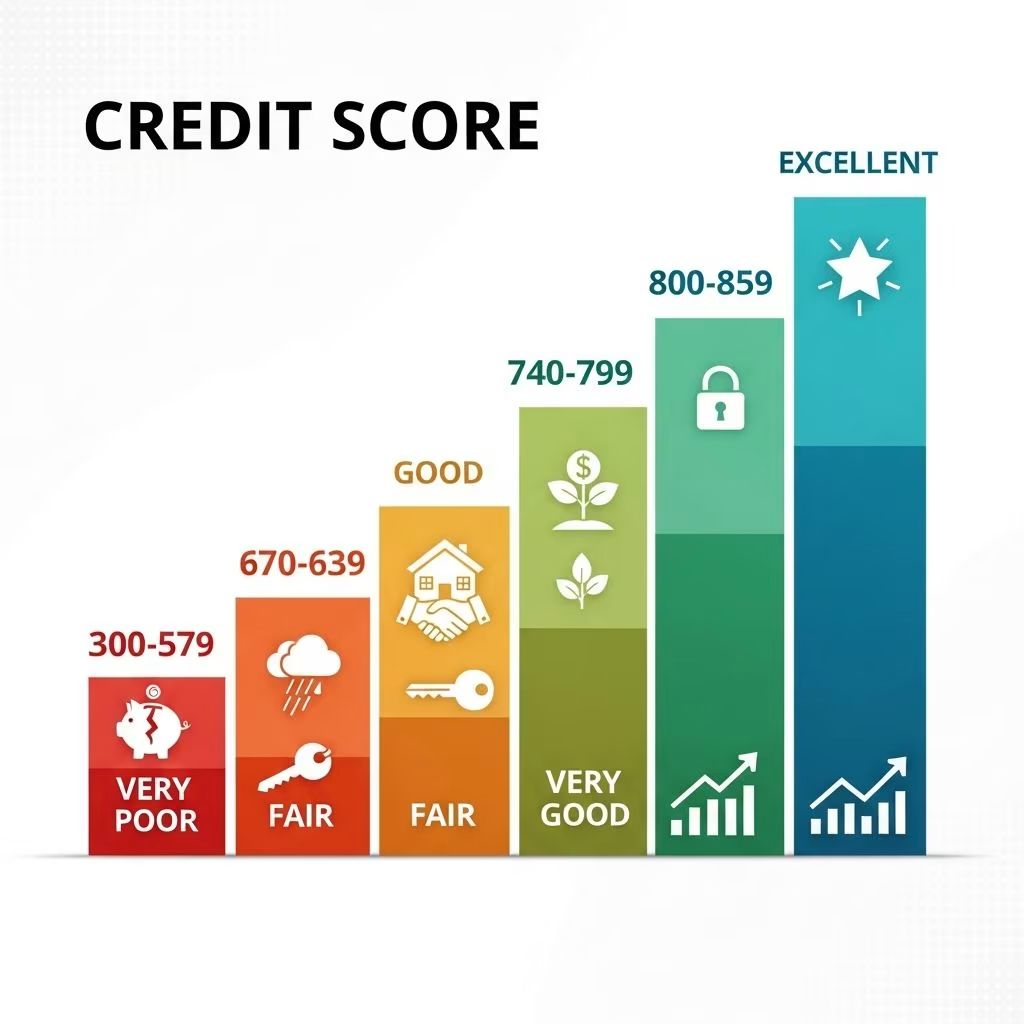
Your credit score is a three-digit number that summarizes how risky you appear to lenders, landlords, and sometimes even insurers and employers. Most common scoring models, like FICO and VantageScore, use a scale from 300 to 850, where higher scores indicate lower risk. Understanding credit score ranges can help you predict how lenders will view you, what interest rates you may qualify for, and what steps to take to improve your financial standing.
What Is a Credit Score?
A credit score is a numerical estimate of your credit risk, based primarily on data in your credit reports from Equifax, Experian, and TransUnion. These reports track your history of borrowing and repaying money, including credit cards, loans, and some other accounts.
Although there are many scoring formulas, FICO and VantageScore are the two most widely used models in the United States. Both weight similar types of information, such as payment history and amounts owed, but may treat the same data somewhat differently and can therefore generate slightly different scores.
Typical Credit Score Scale
- Lowest common score: 300
- Highest common score: 850
- Industry-specific FICO variants: some range from 250 to 900 (for example, specialized auto and bankcard scores).
Because many lenders use this kind of standardized range, where you fall within it has a direct impact on terms like interest rates, credit limits, and required deposits.
How Credit Scores Are Calculated
Although each scoring model uses its own formula, the main factors feeding into a typical consumer credit score are similar across FICO and VantageScore.
- Payment history: Whether you pay your credit accounts on time. Late payments, collections, and defaults generally hurt scores the most.
- Amounts owed: How much of your available credit you are currently using (often measured as credit utilization on revolving accounts).
- Length of credit history: How long your accounts have been open and the age of your oldest and newest accounts.
- New credit and inquiries: How many recently opened accounts and hard inquiries you have, which can signal increased risk if there are many in a short period.
- Credit mix: The variety of account types in your file, such as credit cards, mortgages, auto loans, and student loans.
No single factor entirely determines your score, but consistently paying on time and keeping balances relatively low versus limits are critical across virtually all scoring models.
Standard Credit Score Ranges
Many financial institutions and credit bureaus group scores into broad categories like poor, fair, good, very good, and excellent to simplify risk assessment. The most commonly cited ranges for general-purpose FICO scores and similar models are:
| Score Range | Category | General Risk Level |
|---|---|---|
| 300–579 | Poor | High risk; difficult to obtain new credit on affordable terms. |
| 580–669 | Fair | Subprime; may qualify for credit but usually with higher interest rates and fees. |
| 670–739 | Good | Lower risk; considered acceptable by many mainstream lenders. |
| 740–799 | Very good | Low risk; generally receives more favorable borrowing terms. |
| 800–850 | Excellent / Exceptional | Minimal risk; often qualifies for the best available rates and products. |
Poor Credit: 300–579
Scores in this range generally signal a history of serious credit difficulties, such as frequent late payments, recent defaults, collections, or very high utilization relative to limits.
- New credit is often hard to obtain without collateral or high fees.
- If approved, borrowers may face steep interest rates and strict terms.
- Improving payment habits and reducing debt can gradually move scores upward.
Fair Credit: 580–669
Fair scores are often labeled subprime, meaning lenders may still view you as higher risk, but not at the very highest risk level.
- You may qualify for many loans and credit cards, but often at above-average APRs.
- Security deposits for apartments, utilities, or cell phone contracts may be higher.
- Consistent on-time payments and lowering revolving balances can help move a fair score into the good range.
Good Credit: 670–739
A score in the good range indicates to many lenders that you are a relatively dependable borrower.
- Most mainstream lenders consider scores of 670 and above as acceptable or lower risk.
- Approval odds for standard credit cards, auto loans, and many mortgages are generally favorable, though not guaranteed.
- Interest rates and fees are often competitive, though not always the very best available.
Very Good Credit: 740–799
Very good scores reflect a long and positive credit history with few negative marks.
- Borrowers in this range typically qualify for most premium financial products.
- Lenders often offer lower-than-average interest rates, higher credit limits, and more favorable terms.
- Continuing to keep utilization low and avoiding unnecessary new debt can support further improvement.
Excellent or Exceptional Credit: 800–850
At the top tier, scores between 800 and 850 generally represent minimal statistical risk of default.
- Borrowers in this range often receive the most favorable advertised rates and terms on loans and credit cards.
- High scores can improve negotiating power, especially for large loans like mortgages.
- Maintaining these scores typically requires long-term consistent on-time payments and disciplined use of credit.
FICO vs. VantageScore Ranges
Both FICO and VantageScore commonly use a 300–850 scale, but their internal labels for ranges and the weight they assign to specific behaviors can differ slightly.
| Model | Typical Score Scale | General Range Labels |
|---|---|---|
| Base FICO Scores (e.g., FICO 8, 9, 10) | 300–850 | Poor, Fair, Good, Very Good, Exceptional |
| Recent VantageScore Models (3.0, 4.0) | 300–850 | Very Poor, Poor/Fair, Good, Very Good, Excellent (labels vary by source) |
How Your Credit Score Range Affects Borrowing
Credit score ranges are important because they influence approvals, interest costs, and access to financial opportunities.
- Loan approvals: Many lenders set minimum score thresholds for different types of products, such as mortgages, auto loans, and personal loans.
- Interest rates and fees: Higher scores usually qualify for lower interest rates, which can save substantial money over the life of a loan.
- Credit limits: A stronger credit profile often leads to higher credit limits on credit cards and lines of credit.
- Security deposits: Utility companies, landlords, and phone providers may reduce or waive deposits for customers with higher scores.
Even moving from one range to the next, for example from fair to good, can significantly improve borrowing terms and reduce financing costs over time.
Why You Might Have Different Credit Scores
It is common to see different credit scores for yourself, even when they are pulled around the same time.
- Different credit bureaus: Your reports at Equifax, Experian, and TransUnion may not contain exactly the same information if not all creditors report to all three.
- Different scoring models: FICO, VantageScore, and other proprietary models use distinct formulas, so the same report can produce different scores.
- Updates over time: Scores are dynamic. As balances, payments, or new accounts change, your scores may update at different times with different providers.
- Industry-specific scores: Lenders sometimes use specialized scores (for example, auto or bankcard-focused versions) that weigh certain factors more heavily.
For these reasons, most experts suggest focusing more on the overall range and trend of your scores over time rather than any single number on a given day.
How to Move Into a Better Credit Score Range
Improving your credit score usually requires time and consistent positive behavior rather than quick fixes. However, some actions are particularly impactful across a wide range of scoring models.
- Pay on time, every time: Payment history is a major factor; avoiding late payments, collections, and defaults is fundamental.
- Lower your credit utilization: Aim to keep revolving balances well below your limits; many experts suggest below 30%, and lower is usually better.
- Limit new hard inquiries: Only apply for new credit when necessary. Multiple applications in a short span can temporarily lower scores.
- Build a longer history: Keeping older accounts open and in good standing can help strengthen the average age of your credit.
- Monitor your credit reports: Checking your reports regularly and disputing any errors can prevent incorrect negative information from harming your score.
Gradual improvement in these areas can move you from poor to fair, fair to good, and eventually into very good or excellent ranges, unlocking better financial options and potential savings.
Frequently Asked Questions (FAQs)
Q: What is considered a good credit score?
A: On the 300–850 scale used by many FICO scores, a good credit score generally starts around 670 and extends to about 739, with higher ranges (740 and above) often labeled very good or excellent.
Q: Is there more than one credit score range?
A: Yes. Different scoring models and lenders may define ranges slightly differently, although most widely used consumer scores still cluster between 300 and 850 with broadly similar category labels.
Q: Why is my credit score from one website different from another?
A: Websites and lenders may pull scores from different bureaus or use different scoring models; even when using the same model, differences in report data or timing can lead to score variations.
Q: What is the highest credit score I can get?
A: For the most common FICO and VantageScore consumer models, the highest possible score is 850, though only a small share of consumers achieve that level; some industry-specific scores use a 250–900 range instead.
Q: Can I quickly raise my credit score range?
A: Large, immediate jumps are uncommon; scores usually improve steadily as you build a longer record of on-time payments, reduce debt, and avoid new negative marks. However, correcting significant errors on your credit report may lead to faster improvements if incorrect negative items are removed.
References
- What Are the Different Credit Score Ranges? — Experian. 2024-01-10. https://www.experian.com/blogs/ask-experian/infographic-what-are-the-different-scoring-ranges/
- What Credit Score Ranges Mean and How They Work — Credit Union of Colorado. 2023-09-15. https://www.cuofco.org/resources/what-credit-score-ranges-mean-and-how-they-work
- What are the Different Ranges of Credit Scores? — Equifax. 2022-11-18. https://www.equifax.com/personal/education/credit/score/articles/-/learn/credit-score-ranges/
- What Are the Different Credit Score Ranges? — American Express. 2023-08-02. https://www.americanexpress.com/en-us/credit-cards/credit-intel/credit-score-ranges/
- What is a Credit Score? — myFICO (FICO). 2024-03-05. https://www.myfico.com/credit-education/credit-scores
- What Is a Good Credit Score? — Experian. 2023-06-21. https://www.experian.com/blogs/ask-experian/credit-education/score-basics/what-is-a-good-credit-score/
This article is general information, not personal financial advice. Consider your own situation, or speak with a licensed adviser, before acting on it.


