What Is a Debit Card?
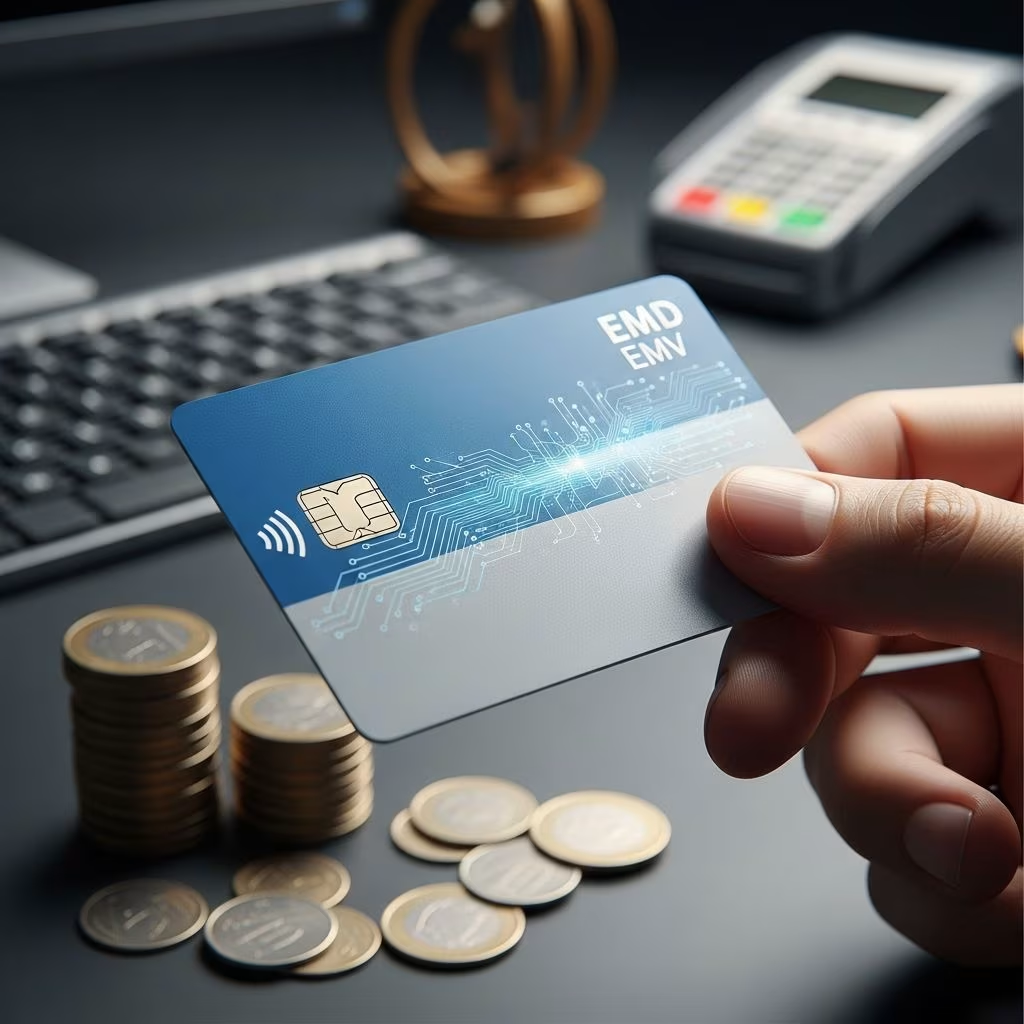
A debit card is a financial payment instrument that allows individuals to access funds directly from their bank account without borrowing money. Unlike credit cards, which enable purchases on credit with the expectation of repayment at a later date, debit cards withdraw funds immediately from the cardholder’s checking or savings account. This direct access to personal funds makes debit cards a popular choice for consumers who prefer to spend only what they have available, helping them manage their budgets more effectively.
Debit cards function as a modern alternative to cash and checks, offering convenience and security for everyday transactions. They are issued by banks and financial institutions to their customers and can be used at millions of merchants worldwide wherever the card network logo is accepted. The primary appeal of debit cards lies in their simplicity: the money spent is the money the cardholder actually possesses, eliminating the risk of accumulating debt through overspending.
How Debit Cards Work
When a debit card is used to make a purchase, the transaction process involves several key steps that ensure funds are properly transferred from the cardholder’s account to the merchant’s account. Understanding this mechanism helps users appreciate the convenience and reliability of debit card transactions.
The Transaction Process
- Card Presentation: The cardholder presents the debit card to the merchant at the point of sale.
- Authorization Request: The merchant’s payment terminal reads the card information and sends an authorization request to the cardholder’s bank.
- Verification: The bank verifies that the card is valid and that sufficient funds are available in the account to cover the purchase.
- Fund Transfer: Upon approval, the bank authorizes the transaction and funds are transferred from the cardholder’s account to the merchant’s account.
- Confirmation: The merchant receives confirmation that the transaction was successful and provides a receipt to the cardholder.
This entire process typically occurs within seconds, providing real-time confirmation of the transaction. The funds are usually deducted from the cardholder’s account within one to three business days, depending on the financial institutions involved and the type of transaction.
PIN and Signature Options
Debit cards offer two primary authentication methods for transactions. When using a Personal Identification Number (PIN), the cardholder enters a confidential code at the merchant’s terminal to authorize the transaction. This method is commonly used at ATMs and for online purchases. Alternatively, signature-based transactions require the cardholder to sign a receipt or digital signature pad to verify their identity. Both methods provide security measures to protect against unauthorized use, though PIN-based transactions are generally considered more secure as they require knowledge of a confidential code that only the legitimate cardholder should know.
Debit Card vs. Credit Card
While both debit and credit cards appear similar in form and function, they operate on fundamentally different principles that significantly impact how consumers use them and manage their finances.
| Feature | Debit Card | Credit Card |
|---|---|---|
| Fund Source | Draws from existing account balance | Borrows against credit limit |
| Spending Limit | Limited to available funds | Determined by credit limit |
| Debt Accumulation | Cannot incur debt | Can accumulate interest-bearing debt |
| Credit Building | Does not build credit history | Builds credit score and history |
| Fraud Protection | Limited protection; burden on consumer | Strong protection; limited liability |
| Rewards | Minimal rewards programs | Extensive rewards and cashback options |
| Interest Charges | None | Applied to unpaid balance |
The fundamental difference is that debit cards spend money the cardholder already possesses, while credit cards extend credit that must be repaid. This distinction makes debit cards ideal for budgeting and avoiding debt, while credit cards are better for building credit history and earning rewards. However, credit cards often provide superior fraud protection and consumer rights compared to debit cards.
Advantages of Debit Cards
Debit cards offer numerous benefits that make them an attractive payment option for many consumers seeking to maintain control over their finances.
- Budget Control: Since debit cards only allow spending of available funds, they prevent overspending and help users maintain disciplined budgeting habits.
- No Debt Risk: Users cannot accumulate debt or pay interest charges, as transactions are funded from their own money.
- Convenience: Debit cards eliminate the need to carry cash or write checks, offering a convenient and portable payment method.
- Easy Access: Cardholders can withdraw cash from ATMs worldwide, providing immediate access to their funds.
- Transaction Records: All debit card transactions are recorded and provide clear documentation of spending habits.
- Wide Acceptance: Debit cards are accepted at millions of merchants globally, making them highly versatile.
- Lower Fees: Generally, debit cards have fewer fees compared to credit cards, particularly if account requirements are met.
Disadvantages of Debit Cards
Despite their advantages, debit cards come with several limitations and risks that consumers should understand.
- Limited Fraud Protection: Debit cards offer less legal protection against fraud compared to credit cards. The burden of proving fraudulent transactions often falls on the cardholder.
- No Credit Building: Using a debit card does not establish credit history or help build a credit score, which is essential for obtaining loans or favorable interest rates.
- Minimal Rewards: Most debit cards offer few or no rewards programs, unlike credit cards that provide cashback and travel rewards.
- Overdraft Risks: While overdraft protection prevents declined transactions, it can lead to significant fees if the account balance drops below zero.
- Holds on Funds: Merchants may place holds on debit card transactions, temporarily reducing available account balance and limiting access to funds.
- Unauthorized Access: If a PIN or card number is compromised, fraudsters can access the cardholder’s actual bank account directly.
Types of Debit Cards
Financial institutions offer several varieties of debit cards designed to meet different consumer needs and preferences.
Standard Debit Cards
Standard debit cards are the most common type, issued by banks directly to customers with checking accounts. They carry the bank’s logo and a card network logo such as Visa or Mastercard, enabling use at any merchant that accepts these brands worldwide.
Prepaid Debit Cards
Prepaid debit cards function similarly to gift cards, allowing users to load funds onto the card and spend up to that amount. These cards are useful for individuals without traditional bank accounts, those wanting to control spending limits, or as gifts. They typically involve fees for activation, transactions, and balance inquiries.
Secured Debit Cards
Secured debit cards require users to maintain a cash deposit as collateral, with the card’s spending limit equal to the deposit amount. These cards are often used by individuals building credit history or those with limited banking access.
Virtual Debit Cards
Virtual debit cards are digital versions of physical debit cards, designed specifically for online transactions. They provide unique card numbers for each transaction or merchant, enhancing security by limiting exposure of the primary card number.
Security and Fraud Protection
While debit cards are generally secure, understanding protection mechanisms and best practices is essential for preventing unauthorized access and fraud.
Consumer Protections
The Electronic Funds Transfer Act provides some protection against debit card fraud, though the extent varies depending on when the fraud is reported. If fraudulent transactions are reported within two business days, consumer liability is typically limited to $50. However, if reported later, liability can increase to $500 or even unlimited amounts in certain circumstances.
Best Practices for Debit Card Security
- Memorize your PIN and never share it with anyone, including bank employees.
- Cover the PIN pad when entering your code to prevent observation.
- Regularly monitor bank statements for unauthorized transactions.
- Use debit cards only at secure, reputable merchants.
- Avoid using public Wi-Fi networks for online debit card transactions.
- Keep your card in a secure location and report loss or theft immediately.
- Use fraud alerts or credit monitoring services for additional protection.
- Consider setting transaction limits or spending alerts with your bank.
Debit Card Fees
While debit cards typically involve fewer fees than credit cards, various charges may apply depending on account type and usage patterns.
- Annual Fees: Some premium debit cards charge annual fees for enhanced features or benefits.
- ATM Fees: Using ATMs outside your bank’s network may incur withdrawal fees ranging from $1 to $5.
- Overdraft Fees: Exceeding account balance may trigger fees between $25 and $35 per transaction.
- Transaction Fees: Certain accounts may charge per-transaction fees for purchases or transfers.
- Balance Inquiry Fees: Some prepaid debit cards charge for checking balances.
- Inactivity Fees: Prepaid cards may charge fees if unused for extended periods.
Frequently Asked Questions
Q: Can I use a debit card online?
A: Yes, debit cards can be used for online purchases at most retailers. However, use virtual debit cards or trusted payment platforms when possible to enhance security. Never provide your PIN for online transactions.
Q: What happens if my debit card is lost or stolen?
A: Report the loss or theft to your bank immediately. Most banks will cancel the card and issue a replacement within 7-10 business days. If fraudulent charges occur, your liability depends on when you report the loss and your bank’s policies.
Q: Do debit cards help build credit?
A: No, debit card usage does not build credit history or credit scores. To build credit, you need credit products like credit cards, loans, or lines of credit where you borrow money and repay it.
Q: Are debit cards safe for international travel?
A: Debit cards can be used internationally, but notify your bank before traveling to avoid card blocks due to suspicious activity. Use ATMs in secure locations, avoid using cards at unfamiliar merchants, and consider carrying multiple payment methods as backup.
Q: What is the difference between a debit card and a prepaid card?
A: A debit card draws funds from your bank account, while a prepaid card requires you to load funds onto it first. Prepaid cards don’t require a bank account and offer more spending control, but typically involve higher fees.
Q: Can I get cash back when using my debit card?
A: Yes, most retailers allow debit cardholders to withdraw cash during purchases at checkout. This typically involves no additional fees when using your bank’s ATM, though other ATMs may charge withdrawal fees.
Conclusion
Debit cards represent a modern and convenient payment method that provides direct access to personal funds without incurring debt. They offer simplicity, budget control, and widespread acceptance, making them ideal for everyday transactions and cash management. However, consumers should be aware of their limitations regarding fraud protection, credit building, and rewards programs. By understanding how debit cards work, recognizing their advantages and disadvantages, and implementing security best practices, individuals can maximize the benefits of debit cards while minimizing associated risks. Whether used as a primary payment method or complemented with credit cards for specific purposes, debit cards remain an essential financial tool for most consumers in today’s digital economy.
References
- Electronic Funds Transfer Act — Consumer Financial Protection Bureau. 2024. https://www.consumerfinance.gov/
- Understanding Debit Card Fraud and Your Rights — Federal Deposit Insurance Corporation (FDIC). 2024. https://www.fdic.gov/resources/consumers/
- Payment Systems and Consumer Protection — Board of Governors of the Federal Reserve System. 2023. https://www.federalreserve.gov/paymentssystems/
- Prepaid Cards Consumer Guide — Consumer Financial Protection Bureau. 2023. https://www.consumerfinance.gov/consumer-tools/prepaid-cards/
- Banking and Account Security Best Practices — Office of the Comptroller of the Currency (OCC). 2024. https://www.occ.gov/publications-and-resources/
- Debit vs. Credit Card Comparison Guide — National Credit Union Administration (NCUA). 2023. https://www.ncua.gov/consumers/
This article is general information, not personal financial advice. Consider your own situation, or speak with a licensed adviser, before acting on it.