

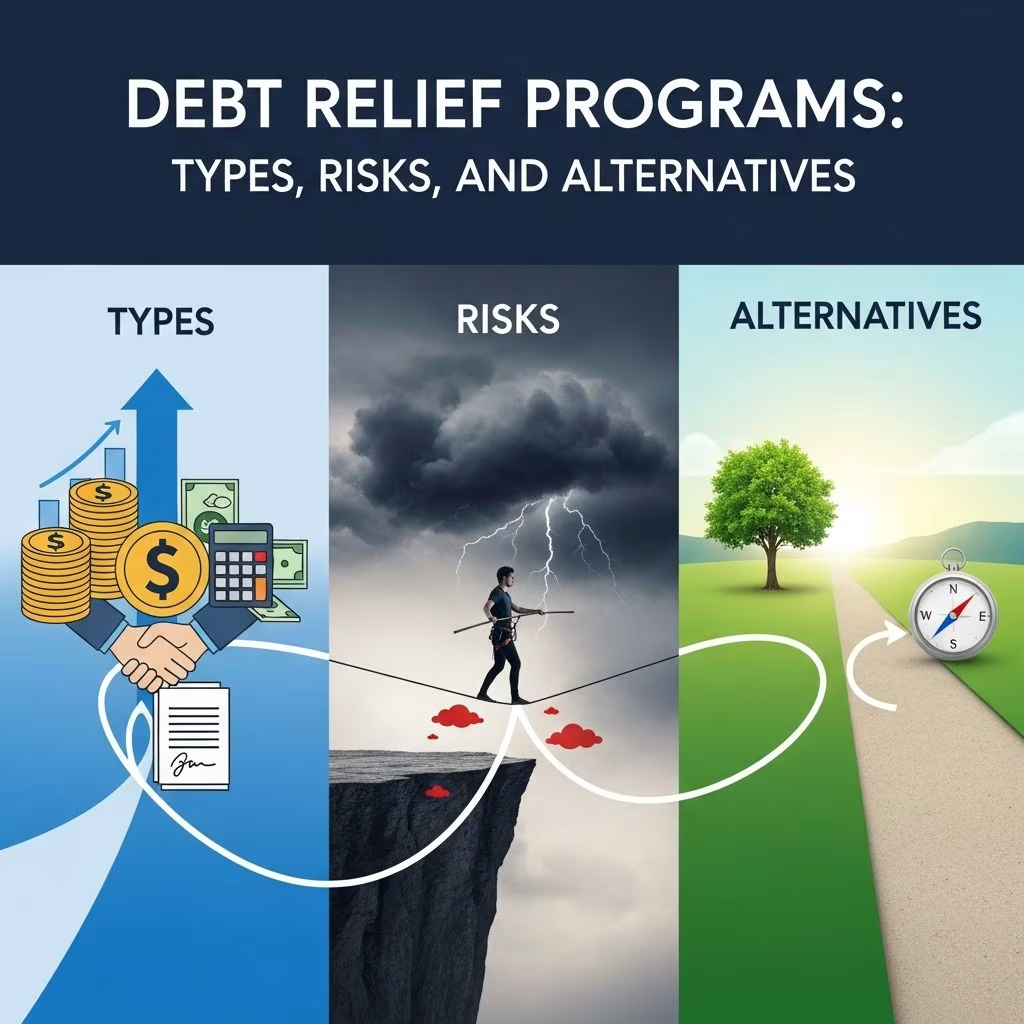
Debt relief programs are frequently marketed as fast, simple ways to slash what you owe and get out of debt. In reality, they are complex services with meaningful risks, costs, and long-term consequences. Understanding how these programs work can help you make a better decision about whether they fit your situation, or whether other debt solutions would be safer and more effective.
What Is a Debt Relief Program?
A debt relief program (often called a debt settlement program) is typically offered by a for-profit company that says it can negotiate with your creditors so you pay less than the full amount you owe on unsecured debts such as credit cards, medical bills, or personal loans.
Rather than continuing to pay your creditors directly, you usually make monthly deposits into a dedicated account controlled or coordinated by the debt relief company. Once there is enough money in that account, the company attempts to negotiate lump-sum settlements with your creditors for less than the full balance.
- Goal: Reduce the total amount of debt you repay.
- Common target debts: Credit cards, medical bills, collection accounts, some personal loans.
- Typical provider: For-profit debt relief or debt settlement firm.
Debt relief programs are not the same as debt consolidation loans or nonprofit debt management plans, which focus on repayment in full under better terms rather than paying less than you owe.
How Do Debt Relief Programs Work?
Although individual companies differ, most debt relief programs follow a similar step-by-step process.
1. Initial Consultation and Enrollment
The process typically starts with a phone or online consultation where the company reviews your unsecured debts, income, and budget. If the company believes you are a good candidate, it will propose a multi-year plan, often lasting 24–48 months or more.
- You sign a service agreement spelling out the program length, projected savings, and fees.
- The company may instruct you to stop paying your creditors directly and instead start funding a special account.
2. Stopping Direct Payments to Creditors
Many settlement firms tell clients to stop making payments to creditors so accounts fall past due. The idea is that creditors may be more willing to accept a reduced lump-sum settlement on accounts that are in default.
This step is crucial and risky. As you miss payments, creditors can charge late fees and penalty interest, report delinquencies to credit bureaus, send your accounts to collections, or even sue you.
3. Building a Settlement Fund
Instead of paying creditors, you send one monthly payment into a dedicated savings or escrow account managed by a third-party or linked to the program.
- Each month, your balance in this account grows.
- The goal is to accumulate enough to offer creditors lump-sum settlements, while also covering the company’s fees.
4. Negotiating Settlements
Once there is enough money in the account, the company starts negotiating settlements with your creditors—typically one at a time.
- The firm might aim to settle each account for a percentage of the balance (for example, 40–60%), though actual outcomes vary by creditor and situation.
- Some creditors refuse to work with settlement companies, or may pursue legal collection instead.
When a creditor accepts a settlement, you authorize the payment from your account. The company then earns its fee, which is often calculated as a percentage of the enrolled or settled debt.
5. Completing the Program
The program typically ends when all enrolled debts have been either settled or otherwise resolved, or when you stop participating. Many people drop out before completion because of the financial strain of missed payments, escalating collection activity, or inability to keep up with monthly deposits.
| Step | What Happens | Main Risk |
|---|---|---|
| Consultation & enrollment | Plan designed; you sign service agreement | Unrealistic savings or timelines |
| Stopping payments | You stop paying creditors directly | Delinquencies, fees, collection actions |
| Building settlement fund | Monthly payments into special account | Cash-flow strain; account may not grow quickly enough |
| Negotiation | Company seeks lump-sum settlements | Creditors may refuse or sue |
| Completion | Debts settled or program abandoned | Taxable forgiven debt; unresolved accounts |
Types of Debt Relief Compared
Debt relief is a broad term that can describe several different strategies. It is helpful to distinguish for-profit settlement programs from other common options like consolidation, debt management plans, and bankruptcy.
| Option | How It Works | Key Advantages | Main Drawbacks |
|---|---|---|---|
| Debt relief / settlement program | Company negotiates to pay less than you owe on unsecured debts | May reduce total debt if settlements succeed | Severe credit damage, fees, risk of lawsuits, no guarantee of success |
| Debt consolidation loan | New loan used to pay off multiple debts, leaving a single payment | Simplified payments; possible lower interest and faster payoff | Requires adequate credit/income; may pay more interest if term is long |
| Debt management plan (DMP) | Nonprofit credit counseling agency structures a 3–5 year repayment plan | Lower interest rates and fees from creditors; structured payoff in full | Accounts typically closed; requires consistent payments for several years |
| Bankruptcy | Court-supervised process to discharge or reorganize debts | Can provide a fresh start when debt is truly unmanageable | Serious, long-lasting credit impact; legal and court costs |
Pros and Cons of Debt Relief Programs
Debt relief programs can help some consumers, but they also carry significant trade-offs.
Potential Benefits
- Possibility of paying less than you owe: If settlements succeed, your total repayment could be lower than the original balances.
- Single coordinated strategy: Instead of juggling many creditors, you follow one coordinated plan.
- Helpful for severe hardship: People already behind on multiple accounts and unable to qualify for consolidation may see settlement as one of the few remaining non-bankruptcy options.
Significant Drawbacks
- No guarantee of success: Creditors are not required to settle, and some refuse to work with debt settlement firms or pursue legal action instead.
- Credit damage: Stopping payments leads to serious delinquencies, charge-offs, and collection accounts, which can severely hurt your credit score and remain on your credit reports for years.
- Fees and costs: Settlement companies typically charge substantial fees, often a percentage of the enrolled or settled debt, which reduces your net savings.
- Collection calls and lawsuits: While you build your settlement fund, creditors may increase collection efforts or sue you, potentially leading to wage garnishments or liens if they obtain judgments.
- Tax consequences: Forgiven debt may be treated as taxable income by the IRS if the amount forgiven is $600 or more, unless you qualify for an exclusion such as insolvency.
Risks and Common Problems
Because of the financial and legal stakes, regulators urge consumers to be extremely careful before enrolling in a debt relief program.
Major Risks
- Falling further behind: Late fees, penalty interest, and added collection costs can cause your balances to grow before any settlement is reached.
- Program dropout: Many people cannot keep up with monthly deposits for several years, especially as collection pressure increases. If you leave the program early, you may be left with higher balances and no resolution.
- Impact on future borrowing: Severely damaged credit can make it harder and more expensive to get housing, insurance, utilities accounts, or loans in the future.
Regulatory Protections
U.S. rules restrict how for-profit debt relief companies can charge fees. Under federal law, they generally cannot collect advance fees before delivering results, and they must disclose key information about costs and risks.
However, even with these protections, you must carefully review contracts, ask detailed questions, and verify that the company complies with relevant regulations.
Red Flags When Evaluating Debt Relief Companies
There are reputable firms, but the industry has also seen scams and abusive practices. Watch for these warning signs, which regulators and consumer advocates frequently highlight.
- Guarantees of specific results: Promises that your debt will be reduced by a precise percentage, or that all creditors will settle, are unrealistic because creditors are not obligated to accept settlements.
- Demands for upfront fees: For-profit settlement providers generally may not charge fees before settling or reducing at least one of your debts.
- Pressure to stop all contact with creditors: Advising you to ignore lawsuits, court notices, or formal collection letters is a serious red flag.
- Lack of written information: If the company will not give you written disclosures of fees, timelines, and risks, walk away.
- Claims that it is a government or legal program: Some marketing implies government endorsement or legal immunity from collection, which is misleading.
Safer Alternatives to Debt Relief Programs
Before turning to a settlement program, it is wise to consider alternatives that might help you get out of debt with fewer risks.
1. Budgeting and Self-Directed Debt Repayment
For many people, the starting point is a realistic budget and a structured repayment plan:
- List all debts, interest rates, and minimum payments.
- Use methods such as the debt snowball (pay off smallest balances first) or debt avalanche (pay off highest interest rates first).
- Cut expenses or increase income where possible to free more money for debt repayment.
2. Debt Consolidation
Debt consolidation means combining multiple debts into one new loan or credit product, ideally with a lower interest rate or more manageable payment.
- You might use a personal loan, a balance-transfer credit card, or a home equity product (if you own a home and understand the risks).
- If the interest rate is lower and you avoid extending the term too much, consolidation can reduce total interest paid and simplify your finances.
- Consolidation is most effective if your credit is still reasonably strong and your income can support the new payment.
3. Nonprofit Credit Counseling and Debt Management Plans
Credit counseling agencies, often nonprofit, can help you review your budget, debts, and credit, and recommend tailored strategies. In some cases, they may suggest a debt management plan (DMP).
- In a DMP, you make one monthly payment to the agency, which then pays your unsecured creditors according to an agreed schedule.
- Creditors may agree to lower your interest rates, waive certain fees, and help you pay off debts in about three to five years.
- Your accounts are usually closed, and you must make on-time payments for the plan to succeed.
Because DMPs aim to repay your debts in full under better terms and are overseen by nonprofit counseling agencies, they are often considered less risky than for-profit settlement programs.
4. Working Directly With Creditors
Some creditors offer hardship programs for customers struggling due to events like job loss, illness, or natural disasters. These programs may temporarily reduce payments, lower interest rates, or waive fees.
Contacting creditors early, before your accounts become severely delinquent, can increase the chances of qualifying for hardship assistance.
5. Bankruptcy as a Last Resort
If your debt is truly unmanageable and you see no realistic way to repay it, even with structured plans, consumer bankruptcy may provide a more predictable legal path to relief.
- Chapter 7 can discharge many unsecured debts relatively quickly, subject to income and asset limits.
- Chapter 13 sets up a court-supervised repayment plan over three to five years.
Because bankruptcy is complex and has serious long-term consequences, consult a qualified bankruptcy attorney or legal aid organization before making a decision.
Who Might Consider a Debt Relief Program?
Debt relief programs are not for everyone. They may be considered by people who:
- Have large amounts of unsecured debt, especially credit cards.
- Are already behind on payments or in collections.
- Cannot qualify for affordable consolidation loans.
- Prefer to try settlement before considering bankruptcy.
Even in these situations, carefully compare settlement with debt management plans and bankruptcy to understand which path is likely to lead to the best long-term outcome.
Frequently Asked Questions (FAQs)
Q: Will a debt relief program stop collection calls and lawsuits?
A: Not necessarily. While a company is negotiating, creditors and collectors may still call, send letters, or even sue you. Only legal actions like bankruptcy or court-approved repayment plans can reliably stop most collection efforts.
Q: How long will a debt relief program affect my credit?
A: Missed payments, charge-offs, and collections tied to settlement can stay on your credit reports for up to seven years, potentially making new credit more expensive or harder to obtain.
Q: Are forgiven debts taxable?
A: In many cases, the IRS treats forgiven debt of $600 or more as taxable income, unless you qualify for exceptions such as being insolvent. Consult a tax professional or IRS guidance before enrolling in a settlement program.
Q: Is a debt management plan the same as a debt relief program?
A: No. A debt management plan is typically run by a nonprofit credit counseling agency and focuses on repaying your debts in full with reduced interest and fees. For-profit debt relief programs often aim to settle debts for less than you owe and may involve stopping payments to creditors, which carries greater risks.
Q: How can I find reputable help with my debts?
A: Start with nonprofit credit counseling agencies, legal aid organizations, or government and credit union educational resources. Verify accreditation, check for complaints with state regulators and consumer protection agencies, and avoid any company that demands upfront fees or makes unrealistic guarantees.
References
- Debt Relief Programs: The Pros and Cons of Each Type — National Foundation for Credit Counseling (NFCC). 2023-08-10. https://www.nfcc.org/blog/debt-relief-programs-the-pros-and-cons-of-each-type/
- The 7 Types of Debt Relief Options and Their Pros & Cons — Debt Reduction Services. 2023-05-15. https://debtreductionservices.org/debt-relief-options/
- 5 Types of Debt Relief Programs — Take Charge America. 2022-11-30. https://www.takechargeamerica.org/types-of-debt-relief-programs/
- Which Debt Relief Option Is Right for You? — Bankrate. 2024-01-05. https://www.bankrate.com/personal-finance/debt/different-debt-relief-options/
- Managing Debt — MyCreditUnion.gov (National Credit Union Administration). 2023-04-20. https://mycreditunion.gov/manage-your-money/dealing-debt/managing-debt
- How to Get Out of Debt — Federal Trade Commission. 2023-06-06. https://consumer.ftc.gov/articles/how-get-out-debt
- What Is a Debt Relief Program and How Do I Know If I Should Use One? — Consumer Financial Protection Bureau. 2022-10-01. https://www.consumerfinance.gov/ask-cfpb/what-is-a-debt-relief-program-and-how-i-know-if-i-should-use-one-en-1457/
- Debt Relief Programs Explained: What They Are and How They Work — HerMoney. 2023-02-14. https://hermoney.com/borrow/debt-relief-programs-explained-what-they-are-and-how-they-work/
- Debt Relief: Options, Considerations and How It Works — NerdWallet. 2024-03-01. https://www.nerdwallet.com/finance/learn/find-debt-relief
This article is general information, not personal financial advice. Consider your own situation, or speak with a licensed adviser, before acting on it.


