

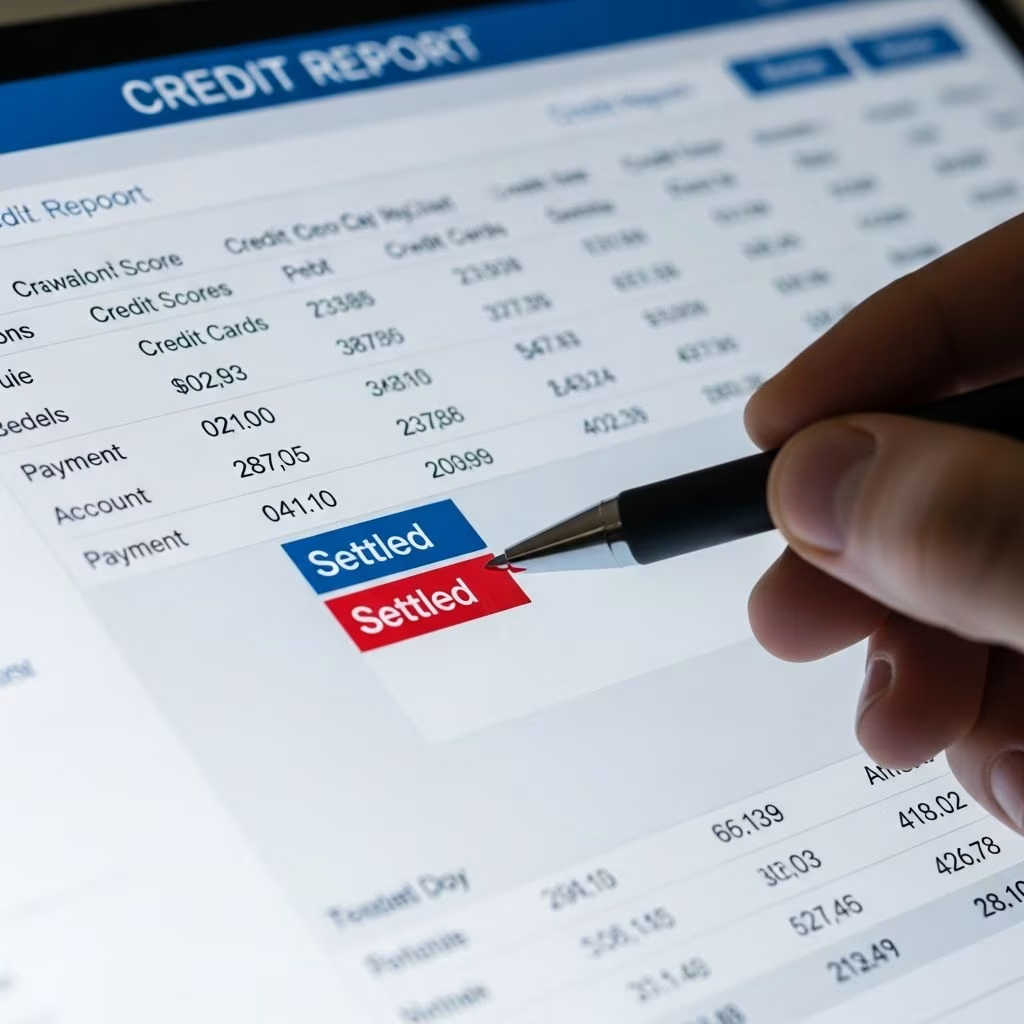
When you negotiate a debt settlement, it provides relief from overwhelming obligations, but it leaves a lasting mark on your credit history. These accounts signal to lenders that you paid less than owed, influencing your borrowing power for years. This guide explores the duration, implications, and paths to recovery.
Understanding Debt Settlement and Its Credit Footprint
Debt settlement involves agreeing with a creditor to pay a reduced lump sum to close an account. While this resolves the immediate debt, the account updates to reflect the partial payment, distinguishing it from accounts paid in full. Lenders view this as increased risk, as it shows deviation from original terms.
The process often begins with missed payments to prompt negotiation, creating delinquencies that further harm scores before settlement. Post-settlement, the notation persists, but proper reporting shows a zero balance and closed status with phrases like “settled for less than full balance”.
Timeline for Settled Accounts on Your Credit File
Settled accounts generally remain visible for seven years, aligning with rules under the Fair Credit Reporting Act (FCRA) for most negative items. The clock starts from the original delinquency date—the first missed payment leading to default—not the settlement date.
- For accounts already delinquent: Seven years from the initial late payment date.
- For accounts settled without prior lates: Seven years from settlement.
Example: If delinquency began in January 2024 and settlement occurred in June 2024, the entry drops off in January 2031. This period allows lenders, employers, and landlords to see the history.
Immediate Impact of Settlement on Credit Scores
Settlement typically causes a sharp score drop, often 100 points or more, due to delinquencies and the negative status. Factors amplifying the hit include:
- Multiple settlements.
- Large original debt amounts.
- Prior good credit history, making the contrast stark.
The FICO model weighs payment history (35%) heavily, so lates and settlements ding this category most. However, settlement beats charge-offs or bankruptcy in long-term recovery potential.
Long-Term Effects and Natural Fading
Over time, the weight of settled accounts diminishes. Credit scoring algorithms prioritize recent behavior, so aged negatives influence less. Positive actions like on-time payments elsewhere accelerate improvement.
| Time After Settlement | Typical Score Impact | Key Factors |
|---|---|---|
| 0-12 months | Severe (100+ point drop) | Delinquencies, new status |
| 1-3 years | Moderate | Aging account, new positives |
| 3-7 years | Minimal | Account nears expiration |
By year three, many rebuild to pre-settlement levels with disciplined habits.
Checking and Correcting Your Credit Report
Regular monitoring ensures accurate reporting. Settled accounts should show closed, zero balance, and correct notations. Errors like open status or wrong balances inflate utilization and harm scores.
Free weekly reports from AnnualCreditReport.com allow verification. Dispute inaccuracies online via Equifax, Experian, TransUnion portals—resolutions often occur within 30 days.
Strategies to Rebuild After Settlement
Recovery focuses on positives outweighing negatives. Key steps include:
- Secure secured cards: Build history with low-limit cards backed by deposits.
- Automate payments: Avoid future lates on active accounts.
- Reduce utilization: Keep balances under 30% of limits.
- Add installment credit: Small personal loans paid steadily diversify mix.
Creditors may request “paid as agreed” notations during settlement to soften impact, though not always granted.
Alternatives to Debt Settlement
Before settling, consider options with less credit damage:
- Debt management plans: Nonprofit programs consolidate payments, often lowering rates without settlements.
- Hardship forbearance: Temporary relief from creditors.
- Balance transfers: 0% APR cards for consolidation.
Settlement suits severe cases but weighs long-term credit health.
FAQ: Common Questions on Settled Debts
How does a settled account differ from a charge-off?
A charge-off assumes uncollectible debt after 180 days delinquent; settlement resolves it actively, often better for scores.
Can I remove settled accounts early?
No, accurate info stays seven years per FCRA. Goodwill letters rarely succeed.
Does settlement affect employment?
Some employers check credit; negatives may raise flags, but context matters.
Will settling one debt cascade to others?
Possibly, as lowered scores tighten approvals elsewhere.
How soon can I apply for new credit post-settlement?
Wait 6-12 months, starting small to build history.
Preventing Future Debt Pitfalls
Post-recovery, budgeting apps, emergency funds (3-6 months expenses), and credit monitoring prevent repeats. Educate on utilization’s 30% score role and 15% length-of-history factor.
Settlement marks a reset, not ruin. With proactive steps, financial stability returns stronger.
References
- Settled Accounts on Your Credit Report — Experian. 2023. https://www.experian.com/blogs/ask-experian/settled-account-will-still-appear-on-the-credit-report/
- How Does Debt Settlement Affect Your Credit Score? — Patton Dean. 2025-02. https://www.pattondean.com/blog/2025/february/how-does-debt-settlement-affect-your-credit-scor/
- Will Settling a Debt Affect My Credit Score? — Experian. 2023. https://www.experian.com/blogs/ask-experian/will-settling-a-debt-affect-my-score/
- How long do settled accounts stay on your credit report? — CBS News. 2023. https://www.cbsnews.com/news/how-long-do-settled-accounts-stay-on-your-credit-report/
- Why Settled Debts May Appear as Open on Your Credit Report — McCarthy Law. 2025-09-24. https://mccarthylawyer.com/2025/09/24/why-settled-debts-may-appear-as-open-on-your-credit-report/
This article is general information, not personal financial advice. Consider your own situation, or speak with a licensed adviser, before acting on it.


