

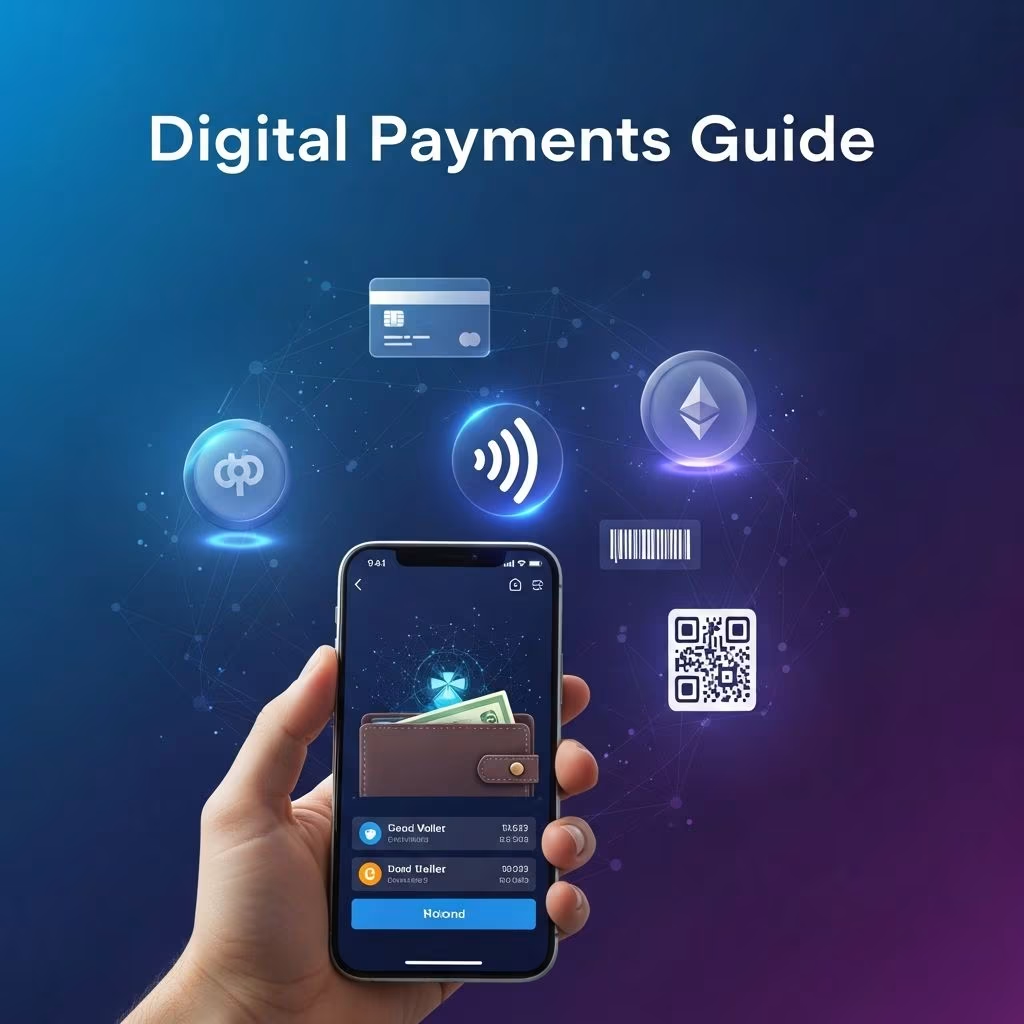
Digital payments represent a shift from physical cash and checks to electronic transactions processed via devices like smartphones, computers, and terminals. These methods enable quick fund transfers without tangible exchanges, offering real-time tracking and integration with financial systems.
Understanding the Fundamentals of Electronic Transactions
At their core, digital payments involve moving money electronically between parties using internet-connected networks. This encompasses everything from tapping a phone at a store to sending funds via apps between friends. Unlike traditional methods, they eliminate physical handling, reduce processing times, and provide digital receipts for easy record-keeping.
Transactions typically flow through payment processors that verify details, check for sufficient funds, and route money securely. Key players include the payer’s bank (issuer), the recipient’s bank (acquirer), and intermediaries like networks (Visa, Mastercard) or gateways.
Primary Categories of Digital Payment Options
Digital payments span several categories, each suited to specific scenarios from retail purchases to business disbursements.
Card Networks: The Backbone of Everyday Spending
Credit, debit, and prepaid cards dominate due to their widespread acceptance. Credit cards let users borrow against a line with potential interest, debit cards draw directly from accounts, and contactless versions use near-field communication (NFC) for tap payments.
- Credit cards: Offer rewards and purchase protections via chargebacks.
- Debit cards: Immediate fund deduction, lower fees for merchants.
- Contactless: Encrypted taps reduce swipe fraud risks.
These support both in-person (chip/tap) and online (card-not-present) uses, backed by global networks.
Mobile Wallets and App-Based Solutions
Digital wallets like Apple Pay, Google Pay, and PayPal store card details on devices, using tokenization—replacing real numbers with unique codes—for enhanced privacy. Merchants receive tokens, not actual data.
Authentication often involves biometrics (fingerprints, face scans), adding layers beyond passwords. They enable NFC in stores, QR scans, or one-click online checkouts.
Bank Transfers and Automated Clearing
Electronic transfers include ACH for batch U.S. payments (low-cost, 1-3 days), wires for urgent high-value moves (same-day, pricier), and eChecks mimicking paper ones digitally.
Ideal for payroll, vendors, or recurring bills, they integrate with accounting software for automation.
Emerging and Niche Methods
QR codes let users scan for instant payments via apps, popular in retail without hardware needs. Buy Now, Pay Later (BNPL) like Klarna splits costs interest-free, boosting sales. Peer-to-peer apps (Venmo, Zelle) simplify personal splits or small business receipts. Cryptocurrencies offer borderless options but face volatility hurdles.
The Step-by-Step Process Behind a Digital Payment
Every transaction follows a standardized flow for reliability.
- Initiation: Payer selects method and enters details or authenticates via app/device.
- Authorization: Processor verifies funds, fraud checks, and approves.
- Fund Transfer: Money moves; timing varies (instant for cards, days for ACH).
- Notification: Receipts sent to all parties.
- Settlement: Banks reconcile, often next day.
Security protocols like encryption and 3D Secure add protection throughout.
Key Advantages Driving Adoption
Digital payments excel in efficiency and safety.
- Speed: Instant confirmations vs. check mailing delays.
- Convenience: No cash carrying; works globally.
- Cost Savings: Lower fees for ACH over cards; automation cuts admin.
- Tracking: Real-time visibility into cash flow.
- Inclusivity: Reaches unbanked via mobile apps.
Businesses report higher sales from frictionless checkouts.
Potential Drawbacks and Mitigation Strategies
Despite benefits, challenges exist.
| Risk | Impact | Mitigation |
|---|---|---|
| Fraud/Theft | Unauthorized access | Tokenization, biometrics, monitoring |
| Fees | 2.9%+ per transaction | Choose interchange-plus pricing |
| Connectivity Dependence | Offline failures | Hybrid cash backups |
| Privacy Concerns | Data breaches | PCI compliance, minimal data sharing |
Credit cards provide dispute rights, unlike some P2P apps.
Comparing Popular Payment Methods
| Method | Best For | Speed | Cost | Security Features |
|---|---|---|---|---|
| Cards | Retail/Online | Instant | Medium-High | EMV, Chargebacks |
| Wallets | Mobile/Tap | Instant | Medium | Tokens, Biometrics |
| ACH | B2B/Recurring | 1-3 Days | Low | Bank-Level |
| P2P Apps | Personal | Instant | Low | App PINs |
| BNPL | Installments | Instant | Merchant Bears | Credit Checks |
Data drawn from industry standards.
Tips for Implementing Digital Payments Effectively
For consumers:
- Enable two-factor and biometrics.
- Monitor statements weekly.
- Use virtual cards for online buys.
For businesses:
- Select processors with flat or tiered pricing.
- Offer multiple options to widen appeal.
- Integrate with invoicing for auto-reconciliation.
Future Directions in Payment Technology
Trends point to blockchain for fee-free B2B, wider biometrics, and central bank digital currencies (CBDCs) for stable electronic cash. Expect seamless cross-border and voice-activated payments.
Frequently Asked Questions
What is the safest digital payment method?
Digital wallets with tokenization and biometrics offer top security, as actual card data isn’t shared.
Are digital payments free?
No; cards charge 1.5-3.5%, ACH under $1, wires $15-50.
Can I use digital payments without a bank account?
Yes, via prepaid cards or P2P apps linked to alternatives.
How do I dispute a digital payment?
Contact issuer within 60 days for cards; P2P varies by app.
What’s the difference between debit and credit for digital use?
Debit uses your money now; credit borrows with protections.
References
- Digital Payments Guide: How They Work for Business — Paystand. 2023. https://www.paystand.com/blog/digital-payments
- Digital Payments: What They Are, How They Work, & Types — Ramp. 2024. https://ramp.com/blog/what-are-digital-payments
- What are Digital Payments and how do they work? — GoCardless. 2023. https://gocardless.com/en-us/guides/posts/what-are-digital-payments/
- Digital payment types: Simplifying Transactions in a Digital World — Fidelity. 2024. https://www.bankatfidelity.com/commercial/merchant-services/digital-payment-types-simplifying-transactions-in-a-digital-world/
- What are digital payment systems and how do they work? — Stripe. 2024. https://stripe.com/resources/more/digital-payment-systems-101-what-they-are-and-how-they-work
- What Is An Electronic Payment: Definition, Methods, & Tips — BILL. 2023. https://www.bill.com/learning/electronic-payments
This article is general information, not personal financial advice. Consider your own situation, or speak with a licensed adviser, before acting on it.


