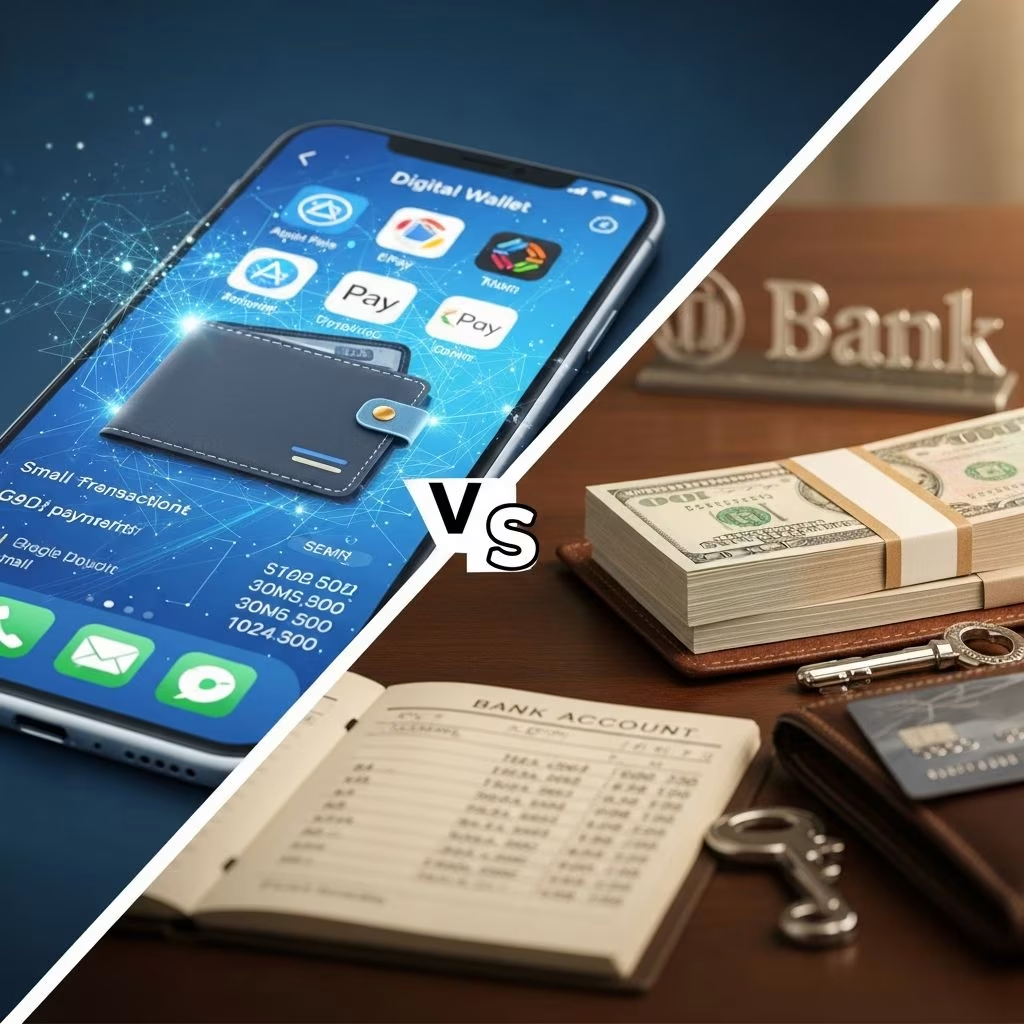
Digital wallets and bank accounts serve distinct roles in modern finance, with digital wallets excelling in quick transactions and bank accounts providing robust long-term management. Understanding their differences helps users select the right tools for daily spending, savings, and global transfers.
What Are Digital Wallets?
Digital wallets, also known as e-wallets or mobile wallets, are apps that store payment information such as credit cards, debit cards, and loyalty programs on your smartphone or device. They enable contactless payments via technologies like NFC (Near Field Communication) for in-store purchases, online shopping, or peer-to-peer transfers.
Popular examples include Apple Pay, Google Pay, and PayPal, which allow users to link bank accounts or cards and complete transactions with a tap or biometric scan like fingerprint or face recognition. Some digital wallets let you preload funds for direct spending without linking external accounts, offering flexibility for small, frequent payments.
- Store multiple payment methods in one app.
- Support real-time notifications for spending.
- Integrate with ride-sharing, transit, and retail apps for seamless use.
Understanding Bank Accounts
Bank accounts are traditional financial products offered by banks or credit unions, including checking, savings, and money market accounts. They act as a central hub for receiving income, paying bills, and building wealth through interest-earning options.
Checking accounts facilitate daily transactions via debit cards, checks, or ACH transfers, while savings accounts focus on accumulating funds with potential interest. Most are protected by FDIC insurance up to $250,000 per depositor, ensuring safety even if the institution fails.
- Enable direct deposits from employers.
- Offer tools for bill pay and wire transfers.
- Provide detailed monthly statements for tax and budgeting purposes.
Core Functional Differences
Digital wallets prioritize speed and portability, replacing physical cards for everyday purchases. They shine in scenarios requiring instant access, like splitting a restaurant bill or buying coffee.
Bank accounts, however, support comprehensive financial planning, including loans, investments, and large transfers. They are essential for activities like mortgage payments or business payroll that demand reliability and regulatory compliance.
| Feature | Digital Wallet | Bank Account |
|---|---|---|
| Primary Use | Quick payments and storage of cards | Savings, deposits, and long-term management |
| Transaction Speed | Instant (minutes) | 1-3 days for transfers |
| Interest Earnings | Rarely offered | Available on savings accounts |
| Global Reach | Excellent for cross-border via local rails | Strong but slower via SWIFT |
Convenience and Accessibility
Digital wallets offer unmatched convenience by eliminating the need for physical items. Users can pay at millions of terminals worldwide without digging for cards, and features like auto-fill streamline online checkouts.
For global users, digital wallets provide virtual local accounts (e.g., IBAN or ACH details) for receiving payments like a resident, ideal for freelancers and nomads. Bank accounts require more paperwork for international access but offer branch services and ATMs for cash handling.
However, digital wallets depend on internet and device battery, posing challenges in remote areas.
Security and Protection Measures
Digital wallets employ tokenization, where actual card numbers are replaced with unique tokens, reducing skimming risks. Multi-factor authentication and device binding add layers of protection.
Bank accounts benefit from FDIC/NCUA insurance and fraud monitoring by regulated institutions. While digital wallets linked to banks inherit some protections, standalone balances may lack insurance unless specified.
- Digital Wallets: Biometrics, encryption, remote wipe.
- Bank Accounts: Deposit insurance, zero-liability policies, account alerts.
Hybrid approaches, like wallets backed by regulated entities, combine both strengths.
Costs, Fees, and Earnings Potential
Digital wallets typically have lower or no fees for domestic P2P transfers and often waive foreign exchange markups for international sends. Bank accounts may charge for overdrafts, wires, or low balances but offer interest on savings—up to 5% APY in high-yield options as of 2026.
Businesses favor wallets for low processing costs on high-volume transactions, while banks suit large-value needs with established reporting.
Expense Tracking and Budgeting Tools
Both provide visibility, but styles differ. Digital wallets deliver instant categorization and graphs for daily habits, helping curb impulse buys.
Bank apps offer historical reports, customizable budgets, and integration with accounting software, better for annual planning.
Best Use Cases for Each
When to Choose Digital Wallets
- Daily micro-transactions and contactless payments.
- International freelance payouts with low fees.
- Organizing loyalty programs and tickets.
When to Rely on Bank Accounts
- Building emergency funds or savings goals.
- Receiving salary or government benefits.
- High-value transfers requiring compliance.
Pros and Cons Comparison
| Aspect | Digital Wallets Pros | Digital Wallets Cons | Bank Accounts Pros | Bank Accounts Cons |
|---|---|---|---|---|
| Speed | Instant settlements | Connectivity dependent | Reliable processing | Slower for globals |
| Security | Tokenization & biometrics | Limited insurance | FDIC protected | Phishing vulnerabilities |
| Costs | Low/no fees | FX variability | Interest income | Maintenance fees |
Integrating Both for Optimal Finance
The hybrid model prevails in 2026: Link digital wallets to bank accounts for funding, using wallets for speed and banks for storage. Platforms like Due exemplify this by offering wallet-like instant transfers with banking compliance.
Steps to integrate:
- Select compatible digital wallets for your devices.
- Open high-yield bank accounts for idle funds.
- Enable auto-transfers for budgeting.
- Monitor via apps for unified views.
Frequently Asked Questions (FAQs)
Are digital wallets FDIC insured?
Some are if funds are held at partner banks, but not all. Always verify.
Can I use a digital wallet without a bank account?
Yes, by preloading funds or linking cards directly.
Which is better for international payments?
Digital wallets for speed and cost; banks for large sums.
Do digital wallets earn interest?
Rarely; bank savings accounts do.
How secure are digital wallets compared to banks?
Both secure, but banks offer deposit insurance.
Future Trends in 2026
Expect deeper integration with stablecoins, AI budgeting, and embedded finance, blurring lines further while enhancing security via MPC wallets.
References
- Digital Wallet vs. Bank Account: Which One Should You Have? — Suisse Bank. 2026. https://www.suissebank.com/en/digital-wallet-vs-bank-account-which-one-should-you-have.html
- Digital Wallets vs Bank Accounts | Global Payments 2025 — OpenDue. 2025. https://www.opendue.com/blog/digital-wallets-vs-bank-accounts-which-works-best-for-global-payments
- Digital Wallet vs. Bank Account: What’s the Difference? — Experian. 2026. https://www.experian.com/blogs/ask-experian/digital-wallet-vs-bank-account/
- Savings Account vs Digital Wallet — Ujjivan Small Finance Bank. 2025. https://www.ujjivansfb.bank.in/banking-blogs/savings-account/savings-account-vs-digital-wallet
- Digital Wallet vs. Bank Account: What’s the Difference? — Ria Money Transfer. 2025. https://www.riamoneytransfer.com/en/blog/digital-wallet-vs-bank-account-whats-the-difference/
This article is general information, not personal financial advice. Consider your own situation, or speak with a licensed adviser, before acting on it.