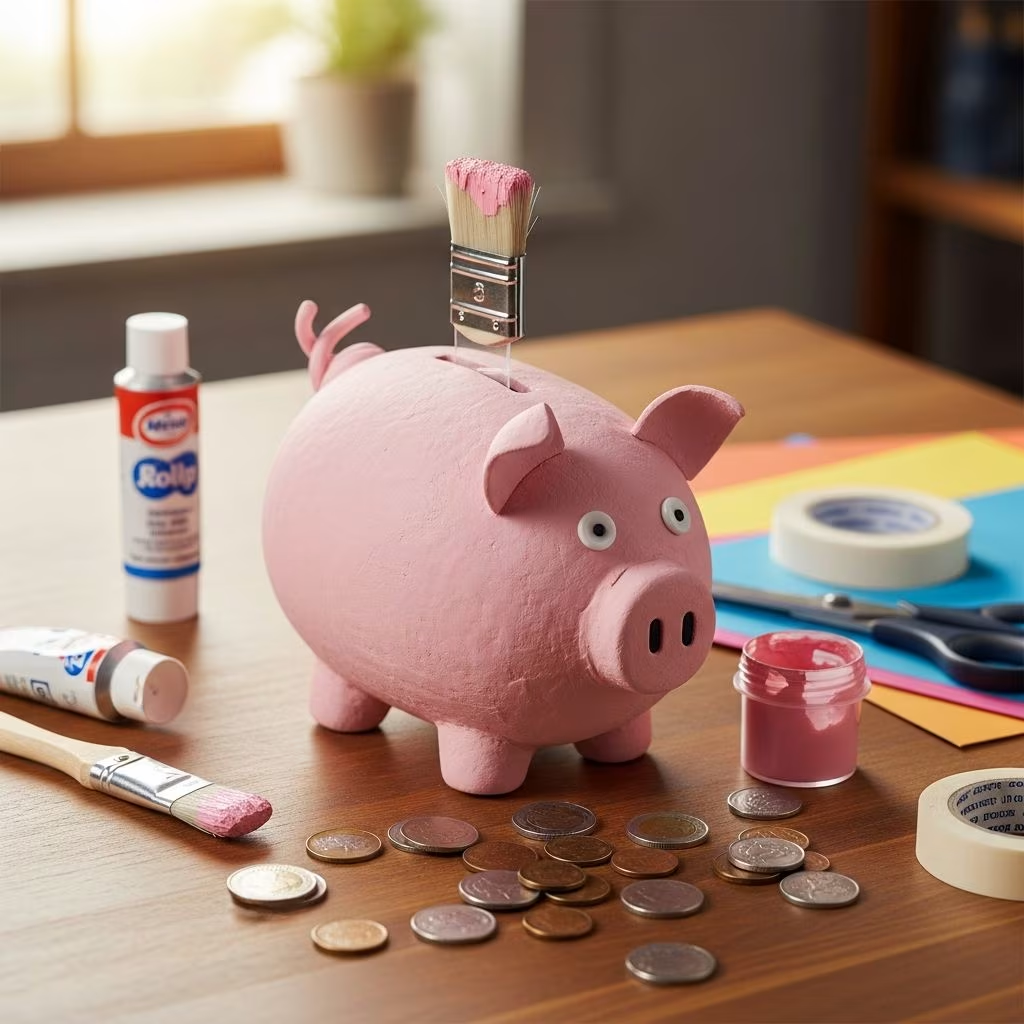
Creating your own piggy bank is a timeless, enjoyable project that promotes saving habits while recycling household items. Whether for children learning financial basics or adults building emergency funds, a homemade piggy bank turns loose change into visible progress. This guide covers multiple DIY methods, from simple jars to elaborate ceramic pigs, drawing on practical tips and real-world savings success stories.
Why Make a Piggy Bank?
Piggy banks serve as tangible reminders of saving’s value in a digital age. They make abstract concepts like compound growth concrete—watching coins accumulate motivates discipline. Studies show children using piggy banks develop lifelong savings habits; one Journal of Economic Psychology survey of 1,000 adults found early savers continued the practice into adulthood. For adults, they capture ‘found money’ like pocket change, often yielding $40–$65 every few months, as shared by Wise Bread readers.
Homemade versions cost nothing, encourage creativity, and fit any goal: kids’ ice cream funds, travel expenses, or charity donations. Unlike apps, their visibility combats impulse spending, fostering mindful finance.
Materials You’ll Need
Gather these common supplies for most projects:
- Clean jars, bottles, or plastic containers (e.g., mayonnaise jars, milk jugs)
- Acrylic paints, markers, or construction paper for decoration
- Construction paper, felt, or cardboard for features like ears and tails
- Hot glue gun or strong tape
- Coins or marbles for testing coin slots
- Optional: googly eyes, pipe cleaners, varnish for durability
These items are typically free or under $5 at dollar stores, keeping projects frugal.
Method 1: The Classic Jar Piggy Bank
This beginner-friendly option uses a recycled jar, ideal for quick setup.
- Prepare the jar: Remove label from a sturdy glass or plastic jar (e.g., pasta sauce or peanut butter). Wash and dry thoroughly.
- Cut the coin slot: Use a craft knife or box cutter to make a slot (1-inch wide, 3–4 inches long) in the lid. Test with coins; sand edges smooth for safety.
- Decorate as a pig: Paint the jar pink. Cut pink construction paper ears, a snout, and curly tail; glue on. Add googly eyes and draw nostrils.
- Seal and label: Hot-glue the lid if needed. Write your savings goal (e.g., ‘New Bike Fund’) on the front.
Pro tip: Place it visibly, like on your dresser, to encourage daily deposits. One user filled theirs monthly, funding laundry and eventually car repairs.
Method 2: Plastic Bottle Piggy Bank
Perfect for kids, using lightweight recyclables.
- Select bottle: Clean 2-liter soda or water bottle.
- Shape the pig: Cut a rectangular slot near the neck for coins. Cover with pink paper or paint.
- Add features: Glue on cardboard ears, felt snout, and pipe cleaner tail. Draw or stick on eyes and legs from bottle caps.
- Reinforce: Wrap duct tape around the base for stability; decorate over it.
This method yields a lightweight bank easy to shake for a satisfying sound, motivating deposits. Families report $30–$50 for trips.
Method 3: Cardboard Box Piggy Bank
For sturdier builds, use shoeboxes or cereal boxes.
- Build base: Tape flaps shut on a rectangular box.
- Coin slot: Cut slot in the top, large enough for quarters.
- Pigify it: Cover with white paper, paint pink. Attach paper plate ears, toilet paper roll snout, and yarn tail.
- Personalize: Add stickers or markers for themes like ‘Vacation Fund’.
Great for classrooms; one parent noted their child’s box amassed $500 over two years.
Method 4: The Advanced Clay Piggy Bank
For craft enthusiasts, model a traditional pig from air-dry clay.
- Form body: Roll clay into a fat oval body, add shorter legs, elongated snout.
- Sculpt details: Pinch ears, curl tail, poke eyes. Create coin slot on back.
- Dry and paint: Let air-dry 24–48 hours, paint pink with black details. Seal with varnish.
- Bake option: Use oven-bake clay for durability; follow package instructions.
This heirloom-quality bank teaches sculpting. Break to empty traditional styles, or add a removable plug.
Creative Variations and Themes
| Theme | Base Material | Decor Ideas | Best For |
|---|---|---|---|
| Animal Kingdom | Jar | Ears/tail from felt | Kids |
| Superhero | Bottle | Cape from fabric, mask | Teens |
| Travel Fund | Box | Mini maps, airplane cutouts | Adults |
| Charity Pig | Clay | Heart motifs, donation label | Families |
Customize for goals: luxury groceries, tzedakah (charity), or found money ($167/year reported).
Tips for Maximum Savings Impact
- Visibility: Keep in high-traffic spots; daily sight prompts deposits.
- Rules: No raiding except for predefined goals. Deposit to savings when full.
- Kids’ involvement: Let them decorate and track totals for financial literacy.
- Multiple banks: One for spending (ice cream), one for saving/investing.
- Digital hybrid: Apps round up purchases; pair with physical bank for tactile joy.
Credit unions often provide free counters, saving 5% fees.
Real-Life Success Stories
- A college student filled theirs monthly, saving for car fixes.
- Family uses for city trips: $30–50 in quarters covers tolls.
- Found money collector hit $167.19 yearly, deposited January 1st.
- Kid’s bank reached $500 in two years.
- 4-month fill-up: $65 to savings.
These anecdotes prove spare change adds up fast.
Frequently Asked Questions (FAQs)
Are piggy banks still relevant with digital banking?
Yes, their tactile nature builds habits apps can’t match, especially for kids per studies.
How much can a piggy bank really save?
$40–$65 every few months typically; up to $167/year from found change.
What’s the easiest material for beginners?
A clean jar with painted features—ready in 30 minutes.
Can I make one without breaking to empty?
Yes, use screw-top lids or add a bottom plug from wood/cork.
How to involve kids safely?
Supervise cutting; let them paint and choose goals for engagement.
Safety and Maintenance
Supervise children with sharp tools. Use non-toxic paints. Empty regularly to avoid overflow. Clean with mild soap; avoid water for clay versions.
References
- The Piggy Bank: A Secret to Simple Saving — Wise Bread. 2009-approx. https://www.wisebread.com/the-piggy-bank-a-secret-to-simple-saving
- Recent comments on Wise Bread — Wise Bread. 2009-approx. https://www.wisebread.com/comments/www.wisebread.com/www.myspace.com/digiot?page=3423
- Are Piggy Banks Relevant in the Age of Digital Banking? — Sammy Rabbit Blog. Recent. https://sammyrabbit.com/blog/are-piggy-banks-relevant-in-the-age-of-digital-banking
- Recent comments on Wise Bread (page 3426) — Wise Bread. 2009-approx. https://www.wisebread.com/comments/www.wisebread.com/www.myspace.com/digiot?page=3426
- Investment & Personal Finance Resources — Burlington Public Library (.gov equivalent local authority). Recent. https://burlingtonpubliclibrary.org/346/Investment-Personal-Finance-Resources
This article is general information, not personal financial advice. Consider your own situation, or speak with a licensed adviser, before acting on it.