

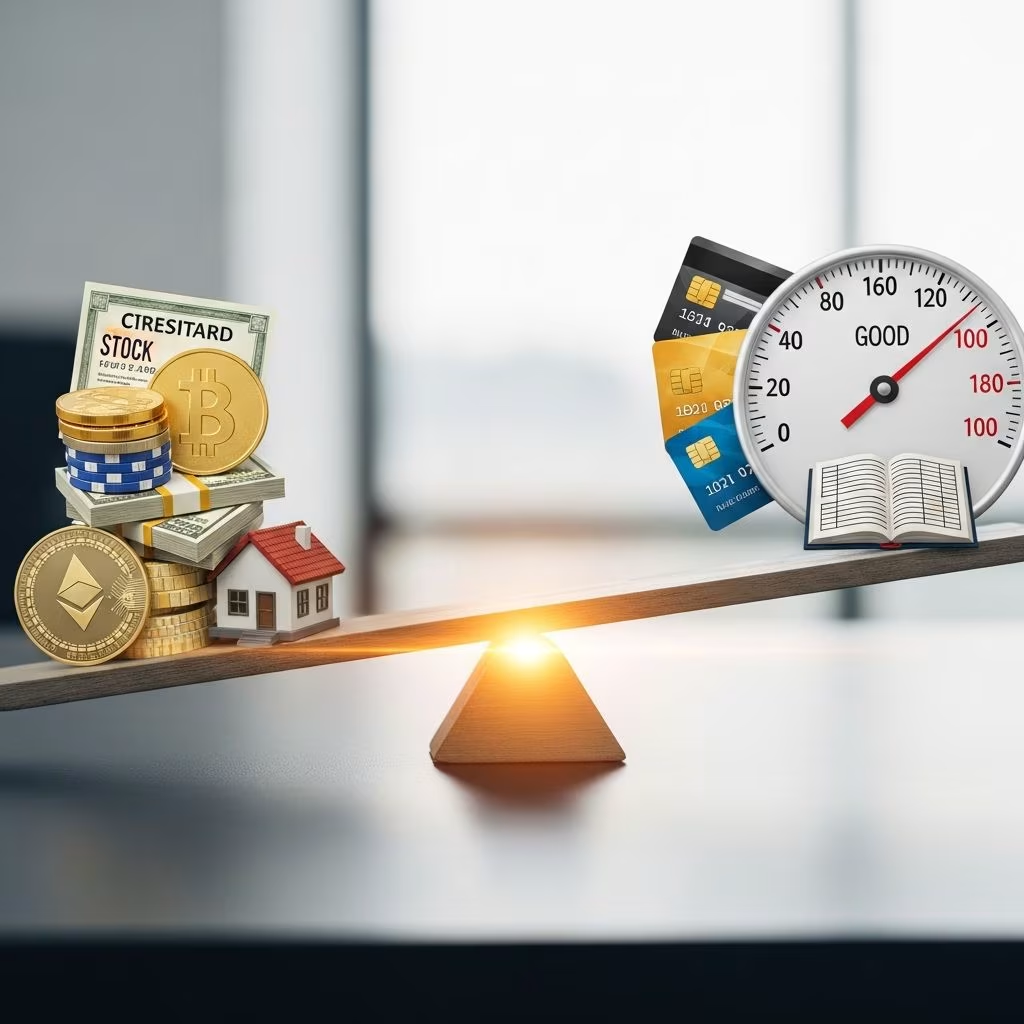
Most standard investment activities, such as purchasing stocks through brokerage accounts or contributing to retirement plans like 401(k)s or IRAs, do not directly influence your credit score. Credit scoring models from agencies like FICO and VantageScore rely exclusively on data from your credit reports, which typically exclude non-credit-related financial accounts.
However, certain investment strategies involving borrowing, such as margin accounts, can trigger indirect effects through hard credit inquiries or debt obligations. Understanding these nuances helps investors maintain both portfolio growth and credit integrity.
Core Mechanisms of Credit Scoring
Credit scores aggregate information from three major bureaus: Equifax, Experian, and TransUnion. These scores predict creditworthiness based on historical borrowing behavior, not investment performance. Key components include payment reliability, debt levels, account age, credit variety, and recent applications—none of which inherently track investment holdings.
Investment accounts remain invisible to credit reports unless they involve credit extensions. Brokerages rarely report balances or transactions to bureaus, preserving separation between investing and lending data.
Types of Investments and Their Credit Neutrality
Diverse investment vehicles exist, each with distinct credit implications—or lack thereof. Here’s a breakdown:
- Retirement Accounts (401(k), IRA, HSA): These tax-advantaged plans fund future security without credit checks or reporting. Contributions from paychecks bypass credit ecosystems entirely.
- Standard Brokerage Accounts: Opening one to trade stocks, bonds, or ETFs involves no credit pull. Account activity stays private from scoring algorithms.
- Mutual Funds and Index Funds: Pooled investments follow the same non-reporting pattern, focusing on market exposure rather than credit metrics.
This neutrality stems from regulatory boundaries: credit reports capture only “credit” products like loans and cards, excluding pure investment vehicles.
Scenarios Where Investments Might Indirectly Affect Credit
While direct impacts are rare, indirect pathways emerge in leveraged or high-risk setups.
Margin Accounts and Borrowing
A margin account allows borrowing against portfolio assets to amplify purchases. Approval may require a hard inquiry, dinging scores by 5-10 points temporarily (resolving in months). Actual margin debt isn’t reported unless defaulted into collections, but margin calls—demands for more funds during market dips—can strain liquidity, risking bill delinquencies elsewhere.
| Aspect | Standard Account | Margin Account |
|---|---|---|
| Credit Check | None | Possible hard inquiry |
| Reporting to Bureaus | No | Only on default |
| Score Risk | Zero direct | Inquiry + potential debt |
| Best Use | Long-term growth | Experienced traders |
Using Credit for Investments
FINRA warns against funding brokerages via credit card cash advances. High interest (often 20%+ APR) and fees erode returns, potentially leading to unpaid balances that harm payment history—the top scoring factor (35%). Brokerages typically ban direct card purchases anyway, routing through advances amplifies credit utilization risks.
Market Losses and Financial Ripple Effects
Portfolio downturns don’t touch credit reports, but real-world fallout can: depleted savings may delay loan payments, spiking utilization or creating lates. Proactive budgeting mitigates this.
The Five Pillars of Credit Scores Explained
Even without investments altering scores, mastering these factors optimizes your profile:
- Payment History (35%): Tracks on-time payments across loans and cards. One late payment lingers 7 years, but consistency rebuilds quickly.
- Credit Utilization (30%): Ratio of balances to limits. Aim below 30%; paying down cards boosts scores rapidly.
- Length of History (15%): Average account age signals reliability. Keep old accounts open.
- Credit Mix (10%): Balances revolving (cards) and installment (loans) debt positively.
- New Credit (10%): Limit inquiries; space applications 6+ months apart.
Investors should monitor these amid market volatility to avoid spillover effects.
Strategies to Protect Credit While Investing
Balance wealth-building with credit health through deliberate practices:
- Maintain emergency funds covering 3-6 months’ expenses to buffer investment losses.
- Avoid margin unless portfolio exceeds $100K and volatility tolerance is high.
- Use auto-payments for debts, insulating from market-induced cash crunches.
- Regularly review credit reports via AnnualCreditReport.com for errors.
- Build utilization buffer by requesting limit increases without spending more.
Tools like Experian’s free monitoring detect inquiries early.
Common Myths About Investments and Credit
Misconceptions abound:
- Myth: All Brokerage Openings Hurt Scores. False—only margin variants do.
- Myth: Stock Gains Boost Scores. No, scores ignore assets.
- Myth: Losses Directly Lower Scores. Indirect only via payment issues.
Advanced Considerations for Active Investors
For day traders or high-net-worth individuals, robo-advisors and no-margin platforms minimize risks. Tax-loss harvesting preserves capital without credit ties. When scaling to alternatives like options, ensure liquidity exceeds leverage.
Institutional data shows margin usage below 10% of retail accounts, underscoring its niche risks.
Frequently Asked Questions
Will opening a Robinhood or Fidelity account affect my score?
No, standard accounts skip credit checks. Margin opt-ins might trigger one.
Can crypto investments impact credit?
Similar to stocks: non-custodial wallets are invisible; borrowed crypto loans may report.
How long does a margin inquiry linger?
Hard inquiries fade from scores in 12 months, reports in 24.
Does 401(k) withdrawal hurt credit?
No direct hit, but early penalties reduce funds for debts.
Should I pay off cards before investing?
Yes—low utilization trumps marginal stock returns.
Investing empowers financial independence, but credit underpins borrowing power. By isolating the two, you harness markets without score sabotage. Prioritize fundamentals: diversified portfolios, emergency reserves, and impeccable payments ensure both thrive.
References
- Does Buying Stocks Affect My Credit Score? — Experian. 2023-10-15. https://www.experian.com/blogs/ask-experian/does-buying-stock-affect-credit-score/
- Using Credit Cards for Investing: Exercise Caution — FINRA. 2024-05-22. https://www.finra.org/investors/insights/credit-cards-and-investing
- What Affects Your Credit Score — Fidelity Investments. 2025-01-10. https://www.fidelity.com/learning-center/personal-finance/understanding-your-credit-score
- Does Investing Affect Your Credit Score — Chase. 2024-08-05. https://www.chase.com/personal/credit-cards/education/credit-score/do-investments-affect-your-credit-score
- Does Investing Affect Your Credit Scores? — MyScoreIQ. 2024-11-12. https://www.myscoreiq.com/articles/does-investing-affect-your-credit-scores/
This article is general information, not personal financial advice. Consider your own situation, or speak with a licensed adviser, before acting on it.


