

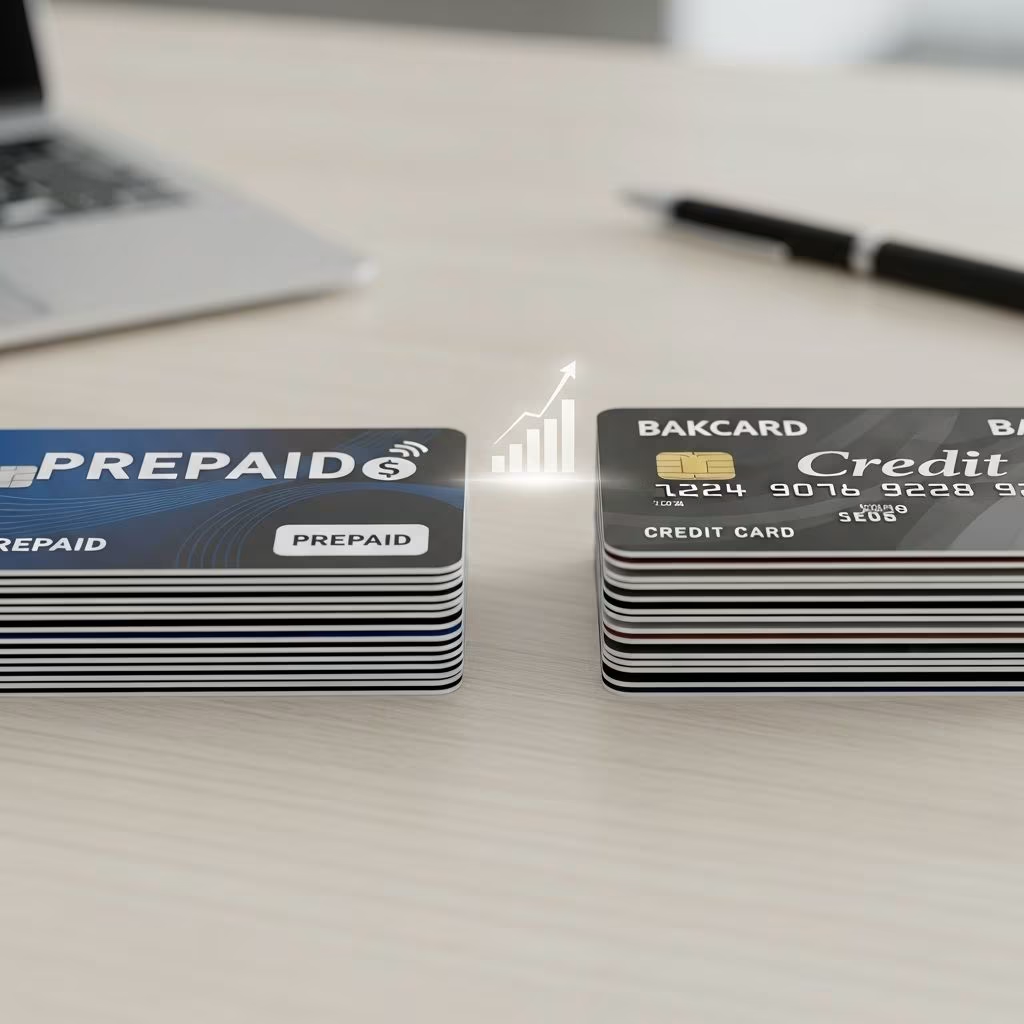
Prepaid cards resemble traditional credit cards in appearance but function fundamentally differently when it comes to influencing your financial profile. These cards require users to load funds upfront, limiting spending to the available balance, much like a digital wallet. Unlike standard credit cards that extend borrowing power and report activity to credit bureaus, prepaid options do not contribute to credit score calculations. This distinction is crucial for anyone aiming to establish or enhance their creditworthiness.
Understanding the Mechanics of Prepaid Cards
At their core, prepaid cards operate on a pay-as-you-go model. Users deposit money onto the card, which can then be used for purchases until the balance depletes. Reloadable versions allow repeated funding, while non-reloadable ones, similar to gift cards, become inactive once funds are exhausted. This setup provides a safeguard against overspending since no debt is incurred.
Key characteristics include:
- No credit check required: Approval depends on loading funds, not financial history.
- Immediate usability: Activate after purchase or funding without banking ties.
- Fee structures: Often include activation, reload, or transaction charges that can add up.
- Wide acceptance: Accepted where Visa or Mastercard logos appear, though some merchants restrict them.
While convenient for budgeting or those without bank accounts, this model lacks the borrowing element essential for credit building.
Why Prepaid Cards Fail to Impact Credit Scores
Credit scores, calculated by models like FICO or VantageScore, rely on data from the three major bureaus: Equifax, Experian, and TransUnion. This data encompasses payment history, credit utilization, length of credit history, new credit, and credit mix. Prepaid card issuers do not submit activity reports to these bureaus because no credit extension occurs—users spend pre-loaded personal funds, not borrowed money.
| Feature | Prepaid Card | Traditional Credit Card |
|---|---|---|
| Borrowing Involved | No (spend own money) | Yes (borrow from issuer) |
| Reports to Bureaus | No | Yes |
| Builds Credit History | No | Yes, with responsible use |
| Risk of Debt | None | Possible if not managed |
As shown, the absence of reporting means zero positive or negative effect on scores. Even consistent usage or reloads remain invisible to scoring algorithms.
Potential Benefits of Using Prepaid Cards
Despite their credit-neutral status, prepaid cards serve practical purposes. They promote spending discipline by capping expenditures at loaded amounts, helping avoid impulse buys or debt accumulation. Ideal for teens, travelers, or unbanked individuals, they offer cash-like security without carrying physical bills.
- Budgeting tool: Track expenses easily via apps or statements.
- Emergency funds: Designated loading prevents dipping into savings.
- Online shopping: Safer than cash for e-commerce without exposing bank details.
Additionally, they can foster responsible financial habits, such as regular reloading, which indirectly prepares users for credit products.
Common Misconceptions About Prepaid Cards and Credit
Marketing sometimes blurs lines, with some providers claiming credit-building features. However, standard prepaid cards universally skip bureau reporting. Rare exceptions might involve hybrid products, but verify terms—most ‘credit-building’ prepaid claims are misleading without major bureau involvement. Another myth: Prepaid cards as debit substitutes that build credit. Debit cards also don’t report positively, focusing instead on banking transactions.
Effective Strategies to Build Credit Without Prepaid Cards
For genuine credit improvement, opt for products that generate reportable history. Start with low-risk options tailored for beginners.
Secured Credit Cards
These require a refundable deposit matching the credit limit, assuring issuers of repayment. Responsible use—timely payments and low utilization—builds positive history. Many graduate to unsecured cards after six months of good behavior, reclaiming deposits.
Authorized User Status
Join a trusted family member’s card. Their positive history may boost yours if the primary user maintains low balances and on-time payments. Confirm the issuer reports authorized users to all bureaus.
Credit-Builder Loans
These installment loans hold funds in savings while you make fixed payments, reported as on-time. Ideal for diversifying credit mix without spending temptation.
Retail or Gas Cards
Store-specific cards often approve thin files, reporting activity if used judiciously.
Across strategies, prioritize:
- Paying balances fully monthly.
- Keeping utilization under 30%.
- Monitoring reports via free weekly pulls from AnnualCreditReport.com.
Risks and Pitfalls to Avoid
Prepaid cards aren’t risk-free. High fees—up to $10 activation, $5 reloads, $3 ATM withdrawals—erode value. Inactivity or overdraft fees apply if overlooked. Unlike credit cards, no purchase protections or rewards exist. For credit building, mismanaging alternatives like secured cards can harm scores via late payments.
Comparing Prepaid Cards to Other Starter Options
| Option | Credit Impact | Requirements | Cost |
|---|---|---|---|
| Prepaid Card | None | Funds to load | Fees vary |
| Secured Card | Positive potential | Deposit ($200+) | Annual fee possible |
| Authorized User | Positive if primary good | Trusted contact | None |
| Credit-Builder Loan | Positive | Small fee | Low interest |
Steps to Monitor and Improve Your Credit Journey
- Check current score: Use free tools from bureaus or apps.
- Select product: Match to risk tolerance, e.g., secured for control.
- Set autopay: Ensure on-time payments (35% of FICO score).
- Review statements: Dispute errors promptly.
- Track progress: Expect 3-6 months for noticeable gains.
Frequently Asked Questions (FAQs)
Can any prepaid card build credit?
No, standard prepaid cards do not report to credit bureaus, offering no score impact.
Do prepaid cards hurt your credit?
They neither help nor hurt, as activity goes unreported.
What’s the best first credit card for bad credit?
Secured cards from reputable issuers like Discover or Capital One, with deposit-based limits.
How long to build credit from zero?
6-12 months of consistent positive activity typically yields a usable score.
Are debit cards better for credit building?
No, like prepaid, they don’t report borrowing behavior.
Long-Term Financial Habits for Sustained Credit Health
Beyond starter products, diversify with installment loans or mortgages. Maintain multiple accounts for mix (10% of score). Avoid frequent applications hurting inquiry scores. Pair credit use with savings growth—aim for 3-6 months’ expenses in emergencies. Educate via CFPB resources for scam avoidance.
Transitioning from prepaid reliance to credit products marks financial maturity. Patience and discipline yield compounding benefits: lower loan rates, rental approvals, job opportunities. Track via free monitoring from Experian or Credit Karma for motivation.
References
- Do Prepaid Credit Cards Help Your Credit Score? — Experian. 2023-10-15. https://www.experian.com/blogs/ask-experian/do-prepaid-credit-cards-help-credit-scores/
- Do Prepaid Credit Cards Help Build Your Credit? — SoFi. 2024-05-20. https://www.sofi.com/learn/content/do-prepaid-credit-cards-build-credit/
- Do Prepaid Cards Build Credit? What Actually Works — Firstcard. 2024-02-10. https://www.firstcard.app/learn/blog/prepaid-cards-that-build-credit
- Do Prepaid Cards Build Credit? — Discover. 2024-08-05. https://www.discover.com/credit-cards/card-smarts/do-prepaid-cards-build-credit/
- Will Prepaid Credit Cards Help You Build Credit? — myFICO. 2023-11-12. https://www.myfico.com/credit-education/blog/prepaid-credit-cards
- Do prepaid credit cards build credit? — Chase. 2024-03-18. https://www.chase.com/personal/credit-cards/education/credit-score/do-prepaid-cards-build-credit/
This article is general information, not personal financial advice. Consider your own situation, or speak with a licensed adviser, before acting on it.


