

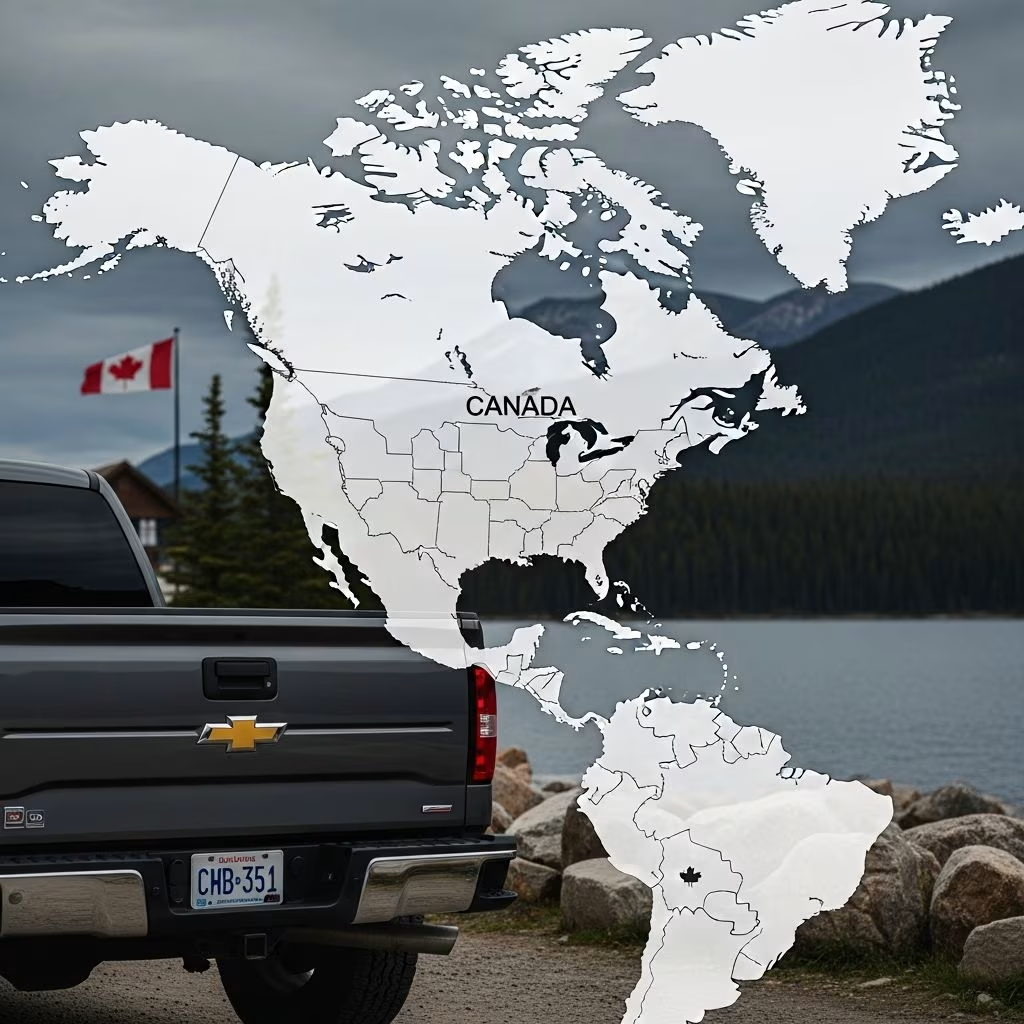
Most U.S. car insurance policies extend coverage to Canada under reciprocal agreements between the two nations, providing the same liability, collision, and comprehensive protections you have at home for short-term visits. This mutual recognition simplifies travel for tourists driving their own vehicles or rentals across the border.
Understanding Reciprocal Insurance Agreements
The foundation of U.S. auto coverage in Canada lies in interstate compacts that ensure policies from major American insurers are valid north of the border. These arrangements mean your standard policy terms, limits, and deductibles generally apply without interruption during temporary trips. For instance, if your policy includes uninsured motorist protection or roadside assistance, these benefits typically transfer seamlessly.
However, coverage isn’t automatic in every scenario. Policyholders must verify specifics with their provider, as some insurers impose restrictions based on trip duration or vehicle type. Government advisories from the U.S. State Department emphasize reviewing policies to align with Canadian standards, which often demand higher liability thresholds.
Required Documentation for Legal Driving
To drive legally in Canada, U.S. motorists need more than just a license. Essential items include:
- A valid U.S. driver’s license.
- Vehicle registration documents.
- Proof of insurance, preferably the Canada Non-Resident Inter-Province Motor Vehicle Liability Insurance Card (Yellow Card).
- A passport or approved travel ID for border crossing.
The Yellow Card is a standardized form issued by your U.S. insurer confirming coverage meets Canadian inter-province liability rules. Without it, authorities may issue fines up to several hundred dollars or impound your vehicle. Many insurers provide this free upon request; alternatives like your policy declaration page or ID card may suffice in some provinces, but the Yellow Card is the safest option.
| Document | Purpose | Issued By |
|---|---|---|
| Yellow Card | Proves inter-province liability | Your U.S. insurer |
| Insurance ID Card | Basic proof of coverage | Your U.S. insurer |
| Policy Declaration | Detailed coverage outline | Your U.S. insurer |
| Driver’s License | Driving authorization | State DMV |
Navigating Provincial Insurance Variations
Canada’s provinces set their own minimum liability requirements, often exceeding U.S. state standards. Most mandate at least C$200,000 in third-party liability, with variations:
- Quebec: C$50,000 minimum.
- Nova Scotia and Manitoba: C$500,000 or more.
- Other provinces: Typically C$200,000.
If your U.S. policy falls short, you risk personal financial liability in an accident. Contact your insurer to confirm or purchase a temporary endorsement boosting limits to match. No-fault insurance rules also differ; provinces like Ontario use threshold systems where minor injuries may not qualify for payouts.
Rental Vehicles and Cross-Border Travel
U.S. policies usually cover rental cars in Canada, whether picked up stateside or in Canada, extending collision, comprehensive, and liability protections. Rental agencies often supply the Yellow Card or equivalent. For added security, consider:
- Declining rental company’s collision damage waiver (CDW) if your policy covers it, to avoid double premiums.
- Purchasing supplemental liability from the rental firm for limits above your policy’s cap.
- Checking credit card perks, as some offer secondary rental coverage.
Cross-border rentals require agency approval; confirm the contract permits driving into Canada to avoid voiding coverage.
Duration Limits and Residency Changes
U.S. insurance remains valid for tourists up to six months, aligning with visitor status rules. Exceeding this without a visa invalidates your policy, necessitating Canadian coverage. Permanent movers must insure and register vehicles provincially within days of residency, as U.S. policies cease upon establishing a Canadian address.
Costs in Canada average higher due to mandated public auto insurance in some areas and elevated premiums. New residents often face rate hikes until building a local driving record.
Potential Coverage Gaps and Solutions
While core protections transfer, gaps may arise:
- Medical Payments: Canada’s universal healthcare doesn’t cover U.S. visitors fully; ensure personal injury protection (PIP) adequacy.
- Roadside Assistance: Verify if services operate in remote areas like the Yukon.
- High-Value Vehicles: Gap coverage for leased or financed cars may need review.
Mitigate by buying short-term policies from providers specializing in cross-border travel or consulting brokers for endorsements. The U.S. State Department recommends supplemental insurance for comprehensive peace of mind.
Steps Before Your Trip
- Call your insurer to request the Yellow Card and confirm coverage details.
- Review declarations page for Canada-specific exclusions.
- Compare your liability to provincial minimums; adjust if needed.
- Gather all documents in a travel folder.
- Notify your agent of trip dates for accurate claims processing.
Frequently Asked Questions
Does every U.S. insurer cover Canada?
Nearly all major providers do via reciprocal agreements, but confirm with yours.
What’s the fine for lacking proof of insurance?
Fines vary by province but can exceed C$500, plus potential vehicle impoundment.
Can I use my insurance for a rental from Canada?
Yes, U.S. policies apply, but rental contracts must allow border crossing.
How soon must I get Canadian insurance if moving?
Immediately upon residency; U.S. coverage ends after six months for tourists.
Are there differences in accident claims?
Claims process similarly, but notify both insurers promptly and report to local police.
Provincial Liability Minimums Overview
| Province/Territory | Minimum Liability (CAD) |
|---|---|
| Alberta | 200,000 |
| British Columbia | 200,000 |
| Manitoba | 500,000 |
| New Brunswick | 200,000 |
| Newfoundland | 200,000 |
| Nova Scotia | 500,000 |
| Ontario | 200,000 |
| Prince Edward Island | 200,000 |
| Quebec | 50,000 |
| Saskatchewan | 300,000 |
Note: Figures are standard minimums; higher limits recommended.
References
- Does U.S. Car Insurance Cover You in Canada? — Experian. 2023. https://www.experian.com/blogs/ask-experian/does-us-car-insurance-cover-you-in-canada/
- Auto Insurance Coverage in Canada — AutoInsurance.com. 2024. https://www.autoinsurance.com/coverage/canada/
- Chicago to Canada Road Trip: Does U.S. Car Insurance Work? — InsureOnTheSpot.com. 2023. https://www.insureonthespot.com/us-car-insurance-canada-chicago/
- Does My U.S. Car Insurance Work in Canada? — Allstate. 2024. https://www.allstate.com/resources/car-insurance/car-insurance-canada
- Can I drive in Canada with US insurance? — Progressive. 2024. https://www.progressive.com/answers/driving-in-canada/
This article is general information, not personal financial advice. Consider your own situation, or speak with a licensed adviser, before acting on it.


