

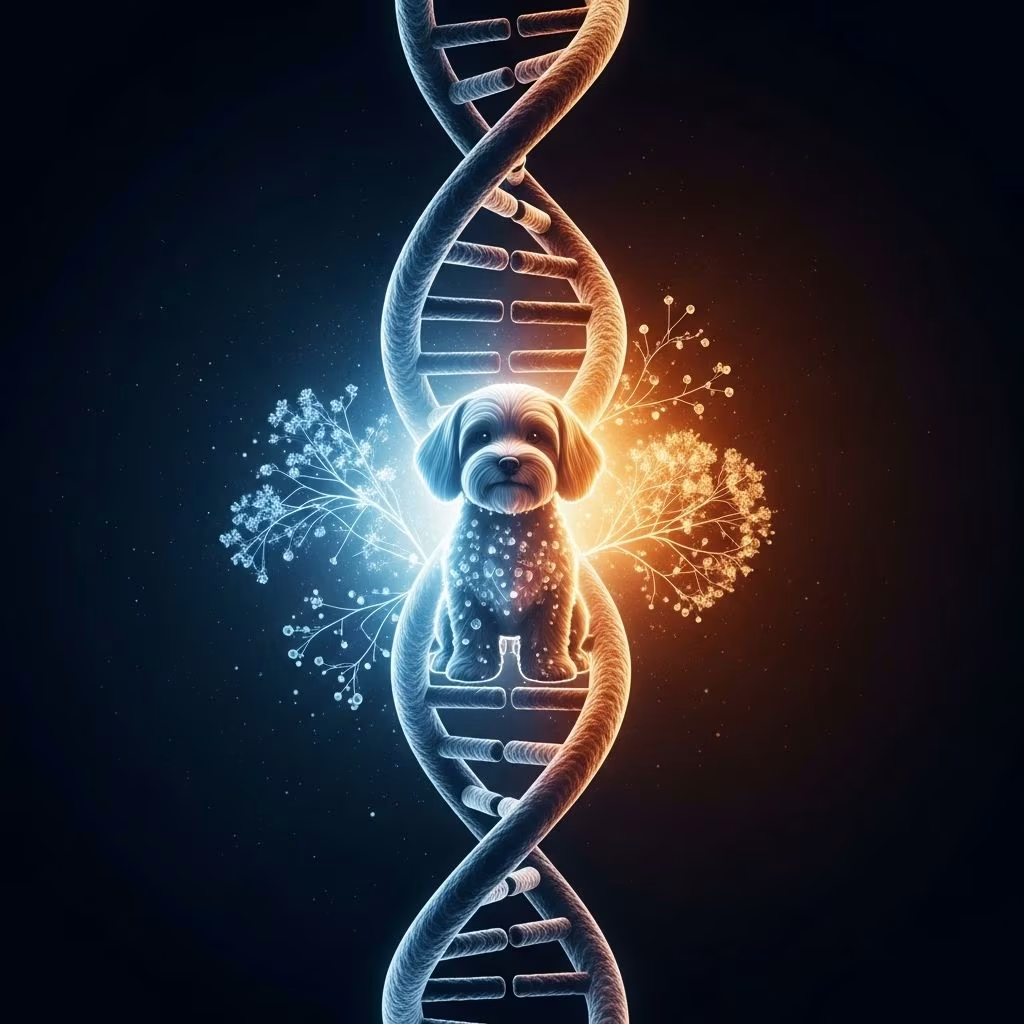
The Story Behind Barbra Streisand’s Cloned Dogs
In 2018, when legendary singer and filmmaker Barbra Streisand revealed that two of her three Coton de Tulear dogs were clones, the announcement sent shockwaves through both the entertainment world and the scientific community. At 75 years old, Streisand made headlines by confessing that her beloved dogs, Miss Violet and Miss Scarlet, were genetic duplicates of her cherished pet Samantha, who had passed away after 14 years together.
Streisand’s decision to pursue dog cloning stemmed from profound grief. As she explained in an op-ed published in the New York Times, she was devastated by Samantha’s loss and wanted to preserve some part of her beloved companion. “I was so devastated by the loss of my dear Samantha, after 14 years together, that I just wanted to keep her with me in some way,” she wrote. “It was easier to let Sammie go if I knew I could keep some part of her alive, something that came from her DNA.” A friend’s successful experience with dog cloning inspired her to pursue this unconventional path to cope with her loss.
The decision immediately generated considerable public discussion about pet cloning, raising questions about both its feasibility and its moral implications. Streisand’s openness about the procedure, coupled with her celebrity status, brought an obscure biotechnology into mainstream conversation.
Understanding the Science of Dog Cloning
Dog cloning is a complex biological process that requires sophisticated laboratory techniques and careful coordination. The procedure begins with collecting cells from the original dog—in Streisand’s case, tissue was extracted from Samantha’s mouth and stomach. These cells must be harvested quickly after death because animal tissue begins to degrade rapidly as bacteria attack the newly defenseless cells.
Once viable cells are obtained, scientists extract the genetic material (DNA) from these cells. The next critical step involves removing the nucleus from a donor egg cell belonging to another dog. The DNA from the deceased pet is then inserted into this empty egg cell, essentially replacing the egg’s original genetic material with the genetic blueprint of the deceased animal.
The reconstructed egg cell is then stimulated using an electrical burst, which jumpstarts cell division. After a few days, if the process successfully takes hold, the laboratory can surgically implant the developing cells into a surrogate dog mother. These surrogate animals are typically treated with hormones and sometimes made to mate with vasectomized male dogs to facilitate pregnancy. Under ideal circumstances, the surrogate can carry the pregnancy to term and deliver healthy cloned puppies.
Despite the seemingly straightforward description, the process remains extraordinarily inefficient. The first cloned dog, Snuppy, resulted from more than 1,000 embryos implanted into 123 surrogates, with only three pregnancies successfully carried to term. Modern techniques have improved success rates to approximately 20 percent, according to cloning researchers, yet this still represents a significant number of failed attempts and surrogate animals involved in each successful clone.
The Cost of Pet Cloning
One of the most significant barriers to dog cloning remains its substantial financial cost. Currently, it costs $50,000 to clone a dog or cat with major pet cloning companies. This price tag places the procedure well beyond the reach of average pet owners, restricting it to wealthy individuals and celebrities like Streisand.
For those not immediately ready to commit to a full cloning procedure, pet cloning companies offer genetic preservation services. ViaGen Pets, one of the leading providers, charges $1,600 for genetic preservation of a pet’s DNA, with an additional annual storage fee of $150. This option allows pet owners to preserve their animal’s genetic material for potential future cloning, essentially maintaining the possibility without immediately pursuing the expensive procedure.
The financial model has proven successful for cloning companies. ViaGen reports having cloned over two thousand animals over a 25-year period. The vast majority of the company’s clients are people who pay for genetic preservation rather than immediate cloning, keeping their options open while maintaining a connection to their deceased pets through preserved DNA.
The Ethical Concerns Surrounding Dog Cloning
Despite the technological marvel of pet cloning, significant ethical concerns have emerged from animal welfare organizations, bioethicists, and veterinary professionals. These concerns extend beyond mere philosophical debate and touch on practical animal welfare issues.
Animal Welfare and Surrogate Mothers
One of the primary ethical objections involves the treatment of surrogate animals. The cloning process requires numerous dogs to produce a single clone, including egg donors and surrogate mothers who carry the cloned pregnancies. The ASPCA has taken a formal position on this issue, calling for “a moratorium on the research, promotion and sale of cloned and bioengineered pets” while a multidisciplinary commission investigates the ethical consequences.
Bioethicist Jessica Pierce has described the situation as creating “a whole canine underclass that remains largely invisible to us but whose bodies serve as a biological substrate.” Surrogates, whether sourced from shelters or purpose-bred specifically for this role, live in biosecure facilities throughout the cloning and pregnancy process. While company representatives note that surrogate animals are eventually retired and put up for adoption after producing one litter, critics argue that this doesn’t adequately address the inherent exploitation involved in using animals as biological vessels.
The Personality Problem
Perhaps the most fundamental ethical issue with pet cloning involves a widespread misunderstanding about what cloning can actually achieve. Centuries of selective breeding have created a misconception that a dog’s genetic makeup determines its personality and behavioral characteristics. Cloning companies may inadvertently perpetuate this misunderstanding through their marketing and messaging.
Dr. Alexandra Horowitz, an expert on canine behavior, explains the scientific reality: “There might be some breed tendencies, and there certainly are tendencies that a genome will avail that makes a cloned dog maybe likelier than some other non-genetically similar dog to do a kind of thing. But everything that matters to us about the personality of a dog is not in those genes. Everything is in the interaction of that genome with the environment, starting from the time they’re in utero—just as with humans.”
Personality develops through complex interactions between genetics and environment, beginning even before birth and continuing throughout the animal’s life. A cloned dog will have the same genetic makeup as the original but will have different experiences, different environmental exposures, and will live in different circumstances. These differences inevitably shape behavior and personality in profound ways.
Notably, Streisand herself has acknowledged this reality. She told Variety that her two cloned pups “have different personalities” than Samantha. In her New York Times op-ed, she wrote: “Each puppy is unique and has her own personality. You can clone the look of a dog, but you can’t clone the soul.” This contradiction—pursuing cloning with expectations of recreating a lost pet while simultaneously acknowledging that clones cannot replicate the original animal’s unique essence—highlights the fundamental flaw in the reasoning that drives many people to pursue this expensive procedure.
The Broader Implications for Pet Owners
Beyond the direct ethical issues, animal behavior experts and grief counselors worry that pet cloning may prevent people from processing loss and developing healthy coping mechanisms. When a beloved pet dies, the grief and mourning process serves important psychological functions. Attempting to recreate or replace the lost animal through cloning may interfere with this natural healing process.
Dr. Bernard Williams, a veterinary behaviorist, expresses concern that “cloning a pet could be a barrier to finding healthy ways to cope with their loss and discovering why the relationship was so meaningful—and not reproducible.” He emphasizes that what makes pet-owner relationships special is the uniqueness of each individual animal: “What makes these relationships special and unique is the fact that these are individuals with their own unique personalities, and they fit into our lives in a lot of different ways that make those moments special. We actually transition through that lifespan with them, and we’re changing through that process as well. So the idea that somehow, we are going to recreate that experience is also kind of a faulty premise from just a purely developmental perspective.”
Industry Standards and Surrogate Care
Despite the ethical concerns, the pet cloning industry maintains that it follows established standards for animal care. Surrogate animals live in biosecure facilities with dedicated animal care teams and staff veterinarians. After producing a litter, surrogates remain with the cloned puppies or kittens for approximately eight weeks to facilitate nursing and weaning before being retired.
Some cloning companies work with shelters and rescue organizations to source surrogate animals, providing these animals with homes and care throughout the process. Once retired from the breeding program, these surrogates are offered for adoption. In some cases, company employees have adopted retired surrogates themselves. For example, one ViaGen employee adopted an 8-week-old German Shepherd clone named Vader that resulted from a multiple-clone pregnancy when the owners only had room for one clone.
Potential Future Applications Beyond Pet Cloning
While pet cloning remains controversial for companion animals, the technology has broader applications that some view more favorably. Conservation efforts, for instance, have long stored DNA from endangered and extinct species. Zoos worldwide maintain what they call “frozen zoos” containing genetic material from their animals, with some DNA preserved for over 40 years, such as that from Przewalski’s horses. This preservation opens the possibility of using cloning technology to help restore endangered populations or prevent species extinction.
Additionally, some clients pursue dog cloning for working animals. Police departments, schools, and other organizations sometimes want multiple clones of particularly effective working dogs, and the cloning process can produce multiple puppies per surrogate pregnancy, making this more economically feasible for these applications than for individual pet owners.
Public and Expert Response to Streisand’s Decision
When Streisand’s dog cloning became public knowledge, reactions ranged from sympathetic understanding to harsh criticism. Some people connected with her grief and recognized the depth of her attachment to Samantha. Others viewed the decision as self-indulgent and ethically problematic, particularly given the involvement of surrogate animals and the perpetuation of a flawed understanding about what cloning can achieve.
The controversy helped launch broader public conversations about pet cloning, animal welfare, and the boundaries of biotechnology. Media coverage introduced millions of people to the realities of dog cloning, including its costs, inefficiencies, and ethical complexities. Streisand’s openness about her experience, while attracting criticism, also provided valuable educational opportunities about a technology that had previously remained largely invisible to the general public.
Frequently Asked Questions
Q: How much does dog cloning cost?
A: Dog cloning currently costs approximately $50,000 through companies like ViaGen Pets. Genetic preservation of a pet’s DNA costs $1,600 with an annual $150 storage fee.
Q: Why did Barbra Streisand clone her dog?
A: Streisand was deeply grieved by the loss of her 14-year-old Coton de Tulear, Samantha, and wanted to preserve some part of her beloved companion through cloning. She was inspired by a friend who had successfully cloned his own dog.
Q: Can cloned dogs have the same personality as the original?
A: No. While cloned dogs share the same genetic makeup, personality develops through both genetics and environmental interactions. Streisand herself acknowledged this, noting that her cloned dogs “have different personalities” than Samantha.
Q: What is the success rate of dog cloning?
A: The current success rate is approximately 20 percent. Historically, the first cloned dog required over 1,000 embryos implanted into 123 surrogates to produce just three successful pregnancies.
Q: What ethical concerns exist about pet cloning?
A: Key concerns include the welfare of surrogate animals, the inefficiency of the process requiring numerous animals, and the false expectations pet owners may have about clones replicating their deceased pets’ unique personalities and characteristics.
Q: Are cloned dogs healthy?
A: Cloned dogs are typically normal and healthy, looking and acting like conventionally bred animals with no unusual physical characteristics or behavioral abnormalities.
Conclusion
Barbra Streisand’s decision to clone her dog brought international attention to a complex biotechnology that sits at the intersection of science, ethics, economics, and emotion. While her choice reflected genuine grief and love for her pet, it also highlighted fundamental misunderstandings about what cloning can and cannot achieve. The technology remains controversial, expensive, and ethically complicated, with significant concerns about animal welfare and questionable outcomes relative to what pet owners hope to accomplish.
The broader implications of pet cloning extend beyond celebrity decisions. As the technology develops and becomes potentially more accessible, society must grapple with difficult questions about the appropriate use of biotechnology, our relationship with animals, and healthy ways to process pet loss. While conservation applications may justify the continuation and development of cloning technology, the practice of cloning companion animals for grieving owners remains ethically fraught and scientifically disappointing compared to expectations.
References
- “The Real Reasons You Shouldn’t Clone Your Dog” — Smithsonian Magazine. 2020. https://www.smithsonianmag.com/science-nature/why-cloning-your-dog-so-wrong-180968550/
- “Best Friend 2.0: Pet Cloning—Should You Do It?” — American Animal Hospital Association (AAHA). https://www.aaha.org/trends-magazine/publications/best-friend-2-0-pet-cloning-should-you-do-it/
- ViaGen Pets Official Information — ViaGen Inc. https://www.viagensets.com/
- “Position on Pet Cloning” — American Society for the Prevention of Cruelty to Animals (ASPCA). https://www.aspca.org/
This article is general information, not personal financial advice. Consider your own situation, or speak with a licensed adviser, before acting on it.


