

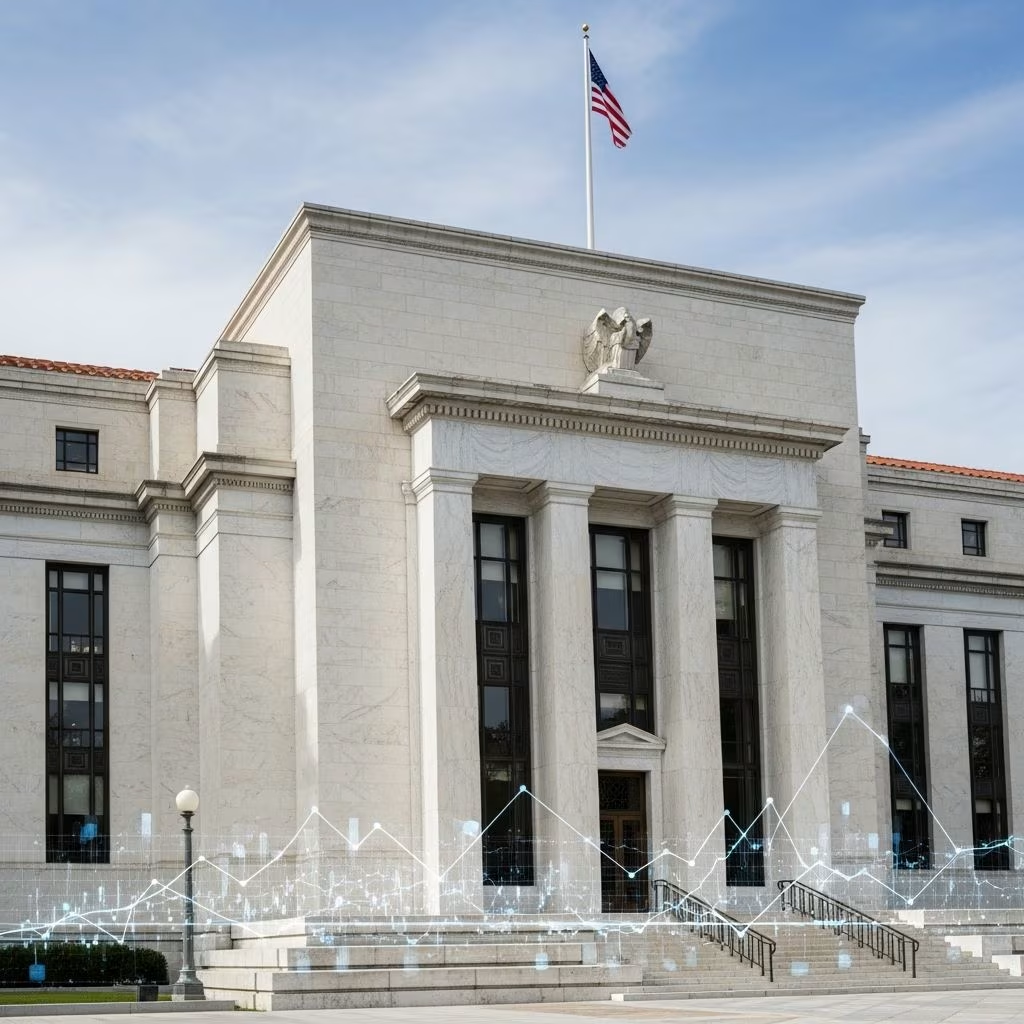
The Federal Reserve, commonly known as the Fed, serves as the central banking system of the United States, playing a pivotal role in maintaining economic stability and growth. Established by Congress in 1913 through the Federal Reserve Act, it addresses key challenges like banking panics and promotes maximum employment, stable prices, and moderate long-term interest rates.
Historical Foundations of the Fed
The creation of the Federal Reserve responded to recurring financial crises, particularly the Panic of 1907, which highlighted the need for a more resilient banking system. Prior to its establishment, the U.S. lacked a central authority to manage currency elasticity or provide rediscounting for commercial paper. The Federal Reserve Act aimed to furnish an elastic currency, improve banking supervision, and establish regional reserve banks to balance private banking interests with government oversight.
Over the decades, the Fed’s responsibilities have evolved. During the Great Depression, it expanded its role in financial stability. Post-World War II, it refined monetary policy tools. In recent years, responses to events like the 2008 financial crisis and the COVID-19 pandemic demonstrated its capacity to inject liquidity and support markets through innovative measures.
Core Structure and Governance
The Fed operates as a unique blend of public and private elements, comprising three primary entities: the Board of Governors, the 12 regional Federal Reserve Banks, and the Federal Open Market Committee (FOMC).
- Board of Governors: Located in Washington, D.C., this seven-member body is appointed by the President and confirmed by the Senate. Members serve 14-year terms to ensure independence from political cycles. The Chair, also appointed by the President, leads the board and influences policy direction.
- Regional Federal Reserve Banks: These 12 banks, spread across major U.S. districts, act as the operational arms. Each has a president appointed by its board, with input from member banks. They supervise local banks, distribute currency, and provide economic research.
- Federal Open Market Committee (FOMC): Composed of the seven governors and five Reserve Bank presidents (New York Fed always votes, others rotate), the FOMC sets monetary policy. It meets eight times annually to assess data and adjust strategies.
This decentralized structure fosters diverse regional input while maintaining centralized policy control, safeguarding against excessive political influence.
Primary Functions and Responsibilities
The Fed executes five main functions to support the U.S. economy: conducting monetary policy, supervising financial institutions, maintaining financial stability, fostering payment systems, and promoting consumer protection.
| Function | Description | Impact |
|---|---|---|
| Monetary Policy | Influences money supply and credit availability to achieve dual mandate goals. | Affects employment, inflation, and growth. |
| Financial Stability | Monitors systemic risks and engages domestically/internationally. | Prevents crises like 2008. |
| Supervision & Regulation | Oversees banks for safety and soundness. | Protects depositors and markets. |
| Payment Systems | Manages clearing and settlement for efficiency. | Ensures smooth transactions nationwide. |
| Consumer Protection | Enforces laws safeguarding credit rights. | Supports community development. |
These functions collectively promote a healthy financial ecosystem.
The Dual Mandate: Employment and Price Stability
Congress assigned the Fed a dual mandate: maximum sustainable employment and stable prices, typically targeting 2% average inflation. Maximum employment means supporting conditions where individuals willing and able to work can find jobs without accelerating inflation. Price stability prevents erosion of purchasing power, fostering predictable economic planning.
The FOMC evaluates indicators like unemployment rates, CPI, and GDP growth. Moderate long-term interest rates emerge as a byproduct of achieving these goals, signaling balanced policy.
Key Tools of Monetary Policy
The Fed employs several instruments to implement policy, primarily through the FOMC’s target for the federal funds rate—the overnight lending rate between banks.
- Open Market Operations (OMO): The primary tool. Buying securities injects reserves, lowering rates; selling withdraws reserves, raising them. This adjusts bank lending capacity.
- Discount Rate: Interest charged to banks borrowing directly from the Fed’s discount window. Adjustments signal policy stance.
- Reserve Requirements: Mandated deposit percentages held as reserves. Rarely changed, but impactful.
- Forward Guidance: Public statements on future policy to shape expectations.
- Quantitative Easing (QE): Large-scale asset purchases during crises to lower long-term rates.
These tools transmit policy via channels like interest rates on loans, mortgages, and investments, influencing spending and investment.
How Fed Decisions Influence Daily Life
Fed actions ripple through the economy. Higher federal funds rates increase borrowing costs for mortgages, auto loans, and credit cards, cooling spending to tame inflation. Lower rates stimulate borrowing, homebuying, and business expansion, boosting jobs.
Investors monitor FOMC meetings for rate signals affecting stocks, bonds, and currencies. For instance, rate hikes strengthen the dollar but pressure equities; cuts often lift markets. Savers benefit from higher yields on deposits during tightening cycles.
During downturns, the Fed provides liquidity to avert panics, as seen in 2020 when it expanded its balance sheet dramatically.
Independence and Accountability
The Fed’s independence—long terms, self-funded operations—insulates decisions from short-term politics, enabling focus on long-term stability. Yet, it remains accountable via congressional testimonies, audited financials (excluding policy), and public communications like the Beige Book and FRED database.
Critics debate its influence, but empirical evidence supports its role in reducing recession severity and inflation volatility since the 1980s.
Challenges Facing the Fed Today
Modern challenges include persistent inflation, supply chain disruptions, geopolitical tensions, and climate risks to financial stability. Balancing the dual mandate amid fiscal policy overlaps tests policymakers. The Fed also navigates digital currencies and fintech innovations, potentially reshaping payment systems.
Global standing requires coordination with other central banks, as U.S. policy affects worldwide capital flows.
Frequently Asked Questions
What is the Fed’s inflation target?
The Fed aims for 2% inflation on average, measured by the PCE index, to allow economic flexibility without eroding purchasing power.
How often does the FOMC meet?
Eight times per year, with additional meetings as needed. Decisions are announced with projections and press conferences.
Who appoints the Fed Chair?
The U.S. President nominates, and the Senate confirms. Terms are four years, renewable.
Does the Fed print money?
The U.S. Treasury prints physical currency, but the Fed controls money supply through policy tools.
Can the Fed cause recessions?
Tightening to control inflation can slow growth, but timely action mitigates downturns.
This comprehensive overview equips readers with foundational knowledge of the Federal Reserve’s operations and significance. Staying informed on FOMC announcements aids personal financial planning.
References
- Federal Reserve – Wikipedia — Wikipedia. 2026-02-06. https://en.wikipedia.org/wiki/Federal_Reserve
- The Fed’s Functions – Federal Reserve Structure and Functions — Federal Reserve Bank of Atlanta. 2026-02-06. https://www.atlantafed.org/about/publications/fed-structure-and-functions/functions
- What Is the Federal Reserve and How Does It Work? — Morningstar. 2026-02-06. https://www.morningstar.com/economy/what-is-federal-reserve-how-does-it-work
- The Fed’s Functions — Federal Reserve History. 2026-02-06. https://www.federalreservehistory.org/essays/feds-functions
- The Federal Reserve System Purposes & Functions – Section 1 — Board of Governors of the Federal Reserve System. 2026-02-06. https://www.federalreserve.gov/aboutthefed/files/pf_1.pdf
- The Fed Explained — Board of Governors of the Federal Reserve System. 2026-02-06. https://www.federalreserve.gov/aboutthefed/the-fed-explained.htm
This article is general information, not personal financial advice. Consider your own situation, or speak with a licensed adviser, before acting on it.


