

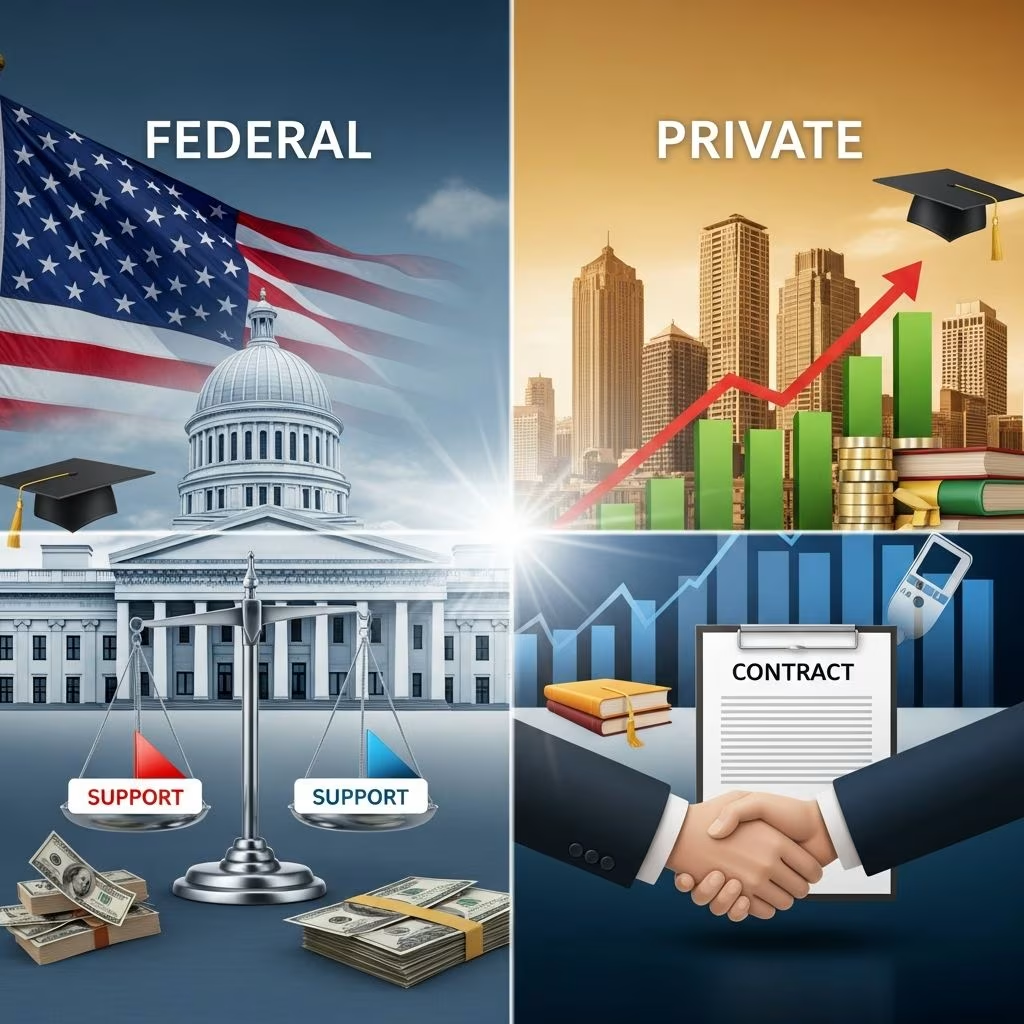
Federal student loans, issued directly by the U.S. Department of Education, offer standardized terms, borrower protections, and accessibility without stringent credit requirements for most types. Private student loans, provided by banks, credit unions, and other lenders, often fill funding gaps but come with variable terms based on creditworthiness.
Understanding Federal Student Loans
Federal loans stand out for their reliability and support mechanisms designed to assist a wide range of students. To access them, students must submit the Free Application for Federal Student Aid (FAFSA), which determines eligibility for various aid types including grants, work-study, and loans.
- Fixed Interest Rates: Rates are set annually by Congress and remain constant throughout the loan term, providing payment predictability. For 2025, undergraduate Direct loans range from 6.39% to 8.94%.
- No Credit Check for Most Loans: Direct Subsidized and Unsubsidized loans do not require a credit evaluation, making them ideal for those building credit history.
- Grace Period: Repayments typically begin six months after graduation or dropping below half-time enrollment.
- Subsidies Available: Subsidized loans for undergraduates with demonstrated need have interest covered by the government while in school at least half-time.
These features make federal loans the recommended starting point for education financing.
Exploring Private Student Loans
Private loans serve as a supplement when federal aid falls short of covering full college costs. Lenders assess applications based on credit scores, income, and often require a cosigner for better terms.
- Variable or Fixed Rates: Options range from 3.39% to 17.99%, potentially lower for excellent credit but riskier with variables tied to market indexes.
- Higher Borrowing Limits: Many cover up to the full cost of attendance, unlike federal caps.
- Flexible Repayment During School: Some offer interest-only or deferred payments, though terms vary widely.
- No Origination Fees: Unlike federal loans’ 1.057% fee, private options often waive this.
Shopping multiple lenders is crucial, as rates and conditions differ significantly.
Key Differences in a Comparison Table
| Feature | Federal Student Loans | Private Student Loans |
|---|---|---|
| Interest Rates | Fixed (6.39%-8.94% for undergrads) | Fixed or variable (3.39%-17.99%) |
| Credit Check | Not required (except PLUS) | Required; cosigner often needed |
| Repayment Start | 6-month grace period | Varies; may start in school |
| Borrowing Limits | $31,000-$57,500 aggregate | Up to full cost of attendance |
| Protections | Forgiveness, deferment, IDR plans | Limited; lender-specific |
| Fees | 1.057% origination | Usually none |
This table highlights why federal loans prioritize accessibility and stability, while private loans emphasize customization.
Repayment Options and Flexibility
Federal loans provide multiple repayment plans, including income-driven repayment (IDR) where payments cap at 10% of discretionary income over 20-25 years, with potential forgiveness. Deferment and forbearance pause payments during hardships like unemployment or residency.
Private loans lack standardized IDR but may offer fixed terms from 5-20 years. In-school payments can reduce interest accrual, beneficial for those with part-time jobs. However, changing terms post-origination is rare without refinancing.
Borrower Protections and Forgiveness Programs
A major advantage of federal loans is robust safeguards. Public Service Loan Forgiveness (PSLF) erases remaining balances after 120 qualifying payments for government or nonprofit workers. Teacher Loan Forgiveness and other targeted programs exist too.
Private loans rarely offer forgiveness, placing full repayment burden on borrowers. This underscores exhausting federal options first.
Cost of Attendance Gaps and When Private Loans Fit
Federal limits often leave shortfalls. For a dependent undergraduate at public in-state schools, four-year costs average $109,320 against $31,000 federal max, creating a $78,320 gap. Private colleges widen this to $188,200.
| Student Type | 4-Year Cost (Public) | Federal Max | Gap |
|---|---|---|---|
| Dependent Public | $109,320 | $31,000 | $78,320 |
| Dependent Private | $219,200 | $31,000 | $188,200 |
| Independent Public | $109,320 | $57,500 | $51,820 |
| Independent Private | $219,200 | $57,500 | $161,700 |
Private loans bridge these gaps effectively for graduate students, parents with strong credit, or those maxed on federal aid.
Pros and Cons of Each Loan Type
Federal Loans Pros
- Accessible without good credit
- Income-based repayment and forgiveness
- Fixed rates and subsidies
- Government-backed protections
Federal Loans Cons
- Borrowing caps
- Origination fees
- Higher rates for some vs private elite rates
Private Loans Pros
- Potentially lower rates for top credit
- Higher limits and flexible terms
- No fees, cosigner release options
Private Loans Cons
- Credit-dependent approval
- Variable rates risk
- Fewer protections or forgiveness
Balancing these helps tailor financing strategies.
Strategies for Smart Borrowing
Always file FAFSA first to maximize federal aid. Compare private offers using tools from lenders like credit unions. Consider cosigners wisely, as they share liability. Refinancing federal to private forfeits protections, so avoid unless rates drop significantly.
- Prioritize scholarships and grants.
- Work-study or part-time jobs.
- Budget for total costs including living expenses.
Frequently Asked Questions (FAQs)
What is the first step for student loans?
Complete the FAFSA to access federal aid.
Can I get private loans without a cosigner?
Possible but rates higher; strong credit helps.
Are federal loans better than private?
For most, yes due to protections; private for gaps or better rates.
What if I can’t afford payments?
Federal offers IDR, deferment; private—contact lender.
Do private loans have forgiveness?
Rarely; no government programs apply.
References
- Private Vs. Federal Student Loans: Which Is Better In 2025? — Bankrate. 2025. https://www.bankrate.com/loans/student-loans/federal-vs-private-student-loans/
- Federal and Private Student Loans: What’s the Difference? — Navy Federal Credit Union. 2025. https://www.navyfederal.org/makingcents/college-planning/federal-vs-private-student-loans.html
- Federal vs Private Student Loans: Understanding the Key Differences — Sallie Mae. 2025. https://www.salliemae.com/college-planning/student-loans-and-borrowing/compare-federal-vs-private-loans/
- Comparing Federal and Private Student Loans — Penn State University. 2025. https://www.psu.edu/costs-aid/types-of-aid/loans/comparing-federal-and-private-student-loans
- Federal vs. Private Education Loans — Association of American Medical Colleges. 2025. https://students-residents.aamc.org/financial-aid-resources/federal-vs-private-education-loans
- Federal vs Private Loans — Federal Student Aid (U.S. Department of Education). 2025. https://studentaid.gov/understand-aid/types/loans/federal-vs-private
This article is general information, not personal financial advice. Consider your own situation, or speak with a licensed adviser, before acting on it.


