

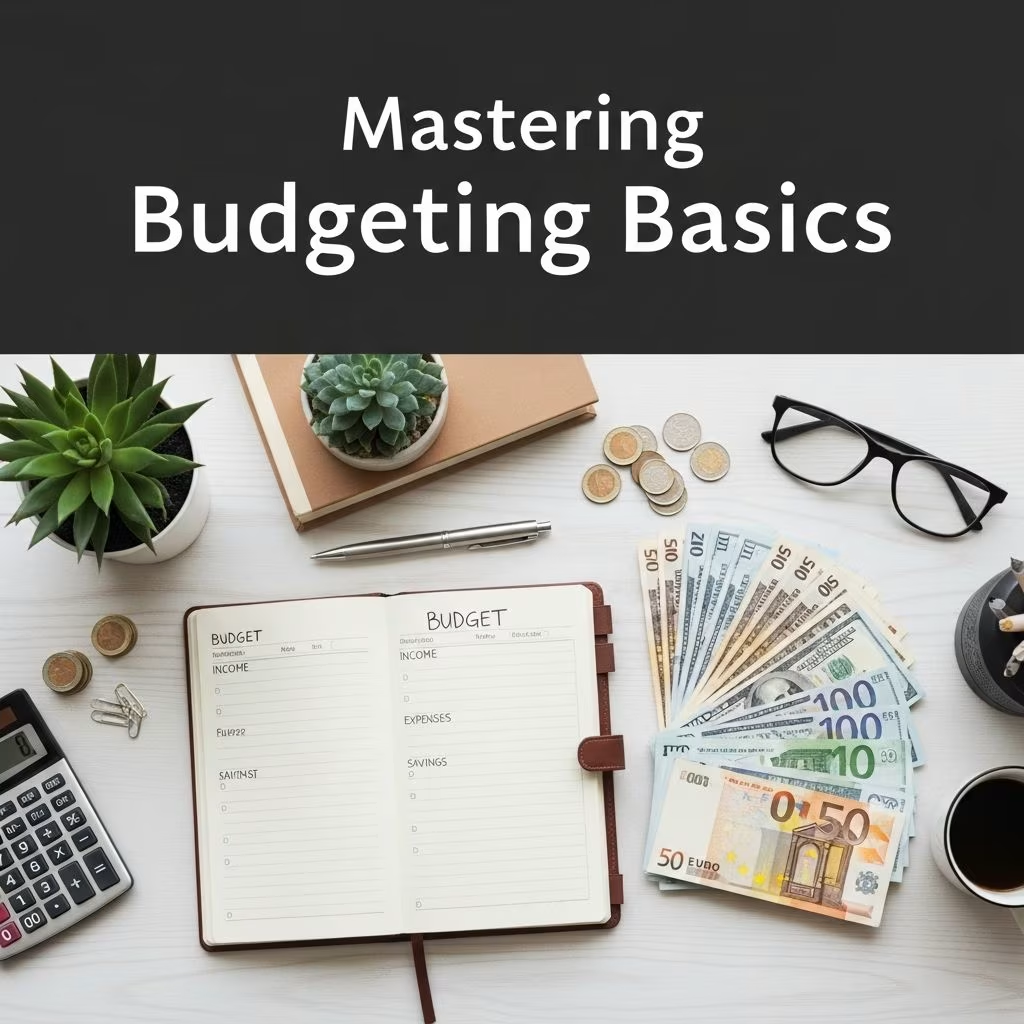
Effective budgeting forms the foundation of financial stability, enabling individuals to align their spending with long-term aspirations. By systematically organizing income and outflows, anyone can reduce stress and build wealth progressively.
Understanding Your Financial Starting Point
The journey to financial control begins with a clear assessment of current resources. Calculate total monthly income using take-home pay from primary jobs, side gigs, and other consistent sources. For variable earnings, average the past three months to establish a reliable baseline.
Distinguish between gross and net income to avoid overestimating available funds. Track every expense over at least one month, categorizing them into essentials like housing and food, and non-essentials such as entertainment. This reveals spending patterns and highlights areas for adjustment.
Defining Clear Financial Objectives
Set specific, measurable goals to guide your budget. Short-term targets might include building an emergency fund covering three to six months of expenses, while long-term ones focus on retirement or debt elimination. Apply the SMART framework—Specific, Measurable, Achievable, Relevant, Time-bound—for effectiveness.
- Emergency savings: Aim for $1,000 initially, then expand.
- Debt reduction: Prioritize high-interest balances.
- Savings for purchases: Allocate for vacations or vehicles.
These objectives provide motivation and a framework for allocation decisions.
Building a Customized Budget Framework
With income, expenses, and goals identified, construct a plan that prioritizes necessities. Allocate funds first to fixed costs like rent, utilities, and loan payments, then to savings and variable spending.
Popular approaches include:
| Method | Allocation Breakdown | Best For |
|---|---|---|
| 50/30/20 Rule | 50% needs, 30% wants, 20% savings/debt | Beginners seeking simplicity |
| Zero-Based Budget | Every dollar assigned a purpose | Detailed control enthusiasts |
| Envelope System | Cash in envelopes per category | Cash users limiting overspending |
Adapt these to your lifestyle for sustainability.
Practical Tools for Expense Monitoring
Leverage digital apps and planners to simplify tracking. Options like YNAB (You Need A Budget) categorize transactions automatically, while spreadsheets offer free customization. Manual methods, such as notebooks, suit those preferring tangible records.
Review weekly to stay aligned, adjusting for surprises like medical bills. Automation transfers savings to separate accounts immediately after payday, enforcing discipline.
Streamlining Income and Expense Categories
Organize outflows into logical groups for oversight:
- Housing: Rent/mortgage, maintenance, utilities.
- Transportation: Fuel, insurance, public transit.
- Food: Groceries, dining out.
- Health: Premiums, prescriptions.
- Debt: Loans, credit cards.
- Discretionary: Hobbies, subscriptions.
- Savings: Emergency, retirement.
Fixed items demand priority; variables offer flexibility.
Overcoming Common Budgeting Hurdles
Irregular income requires conservative estimates, using lower historical averages to buffer fluctuations. Unexpected costs necessitate a miscellaneous category or fund. Regularly revisit and tweak the plan quarterly to reflect life changes.
Avoid perfectionism; progress over rigidity sustains adherence. Celebrate milestones, like debt payoffs, to maintain momentum.
Advanced Strategies for Long-Term Success
Once basics solidify, incorporate automation for bills and savings. Explore investment basics post-emergency fund. Annual reviews ensure goals evolve with career or family shifts.
For families, involve all members in planning to foster shared accountability. Teach children through allowance systems mirroring adult categories.
Real-World Budgeting Examples
Consider a $4,000 monthly net income scenario using 50/30/20:
- Needs ($2,000): Housing $1,200, food $400, transport $200, utilities $200.
- Wants ($1,200): Dining $300, entertainment $400, shopping $500.
- Savings/Debt ($800): Emergency $300, retirement $300, debt $200.
Adjust based on actual tracking data for precision.
Frequently Asked Questions
What if my income varies monthly?
Use the lowest recent average and build a buffer for highs.
How long to track expenses before budgeting?
One full month captures cycles accurately.
Can I budget without apps?
Yes, spreadsheets or paper suffice for manual tracking.
What percentage for savings?
Start at 20%, increasing as expenses optimize.
How to handle impulse buys?
Implement a 24-hour wait rule and review against goals.
Next Steps to Financial Empowerment
Implement today: Gather statements, list income/expenses, draft a trial budget. Consistency transforms habits, paving paths to security and freedom.
References
- Making a Budget — consumer.gov. 2023-01-01. https://consumer.gov/your-money/making-budget
- BUDGETING FOR BEGINNERS — Vista Bank. 2024-05-15. https://www.vistabank.com/resources/financial-literacy-resource-center/budgeting-for-beginners/
- Budgeting 101: How to Create a Budget for Beginners — Erin Condren. 2024-03-20. https://www.erincondren.com/inspiration-center-how-to-budget
- How to Budget Money: A Step-By-Step Guide — NerdWallet. 2025-02-10. https://www.nerdwallet.com/finance/learn/how-to-budget
- 7 steps to learn how to budget — Fidelity Investments. 2024-11-05. https://www.fidelity.com/learning-center/smart-money/how-to-budget
- A Beginner’s Guide to Financial Planning — Wall Street Prep. 2024-08-12. https://www.wallstreetprep.com/knowledge/financial-planning-for-beginners/
This article is general information, not personal financial advice. Consider your own situation, or speak with a licensed adviser, before acting on it.


