

Hearing loss affects an estimated 30 million Americans, according to the National Institute on Health. Being deaf or hard of hearing can make communicating with family and friends over the phone difficult, if not impossible. Fortunately, people with hearing loss have access to solutions that can restore their ability to participate in phone conversations.
Thankfully, people with hearing loss can receive free or steeply discounted assistive technology and captioned telephone services on their landline or cell phone through a program funded by the Federal Communications Commission (FCC). This groundbreaking program has transformed communication accessibility for millions of Americans with hearing impairments, enabling them to stay connected with loved ones and conduct important business over the telephone.
What Is a Caption Phone?
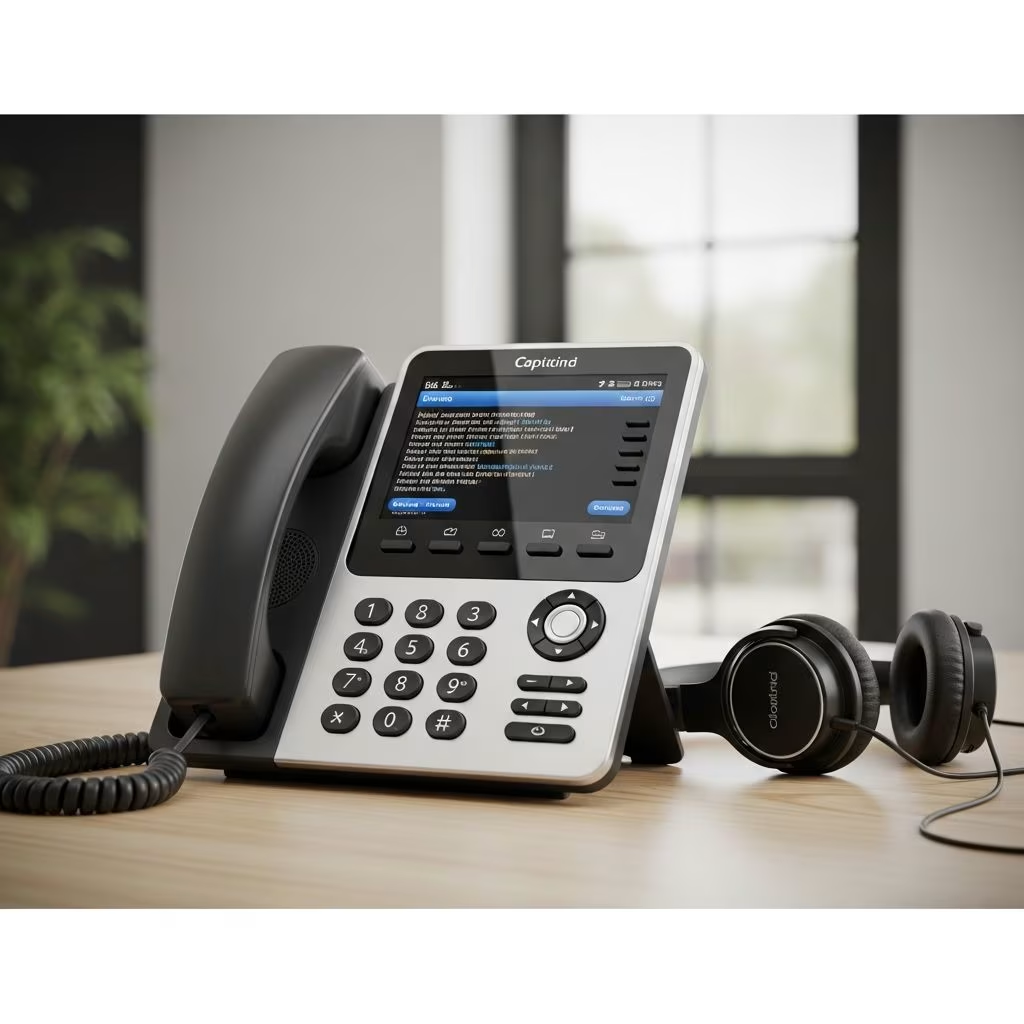
A caption phone is a specialized telecommunications device that transcribes live phone conversations into easy-to-read text displayed on a large screen. Think of it like closed captioning, but specifically designed for phone calls. This technology allows people with hearing loss to read what the other person is saying in real-time, making phone communication accessible and practical.
The functionality of caption phones is straightforward and user-friendly. You can use your existing phone number and phone lines without any changes to your current setup. If you choose an internet protocol relay service option, you will need a high-speed internet connection instead of a regular phone line to make calls, but this is often a more flexible alternative for those with reliable broadband access.
Many modern caption phones include advanced features that enhance their usefulness. They save a transcript of conversations so you can review them later or delete them as needed. Some models also feature an answering machine with captioned messages where you can adjust the font size and color to suit your preferences and vision needs. Beyond these special features, caption phones work like regular telephones—you can dial and answer calls as usual, making the transition seamless for users.
How Is the Caption Phone Free?
Captioned phones are provided for free through a program funded by the FCC called the Intrastate Telecommunications Relay Services program. This federal initiative recognizes that people with hearing loss deserve equal access to telecommunications, and it removes the financial barrier that might otherwise prevent individuals from obtaining these devices.
The program is available in all 50 states, the District of Columbia, Puerto Rico and all other U.S. territories. It can be used for local, long distance and international calls, providing comprehensive communication coverage. This nationwide availability ensures that no matter where you live in the United States, you can access these vital services.
People who qualify for the program can receive the following benefits:
- A free caption phone device
- Free professional installation
- Manufacturer’s warranty coverage
- Free technical support assistance
These comprehensive benefits mean that eligible individuals can get set up and using their new caption phone without incurring any out-of-pocket expenses.
How to Get a Free Caption Phone
There are two main ways to go about getting a free phone if you’re deaf or hard of hearing. Understanding both pathways can help you choose the option that works best for your situation and preferences.
Pathway 1: Ask Your Hearing Care Provider
One of the simplest ways to access a caption phone is to ask your hearing care provider for help. Your audiologist or hearing specialist can guide you through the application process and may have established relationships with caption phone providers in your area. This personal assistance can streamline the qualification and enrollment process significantly.
Pathway 2: Sign Up Directly With a Captioned Telephone Company
Alternatively, you can sign up directly with a captioned telephone company. This option gives you more control over the process and allows you to choose the specific provider and phone model that best suits your needs.
Each state administers its own program to help people with hearing loss obtain a captioned phone for free or at a discounted price. This means the specific providers, application processes, and eligibility requirements may vary slightly depending on where you live. It’s worthwhile to research your state’s specific program to understand the options available to you.
Qualification Requirements
To qualify for a free caption phone, you’ll need to prove you have hearing loss that requires the use of a caption phone. You may need a medical provider or audiologist to sign a form certifying that you’re hard of hearing and could benefit from the device. This certification requirement ensures that the program resources are directed toward those who genuinely need them.
Some state programs technically loan the device to you for a certain time, after which you own the phone outright. The phone is provided at a very low cost or at no cost at all, making it an excellent value for those who qualify. Understanding your state’s specific terms regarding ownership and loan periods will help you plan accordingly.
Working With a Phone Provider
Caption telephone providers can help walk you through the process of signing up for a free phone. Many providers offer comprehensive support including:
- Free device delivery
- Professional installation services
- Device setup and configuration
- User training at no charge
This full-service approach ensures that even if you’re not tech-savvy, you’ll be able to get your caption phone working properly and understand all its features. Many major providers have dedicated customer service teams trained to help people with hearing loss navigate the system.
Buying Your Own Caption Phone
You also have the option to purchase a caption phone independently if you prefer. You can buy caption phones from popular retailers like Amazon and Best Buy, and you can still receive free telecommunication relay services through one of the caption call companies.
Caption phones available for purchase average about $75, though more sophisticated models with advanced features typically cost more. This option gives you flexibility if you want a specific model or brand, or if you don’t qualify for the FCC-funded program but still want to benefit from caption relay services.
Caption Phone Apps for Mobile Devices
Getting a free landline phone is great, but making your cell phone accessible is equally important in today’s mobile-first world. Fortunately, major caption phone companies have extended their services to smartphones and tablets.
Major Provider Apps
CapTel, ClearCaptions and CaptionCall all offer their own apps for mobile phone caption services. Once you sign up with one of these providers for your home caption phone, you can access their caption services on your cell phone too. This seamless integration means you can receive caption services wherever you are, whether at home or on the go.
Additional Caption App Options
Beyond the major providers, other caption app options include:
- InnoCaption (Apple and Android) – Free to download and use
- Live Caption (Apple only) – Free to download and use
- eyeHear (Apple only) – Free to download and use
- Ava (Android only)
Both InnoCaption and eyeHear are free to download and use, making them excellent options for those looking to get started with caption services at no cost. Because these four apps aren’t directly connected to a caption phone company, anyone can use them, even if you don’t qualify for a traditional caption phone at home. This democratization of caption technology has expanded access significantly.
Finding the Right App for Your Needs
Each mobile app has its own pros and cons, so it’s important to try them out to find one that works best for your specific hearing impairment. Some apps may have better accuracy, clearer interfaces, or more intuitive features depending on your particular needs. Taking time to test different options ensures you’ll find the solution that provides the best communication experience for you.
Exploring Additional Hearing Loss Solutions
While caption phones and caption apps are excellent solutions for phone communication, they’re not the only options available for people with hearing loss. For those with mild to moderate hearing loss, over-the-counter hearing aids can provide significant benefits. These new devices became available on the market in late 2022 and serve as an affordable alternative to expensive prescription hearing devices.
Speaking with an audiologist or other medical provider is the best way to explore your complete range of options and find out what accessible technology you can benefit from. A professional assessment can help determine whether caption phones, hearing aids, caption apps, or a combination of solutions would work best for your particular situation and lifestyle.
Frequently Asked Questions
Q: Is there a cost to use caption phone services?
A: No, if you qualify through the FCC’s Intrastate Telecommunications Relay Services program, caption phone services are completely free, including the device, installation, and ongoing support. You only need to meet the hearing loss qualification requirements.
Q: Can I use my existing phone number with a caption phone?
A: Yes, you can use your existing phone number and phone lines with caption phones. The device integrates with your current service without requiring any changes to your number or setup.
Q: What if I live in a rural area?
A: The FCC’s caption phone program is available in all 50 states, the District of Columbia, Puerto Rico, and all other U.S. territories. Your state’s specific program can inform you about service availability in your area and any special options for rural residents.
Q: Can I use caption services on my smartphone?
A: Yes, major caption phone providers like CapTel, ClearCaptions, and CaptionCall offer mobile apps. Additionally, standalone apps like InnoCaption, Live Caption, and eyeHear provide caption services on smartphones for free or low cost.
Q: What if I don’t qualify for the free program?
A: If you don’t qualify for the FCC-funded program, you can still purchase caption phones from retailers like Amazon and Best Buy (averaging around $75), and you can use free or paid caption apps on your smartphone.
Q: How do I know if I qualify for a free caption phone?
A: You need to demonstrate hearing loss that requires caption phone services. An audiologist or medical provider can sign a certification form confirming you’re hard of hearing and would benefit from the device. Contact your state’s Intrastate Telecommunications Relay Services program for specific eligibility details.
Q: Do caption phones work for international calls?
A: Yes, the FCC’s caption phone program can be used for international calls, as well as local and long-distance calls, providing comprehensive calling coverage.
Q: What happens if my caption phone breaks?
A: Free caption phones come with a manufacturer’s warranty and free technical support. If your device needs repair or replacement, contact your provider’s customer service for assistance.
References
- Hearing Loss: A Common Problem for Older Adults — National Institute on Deafness and Other Communication Disorders (NIDCD), National Institutes of Health. 2024. https://www.nidcd.nih.gov/health/hearing-loss-older-adults
- Telecommunications Relay Services (TRS) — Federal Communications Commission. 2024. https://www.fcc.gov/consumers/guides/telecommunications-relay-services-trs
- Understanding the Intrastate Telecommunications Relay Services Program — FCC Consumer Complaint Center. 2024. https://www.fcc.gov/consumers/guides/telecommunications-relay-services-trs
- OTC Hearing Aids: FDA Approval and What You Should Know — U.S. Food and Drug Administration. 2023. https://www.fda.gov/news-events/press-announcements/fda-approves-first-over-counter-hearing-aids-millions-americans
- How to Choose Assistive Technology for Hearing Loss — American Academy of Audiology. 2024. https://www.audiology.org/
This article is general information, not personal financial advice. Consider your own situation, or speak with a licensed adviser, before acting on it.


