

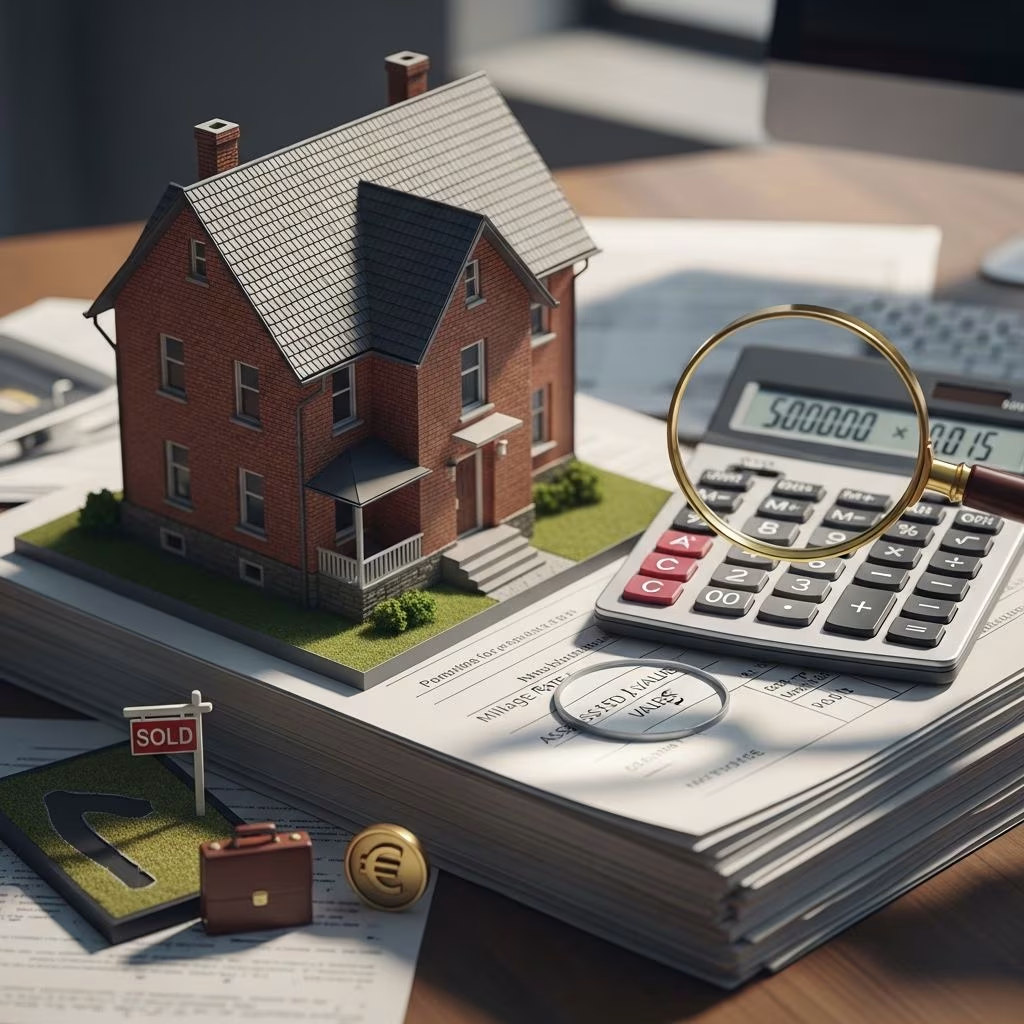
What Is Property Tax?
Property tax is a form of ad valorem tax levied on the value of real estate property. It represents one of the largest revenue sources for local governments, including counties, municipalities, and school districts. Property taxes fund essential public services such as schools, roads, fire departments, police protection, and other community infrastructure.
Unlike income taxes that are collected by federal and state governments, property taxes are primarily collected by local taxing authorities. These taxes are assessed on both residential and commercial properties, making them a critical component of the American tax system. Property owners must understand their tax obligations to effectively manage their real estate investments and household budgets.
Key Characteristics of Property Taxes
- Ad Valorem Nature: Property taxes are based on the assessed value of the property, not a flat fee
- Local Control: Tax rates and assessment methods vary significantly by jurisdiction
- Annual Assessment: Properties are typically reassessed annually or at intervals set by local law
- Tax Lien Potential: Unpaid property taxes can result in tax liens or foreclosure
- Deductibility: Homeowners may deduct property taxes on their federal tax returns up to $10,000 annually
How Property Taxes Are Calculated
Property tax calculations involve a straightforward formula, though the components can be complex depending on local regulations. The basic calculation method is as follows:
Property Tax = Assessed Property Value × Tax Rate
The assessed value of a property is determined by local assessors who evaluate comparable properties, recent sales, and property conditions. The tax rate, often expressed as a percentage or in mills (per $1,000 of assessed value), is set by the local government based on budget requirements and community needs.
The Assessment Process
The assessment process begins when a property assessor evaluates your home or commercial property. Assessors consider multiple factors including:
- Property location and neighborhood characteristics
- Size, age, and condition of the structure
- Recent comparable property sales in the area
- Improvements and renovations made to the property
- Land size and zoning classification
- Market conditions and economic trends
Many jurisdictions conduct full reassessments every three to five years, while others use computer-assisted mass appraisal (CAMA) systems to update values annually. Some states implement assessment caps that limit how much assessed values can increase each year, protecting long-term homeowners from dramatic tax increases.
Understanding Mill Rates and Tax Rates
Property tax rates are frequently expressed in mills, which represent the dollar amount of tax per $1,000 of assessed property value. For example, if a property has an assessed value of $300,000 and the mill rate is 15 mills, the annual property tax would be calculated as follows:
($300,000 ÷ $1,000) × 15 = $4,500 annual property tax
Different types of property often have different tax rates. Residential properties may be taxed at one rate, while commercial and industrial properties face different rates. Some jurisdictions also apply higher rates to vacant land or investment properties.
Property Tax Rates by State
Property tax rates vary dramatically across the United States, reflecting different state philosophies on taxation, revenue needs, and property values. Some states rely heavily on property taxes for funding, while others have reduced reliance through alternative revenue sources.
| State Category | Characteristics | Example States |
|---|---|---|
| High Property Tax States | Rates above 1% of property value, limited state income tax | New Jersey, Texas, Illinois |
| Moderate Property Tax States | Rates between 0.5% to 1%, balanced tax structure | California, Florida, Ohio |
| Low Property Tax States | Rates below 0.5%, significant state income tax or sales tax | Hawaii, Alabama, Louisiana |
States with no state income tax, such as Texas, Florida, and Tennessee, typically compensate by maintaining higher property tax rates. Conversely, states with substantial income taxes often have lower property tax rates. This creates variation in overall tax burdens across different states.
Who Pays Property Taxes?
Property taxes are paid by property owners, including individual homeowners, real estate investors, and commercial property owners. However, the responsibility for paying property taxes can vary based on property ownership structure:
- Primary Homeowners: Individual property owners pay taxes on their primary residences
- Investors: Real estate investors pay property taxes as business expenses, often deducting them as rental property expenses
- Commercial Properties: Business entities pay property taxes on commercial real estate holdings
- Mortgaged Properties: Many lenders require homeowners to escrow property tax payments through mortgage payments
For properties with mortgages, the lender typically requires the homeowner to establish an escrow account into which monthly mortgage payments include an amount for property taxes. The lender then pays the annual property tax bill from this account, ensuring taxes are paid on time and protecting the lender’s investment in the property.
Property Tax Exemptions and Relief Programs
Many jurisdictions offer property tax exemptions and relief programs to specific categories of property owners, reducing their tax burden.
Common Exemptions Include:
- Homestead Exemptions: Reduce assessed value for primary residences, particularly in states like Florida and Texas
- Senior Citizen Exemptions: Property tax reductions or freezes for elderly homeowners
- Disabled Veteran Exemptions: Tax relief for disabled military veterans
- Agricultural Exemptions: Lower rates for working farms and agricultural land
- Religious Property Exemptions: Tax exemptions for churches, synagogues, and other religious institutions
- Nonprofit Exemptions: Exemptions for properties owned and operated by qualified nonprofit organizations
- Low-Income Assistance Programs: Tax credits or deferrals for low-income homeowners
Homeowners should investigate what exemptions they qualify for in their jurisdiction. State and local tax assessor websites typically provide information about available programs and application procedures.
Homeowner Deductions for Property Taxes
At the federal level, homeowners can deduct property taxes paid on their income tax returns, subject to certain limitations. However, the Tax Cuts and Jobs Act of 2017 imposed a cap on the total of state and local taxes (SALT) that can be deducted, limiting property tax deductions to $10,000 annually when combined with state income taxes and sales taxes.
To claim property tax deductions, homeowners must itemize deductions on their federal tax return rather than taking the standard deduction. For many homeowners, especially those in high-tax states, itemizing becomes worthwhile due to substantial property tax payments combined with state income taxes.
Challenging Your Property Tax Assessment
Property owners who believe their assessment is inaccurate have the right to challenge it through their local tax assessor’s office. The process typically involves:
- Obtaining your official assessment and understanding how value was determined
- Gathering comparable property sales data from your neighborhood
- Documenting any property defects or damage affecting value
- Filing an appeal with the appropriate deadline, usually within 30 to 60 days of receiving the assessment
- Presenting your case to the local assessment review board or appeals tribunal
Successful appeals often result in reduced assessments and lower property taxes going forward. Hiring a professional property tax consultant or attorney may be worthwhile for significant properties or contested assessments.
Property Taxes and Real Estate Investments
For real estate investors, property taxes significantly impact cash flow and return on investment. Investors should factor property taxes into their investment analysis, considering:
- Annual property tax costs as a percentage of rental income
- Tax deductibility of property taxes as rental property expenses
- Potential appreciation or depreciation of property values affecting future assessments
- Local tax trends and potential future rate increases
- Opportunity to leverage 1031 exchanges to defer capital gains taxes when selling properties
Investors can deduct property taxes paid on rental properties from their gross rental income when calculating taxable income, reducing their overall tax liability. This makes property tax an important component of investment property analysis.
Recent Changes and Trends in Property Taxation
Property tax systems continue to evolve as communities seek sustainable revenue sources and fair assessment methods. Recent trends include increased adoption of computer-assisted mass appraisal (CAMA) systems for more consistent valuations, growing use of artificial intelligence in property assessment, and increased focus on tax transparency and property owner communication.
Some jurisdictions have implemented property tax caps similar to California’s Proposition 13, while others have eliminated caps to increase revenue for schools and infrastructure. Climate change considerations are also beginning to influence property assessments in flood-prone or fire-risk areas.
Frequently Asked Questions
What happens if I don’t pay my property taxes?
Failure to pay property taxes can result in penalties, interest charges, tax liens on your property, foreclosure by the taxing authority, and severe damage to your credit score. Most jurisdictions offer payment plans for struggling property owners.
How often is property assessed for taxes?
Assessment frequency varies by jurisdiction. Most areas conduct full reassessments every three to five years, while others use annual assessments or computer-assisted systems to update values regularly. Some states also implement annual market-based adjustments.
Can I deduct property taxes on my federal tax return?
Yes, you can deduct property taxes if you itemize deductions on your federal tax return. However, the total deduction for all state and local taxes (SALT) combined with property taxes is capped at $10,000 annually as per the Tax Cuts and Jobs Act of 2017.
Do property taxes increase every year?
Property taxes may increase annually due to assessment adjustments, rising tax rates, or property value appreciation. However, some states impose assessment caps limiting annual increases. Rate increases depend on local government budgets and community needs.
What properties are typically exempt from property taxes?
Properties commonly exempt from property taxes include government buildings, schools, churches and religious organizations, qualifying nonprofits, agricultural land, and designated historic properties. Specific exemptions vary by state and locality.
How do I find my property’s assessed value?
You can find your property’s assessed value through your local tax assessor’s office, usually accessible online through the county or municipal website. Property tax bills typically include the assessed value and calculation breakdown.
References
- Understanding Property Tax Assessment and Appeals — National Association of County Assessors (NACA). 2024. https://www.naca.net/
- State and Local Taxes (SALT): Background and Federal Treatment — U.S. Congressional Research Service. 2024. https://fas.org/sgp/crs/misc/R44839.pdf
- Property Tax Rates by State — Lincoln Institute of Land Policy. 2023. https://www.lincolninst.edu/
- Federal Income Tax Treatment of Homeowner Property Tax Deductions — U.S. Internal Revenue Service (IRS). 2024. https://www.irs.gov/
- Property Tax Exemptions for Agricultural, Religious, and Nonprofit Properties — National Conference of State Legislatures (NCSL). 2023. https://www.ncsl.org/
This article is general information, not personal financial advice. Consider your own situation, or speak with a licensed adviser, before acting on it.


