

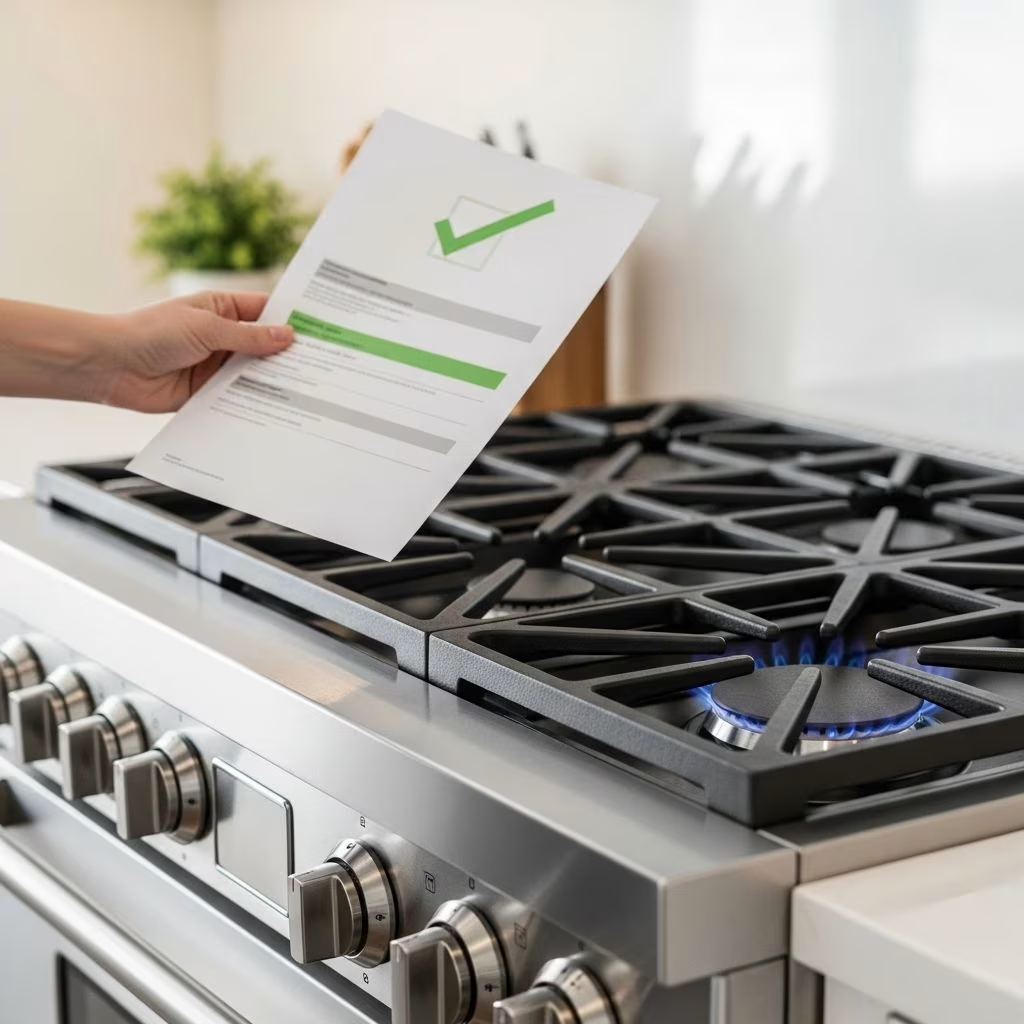
With rising energy costs and a push toward cleaner homes, now is the perfect time to replace your old gas stove. Federal programs, utility rebates, and tax credits can cover thousands in upgrade costs. This guide covers everything from eligibility to application steps, helping you save money while reducing emissions.
What Are Gas Stove Rebates?
Gas stove rebates are financial incentives from governments, utilities, and energy programs to encourage switching from gas to electric induction stoves or other efficient appliances. These programs stem from the Inflation Reduction Act (IRA), offering up to $2,500 for electrification rebates and additional tax credits. Utilities like NIPSCO and Nicor Gas provide targeted rebates for qualifying installations completed in 2026.
Unlike direct rebates for gas stoves—which are phasing out in many areas—these incentives focus on electric alternatives that cut indoor pollution and energy use. Expect savings on installation, plus long-term bill reductions of 20-50% on cooking energy.
Federal Home Electrification and Appliance Rebates (HEAR)
The U.S. Department of Energy’s HEAR program provides up to $2,500 for electric cooktops, ranges, and ovens. Eligible households, especially low- and moderate-income, can claim point-of-sale rebates through state-administered programs launching in 2026. Check your state’s status via the Home Energy Rebates Portal.
- Maximum rebate: $2,500 per household for appliances like induction cooktops (≥2,000 BTU/h output).
- Income-qualified boost: Up to 100% coverage for households at or below 80% area median income (AMI).
- Eligible appliances: Electric cooktops, ranges, ovens; excludes gas models.
Pair HEAR with Home Efficiency Rebates (HOMES) for up to $8,000 more on whole-home upgrades. Programs are rolling out state-by-state; South Carolina, for example, expects full availability soon.
Energy Efficient Home Improvement Credit (Section 25C)
Claim up to $3,200 annually in tax credits for energy-efficient upgrades, including electric stoves. This IRS credit covers 30% of costs for qualified appliances installed after January 1, 2023, through 2032.
| Appliance/Upgrade | Credit Amount | Requirements |
|---|---|---|
| Electric Cooktops/Ranges | 30% up to $600 | ENERGY STAR certified |
| Heat Pump Water Heater | 30% up to $2,000 | ≥2.0 UEF |
| Electrical Panel Upgrade | Up to $600 | ≥200 amps, NEC compliant |
| Insulation/Windows/Doors | 30% up to $1,200 total | Meets ENERGY STAR specs |
Total potential: Combine for $3,200 in one year. Home must be your primary residence (second homes qualify for some items). File with Form 5695.
Utility Rebates for Appliance Upgrades
Local utilities offer instant or mail-in rebates. NIPSCO provides up to $30 for ENERGY STAR dishwashers and $50-$70 for air purifiers—pair with stove upgrades for kitchen makeovers. Nicor Gas rebates high-efficiency furnaces and insulation, applicable alongside electrification.
- NIPSCO (IN): $250 furnace, $750 heat pump water heater, $1,000 air-source heat pump. Apply within 60 days of install (by Nov 30, 2026).
- Nicor Gas (IL): Furnace, thermostat, insulation rebates. Contractor-installed; apply by Jan 31, 2027.
- Consumers Energy (MI): Appliance and home improvement discounts.
- Intermountain Gas: Updated 2026 incentives for efficient appliances.
Note: Gas appliance rebates are ending in some regions (e.g., National Fuel by Dec 2025). Switch to electric for future-proof savings.
Eligibility Requirements
Most programs require:
- Active utility account (electric/gas).
- Installation between Jan 1, 2026, and Nov/Dec 31, 2026.
- ENERGY STAR or AHRI-certified products.
- Postmark applications within 60-90 days.
- Owner-occupied homes or landlord permission.
For new homes: ENERGY STAR manufactured homes qualify for up to $3,000 (NIPSCO). Dual-fuel customers may choose heat pump or gas furnace rebates, not both.
How to Apply for Rebates and Credits
- Verify eligibility: Use ENERGY STAR Product Finder and utility qualified lists.
- Get a home energy assessment: Eligible for 30% tax credit; identifies priorities.
- Purchase & install: Use licensed contractors for rebates.
- Submit docs: Invoices, AHRI certificates, photos. Online portals preferred.
- File taxes: Use IRS Form 5695 for credits.
Pro tip: Track multiple incentives but avoid double-dipping on the same expense.
Benefits of Ditching Gas Stoves
Induction cooktops heat faster, are safer (no open flame), and use 10% less energy than gas. Reduce asthma risks from gas leaks and qualify for green home certifications.
- Energy savings: 20-40% lower bills.
- Health: Cuts NO2 and benzene exposure.
- Environment: Lowers carbon footprint.
Frequently Asked Questions (FAQs)
Are there direct rebates for new gas stoves?
No major programs offer gas stove rebates in 2026; focus is on electrification. Some utilities phase out gas incentives.
Do renters qualify?
Limited; credits require ownership. Some utilities allow with landlord approval.
What’s the deadline?
Installs by Nov 30, 2026 (NIPSCO); apply within 60 days. Tax credits through 2032.
Can I combine rebates and tax credits?
Yes, if not overlapping costs. HEAR rebates first, then credits on remainder.
Is induction compatible with my kitchen?
Needs ferromagnetic cookware; most homes require 240V outlet (rebate-eligible upgrade).
State-Specific Programs
Check your state: SC’s HOMES/HEAR coming soon. Use DOE portal for updates.
References
- Save energy and money with rebates – NIPSCO — NIPSCO. 2026. https://www.nipsco.com/energy-efficiency/for-your-home/rebates
- Home Upgrades — Department of Energy. 2026. https://www.energy.gov/save/home-upgrades
- Energy Efficient Home Improvement Credit — Internal Revenue Service. 2026. https://www.irs.gov/credits-deductions/energy-efficient-home-improvement-credit
- Federal Tax Credits for Energy Efficiency — ENERGY STAR. 2026. https://www.energystar.gov/about/federal-tax-credits
- Energy Efficiency Rebates for Your Home — Nicor Gas. 2026. https://www.nicorgas.com/residential/ways-to-save/rebates.html
This article is general information, not personal financial advice. Consider your own situation, or speak with a licensed adviser, before acting on it.


