

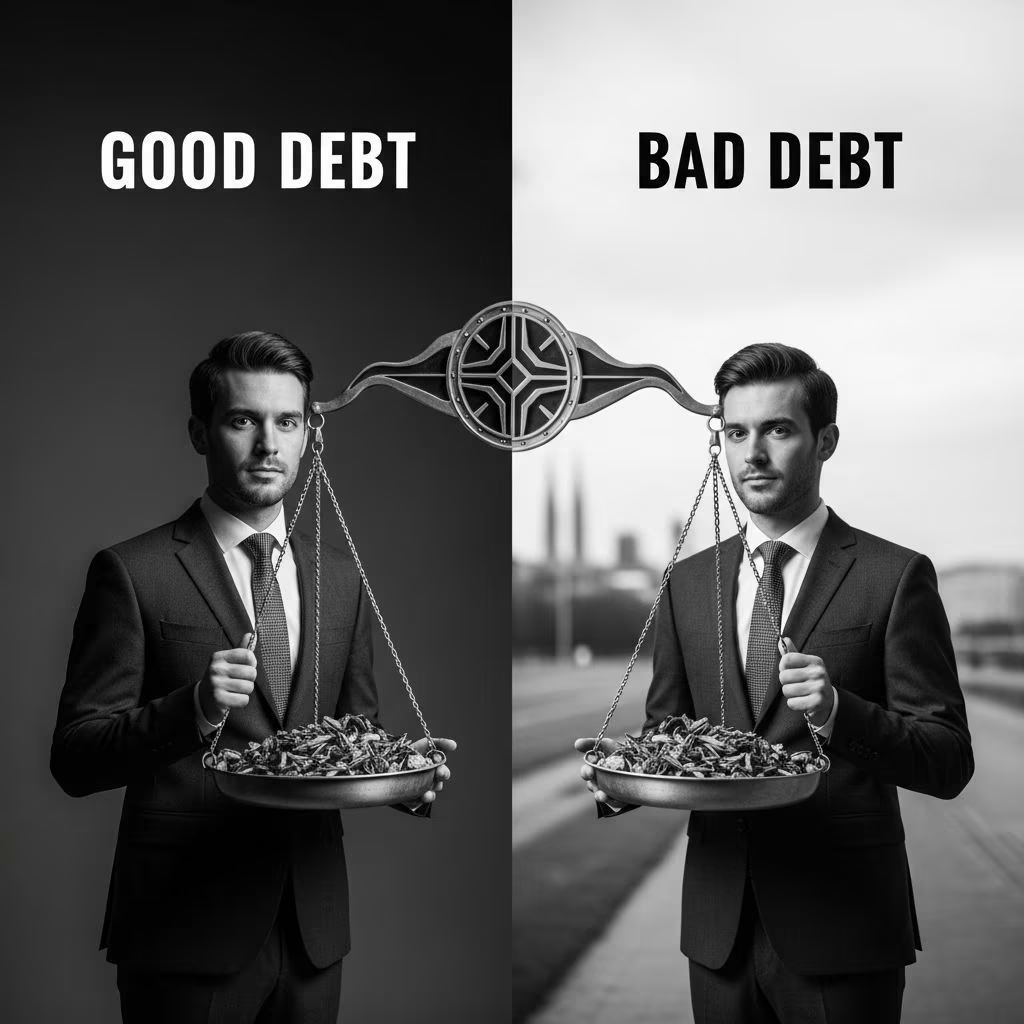
Debt plays a central role in modern financial planning, but not all borrowing serves your interests equally. Good debt fuels investments that appreciate in value or boost earning power, while bad debt often finances fleeting pleasures or depreciating assets at exorbitant costs. Understanding this distinction empowers individuals to leverage credit effectively without falling into traps that erode wealth.
Defining Good Debt: Investments That Pay Off
Good debt refers to borrowing that supports long-term growth, typically featuring low interest rates and assets or opportunities that increase in value or generate income over time. These loans help build equity and improve financial standing when managed responsibly.
Such debt aligns with personal or professional advancement. For instance, it enables access to opportunities that might otherwise be out of reach, like homeownership or advanced education, ultimately contributing to higher net worth.
Key Characteristics of Good Debt
- Low interest rates: Often under 6% APR, making repayment affordable.
- Appreciating assets: The borrowed funds purchase items that gain value, such as real estate.
- Income potential: Enhances skills or opportunities leading to better-paying jobs.
- Tax benefits: Interest may be deductible, reducing overall cost.
Defining Bad Debt: The Financial Pitfalls
Bad debt, conversely, funds consumption without future returns, usually carrying high interest rates that compound expenses. It fails to build wealth and can lead to cycles of repayment struggles, negatively impacting credit scores when balances linger.
This type of borrowing prioritizes immediate gratification over sustainability, often resulting in payments that exceed the item’s worth due to depreciation or lack of utility.
Hallmarks of Bad Debt
- High costs: APRs exceeding reasonable levels, like those on payday loans.
- Depreciating purchases: Items lose value quickly, such as luxury goods.
- No ROI: Does not contribute to income or asset growth.
- Impulsive use: Finances non-essentials that strain budgets.
Prime Examples of Good Debt
Certain loans stand out for their potential benefits when used judiciously.
Mortgages and Real Estate Financing
A mortgage allows individuals to own property that typically appreciates, building equity with each payment. Fixed-rate options provide payment stability, and interest is often tax-deductible. Responsible homeowners see their net worth rise as home values climb.
Student Loans for Education
Borrowing for higher education invests in human capital. Graduates often earn significantly more—up to $32,000 annually extra compared to high school diploma holders—with lower unemployment rates. Low-rate federal loans enhance this value, provided debt levels remain manageable.
Business and Investment Loans
Funds for starting or expanding a business can yield substantial returns if the venture succeeds, turning debt into a wealth multiplier.
| Type | Potential Benefit | Average APR Range | Tax Deductible? |
|---|---|---|---|
| Mortgage | Equity buildup, appreciation | 3-6% | Yes |
| Student Loan | Higher earnings | 4-7% | Often |
| Business Loan | Income generation | 5-8% | Sometimes |
Common Pitfalls of Bad Debt
Recognizing these helps avoid them.
Credit Card Balances
With average balances near $6,730 and high APRs, unpaid revolving debt accrues massive interest, turning conveniences into burdens.
High-Interest and Predatory Loans
Payday, title, and certain online installment loans charge fees that trap borrowers in debt spirals, worsening financial health.
Discretionary and Luxury Spending
Financing vacations, gadgets, or excess vehicles depletes resources without returns, especially if payments exceed affordability.
| Type | Risk | Typical APR |
|---|---|---|
| Credit Cards | Compounding interest | 15-25% |
| Payday Loans | Debt cycles | 300%+ |
| BNPL Overuse | Multiple obligations | 0% but fees |
Gray Areas: When Good Turns Bad
Some debts straddle the line. Auto loans for essential transport can be positive with low rates and short terms, but become problematic for luxury vehicles or long-term financing where the car depreciates faster than it’s paid off.
Buy-now-pay-later services are interest-free if paid on time but risky if overextended. Adjustable-rate mortgages start favorably but can spike payments later.
Strategies to Maximize Good Debt and Minimize Bad
Adopt these practices for healthier finances.
- Assess purpose: Ask if the debt builds value or just consumes.
- Compare rates: Shop for lowest APRs from reputable lenders.
- Maintain ratios: Keep debt-to-income under 36% and credit utilization below 30%.
- Pay promptly: Full credit card payments avoid interest traps.
- Build emergency funds: Buffer against unexpected needs, reducing bad debt reliance.
Impact on Credit Scores and Long-Term Wealth
Responsible good debt management showcases creditworthiness, boosting scores through payment history and credit mix. Bad debt, especially delinquencies, harms scores and limits future opportunities.
Over time, prioritizing good debt accelerates wealth accumulation via compounding asset growth, while bad debt subtraction hinders progress.
Frequently Asked Questions
What makes debt ‘good’ or ‘bad’?
It hinges on usage, cost, and returns: good debt invests in growth; bad debt funds non-appreciating consumption.
Can auto loans be good debt?
Yes, for reliable primary vehicles with low rates and short terms; no for extras or long financing.
Is student debt always good?
No, if excessive or for degrees without strong ROI; manage to ensure earning potential covers costs.
How to convert bad debt to good?
Refinance high-rate debt into lower options or consolidate, but only if it aligns with wealth-building goals.
Does debt affect taxes?
Good debts like mortgages and student loans often qualify for interest deductions; consult a tax professional.
Building a Debt-Smart Future
By favoring good debt and curtailing bad, individuals craft paths to financial independence. Regular reviews of borrowing habits ensure alignment with goals, fostering resilience and prosperity.
References
- Good Debt vs. Bad Debt: What’s the Difference? — Experian. 2024. https://www.experian.com/blogs/ask-experian/good-debt-vs-bad-debt-whats-the-difference/
- Good Debt vs Bad Debt: Can Debt Be Good for You? — Diamond Credit Union. 2023-10-15. https://diamondcu.org/blog/good-debt-vs-bad-debt/
- Understanding Credit: Good Debt vs. Bad Debt — Equifax. 2024. https://www.equifax.com/personal/education/credit/report/articles/-/learn/understanding-credit-good-debt-vs-bad-debt/
- Good debt vs bad debt — Fidelity Investments. 2024. https://www.fidelity.com/learning-center/smart-money/good-debt-vs-bad-debt
- How to create good debt (and steer clear of bad debt) — Fulton Bank. 2023. https://www.fultonbank.com/Education-Center/Managing-Credit-and-Debt/How-to-create-good-debt-and-steer-clear-of-bad-debt
This article is general information, not personal financial advice. Consider your own situation, or speak with a licensed adviser, before acting on it.


