

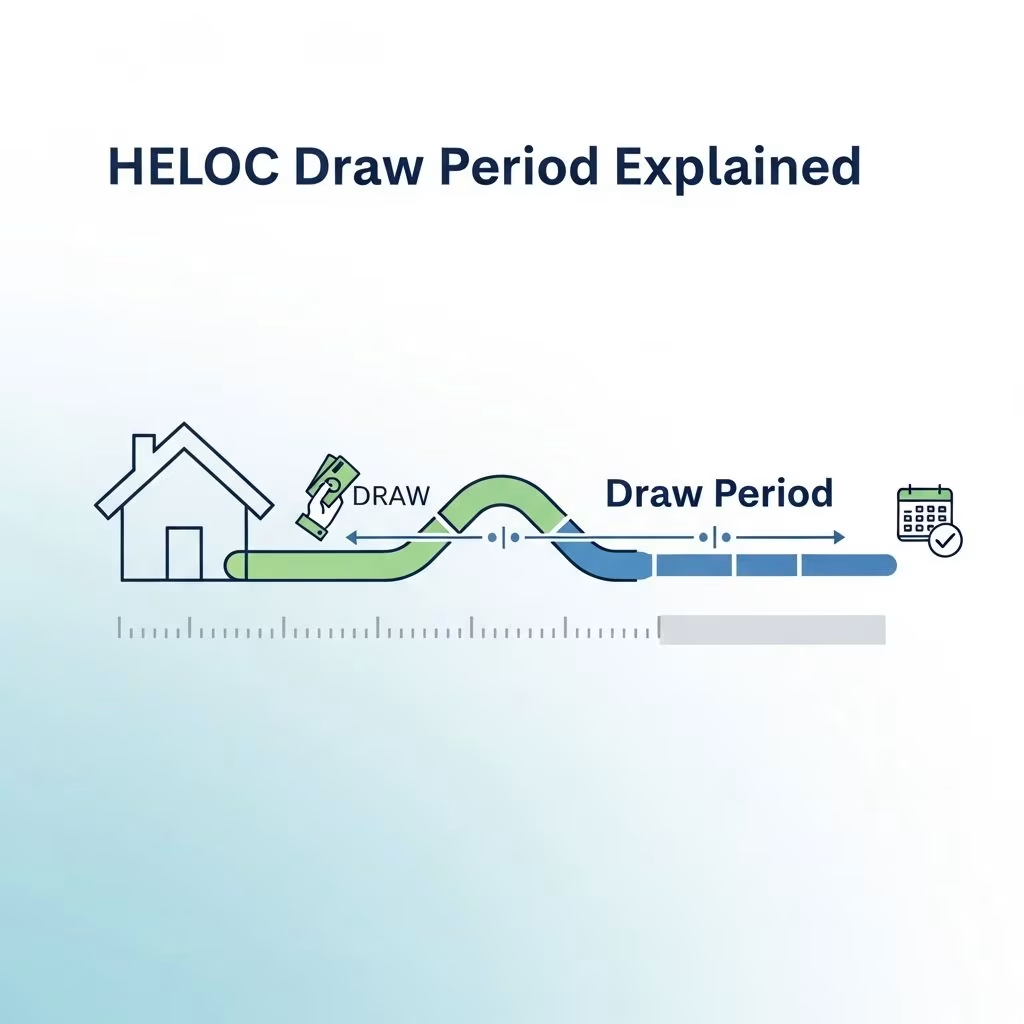
The **HELOC draw period** is the initial phase of a home equity line of credit where borrowers can access funds up to their approved limit, typically making interest-only payments for 5 to 10 years.
Understanding Home Equity Lines of Credit
A home equity line of credit, or HELOC, functions as a revolving credit source secured by your home’s equity—the difference between your property’s market value and any outstanding mortgage balance. Lenders generally allow borrowing up to 80-85% of this equity, minus existing debts. This setup provides liquidity for various needs, from renovations to debt consolidation, without refinancing your primary mortgage.
Unlike a traditional home equity loan, which disburses a lump sum, a HELOC offers ongoing access during its active borrowing window. This flexibility mirrors a credit card but at potentially lower rates due to the collateral.
Key Phases of a HELOC
Every HELOC divides into two main stages: the draw period and the repayment period. Grasping these distinctions ensures borrowers avoid surprises in payments or access restrictions.
- Draw Period: Borrow as needed, repay, and borrow again.
- Repayment Period: No new borrowing; focus on principal and interest.
Mechanics of the Draw Period
During this opening chapter, typically spanning 5 to 10 years, you gain permission to withdraw funds via checks, online transfers, debit cards, or apps, depending on lender options. Minimum payments cover only accrued interest on the borrowed amount, keeping monthly obligations low—often far below what principal-inclusive payments would demand.
Interest rates are usually variable, tied to benchmarks like the prime rate, which can fluctuate. Some agreements permit principal prepayments to shrink the balance early, potentially lowering future costs. Available credit replenishes as you repay, enabling repeated use within the limit.
| Aspect | Draw Period | Repayment Period |
|---|---|---|
| Access to Funds | Yes, up to limit | No new draws |
| Typical Payments | Interest-only | Principal + interest |
| Duration | 5-10 years | 10-20+ years |
| Rate Type | Usually variable | Variable or fixed options |
Standard Lengths and Variations
Most U.S. lenders set the draw period at 10 years, though options range from 3 to 20 years based on the institution and borrower profile. PNC Bank, for instance, offers 10 years, while others like U.S. Bank align similarly. Repayment follows for 10-30 years, with total loan life often capped at 30 years.
Longer draw phases suit projects unfolding over time, like phased home improvements, but may mean deferred principal buildup. Shorter ones push quicker repayment discipline.
Example: Navigating a Real-World HELOC
Consider securing a $75,000 HELOC with a 10-year draw and 20-year repayment. Year 1: Draw $30,000 for a kitchen upgrade; pay ~$150 monthly interest at 6% (variable). Year 4: Draw another $20,000 for HVAC; now owe $50,000, payments ~$250 interest-only.
Draw ends: $50,000 balance shifts to repayment. Monthly payments jump to ~$350 (principal + interest), doubling prior amounts. If rates rise to 8%, they climb further. Tools like fixed-rate conversion options from some banks (e.g., U.S. Bank) can lock portions for stability.
Payments and Interest Dynamics
Interest-only minimums during draw ease cash flow, ideal for variable expenses. However, unpaid principal accrues, ballooning the eventual debt. Variable rates expose you to market shifts; a prime rate hike from 8% to 10% could spike payments 25%.
Proactive principal payments build equity faster and soften repayment shocks. Track via lender apps to monitor usage, rates, and projections.
Transitioning to Repayment
Draw closure halts borrowing; the outstanding balance amortizes over the repayment term. Payments escalate as principal joins interest—often 2-3x higher. Rare balloon structures demand full payoff at draw end, though uncommon today.
Prepare by:
- Reducing balance pre-transition.
- Budgeting for hikes via simulations.
- Exploring renewals or refinances if eligible.
Some lenders offer extensions, but approval isn’t guaranteed amid equity or credit changes.
Pros and Cons of the Draw Period
Advantages
- Flexible access for emergencies or opportunities.
- Lower initial payments preserve liquidity.
- Revolving nature supports multiple uses.
Disadvantages
- Temptation to overborrow without principal discipline.
- Variable rates risk payment volatility.
- Sudden repayment shift strains unprepared budgets.
Strategic Tips for Maximizing Benefits
To leverage a HELOC effectively:
- Assess Needs: Limit to purposeful spending like value-adding renovations.
- Monitor Equity: Home appreciation expands limits; depreciation contracts them.
- Pay Ahead: Tackle principal to cut interest and ease transitions.
- Shop Lenders: Compare draw lengths, rates, fees (e.g., annual, closing).
- Build Reserves: Save for repayment ramps or rate surges.
Use online calculators from reputable sites to model scenarios.
Fees and Additional Costs
Beyond interest, watch for origination (1-5% of limit), annual (~$50-75), inactivity, or early closure fees. Appraisal and title costs arise at setup. Post-draw, prepayment penalties are rare but check terms.
Eligibility and Qualification
Lenders evaluate credit score (typically 620+), debt-to-income (<43%), and equity (15-20% minimum). Stable income and home ownership are prerequisites. Approval yields a limit based on appraisals.
Alternatives to Traditional HELOCs
- Home Equity Loans: Fixed lump sums, predictable payments.
- Personal Loans: Unsecured, higher rates, shorter terms.
- Cash-Out Refinance: Replaces mortgage, taps equity at fixed rates.
Choose based on rate environment, access needs, and risk tolerance.
Frequently Asked Questions
What occurs if I repay fully during the draw period?
The line remains open for redrawing until draw end, barring lender closure.
Can I extend the draw period?
Possible via refinance or renewal, subject to requalification.
Are HELOC rates fixed or variable?
Predominantly variable; some offer fixed-rate locks on portions.
How does home value impact my HELOC?
Drops may trigger margin calls or line freezes; rises allow increases.
Is a HELOC tax-deductible?
Interest may qualify if used for home improvements; consult IRS rules.
Final Thoughts on Smart HELOC Use
The draw period empowers homeowners with accessible equity, but demands foresight for repayment realities. By borrowing judiciously and planning ahead, it becomes a powerful financial tool rather than a pitfall. Always review terms meticulously and consider professional advice tailored to your situation.
References
- What is the Draw Period on a HELOC? — PNC Insights. 2023. https://www.pnc.com/insights/personal-finance/borrow/what-is-heloc-draw-period.html
- What Is a Draw Period on a HELOC? — Experian. 2024. https://www.experian.com/blogs/ask-experian/what-is-a-draw-period-on-a-heloc/
- HELOC Draw and Repayment Periods: What Are They? — Chase. 2024. https://www.chase.com/personal/mortgage/education/financing-a-home/heloc-draw-period
- Understanding a HELOC: draw vs. repayment period — Citizens Bank. 2023. https://www.citizensbank.com/learning/heloc-draw-period-and-repayment-period.aspx
- How Does A Home Equity Line Of Credit Work — U.S. Bank. 2024. https://www.usbank.com/home-loans/home-equity/how-home-equity-lines-of-credit-work.html
- What is a Home Equity Line of Credit and How Does it Work? — Bank of America. 2024. https://www.bankofamerica.com/mortgage/learn/what-is-a-home-equity-line-of-credit/
- What you should know about Home Equity Lines of Credit (HELOC) — Consumer Financial Protection Bureau. 2014-06-01. https://files.consumerfinance.gov/f/documents/cfpb_heloc-brochure_print.pdf
This article is general information, not personal financial advice. Consider your own situation, or speak with a licensed adviser, before acting on it.


