

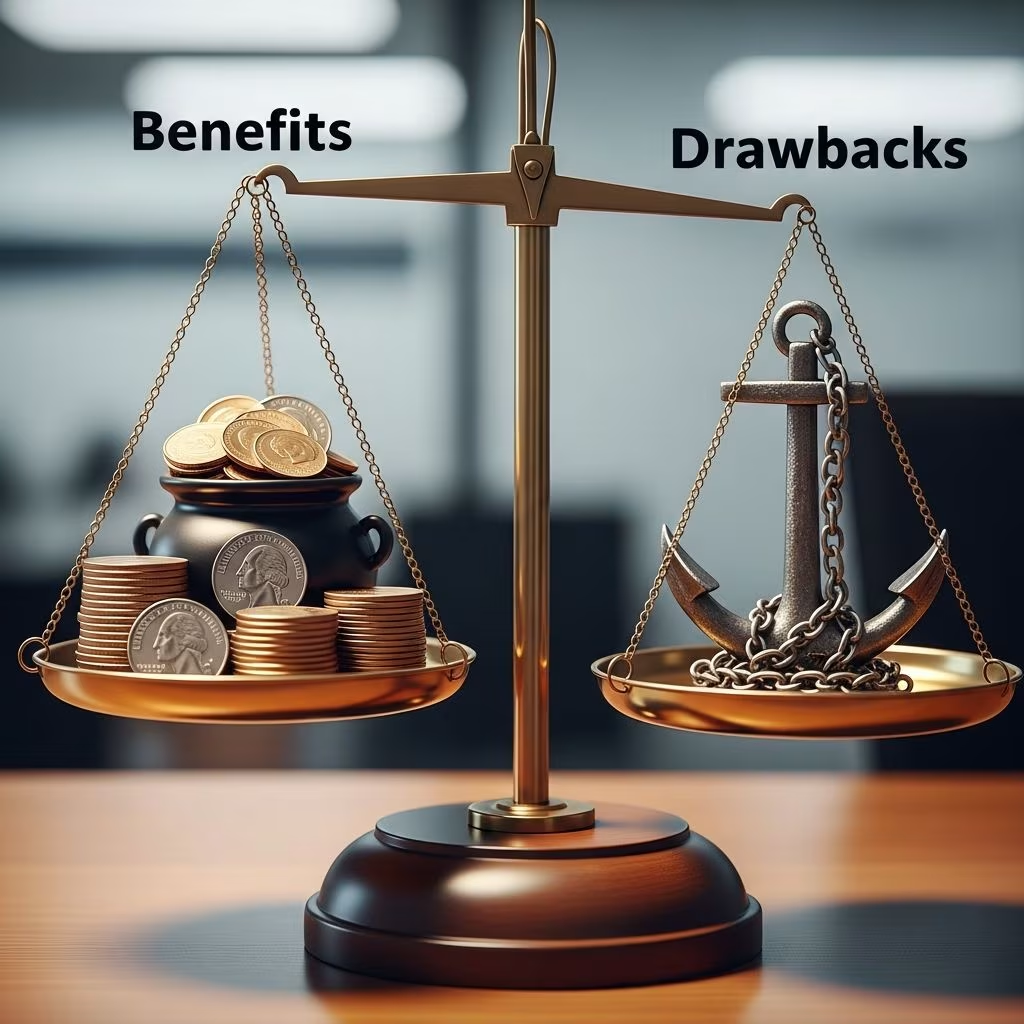
High-yield savings accounts deliver substantially higher annual percentage yields (APYs) than standard savings options, enabling faster growth of deposited funds through compounding interest. These accounts combine accessibility with low-risk returns, making them suitable for specific financial needs.
Understanding the Fundamentals of High-Yield Savings
Depositors earn interest on their balance, with APY reflecting the total yearly return including compounding effects. Unlike traditional accounts, high-yield versions often provide rates several times the national average, driven by online banks’ lower overhead costs. Funds remain liquid, though some institutions impose withdrawal restrictions to encourage saving discipline.
Interest compounds automatically, typically daily or monthly, accelerating growth over time. For instance, higher principal from prior interest earns additional returns in subsequent periods. Federal Deposit Insurance Corporation (FDIC) coverage protects deposits up to $250,000 per depositor per bank, ensuring principal safety even if the institution fails.
Key Advantages That Make High-Yield Accounts Appealing
These accounts stand out for their superior earning potential and protective features.
- Superior Returns: APYs frequently exceed traditional accounts by multiples, boosting savings growth significantly.
- Inflation Resistance: Elevated rates help preserve purchasing power as inflation erodes value in low-yield options.
- Principal Protection: FDIC insurance eliminates loss risk, unlike market investments.
- Easy Access: Funds withdraw without penalties, unlike certificates of deposit.
Ideal Applications for High-Yield Savings
Building a Robust Emergency Fund
Financial advisors recommend maintaining 3-6 months of living expenses in liquid, safe storage. High-yield accounts excel here, offering quick access via transfers to checking while earning competitive interest. This setup avoids market downturns that could deplete funds during crises like medical emergencies or unemployment.
Pursuing Short- to Medium-Term Objectives
For goals like vacations or home down payments within 1-5 years, these accounts provide growth without commitment.
| Goal | Timeframe | Why HYSA Fits |
|---|---|---|
| Vacation | 6-12 months | Liquid access for bookings, steady interest accrual |
| Down Payment | 2-5 years | Flexible deposits, higher yields than standard savings |
| Home Repairs | 1-3 years | Safe growth, no investment risk |
Regular contributions compound effectively, outpacing inflation and traditional rates.
Bridging to Retirement or Risk-Averse Phases
Near retirement, preserving capital trumps high-risk pursuits. High-yield accounts offer predictable gains amid stock volatility.
Potential Shortcomings to Consider
Despite strengths, limitations may affect suitability.
- Variable Rates: APYs fluctuate with market conditions, potentially dropping after Federal Reserve adjustments.
- Access Restrictions: Regulations limit certain withdrawals to six per month, with fees for excess.
- Minimum Balances or Fees: Some require deposits or charge maintenance fees if balances fall short.
- No Physical Branches: Online-only providers lack in-person service, challenging for some users.
- Lower Long-Term Yields: Stocks historically outperform, though with greater risk.
Comparing High-Yield to Traditional Savings and Alternatives
| Account Type | Typical APY | Access | Risk Level | Best For |
|---|---|---|---|---|
| High-Yield Savings | High (e.g., 4-5%+) | High liquidity | Low (FDIC) | Emergency, short-term |
| Traditional Savings | Low (0.01-0.5%) | High | Low | Basic parking |
| CD | Fixed high | Locked | Low | Known date needs |
| Stocks | Variable high | High | High | Long-term growth |
High-yield options bridge safety and returns for non-long-term horizons.
Strategies to Maximize High-Yield Savings
Select FDIC-insured providers with competitive, no-fee APYs. Automate transfers for consistent growth via compounding. Monitor rates quarterly, switching if better options emerge without fees.
- Ladder accounts across banks for full FDIC coverage beyond $250,000.
- Pair with budgeting apps for goal tracking.
- Reinvest interest to amplify compounding.
Frequently Asked Questions
What is the difference between interest rate and APY?
Interest rate is the raw percentage; APY accounts for compounding frequency, providing a more accurate growth measure.
Are high-yield savings accounts safe?
Yes, when FDIC-insured up to $250,000, protecting against bank failure.
Can I lose money in a high-yield savings account?
No principal loss from interest, but inflation or rate drops may reduce real value.
How often do rates change?
Variable rates adjust with market conditions, often tied indirectly to Fed policy.
Is there a minimum deposit required?
Varies; many online banks have none, but check for fees.
Final Thoughts on Integrating into Your Finances
High-yield savings accounts suit conservative savers prioritizing liquidity and modest growth. Assess personal goals, risk tolerance, and fees before opening. Regularly review to ensure alignment with evolving needs.
References
- What is a High Yield Savings Account and How Do They Work? — PNC Bank. 2025. https://www.pnc.com/insights/personal-finance/save/what-is-a-high-yield-savings-account.html
- How Do High Yield Savings Accounts Work? — Openbank. 2025-02. https://www.openbank.us/resources/high-yield-savings/how-do-high-yield-savings-accounts-work
- What Is a High Yield Savings Account? Pros, Cons and How It Works — Synchrony Bank. 2025. https://www.synchrony.com/blog/bank/what-is-a-high-interest-savings-account
- What is a High-Yield Savings Account — Chase Bank. 2025. https://www.chase.com/personal/banking/education/basics/high-yield-savings-account
- What Is a High-Yield Savings Account? — TD Bank. 2025. https://www.td.com/us/en/personal-banking/learning/what-is-a-high-yield-savings-account
This article is general information, not personal financial advice. Consider your own situation, or speak with a licensed adviser, before acting on it.


