

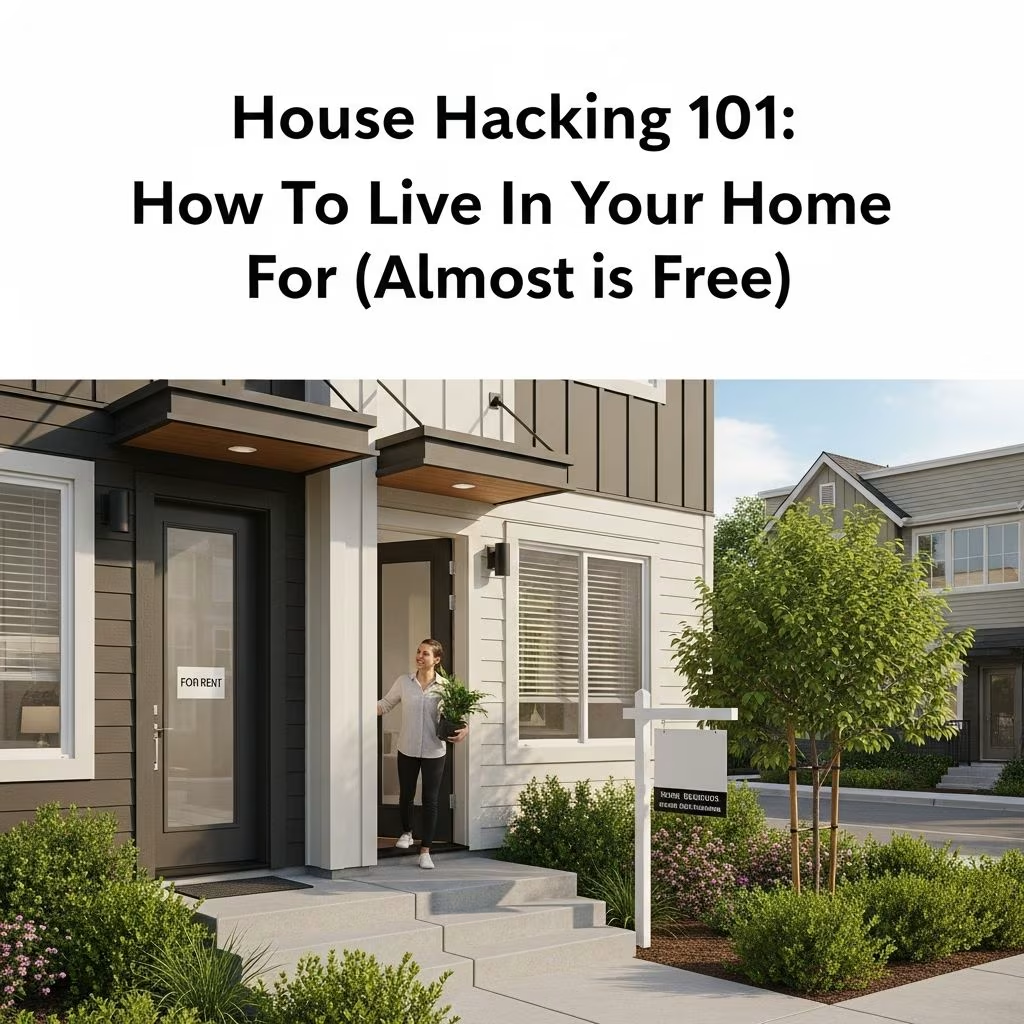
House hacking is a powerful strategy that allows you to dramatically lower, or even eliminate, your housing costs by turning your home into an income-producing asset. Instead of your mortgage draining your budget every month, your tenants help pay the bill while you build equity and long-term wealth.
In this guide, you will learn what house hacking is, how it works, the most common examples, and how to create a practical plan that fits your life and comfort level.
What Is House Hacking?
House hacking is a strategy where you live in a property while renting out part of it to generate income that offsets your housing costs. In many cases, people use this approach to reduce their housing payment to a very low amount, and sometimes to zero, depending on the property and local rental market.
Instead of buying a home that only costs you money, you intentionally choose a place with extra space you can rent out, such as:
- Additional bedrooms in a single-family home
- A duplex, triplex, or fourplex where you live in one unit and rent the others
- A basement or over-garage apartment with a separate entrance
- Space for short-term rentals, where allowed by law
The core idea is simple: your tenants’ rent helps pay the mortgage, taxes, and insurance, while you live in the property and benefit from potential price appreciation over time.
Is It Really Possible To Live For Free?
Yes, it can be possible to live for “free” with a well-executed house hack, although in practice most people simply reduce their costs significantly rather than reaching exactly $0 out-of-pocket every month.
“Living for free” in this context means that the rental income from the property covers most or all of the following:
- Monthly mortgage payment (principal and interest)
- Property taxes
- Homeowner’s insurance
- Reasonable maintenance and repair costs
Whether you can truly reach a zero housing cost depends on factors like:
- Purchase price of the property
- Down payment and interest rate
- Market rent in your area for comparable spaces
- Vacancy rates and operating expenses
In many U.S. housing markets, investors and owner-occupants routinely use rental income to offset a large portion of housing costs, especially in small multifamily properties with two to four units.
How Does House Hacking Work?
Although the details vary, the framework is consistent: you purchase or use a property that has extra rentable space, move in as your primary residence, and rent out that additional space for income.
At a high level, a typical house hack works like this:
- Choose a property that has one or more units or rooms you can legally rent out.
- Finance the home with an owner-occupied mortgage if you are buying, which usually offers better terms than investment property loans.
- Move into one part of the property and prepare the remaining space for tenants (basic repairs, cleaning, safety checks).
- Find tenants who will rent the extra rooms or units.
- Use the rent to cover the mortgage and other housing costs while you live in the property.
Because you live in the home, lenders often classify the mortgage as owner-occupied financing, which typically provides lower down payments and interest rates compared with pure investment loans.
Common House Hacking Examples
House hacking can look very different depending on the type of property you choose. Below are some of the most common approaches, along with their pros and cons.
Renting Out Rooms In A Single-Family Home
One of the simplest ways to start house hacking is by renting out spare bedrooms in a standard single-family house. This often looks similar to a roommate situation, but you approach it more intentionally as a business.
With this strategy, you usually share common areas—such as the kitchen, living room, laundry, and sometimes bathrooms—with your tenants. That can keep your costs low but also requires clear boundaries and good communication.
Common features of this approach:
- Lower upfront cost, since single-family homes are often more affordable than multifamily properties
- Shared utilities and common areas
- More direct involvement in tenant management
- Best suited for those comfortable living with roommates or non-family members
Owner-Occupied Duplex, Triplex, Or Fourplex
Another classic house hacking model is to buy a small multifamily property with two to four units, live in one, and rent out the others.
This strategy offers a clearer separation between your living space and your tenants’ units, which many people find more comfortable over the long term.
| Property type | Units rented out | Typical benefits |
|---|---|---|
| Duplex | 1 | Simple management, one tenant, more privacy |
| Triplex | 2 | More rental income, still manageable size |
| Fourplex | 3 | Maximum units with residential financing in many programs |
In many lending programs, properties with up to four units can still qualify for owner-occupied mortgages if you live in one unit.
Renting Out An Accessory Unit Or Basement Apartment
Some properties include a finished basement, garage apartment, or accessory dwelling unit (ADU) with a separate entrance and amenities. Renting this space can be a lower-friction way to house hack because you have more privacy and less shared space with tenants.
Important considerations include:
- Local zoning rules for ADUs and basement apartments
- Safety requirements such as proper exits, smoke detectors, and electrical standards
- Separate or shared utility meters and how you will divide those costs
Short-Term Or Medium-Term Rentals (Where Allowed)
Some house hackers choose to rent spare rooms or units through short-term rental platforms, or as medium-term furnished rentals for traveling professionals. This can sometimes produce higher income but may also bring more regulatory and management complexity.
Before you consider this route, check:
- Local laws and licensing rules for short-term rentals
- Any restrictions in your homeowners association (HOA) or condo association
- Tax treatment of short-term rental income
Benefits And Trade-Offs Of House Hacking
House hacking offers strong financial potential, but it also comes with lifestyle trade-offs. Understanding both sides helps you decide if it fits your goals and personality.
Key Benefits
- Lower housing costs: Rental income can drastically reduce how much you pay out of pocket each month, freeing cash for savings, debt payoff, or investing.
- Build equity faster: As your tenants help pay down your mortgage, you build ownership in the property over time.
- Gain real estate experience: You learn about rental management, leases, and maintenance on a small scale before potentially expanding.
- Leverage residential financing: Owner-occupied loans typically offer lower rates and down payments than investment property loans, especially on two- to four-unit properties.
Common Challenges
- Less privacy: Sharing your property with tenants can feel intrusive, especially if you share common areas.
- Responsibility as a landlord: You must screen tenants, handle repairs, and comply with landlord–tenant law, even if you only rent one room.
- Vacancy and nonpayment risk: Periods without tenants or late rent can affect your budget.
- Upfront preparation: You may need to invest in safety upgrades, repairs, or furnishings before renting.
How To Create A House Hacking Plan
If the strategy sounds appealing, the next step is to build a simple but realistic plan. The goal is to align your finances, property choice, and comfort level so you can sustain this lifestyle for at least a few years.
1. Assess Your Current Situation
Start by taking an honest look at your finances, living arrangements, and personality. Ask yourself:
- Do you currently own a home with extra space you could rent out?
- If not, are you prepared to buy a property that is suitable for house hacking?
- How comfortable are you sharing a kitchen, living room, or yard with tenants?
- Would you rather live in a separate unit within a small multifamily property?
- Do you have the time and emotional bandwidth to manage tenants and maintenance?
If you already own a property, the easiest way to start may be to rent out a spare bedroom or finished space. If you are still renting or planning to buy, you can intentionally look for a home that lends itself to house hacking from day one.
2. Clarify Your Goals
Define what success looks like before you begin. For example, your goals might be:
- Reduce your monthly housing cost by 50% within one year
- Cover your full mortgage payment within three years
- Gain experience managing tenants before buying a second rental property
- Live in the property for several years while building enough equity to move and keep it as a long-term rental
Setting clear goals helps you choose the right type of property and rental strategy.
3. Run The Numbers
Next, estimate the potential financial impact of a house hack. A simple framework is:
- Estimate your total monthly housing cost (mortgage, taxes, insurance, HOA, and an allowance for maintenance).
- Research market rents for similar rooms or units in your area.
- Assume at least some vacancy and ongoing expenses.
Then compare your expected rental income to your total monthly housing costs. A basic monthly snapshot might look like this:
| Item | Amount (Example) |
|---|---|
| Mortgage (principal & interest) | $1,600 |
| Property taxes & insurance | $400 |
| Maintenance reserve | $150 |
| Total housing costs | $2,150 |
| Rent from Unit/Room 1 | -$900 |
| Rent from Unit/Room 2 | -$850 |
| Net out-of-pocket housing cost | $400 |
Even when you do not hit exactly $0, reducing your housing cost from over $2,000 to a few hundred dollars frees substantial cash flow for savings and investing.
4. Understand Legal And Safety Requirements
Before renting space in your home, make sure you understand the legal framework in your area. Key issues include:
- Zoning rules: Some local governments regulate whether you can rent out rooms, ADUs, or short-term rentals, and how many unrelated people can live in a single dwelling.
- Landlord–tenant law: Even when you live in the property, you may be subject to formal lease rules, notice periods, and security deposit regulations.
- Building and fire codes: Rental units often must meet specific safety standards, such as proper egress windows, smoke detectors, and electrical systems.
Consult local housing authority resources or a qualified professional if you are unsure how the rules apply to your situation.
5. Decide How You Will Finance Your House Hack
If you plan to buy a property, consider how you will finance it. Many house hackers use owner-occupied mortgages because they typically offer lower down payments and interest rates for properties with up to four units.
Common financing approaches include:
- Low-down-payment conventional loans for owner-occupants
- Government-backed loans such as FHA or VA for eligible borrowers, often with down payments as low as 3–3.5% for 2–4 unit properties
- Saving a larger down payment to improve cash flow and reduce monthly costs
Regardless of the loan type, lenders will examine your income, credit, debt-to-income ratio, and sometimes expected rental income when deciding how much you can borrow.
6. Prepare Your Home And Set Clear Expectations
Once you are ready to move forward, prepare your property and your household:
- Make necessary repairs and safety upgrades.
- Decide what areas tenants can use and what remains private.
- Write down clear house rules covering noise, guests, parking, cleaning, and shared utilities.
- Create a written lease that complies with local law and outlines rent, due dates, deposits, and responsibilities.
Strong communication and clear boundaries at the beginning make the experience smoother for both you and your tenants.
7. Screen Tenants Carefully
Living close to your tenants—often under the same roof—means that tenant screening is especially important. Consider:
- Verifying income and employment
- Running a credit check where allowed and appropriate
- Checking past landlord references
- Complying with fair housing laws and avoiding discriminatory practices
Taking the time to choose responsible tenants can prevent many issues later.
House Hacking Tips To Maximize Your Results
Once you have your plan in place, these additional tips can help you make the most of your house hack:
- Keep good records: Track rental income and expenses separately to make budgeting and tax filing easier.
- Maintain the property: Regular upkeep can help you avoid larger, more expensive repairs later.
- Communicate early: Address issues with tenants promptly and respectfully to keep relationships positive.
- Think long term: View the house hack as part of a bigger financial plan—once your equity grows, you may choose to move out and keep the property as a full rental.
House hacking is not effortless, but it can be a strong stepping stone toward financial independence when approached with realistic expectations and a clear plan.
Frequently Asked Questions (FAQs)
Q: Do I have to own a multifamily property to house hack?
No. You can house hack in a single-family home by renting spare bedrooms, a finished basement, or an accessory unit, as long as it is legal and safe to do so.
Q: Is house hacking only for young or single people?
House hacking can work for many life stages. Some families choose duplexes or properties with separate in-law suites so they can maintain privacy while still earning rental income.
Q: How long should I plan to live in a house hack?
Most owner-occupied loan programs expect you to live in the property for at least one year, and many people stay longer to build more equity and maximize the benefits.
Q: What if I do not like living with tenants?
If sharing space feels challenging, consider a layout with a more private unit, such as a duplex or a property with a separate basement apartment, or try medium-term rentals that create more natural breaks between stays.
Q: Is the rental income from house hacking taxable?
Yes, rental income is typically taxable, but eligible expenses such as repairs, a portion of utilities, and property costs related to the rental activity may be deductible. Consult a tax professional for guidance based on your specific situation and local rules.
References
- House Hacking 101: Live In Your Home For Free! — Clever Girl Finance. 2023-07-10. https://www.clevergirlfinance.com/house-hacking/
- 10 House Hacking Strategies That Actually Work in 2026 — AmeriSave Mortgage Corporation. 2025-01-02. https://www.amerisave.com/learn/house-hacking-strategies-that-actually-work
- Housing Quality Standards in the Housing Choice Voucher Program — U.S. Department of Housing and Urban Development. 2023-05-15. https://www.hud.gov/program_offices/public_indian_housing/programs/hcv/hqs
- Short-Term Rentals: Guidance for Local Governments — National League of Cities. 2022-08-30. https://www.nlc.org/resource/short-term-rentals-a-guide-for-local-government/
- The Landlord-Tenant Relationship — U.S. Federal Trade Commission (Landlord and Tenant Issues, summarized via consumer guidance). 2022-11-18. https://www.consumer.ftc.gov/articles/renting-home
This article is general information, not personal financial advice. Consider your own situation, or speak with a licensed adviser, before acting on it.


