

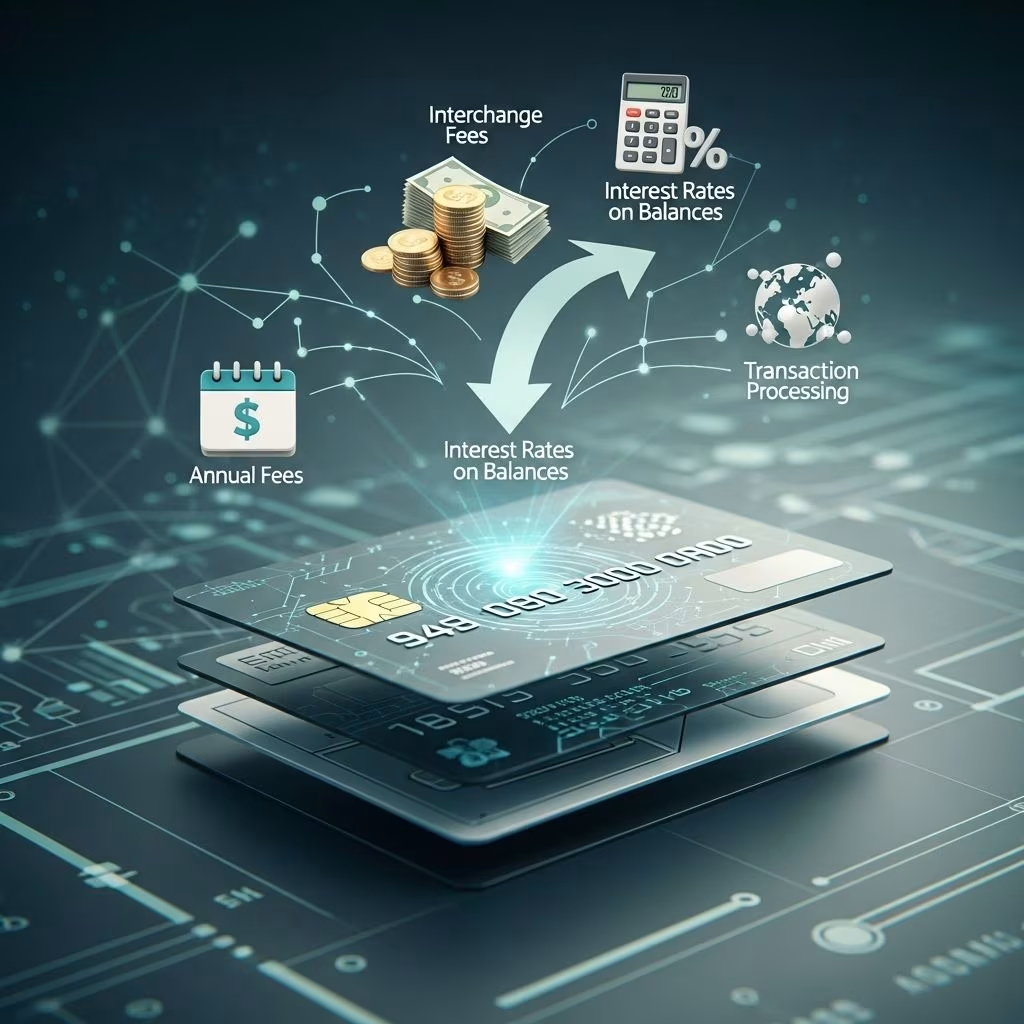
Credit card issuers earn the majority of their income from **interest charges**, **cardholder fees**, and **transaction fees** paid by merchants. These streams ensure profitability even from users who pay balances in full monthly. Understanding these mechanisms empowers consumers to make informed decisions, potentially saving significant amounts annually.
The Dominant Role of Interest Income
Interest represents the largest revenue source for most credit card providers, often comprising around 80% of total profitability according to Federal Reserve analysis. This income arises when cardholders carry unpaid balances beyond the grace period, triggering charges based on the card’s Annual Percentage Rate (APR).
APRs typically range from 15% to 30% or higher, influenced by factors like credit score, card type, and market conditions. For instance, with U.S. credit card debt exceeding $1.18 trillion in early 2025 and average rates near 20%, issuers collect substantial sums from the over 50% of cardholders who revolve balances.
- Revolving balances: Unpaid purchases accrue daily interest, compounded and added to the principal.
- Introductory rates: Temporary low or 0% APRs lure users but revert to standard high rates post-promotion.
- Penalty APRs: Triggered by late payments, these can exceed 29%, amplifying costs rapidly.
Net credit margin—the difference between interest earned and funding costs—drives this segment, underscoring why issuers encourage carrying balances through marketing and minimum payment structures.
Cardholder Fees: Direct Charges to Users
Beyond interest, issuers impose various fees on cardholders, contributing about 15-16% to profitability, with late fees being prominent. These are often avoidable with disciplined usage but form a reliable income stream, especially from subprime lenders who rely more heavily on fees than interest.
| Fee Type | Description | Typical Cost | Avoidance Tip |
|---|---|---|---|
| Annual Fee | Charged yearly for card possession, common on premium rewards cards. | $95–$550+ | Opt for no-fee alternatives or ensure perks outweigh costs. |
| Late Payment Fee | Applied for payments after due date. | $30–$40 | Set autopay or reminders. |
| Cash Advance Fee | Percentage of amount withdrawn, plus immediate interest. | 3–5% + high APR | Use debit or alternatives for cash needs. |
| Balance Transfer Fee | Charged when moving debt to the card. | 3–5% | Calculate long-term savings vs. fee. |
| Foreign Transaction Fee | For purchases in non-local currency. | 1–3% | Choose no-foreign-fee cards for travel. |
Premium cards justify annual fees with rewards, travel insurance, and lounge access, but mass-market issuers profit from penalty fees on basic cards.
Merchant-Paid Transaction Fees: The Hidden Revenue
Even grace-period payers generate issuer income via interchange or “swipe” fees, paid by merchants on every transaction. These fees, typically 1–3% of transaction value, cover processing, fraud checks, and risk assumption by the issuing bank.
Payment flow: When you swipe, the merchant’s bank (acquirer) pays the issuer and network (Visa, Mastercard) from the sale amount before remitting funds. Issuers receive the largest share due to credit risk. With trillions in annual volume, this yields billions despite being invisible to consumers.
- Interchange rates: Vary by card type (rewards cards higher), merchant size, and transaction method (contactless often lower).
- Network role: Visa/Mastercard facilitate but take a cut; Amex/Discover handle both issuing and processing.
- Merchant impact: Small businesses face higher effective rates, sometimes passing costs via surcharges.
Federal Reserve data shows transaction functions slightly negative net due to rewards outpacing interchange, but they sustain user acquisition.
Payment Networks and Issuers: Divided Profits
The ecosystem involves issuers (lending money), networks (processing), and acquirers (merchant side). Revenue splits: Issuers get most interchange for risk; networks earn assessment fees (0.1–0.15%); acquirers handle remainder after costs.
Integrated players like American Express capture more by controlling both ends, charging merchants higher but offering superior rewards. This structure incentivizes volume growth, benefiting all parties.
Broader Revenue Diversification
Issuers supplement core streams with balance transfers, partnerships, and data sales (anonymized). Subprime focus yields higher fees; mass-market emphasizes interest and interchange. Pandemic-era fee waivers temporarily reduced income, but recovery followed.
Consumer Strategies to Counter Costs
Minimize issuer profits through smart habits:
- Pay in full monthly to dodge interest.
- Choose no-fee cards matching spending.
- Maximize rewards to offset effective costs.
- Monitor statements for errors or fraud.
- Build credit for better rates/terms.
Tools like autopay and budgeting apps help maintain discipline.
Industry Trends and Regulatory Shifts
Rising debt levels boost interest revenue, but regulations cap fees (e.g., CARD Act limits penalties). Rewards competition erodes interchange margins, pushing innovation in cash-back and points. Digital wallets and BNPL challenge traditional models but integrate card rails.
FAQs
Do credit card companies make money if I pay in full every month?
Yes, via merchant interchange fees on your purchases.
What is the average credit card interest rate?
Around 20–24% as of 2025, varying by creditworthiness.
Are annual fees worth it?
If perks exceed the fee value, yes; otherwise, avoid.
How much do merchants pay per transaction?
1–3% total, split among parties.
Can I negotiate fees or rates?
Possibly with good payment history; call issuer.
References
- How Credit Card Companies Make Money — Bankrate. 2025-06 (approx.). https://www.bankrate.com/credit-cards/advice/credit-card-companies-make-money/
- How Do Credit Card Companies Make Money? — SoFi. Recent (2024+). https://www.sofi.com/learn/content/how-do-credit-card-companies-make-money/
- Credit Card Profitability — Federal Reserve. 2022-09-09. https://www.federalreserve.gov/econres/notes/feds-notes/credit-card-profitability-20220909.html
- How Do Credit Card Companies Make Money? — Experian. Recent. https://www.experian.com/blogs/ask-experian/how-do-credit-card-companies-make-money/
- How Do Credit Card Companies Make Money? — NerdWallet. Recent. https://www.nerdwallet.com/credit-cards/learn/credit-card-companies-money
This article is general information, not personal financial advice. Consider your own situation, or speak with a licensed adviser, before acting on it.


