

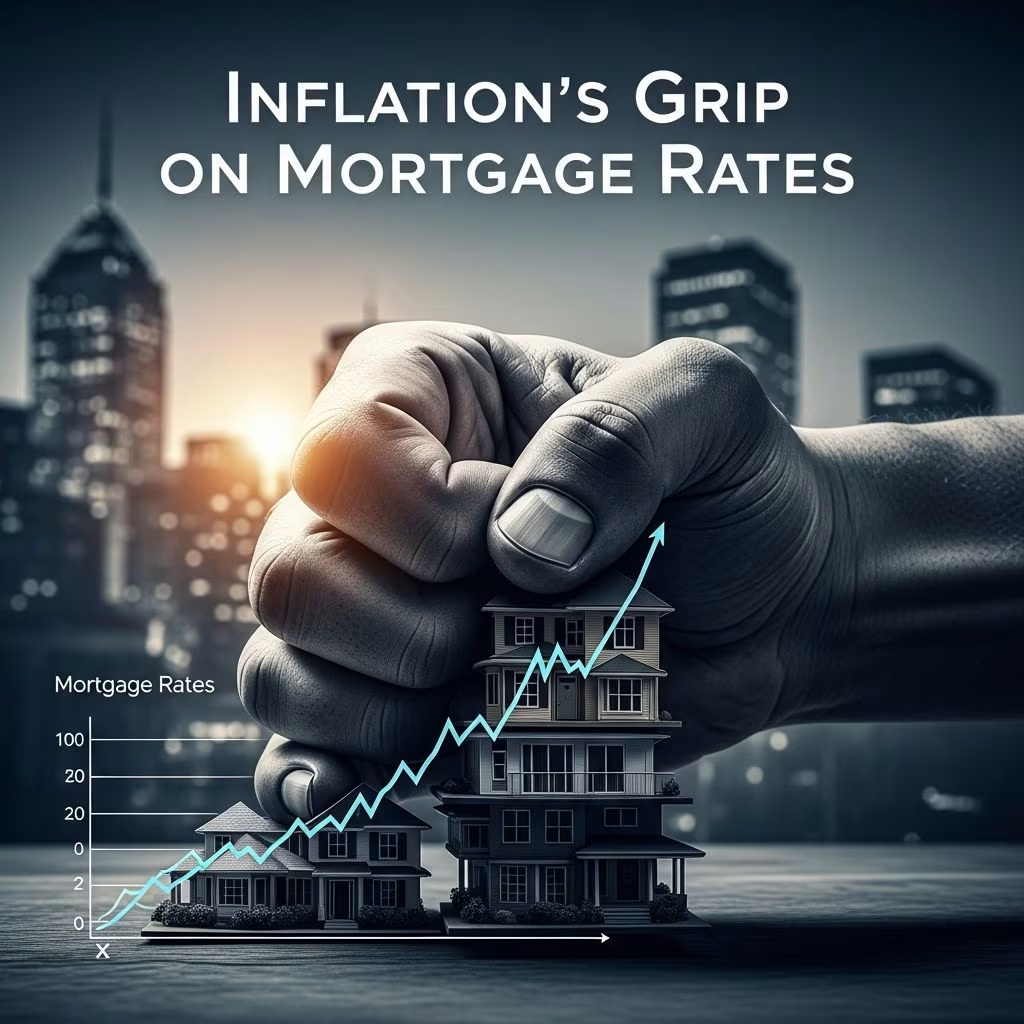
Inflation and mortgage rates share a tight connection, where surging prices often push borrowing costs upward, affecting homebuyers’ dreams and budgets. As prices for everyday goods climb, central banks respond with policies that ripple through the housing market, influencing everything from monthly payments to long-term affordability.
The Fundamental Link Between Rising Prices and Borrowing Costs
When the cost of living accelerates, lenders face erosion in the value of future repayments, prompting them to demand higher interest rates on loans like mortgages to offset this risk. This dynamic ensures that **inflation directly correlates with elevated mortgage rates**, as financial institutions protect their margins against diminished purchasing power.
Historically, periods of high inflation have coincided with mortgage rate spikes, making homeownership more challenging. For instance, when consumer prices rise faster than wages, demand for credit intensifies, further pressuring rates. Conversely, controlled inflation allows rates to ease, opening doors for more accessible financing.
Central Bank Strategies in Combating Price Pressures
The **Federal Reserve** plays a pivotal role, targeting a 2% annual inflation rate to foster economic stability. It adjusts the federal funds rate—the benchmark for short-term borrowing—to either cool overheating economies or stimulate sluggish ones.
- High inflation triggers rate hikes, increasing overall borrowing expenses, including mortgages.
- Low inflation or deflation risks prompt cuts, lowering costs to encourage spending and investment.
- When inflation hovers near 2%, policies often stabilize, holding rates steady.
Although the Fed does not set mortgage rates outright, its decisions profoundly influence them through bond yields and lender expectations. Mortgage rates typically track the 10-year Treasury note, which responds to Fed signals on inflation control.
2026 Projections: A Cautious Outlook for Borrowers
Looking toward 2026, experts anticipate mortgage rates stabilizing in the **5.5% to 6.4% range**, contingent on inflation trends and policy shifts. Forecasts from organizations like Fannie Mae, Redfin, and the Mortgage Bankers Association suggest a mid-6% average, with potential for modest declines if inflation continues cooling toward the Fed’s target.
| Forecast Source | Predicted 30-Year Fixed Rate | Key Assumption |
|---|---|---|
| Fannie Mae | 6.0% | Stable inflation through 2026-2027 |
| Redfin | 6.3% | Labor market softening without recession |
| Mortgage Bankers Assoc. | 6.0%-6.4% | Gradual Fed cuts |
| General Consensus | 5.5%-6.0% | Cooling global pressures |
January 2026 data showed inflation at 2.4%, above the 2% goal, tempering aggressive rate cut expectations. Markets predict one or two Fed reductions by year-end, potentially easing mortgage costs slightly.
Beyond Inflation: Other Forces Shaping Rate Trends
While inflation dominates, several intertwined factors modulate mortgage rates:
- Housing Supply and Demand: Booming demand amid limited inventory drives rates higher as lenders capitalize on competition.
- Global Events: Geopolitical tensions or trade disruptions can spike uncertainty, pushing yields and rates up.
- Employment and Wage Growth: Strong job markets fuel spending and inflation, indirectly lifting rates.
- Borrower Profile: Credit scores, debt levels, and income directly affect personal rates, overlaying economic trends.
These elements create volatility; even with moderating inflation, unexpected shocks could prevent significant drops.
Fixed vs. Adjustable Mortgages: Navigating Inflation Risks
Inflation impacts mortgage products differently, guiding borrower choices based on risk tolerance and timelines.
Fixed-Rate Mortgages (FRMs): These lock in rates for 15-30 years, shielding against future inflation surges. The rate reflects current economic conditions at origination, providing payment certainty.
Adjustable-Rate Mortgages (ARMs): Initial rates are lower, but they reset periodically based on indexes tied to short-term rates, which rise with inflation. Suitable for short-term homeowners planning to sell or refinance.
| Mortgage Type | Inflation Sensitivity | Best For |
|---|---|---|
| Fixed-Rate | Low (locked in) | Long-term stability seekers |
| Adjustable-Rate | High (resets possible) | Short-term plans, rate optimists |
In high-inflation environments, FRMs offer protection; ARMs shine if rates are expected to fall.
Practical Steps for Homebuyers in Uncertain Times
To counter inflation’s effects:
- Monitor Economic Indicators: Track CPI reports and Fed announcements for rate movement signals.
- Boost Creditworthiness: Higher scores unlock better rates, mitigating broader increases.
- Consider Timing: Lock rates during dips, but avoid indefinite waiting as costs compound.
- Explore Loan Options: Compare FRM, ARM, FHA, or VA loans for personalized fits.
- Budget Flexibly: Factor in potential rate hikes when calculating affordability.
Tools like AI-driven calculators can simulate scenarios based on personal finances and forecasts. Average household debt nears $105,000, underscoring the stakes.
Frequently Asked Questions
Will inflation cause mortgage rates to rise in 2026?
Forecasts indicate stabilization around 6%, but persistent inflation above 2% could prevent declines.
How does the Fed influence my mortgage rate?
Indirectly via federal funds rate adjustments, which affect Treasury yields and lender pricing.
Should I choose fixed or adjustable in inflationary times?
Fixed for predictability; adjustable if anticipating drops and planning short-term ownership.
Can I refinance if rates fall?
Yes, but weigh closing costs against savings; ideal if dropping 0.5-1% or more.
What if inflation cools faster than expected?
Rates could dip toward 5.5%, improving affordability—stay informed on Fed meetings.
Long-Term Strategies for Rate Resilience
Beyond immediate decisions, building equity through larger down payments reduces loan sizes and interest exposure. Diversifying into rate buydowns or points can lower effective costs upfront. In 2026’s landscape, where rates linger post-2025 cuts, proactive planning trumps passivity. Regional variations, like in Michigan, may diverge from national trends due to local demand. Ultimately, understanding inflation’s mechanics empowers informed choices, turning economic headwinds into navigable paths to homeownership.
References
- How Inflation and the Global Economy Impact Mortgage Rates in 2026 — Sistar Mortgage. 2026. https://sistarmortgage.com/blog/inflation-global-economy-mortgage-rates
- How Does Inflation Affect Mortgage Rates in 2026? — AmeriSave Mortgage. 2026. https://www.amerisave.com/learn/how-does-inflation-affect-mortgage-rates
- Federal Reserve Rate Cut Outlook & Mortgage Impact Spring 2026 — The Mortgage Reports. 2026-03. https://themortgagereports.com/128048/federal-reserve-rate-cut-outlook-mortgage-rates-2026
- Mortgage Interest Rates Forecast for 2026 — Rocket Mortgage. 2026. https://www.rocketmortgage.com/learn/mortgage-interest-rates-forecast
- 2026 Mortgage Rate Forecast — Acrisure. 2026. https://www.acrisure.com/blog/2026-mortgage-rate-forecast
- Mortgage Rates Remain Near Three-Year Low — Bankrate. 2026-02-25. https://www.bankrate.com/mortgages/analysis/mortgage-rates-february-25-2026/
This article is general information, not personal financial advice. Consider your own situation, or speak with a licensed adviser, before acting on it.


