

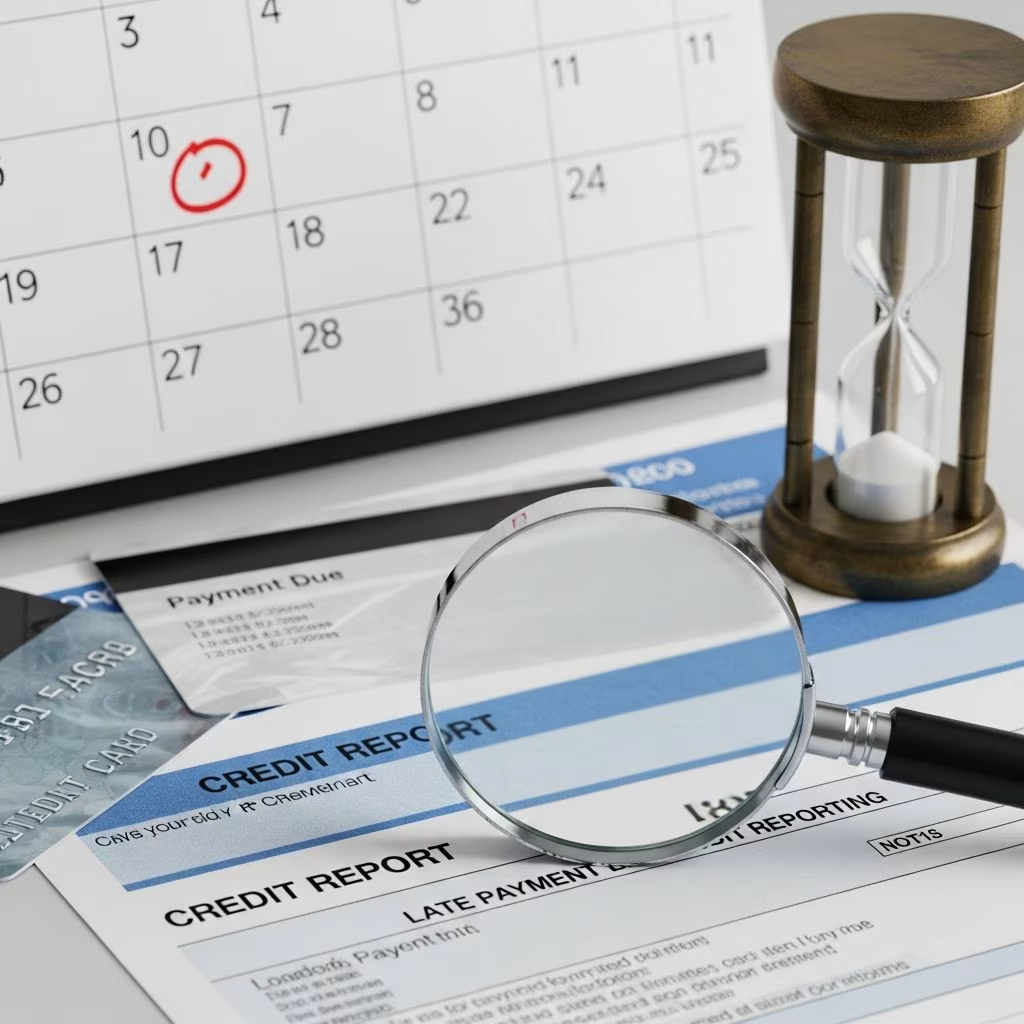
Missing a payment by even a single day marks it as late, but credit bureaus typically learn about it only after 30 days past due. This delay offers a critical window to correct the issue before it stains your credit history.
Defining Late Payments and Delinquency
A late payment occurs whenever you fail to meet the due date on any credit account, such as credit cards, loans, or utilities. Delinquency escalates this when payments remain unpaid beyond the due date, potentially triggering fees and credit reporting.
Creditors distinguish between minor delays and serious delinquencies. Payments 1-29 days late often incur immediate penalties like fees or higher interest rates but do not yet appear on credit reports. This grace period varies slightly by creditor and account type.
- Day 1 late: Late fee possible; no credit report impact.
- 1-29 days late: Account marked internally as delinquent; benefits may be suspended.
- 30+ days late: Eligible for bureau reporting.
The 30-Day Threshold for Credit Bureau Reporting
Most creditors update credit bureaus monthly, aligning reports with billing cycles. A payment becomes reportable once it reaches 30 days past due from the statement date or due date, whichever triggers the update.
For instance, if your due date is the 15th and you miss it, the delinquency hits 30 days around the 45th of the month. The next bureau update—often at cycle end—reflects this status. Federal student loans uniquely wait until 90 days past due before reporting.
| Days Past Due | Typical Creditor Action | Credit Bureau Reporting |
|---|---|---|
| 0-29 days | Late fees, penalty APR | No |
| 30-59 days | Delinquency noted; score impact begins | Yes |
| 60-89 days | Further score drop; collection risk | Yes |
| 90+ days | Charge-off possible | Yes (student loans at 90) |
Exact timing depends on the creditor’s reporting schedule. Some update mid-cycle, others at month-end, creating variability in when the mark appears—usually 1-2 months after delinquency.
Immediate Consequences Before Reporting
Even without bureau involvement, short-term lapses carry costs. Credit card issuers may impose penalty APRs (up to 29.99% or more) on balances, waive rewards, or suspend accounts. Late fees average $30-$40 per incident.
These non-credit effects compound if ignored, leading to escalated actions like account restrictions or collections before 30 days. Proactive payment within the window prevents both fees and reporting.
Long-Term Presence: Seven-Year Reporting Window
Once reported, late payments persist on Equifax, Experian, and TransUnion reports for seven years from the original delinquency date—the first missed payment not cured before further lapses.
For example, a 30-day late payment in March 2026 drops off in March 2033. Multiple consecutive misses tie to this initial date. Closed accounts retain the mark for the full term, though positive history may linger longer (up to 10 years for mortgages).
- Open accounts: Late mark stays seven years post-delinquency.
- Closed current accounts: History up to 10 years; lates for seven.
- Closed delinquent accounts: Full removal after seven years from first delinquency.
The impact diminishes over time. Recent lates weigh heavier in FICO and VantageScore models, where payment history comprises 35% of scores.
Score Impacts Across Delinquency Stages
A single 30-day late can drop scores 60-110 points for those with pristine histories, less (20-100 points) for average profiles. Scores recover faster with consistent on-time payments post-incident.
| Prior Score Range | 30-Day Late Drop | 60+ Day Late Drop |
|---|---|---|
| 800+ | 90-140 points | 150+ points |
| 740-799 | 70-100 points | 120-150 points |
| Below 700 | 40-70 points | 80-120 points |
Data from major bureaus shows recovery timelines: full rebound possible in 1-2 years with perfect behavior. Multiple or severe delinquencies (90+ days) lead to charge-offs, amplifying damage via collections.
Variations by Account and Creditor Type
Not all debts report identically. Mortgages and auto loans follow 30-day rules but emphasize severity. Utilities and telecoms report delinquencies directly, sometimes faster. Federal loans delay to 90 days, protecting borrowers longer.
Some issuers offer courtesies: grace until next business day or partial payment leniency. Always review your agreement for specifics.
Prevention: Strategies to Avoid Late Marks
Automate payments for minimum dues to bypass forgetfulness. Set alerts 3-5 days pre-due. Maintain emergency buffers covering 1-2 minimums. Budget via apps tracking cycles across accounts.
- Enroll in autopay for at least minimums.
- Sync due dates by requesting changes.
- Contact issuers early for hardship plans.
If behind, prioritize catching up within 29 days. Many forgive first offenses via goodwill letters post-payment.
Remediation After a Late Payment Hits
Cure promptly: Pay full arrears to halt further reporting. Dispute inaccuracies via bureau portals. Add positive history with secured cards or credit-builder loans. Scores rebound via utilization under 30% and diverse on-time accounts.
Monitor free weekly reports at AnnualCreditReport.com. Tools like credit monitoring flag issues instantly.
Frequently Asked Questions
Will a one-week late payment hurt my credit?
No, as it falls under 30 days. Expect fees but no reporting.
How soon after 30 days does it appear?
1-2 months, per creditor’s update cycle.
Do paid lates disappear faster?
No, they stay seven years from original delinquency.
Can I remove a late payment early?
Only via dispute if erroneous, or rare goodwill adjustment.
Do all creditors report at 30 days?
Most do; federal student loans wait 90 days.
Building Resilience Against Payment Mishaps
Strong credit buffers via low utilization (under 10%), long history, and mix withstand isolated lates better. Diversify payers and review statements monthly. Hardship programs from issuers like payment deferrals preserve scores during crises.
Ultimately, vigilance trumps reaction. Consistent habits ensure lates remain rare, preserving access to prime rates and approvals.
References
- Consumer Financial Protection Bureau: How long does information stay on my credit report? — CFPB. 2023. https://www.consumerfinance.gov/ask-cfpb/how-long-does-information-stay-on-my-credit-report-en-323/
- Experian: When Do Late Payments Get Reported? — Experian. 2024-03-15. https://www.experian.com/blogs/ask-experian/when-do-late-payments-get-reported/
- myFICO: How Payment History Impacts Your Credit Score — myFICO. 2024. https://www.myfico.com/credit-education/credit-scores/payment-history
- Citi: How Long Do Late Payments Stay on Your Credit Report? — Citibank. 2024-02-20. https://www.citi.com/credit-cards/money-management/how-long-do-late-payments-stay-on-credit-report
- Credit Karma: How Long Do Late Payments Stay on My Credit Report? — Credit Karma. 2024-01-10. https://www.creditkarma.com/credit/i/how-long-do-late-payments-stay-on-credit-report
This article is general information, not personal financial advice. Consider your own situation, or speak with a licensed adviser, before acting on it.


