

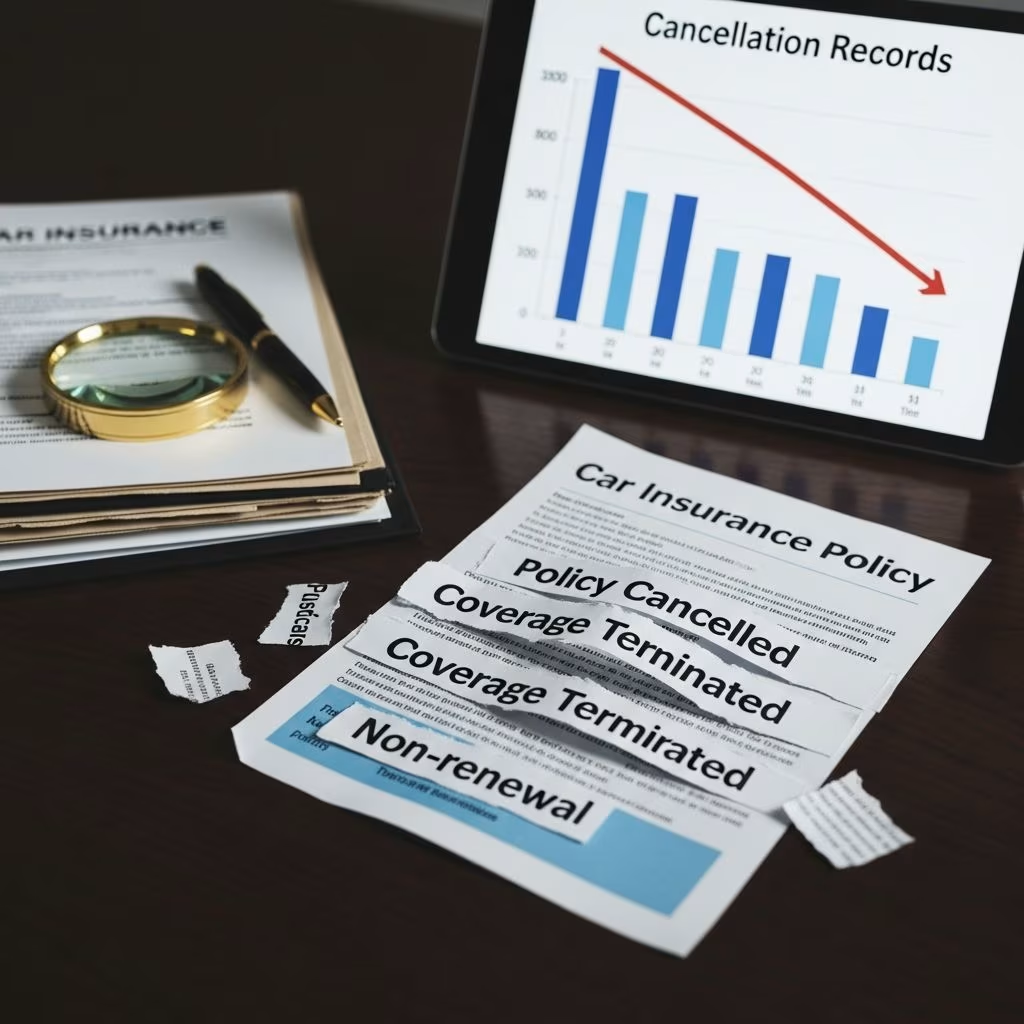
When an auto insurance policy is canceled, many drivers wonder about the lasting implications for their driving history and future insurance costs. The cancellation of a car insurance policy creates a permanent mark on your record that can influence your ability to obtain coverage and the rates you’ll pay for years to come. Understanding the timeline of these records and their consequences helps drivers make informed decisions about maintaining continuous coverage and managing the aftermath of a policy cancellation.
The Duration of Cancellation Records in Your Insurance History
A canceled insurance policy typically remains on your record for approximately five years. This timeframe varies slightly depending on your insurer and state regulations, but five years represents the standard retention period across most insurance providers. During this five-year window, any new insurance company you approach will likely discover this cancellation when reviewing your history, which significantly impacts their underwriting decision and the rates they offer you.
It’s important to understand that the cancellation record itself is permanent in nature. Once a policy is canceled, it does not automatically expire or disappear from your history after a set period. Instead, insurance companies maintain detailed records of the cancellation, including the specific date coverage ended and the reason for termination. This information becomes part of your permanent insurance history and can be accessed by insurers for years, even though the most significant impact typically diminishes after the initial five-year period.
Timeline of Policy Cancellation and Coverage Cessation
The actual cancellation process unfolds over a specific timeline that every driver should understand. When an insurance company determines that your policy will be canceled, they are required by state law to provide advance notice before the cancellation becomes effective. This notice period typically ranges from 10 to 30 days, depending on your state and the reason for cancellation. For example, California requires at least 10 days’ notice for nonpayment, New York mandates 15 days, and Texas requires 10 days for nonpayment but 30 days for other reasons.
After you receive the cancellation notice, your policy will generally end between 10 and 20 days after the notification date. Once this date passes, your coverage terminates completely, and you are no longer protected under that policy. Driving without active insurance after this point becomes illegal in all states, which can result in serious legal and financial consequences.
Reasons for Policy Cancellation and Their Impact
Insurance policies can be canceled for various reasons, and understanding these reasons is crucial because they influence how future insurers perceive your risk profile. The most common reasons include:
- Nonpayment: Missing insurance payments represents the primary reason for policy cancellation. If your payment is late and you allow the grace period to pass, your insurer will formally cancel your policy.
- Misrepresentation: Providing inaccurate information on your insurance application, such as misrepresenting your driving history or vehicle usage, can result in cancellation.
- License Suspension: If your driver’s license is suspended or revoked, insurers may cancel your policy because you’re not legally permitted to drive.
- Fraud: Any fraudulent activities related to your policy, such as submitting false claims, warrant immediate cancellation.
- High-Risk Behavior: Accumulating multiple traffic violations or at-fault accidents can lead to cancellation during the initial underwriting period.
The 60-day underwriting window is particularly important to understand. Most U.S. states allow insurers to cancel a newly issued policy for a broad range of underwriting reasons within the first 60 days of coverage. After this 60-day period expires, mid-term cancellation becomes heavily restricted by state law and is usually limited to nonpayment or fraud. Some states vary from this standard—Florida uses a 90-day underwriting period, while Maryland applies a 45-day period.
Financial Consequences of a Canceled Policy
The financial impact of a canceled insurance policy extends far beyond the immediate loss of coverage. Future insurance premiums increase significantly as a result of the cancellation record:
| Lapse Duration | Typical Premium Increase | Additional Consequences |
|---|---|---|
| Within 30 days | 9% or less | Minimal rate impact if reinstated quickly |
| 30-60 days | 15-30% | Moderate rate increases with some insurers refusing coverage |
| More than 60 days | Up to 48% | Significant rate increases; many insurers deny coverage entirely |
| Beyond five years | Gradually diminishing impact | Record still visible but carries less weight in underwriting |
When you renew your insurance within the first month of cancellation, your premiums might only increase by 9% or less. However, if you allow your insurance to lapse for more than 60 days, rates may increase by as much as 48%. In some instances, your current insurer will refuse to renew your policy if it has lapsed for more than two months.
Additional Penalties Beyond Premium Increases
Beyond elevated insurance rates, canceled policies can trigger additional financial penalties and complications:
- Administrative Fees: Depending on your zip code, you might face penalties for letting your insurance lapse. In New York, for example, drivers must pay $8 per day for up to 30 days after their insurance lapses, with penalties increasing after the 30-day window closes.
- Vehicle Repossession: Most car manufacturers and lenders require comprehensive coverage on leased vehicles. If your insurance lapses, your vehicle could be repossessed.
- License Suspension: Driving without insurance can lead to license suspension in many states, compounding your problems.
- DMV Reporting: Insurers are required to report cancellations to the Department of Motor Vehicles, which can trigger additional fines and penalties.
How Insurance Companies Use Cancellation Records
When you apply for new insurance coverage after a cancellation, potential insurers will almost certainly discover this mark on your record. Insurers use this information to determine your eligibility for coverage and to calculate your premiums. The presence of a cancellation signals to underwriters that you may not reliably maintain insurance, classifying you as a higher-risk customer. This elevated risk perception directly translates into higher monthly premiums.
Some insurers may refuse coverage entirely if your cancellation record is recent or if the circumstances surrounding the cancellation are particularly concerning (such as fraud or multiple incidents). Other insurers may accept your application but impose substantial rate increases to offset the perceived risk. Shopping around becomes essential after a cancellation, as different insurers weigh this information differently.
Managing Your Insurance Record After Cancellation
Although a cancellation record remains on your history for five years, there are steps you can take to minimize its impact and restore your standing with insurers:
- Obtain Coverage Immediately: Secure new insurance as quickly as possible after a cancellation. Reinstatement within 30 days results in minimal rate increases compared to longer lapses.
- Maintain Continuous Coverage: Once you obtain new coverage, maintain it consistently. Every month of continuous coverage strengthens your record and gradually reduces the significance of the past cancellation.
- Request Reinstatement: Ask your previous insurer whether they can reinstate your coverage. If they agree, you’ll likely be required to sign a no-loss declaration, which means claims from the lapsed period will be invalid.
- Explore High-Risk Insurers: If your current insurer won’t restore coverage, seek companies specializing in high-risk drivers. Although premiums will be higher, maintaining active coverage is preferable to remaining uninsured.
- Address Underlying Issues: If the cancellation resulted from violations or risky driving behavior, focus on improving your driving record. A clean driving history over several years helps offset the cancellation record.
Understanding State-Specific Variations
Insurance cancellation rules vary by state, affecting both the notice period required before cancellation and the duration records remain on file. States mandate specific advance notice periods ranging from 10 to 30 days before a policy can be canceled. Additionally, some states impose their own penalties for driving without insurance beyond the standard cancellation process.
California and New York enforce especially strict consumer protections once the initial underwriting window closes, meaning cancellations after 60 days require more substantial justification. Understanding your state’s specific regulations helps you navigate the cancellation process more effectively and know what protections you have as a consumer.
Prevention Strategies for Insurance Lapses
The most effective approach to managing cancellation records is preventing cancellation in the first place. Consider these strategies:
- Set up automatic payments to ensure you never miss a payment deadline
- Review your policy information annually to ensure accuracy and prevent misrepresentation issues
- Maintain a clean driving record by following traffic laws and avoiding risky driving behaviors
- Keep your insurer informed of any changes in your situation that might affect your coverage
- Monitor your policy documents to understand renewal dates and coverage terms
The Long-Term Perspective on Cancellation Records
While a cancellation record remains on your file for five years, its impact gradually diminishes over time. After the initial period of highest impact (typically the first 2-3 years), insurers place less weight on the cancellation when making underwriting decisions, especially if you’ve maintained continuous coverage since the cancellation. However, the record never completely disappears during the five-year window, and it can still influence pricing and coverage decisions even in later years.
Understanding that a cancellation creates a permanent but gradually fading mark on your record should motivate drivers to maintain insurance continuously and address any lapses as quickly as possible. The financial and legal consequences of allowing a cancellation to occur far outweigh the effort required to maintain active coverage.
References
- What to Do if Your Car Insurance Gets Canceled — The Baldwin Group. https://baldwin.com/insights/what-to-do-if-your-car-insurance-gets-canceled/
- How Long Does Canceled Insurance Stay on Record? — The General. https://www.thegeneral.com/going-places/blog/car-insurance/canceled-insurance-on-record/
- How Long Does A Cancelled Car Insurance Policy Last? — How Auto Insurance Works. https://howautoinsuranceworks.com/how-long-does-cancelled-car-insurance-last/
- How long is it on your record if your insurance is canceled? — La Familia Insurance. https://lafamiliainsurance.com/how-long-is-it-on-your-record-if-your-insurance-is-canceled/
- Car Insurance Cancelled Without Notice: How It Can Happen, Your Rights — GEICO. https://www.geico.com/information/aboutinsurance/auto/car-insurance-cancelled-without-notice/
- Can your auto insurance policy be canceled in the first 60 days? — Rio Grande Guardian. https://riograndeguardian.com/premium/stacker/stories/can-your-auto-insurance-policy-be-canceled-in-the-first-60-days,51730
- Car Insurance Lapse & Grace Periods Explained — Progressive. https://www.progressive.com/answers/car-insurance-lapse/
This article is general information, not personal financial advice. Consider your own situation, or speak with a licensed adviser, before acting on it.


