

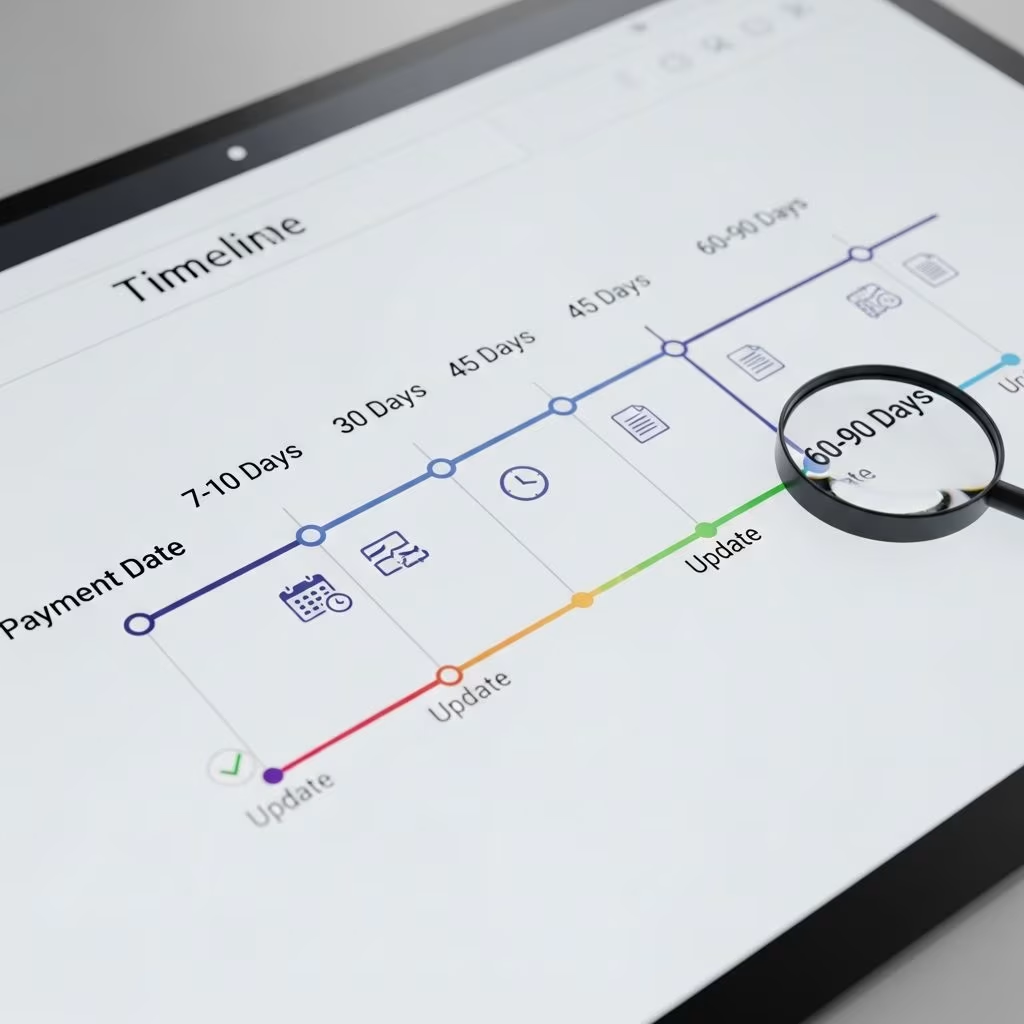
When you successfully pay off a debt in full, you might expect your credit report to reflect this positive change immediately. However, the reality involves a waiting period that can extend several weeks or even months. Understanding this timeline and the mechanics behind it helps you manage expectations and plan accordingly, especially if you’re working to improve your credit profile or applying for new credit soon.
The Standard Processing Window for Account Updates
Most creditors and lenders follow a specific reporting schedule rather than updating information in real-time. After you make a final payment, the process begins with the lender or collection agency updating their internal records. This step typically takes one to two weeks as the payment processes through their banking system and they confirm the account balance is now zero.
Following this initial internal update, the creditor must then communicate the change to the three major credit bureaus—Equifax, Experian, and TransUnion. Many lenders use batch processing, meaning they compile multiple account updates and send them in scheduled batches rather than individual submissions. Some institutions update weekly, others every two weeks, and smaller lenders may only report monthly. This batch reporting system is why even after your lender knows your account is paid off, there remains a lag before credit bureaus receive and process this information.
A practical rule of thumb suggests allowing 30 to 60 days from the payment date for the paid-in-full status to appear on your credit report. This timeline accounts for payment processing, internal record updates, batch reporting cycles, and the credit bureaus’ processing of newly received information.
Factors That Influence Update Speed
The exact timing for your account update depends on several variables:
- Type of Account: Traditional loan servicers often have more standardized reporting protocols than smaller creditors or collection agencies, potentially affecting update speed.
- Payment Method: Electronic payments typically process faster than checks or other payment methods, allowing the creditor to confirm receipt more quickly.
- Account Complexity: Accounts with prior delinquency or collection status may require additional verification steps before updating to paid-in-full status.
- Creditor’s Systems: Different financial institutions maintain different technology infrastructure for credit reporting, affecting their processing efficiency.
- Collection Agency Involvement: If your account went to collections, you’re working with an intermediary that must first update their records, then report to bureaus, adding an extra layer to the timeline.
Collection Accounts: A Longer Path to Resolution
When a debt goes to a collection agency, the update timeline often extends beyond the standard 30 to 60 days. Collection agencies typically allow one to two weeks after receiving your payment before updating their records to reflect settlement. They then need to report this change to the credit bureaus. In total, you should expect one to two months for a collection account to show as paid on your credit report.
An important distinction exists when collection is involved: your credit report may simultaneously display both the original account and the collection account. The original account will show as closed or transferred once sold to collections, but the payment history remains visible. This dual reporting continues until both accounts age off your report, typically seven years from the original delinquency date.
Taking Action When Updates Seem Delayed
If more than two months have passed since your payment and the account still hasn’t updated to paid-in-full status, you have options. The most direct approach involves disputing the account information directly with the credit bureau. When you file a dispute, the bureau will contact your creditor and request verification and correction of the account status.
To strengthen your dispute, gather documentation from your lender proving the account has been paid off. This might include:
- A written confirmation letter from the creditor stating the account is paid in full with a zero balance
- Bank statements showing the final payment cleared
- Payment receipts or transaction confirmations
- Correspondence from the collection agency (if applicable) acknowledging payment
Submitting these documents as part of your dispute significantly strengthens your case and often accelerates the verification process. The credit bureau will use this evidence to contact your creditor and request an expedited update.
Requesting Written Confirmation of Payment
Proactive communication with your creditor can provide valuable proof and documentation. Consider sending a formal letter requesting written confirmation of the paid-in-full status. This letter should include your account number and request that the creditor:
- Provide official written confirmation of zero balance within 30 days
- Update all credit reporting agencies with the paid-in-full status
- Supply you with documentation suitable for your records
Having this written documentation serves multiple purposes: it provides proof for your records, creates a paper trail if you need to dispute the account later, and sometimes encourages faster credit bureau updates.
Impact of Paid-in-Full Status on Your Credit Report Duration
Understanding how long paid-in-full accounts remain on your credit report helps you plan your credit-building strategy. The account’s history determines its reporting period:
| Account Scenario | Reporting Duration |
|---|---|
| Paid in full with no late payments | Up to 10 years from payoff date |
| Paid in full but had late payments | Late payments removed 7 years from delinquency date |
| Delinquent when paid off | 7 years from original delinquency date |
| Settled or collection account | 7 years from original delinquency date |
This means your account payment history remains visible even after you’ve paid it off. If the account had a clean payment history, it continues benefiting your credit score for up to a decade. However, if late payments appeared on the account, those negative marks fall off after seven years from the delinquency date.
Strategic Decisions About Closed Accounts
Once an account is paid in full, many consumers wonder whether to close it. The answer depends on your account’s status and credit-building goals. If the account maintained a good standing throughout—meaning on-time payments and no delinquencies—keeping it open is generally advantageous. An open account in good standing remains on your report longer (up to 10 years) and continues demonstrating your creditworthiness to lenders evaluating your application.
Closing a paid-off account removes it from active status, though it remains visible on your credit report. This action can slightly impact your credit score if the closed account had positive payment history. For credit repair purposes, especially if you’ve struggled with credit problems in the past, maintaining open accounts in good standing accelerates your credit recovery journey.
Monitoring Your Credit Report Progress
After paying off an account, regular monitoring ensures the update eventually appears correctly. Credit reports typically refresh approximately every 30 to 45 days as bureaus receive new information from creditors. Plan to check your report within this timeframe of expected updates.
Access free credit reports annually through AnnualCreditReport.com or monitor your credit more frequently through credit monitoring services. Note that different bureaus may update at slightly different times, so one bureau might show the paid-in-full status before the others.
Preventing Future Delays: Proactive Account Management
While you cannot eliminate reporting delays, you can implement strategies to minimize their impact on your financial timeline:
- Set up automatic payments: Establish recurring automatic payments from your checking account to ensure all bills pay by their due dates, preventing delinquency and collection.
- Maintain payment documentation: Keep records of all payments, especially final payments, along with creditor confirmations.
- Communicate with creditors: If you’re making a large final payment or settling an account, confirm the creditor’s mailing address and request delivery confirmation for any written correspondence.
- Plan ahead for credit decisions: If you’re planning to apply for a mortgage or major loan, pay off problematic accounts well in advance of your application, allowing time for updates to process.
- Address past-due accounts immediately: If you discover past-due accounts, bring them current as soon as possible and request written confirmation of the updated status.
Special Consideration: Rapid Rescoring for Mortgage Applicants
If you’re in the mortgage application process and need your credit report updated faster than normal, ask your loan officer about rapid rescoring. This expedited process, typically available during mortgage underwriting, works with creditors to verify recent account updates and may reflect changes to your credit score more quickly than standard reporting timelines. While not available for all situations, rapid rescoring can be valuable when timing is critical.
Understanding Collection Account Removal
Collection accounts present a unique consideration. Paying off a collection account changes its status from unpaid to paid, improving your credit profile. However, the account remains on your report for seven years from the original delinquency date, not from when you paid it. This means paying off a collection account doesn’t remove it sooner but does change its status to a less damaging notation. The positive impact of converting a collection account to paid status gradually increases your creditworthiness despite the account’s continued presence on your report.
Frequently Asked Questions
How quickly should I expect to see changes after paying off a debt?
Plan for 30 to 60 days for standard accounts and up to two months for collection accounts. If you’ve waited longer without seeing updates, contact the credit bureaus about disputing the account information.
Will paying off a credit card hurt my credit score initially?
Paying off an account typically provides a net benefit, though your score might temporarily dip due to changes in your credit utilization ratio or account mix. This temporary effect reverses as your account updates and your overall credit profile reflects the paid-in-full status.
Should I close the account after paying it off?
Generally, no. Keeping accounts open in good standing benefits your credit by maintaining longer account history and demonstrating responsible credit management to future lenders.
Can I dispute an account if it’s not updating after two months?
Yes. File a dispute with the credit bureau and include documentation proving payment. The bureau will contact your creditor for verification and correction.
References
- When Are Accounts Updated to Show as Paid in Full? — Experian. Accessed April 2026. https://www.experian.com/blogs/ask-experian/updating-an-account-to-show-paid-in-full/
- How Long Before My Collection Account Is Updated? — Experian. Accessed April 2026. https://www.experian.com/blogs/ask-experian/how-long-before-collection-account-is-updated/
- How to Use a Paid-in-Full Letter (+ Template) — Self. Credit Builder. Accessed April 2026. https://www.self.inc/blog/proof-paid-in-full-letter
- How long does it take my credit report to update after paying off debt? — Presented by Michael Bovee. Accessed April 2026. https://www.youtube.com/watch?v=rF0OGsRs8Cg
- AnnualCreditReport.com — Officially authorized source for free credit reports. https://www.annualcreditreport.com/
This article is general information, not personal financial advice. Consider your own situation, or speak with a licensed adviser, before acting on it.


