

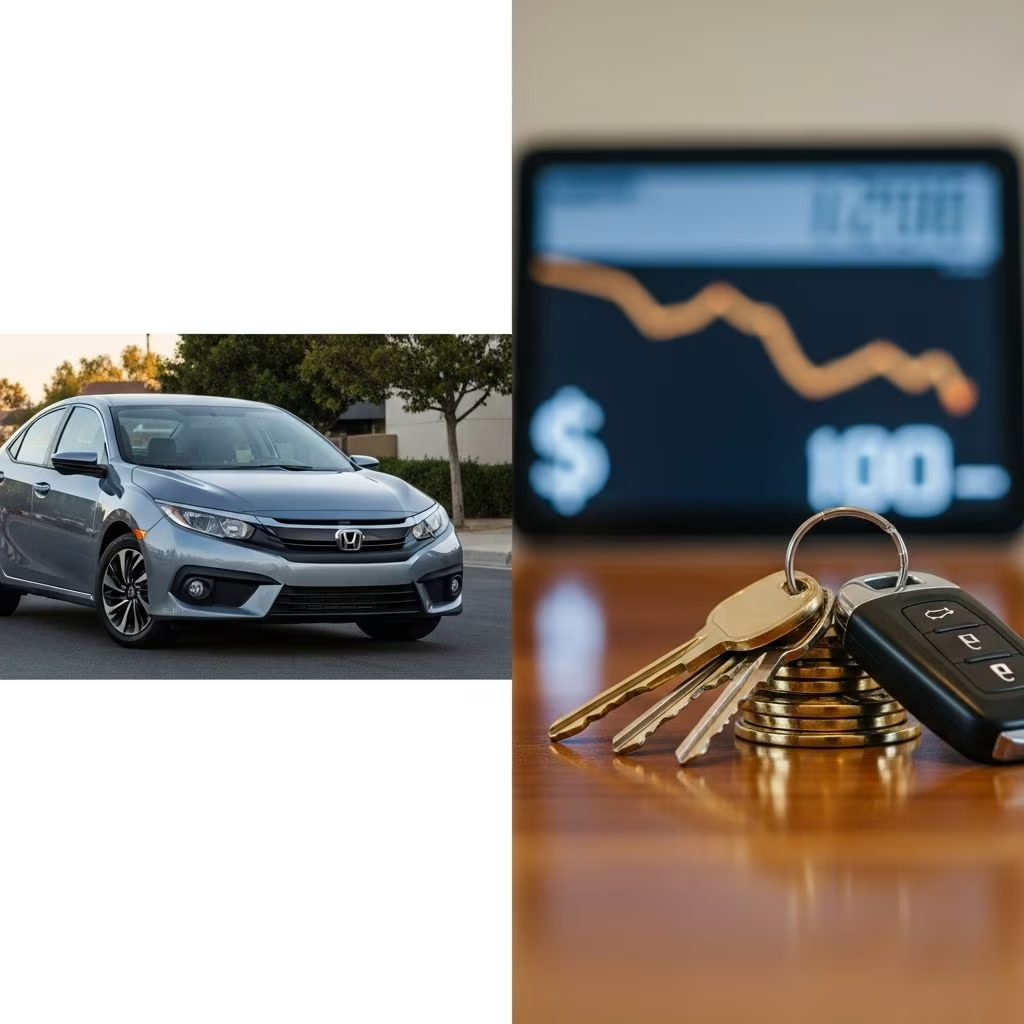
Your choice of vehicle profoundly influences the cost of auto insurance. Manufacturers and specific models carry distinct risk profiles that insurers evaluate meticulously, affecting premiums by thousands of dollars yearly. Understanding these dynamics empowers drivers to select cars that balance affordability with protection.
Defining Make and Model in the Insurance Context
The make identifies the manufacturer behind the vehicle, such as Toyota, Ford, or BMW, each with reputations tied to engineering, safety, and durability. The model, like Camry for Toyota or F-150 for Ford, specifies the variant, incorporating unique design elements, engines, and features that dictate insurance pricing.
Insurers analyze these elements alongside historical data on claims, accidents, and thefts. For instance, models from brands emphasizing safety often secure lower rates due to fewer severe incidents.
Primary Factors Linking Vehicle Specs to Premiums
Several interconnected attributes explain why certain vehicles command higher or lower insurance costs. These include repair expenses, safety technologies, theft vulnerability, and performance characteristics.
Repair and Parts Expenses
Vehicles with premium components, especially from European luxury brands, incur steep repair bills. Specialized parts for brands like BMW or Audi elevate claims costs, prompting insurers to raise premiums accordingly.
Safety Features and Ratings
Advanced driver-assistance systems (ADAS), robust crash structures, and high safety scores from agencies like the IIHS or NHTSA correlate with reduced premiums. Models earning top ratings demonstrate lower injury risks and claim severities.
Theft and Recovery Statistics
Popular targets for thieves, such as certain compact sedans or high-value electronics-laden EVs, face premium surcharges. Vehicles with superior anti-theft tech, like immobilizers, mitigate this risk.
Performance and Engine Power
High-horsepower engines in sports cars encourage aggressive driving, inflating accident probabilities. Insurers apply risk multipliers to models like muscle cars or supercars.
Vehicle Categories and Their Insurance Profiles
Grouping vehicles by type reveals broad premium patterns. Sedans, SUVs, trucks, and electrics each present unique insurer considerations.
- Sedans: Compact models often cheaper due to lower repair costs, though theft-prone ones spike rates.
- SUVs: Generally economical, benefiting from safety and moderate performance.
- Trucks: Pickup models balance higher liability with durable builds.
- Sports and Luxury: Premiums soar from performance risks and part prices.
- Electric Vehicles: Battery tech drives up comprehensive coverage costs.
Premium Comparisons Across Popular Models
Real-world data illustrates stark differences. Annual full-coverage averages for select vehicles highlight budget-friendly versus extravagant options.
| Vehicle | Avg. Annual Premium | % Above National Avg. ($2,100) |
|---|---|---|
| Subaru Outback | $2,175 | +3.57% |
| Honda CR-V | $2,209 | +5.19% |
| Toyota RAV4 | $2,324 | +10.67% |
| Ford F-150 | $2,568 | +22.29% |
| Tesla Model 3 | $3,394 | +61.62% |
| Dodge Challenger | $3,628 | +72.76% |
| Audi R8 | $6,501 | +191.43% |
Budget standouts like the Subaru Outback and Honda CR-V hover near the national average, while exotics like the Audi R8 exceed it dramatically. Data drawn from aggregated insurer quotes.
Strategies to Minimize Premiums Through Vehicle Choice
Smart selection can yield substantial savings. Prioritize models with IIHS Top Safety Pick status, low theft indices, and economical repairs.
- Opt for established brands like Toyota or Honda known for reliability.
- Choose mid-size over compact if theft risks concern you.
- Avoid high-performance trims unless necessary.
- Consider age: Vehicles 5-10 years old often cheapest post-depreciation.
Beyond Make and Model: Additional Vehicle Influences
Other specs refine risk assessments. Larger frames may raise liability but lower collision rates. Older cars depreciate, cutting replacement costs, though safety lags. Engine displacement signals driving style risks.
Real-World Case Studies: Wins and Pitfalls
Switching from a Dodge Challenger ($3,628/year) to a Toyota RAV4 ($2,324/year) saves over $1,300 annually. Conversely, upgrading to a Tesla Model Y ($3,679) from a Honda Civic ($2,608) adds $1,000+ due to tech complexities.
Frequently Asked Questions
Why do luxury cars cost more to insure?
Exotic parts and labor drive repair claims skyward, with insurers passing costs to policyholders.
Are electric vehicles always expensive to insure?
Yes, typically, due to battery replacement expenses, though safety features can offset some hikes.
How much does safety rating affect premiums?
Top-rated models often see 10-20% reductions versus poor performers.
Can I lower rates on a high-risk model?
Yes, via higher deductibles, multi-policy bundles, or defensive driving courses.
Do older cars always mean cheaper insurance?
Usually, but outdated safety tech can counteract savings in some cases.
Practical Steps Before Purchasing a Vehicle
1. Research IIHS and NHTSA ratings.
2. Check theft data via NICB.
3. Obtain quotes for top contenders.
4. Factor total ownership costs.
5. Consult multiple insurers for personalized rates.
Integrating these steps ensures insurance aligns with long-term affordability.
References
- National Highway Traffic Safety Administration Vehicle Safety Ratings — NHTSA (U.S. Dept. of Transportation). 2025-03-15. https://www.nhtsa.gov/ratings
- Insurance Institute for Highway Safety Top Safety Picks — IIHS. 2026-02-28. https://www.iihs.org/ratings/top-safety-picks
- National Insurance Crime Bureau Hot Wheels Report — NICB. 2025-12-01. https://www.nicb.org/content/hot-wheels
- How Make and Model Affect Car Insurance Rates — LA Insurance. 2024-11-10. https://lainsurance.com/blog/how-make-and-model-affect-car-insurance-rates
- Car Insurance Estimate by Make and Model — Bankrate. 2025-01-20. https://www.bankrate.com/insurance/car/make-model-estimate/
- How Does the Car I Drive Impact My Insurance Premium? — Experian. 2024-09-05. https://www.experian.com/blogs/ask-experian/how-make-and-model-impact-car-insurance-premium/
This article is general information, not personal financial advice. Consider your own situation, or speak with a licensed adviser, before acting on it.


