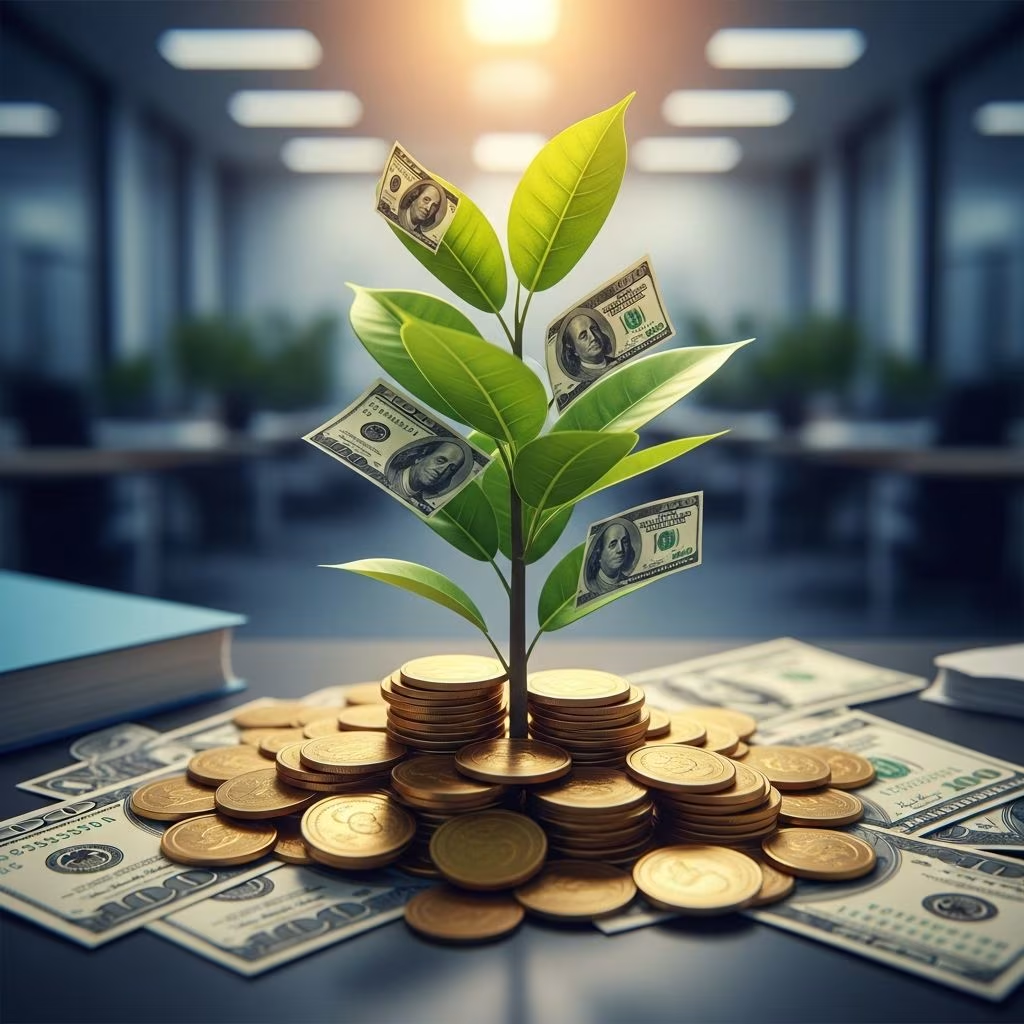
In an era of economic shifts, understanding how interest rates influence your savings is crucial for building wealth. As central banks adjust policies to combat inflation or stimulate growth, savers stand to gain significantly from higher yields on deposit accounts. This comprehensive guide delves into the mechanics of rising rates, their projected trajectory into 2026, and actionable steps to optimize your financial nest egg.
The Fundamentals of Interest Rates and Savings
Interest rates represent the cost of borrowing or the reward for saving. When rates rise, banks pay more to attract deposits, directly boosting returns on savings accounts. The federal funds rate, set by the Federal Reserve, serves as the benchmark influencing consumer rates. Higher fed funds rates typically lead to elevated APYs on savings products, allowing your money to compound faster.
For context, high-yield savings accounts currently offer APYs around 4-5%, far surpassing traditional accounts at 0.39% national average. This disparity underscores the importance of account selection in a rising rate environment.
Why Rates Are Climbing: Economic Drivers
Rising rates often stem from efforts to tame inflation. Post-pandemic supply chain disruptions and demand surges pushed inflation to multi-decade highs. Central banks responded by hiking rates to cool spending. As inflation moderates toward the 2% target, rates may stabilize or ease, but residual effects keep savings yields competitive.
- Inflation Control: Higher rates reduce borrowing, slowing price increases.
- Bank Competition: Institutions vie for deposits with attractive APYs.
- Fed Policy: Adjustments to the federal funds rate ripple through the economy.
Projections indicate short-term rates could range from 3.25% to 3.5% in 2026, supporting decent savings returns despite potential cuts.
Savings Account Types and Their Rate Sensitivity
Not all savings vehicles react equally to rate changes. Here’s a breakdown:
| Account Type | Typical APY (2026 Est.) | Pros | Cons |
|---|---|---|---|
| High-Yield Savings | 3.70% – 4.00% | Liquidity, competitive rates | Variable rates |
| Money Market | 3.50% – 3.90% | Check-writing, higher minimums | Less flexible access |
| Traditional Savings | 0.45% – 0.51% | FDIC insured | Low yields |
| Big Bank Savings | 0.01% | Convenience | Minimal growth |
High-yield options from online banks lead due to lower overhead, often outpacing inflation even as rates trend downward.
2026 Rate Forecasts: What Savers Can Expect
Analysts predict a gradual decline in top savings APYs to 3.70% by year-end 2026, down from 2025 peaks, driven by anticipated Fed cuts. National averages may dip to 0.48%, with lows at 0.45%. Despite this, high-yield accounts should preserve real growth against projected 2.5-2.75% inflation.
Morningstar notes low likelihood of hikes unless inflation surges unexpectedly, keeping the focus on measured easing. iShares forecasts further reductions from the 3.50-3.75% range.
Projected APY Trends
- Early 2026: Near 4.00% for top accounts
- Mid-Year: 3.80-3.90%
- Year-End: 3.70%
Quantifying Earnings: Real-World Calculations
A 4% APY on a high-yield account demonstrates tangible benefits through compounding. Assuming daily compounding over 2026:
| Balance | Annual Interest Earned | Ending Balance |
|---|---|---|
| $500 | $16.61 | $516.61 |
| $1,000 | $33.22 | $1,033.22 |
| $2,500 | $83.06 | $2,583.06 |
| $10,000 | $332.24 | $10,332.24 |
| $50,000 | $1,661.20 | $51,661.20 |
| $100,000 | $3,322.39 | $103,322.39 |
Compare to a 0.01% big bank account: $100,000 earns just $10 annually. The choice is clear for growth-focused savers.
Strategies to Maximize Returns in Rising (or Falling) Rates
To capitalize on rate environments:
- Shop Regularly: Compare APYs weekly; switch if better options emerge.
- Opt for Online Banks: They offer superior rates without branches.
- Laddering CDs: Lock portions at peak rates for fixed returns.
- Monitor Fed Announcements: Rate cuts signal shopping time.
- Build Emergency Funds: Aim for 3-6 months expenses in liquid high-yield accounts.
Diversify across accounts to balance liquidity and yield. Tools like rate trackers simplify this.
Risks and Considerations Amid Rate Volatility
While rising rates benefit savers, volatility poses challenges. Variable APYs can drop suddenly post-Fed cuts. Inflation outpacing yields erodes purchasing power, though current high-yield options mitigate this.
- Opportunity Cost: Money in low-yield accounts misses growth.
- Rate Caps: Some accounts limit maximum APY.
- Fees: Watch for maintenance charges eating into earnings.
FDIC insurance up to $250,000 per depositor protects principal, ensuring safety.
Long-Term Savings Planning in a Dynamic Rate Landscape
Beyond immediate yields, integrate savings into broader goals. Use rising rates to accelerate debt payoff or investment seeding. For retirement, consistent high-yield parking beats idle cash under mattresses.
Projecting 2026: Even at 3.70%, $10,000 grows to $10,370, beating inflation and building momentum. Scale contributions monthly for exponential effects via compounding.
Frequently Asked Questions (FAQs)
What happens to savings rates when the Fed cuts rates?
Savings APYs typically decline shortly after, though high-yield accounts lag and remain competitive.
Are high-yield savings accounts safe?
Yes, FDIC-insured up to $250,000; they function like traditional accounts but with better rates.
How often should I switch savings accounts?
Quarterly or after Fed meetings to capture top APYs without excessive hassle.
Will rates rise again in 2026?
Unlikely per forecasts; focus on current highs before declines.
What’s better: savings or CDs in rising rates?
Savings for liquidity; CDs to lock rates before drops.
Staying informed empowers savers to thrive. Rising rates offer a window to amplify wealth—act now to position your funds optimally.
References
- Savings and money market account rates forecast for 2026 — Bankrate. 2026-01. https://www.bankrate.com/banking/savings/savings-money-market-account-rate-forecast/
- What the Fed Rate Announcement Means for Savings Accounts — NerdWallet. 2025-12-10. https://www.nerdwallet.com/banking/news/what-the-fed-rate-announcement-means-for-savings-accounts
- How much money will a 4% interest savings account earn in 2026? — CBS News. 2026. https://www.cbsnews.com/news/how-much-money-will-4-interest-savings-account-earn-in-2026/
- Where Interest Rates Could Go in 2026 — Bell Bank. 2026. https://bell.bank/business/insights/where-interest-rates-could-go-in-2026
- Could the Fed Raise Interest Rates In 2026? — Morningstar. 2026. https://www.morningstar.com/markets/could-fed-raise-interest-rates-2026
- Fed Outlook 2026: Rate Forecasts and Fixed Income Strategies — iShares. 2026. https://www.ishares.com/us/insights/fed-outlook-2026-interest-rate-forecast
This article is general information, not personal financial advice. Consider your own situation, or speak with a licensed adviser, before acting on it.