

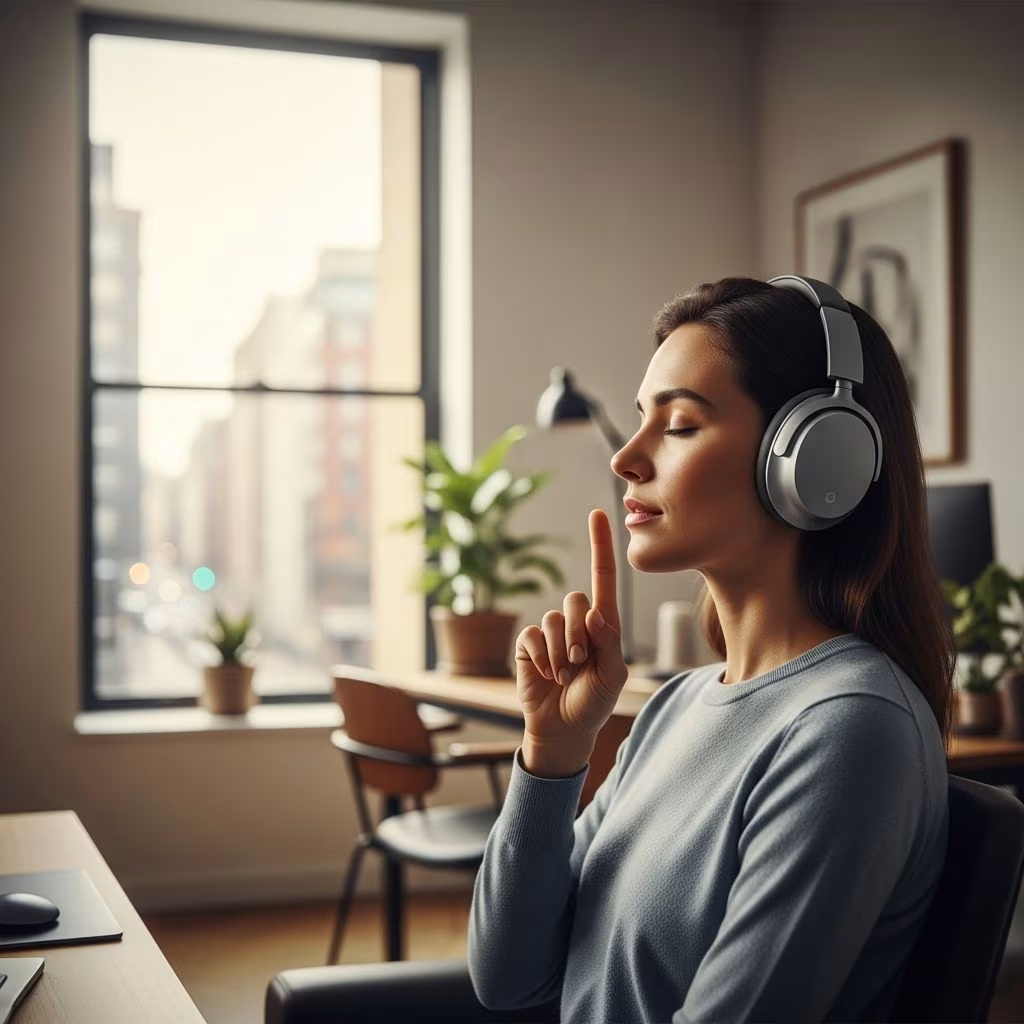
Shhhhh: How to Block Out Noise
Living in a noisy world can be incredibly challenging, whether you’re dealing with traffic sounds, loud neighbors, construction noise, or the constant hum of urban life. Unwanted noise doesn’t just annoy us—it can disrupt our sleep, concentration, and overall well-being. Fortunately, there are numerous practical strategies you can employ to block out noise and create a peaceful sanctuary in your home or workspace. This comprehensive guide explores effective methods ranging from simple, affordable solutions to more permanent soundproofing installations.
Wear Earplugs
One of the simplest and most cost-effective ways to block out noise is to use earplugs. Earplugs are portable, affordable, and can provide immediate relief from unwanted sounds. They work by physically blocking sound waves from entering your ear canal, reducing noise levels by 15 to 30 decibels depending on the type and fit.
There are several types of earplugs available on the market:
- Foam earplugs: These are the most common and affordable option. They expand to fit your ear canal and provide excellent noise reduction when inserted correctly.
- Silicone earplugs: These moldable earplugs conform to your ear shape and are reusable, making them more economical over time.
- Custom-molded earplugs: Professional audiologists can create earplugs specifically fitted to your ears for maximum comfort and effectiveness.
- Musician’s earplugs: Designed to reduce loud sounds while allowing conversation and music to pass through, these are ideal for concerts or live events.
Earplugs are particularly useful for sleeping, studying, or working in noisy environments. However, they may feel uncomfortable for extended wear and require proper insertion to be effective.
Listen to Music
Another straightforward approach to blocking out noise is to listen to music. By filling your auditory environment with pleasant sounds, you can mask unwanted background noise and create a more enjoyable atmosphere. This technique is especially useful in offices, public spaces, or while commuting.
Consider these music-listening strategies:
- White noise and ambient sounds: Consistent, neutral sounds like rainfall, ocean waves, or fan noise can effectively mask irregular background noise.
- Classical or instrumental music: Studies suggest that calm, instrumental music can help reduce stress while masking disruptive sounds.
- Nature sounds: Birds chirping, flowing water, or forest ambience create a soothing backdrop that masks urban noise.
- Lo-fi beats: Gentle, repetitive music designed for studying or relaxing can help you concentrate while blocking distractions.
- Brown noise: A deeper frequency of white noise that some people find more effective at masking low-frequency sounds like traffic.
The key is finding music or sounds that you find pleasant and that effectively mask the specific noises bothering you. Keep the volume at a moderate level to avoid hearing damage.
Use Noise-Canceling Headphones
Noise-canceling headphones represent a technological solution to the noise problem. These devices use active noise control to reduce unwanted sound by up to 30 decibels, creating a quiet listening experience even in loud environments.
Active noise-canceling technology works by:
- Using built-in microphones to detect external noise
- Generating sound waves that are opposite in phase to the detected noise
- Canceling out the unwanted sound through destructive interference
Noise-canceling headphones are excellent for:
- Airplane travel
- Commuting on trains or buses
- Working in open office environments
- Concentrating in noisy cafes or public spaces
While these headphones offer superior noise reduction, they tend to be more expensive than passive earplugs and require charging. However, the investment is worthwhile if you spend significant time in noisy environments.
Close Your Windows
One of the most direct ways to reduce noise in your home is to keep your windows closed. Windows are a major pathway for external noise, especially if you have older single-pane windows that transmit sound easily. By closing and sealing your windows, you can significantly reduce traffic noise, construction sounds, and neighborhood disturbances.
Several window treatments can enhance noise reduction:
- Weatherstripping: Sealing gaps around window frames prevents sound from leaking through, improving overall noise reduction effectiveness.
- Heavy curtains: Blackout curtains with three layers—including a black felt middle layer—provide some noise absorption in addition to blocking light.
- Window plugs: Removable window inserts can completely block a window for temporary noise reduction without permanent alterations, making them ideal for renters.
- Window inserts: These custom-fit panels work particularly well on single-pane windows to reduce noise transmission.
- Double or triple-pane windows: Upgrading to multi-pane windows provides superior noise insulation compared to single-pane alternatives.
For apartment dwellers or those unable to replace windows, temporary solutions like window plugs or acoustic caulk can provide meaningful noise reduction.
Pad Your Space
Creating physical barriers and absorbing surfaces within your living or working space can significantly reduce noise transmission. This approach involves adding materials that absorb sound energy rather than allowing it to bounce around your environment.
Effective padding and absorption methods include:
- Acoustic panels: Foam or fabric-covered panels absorb sound and reduce echo, making them ideal for home studios or offices.
- Rugs and carpeting: Soft floor coverings absorb sound much better than hard floors, reducing noise bounce and creating a quieter environment.
- Curtains and drapes: Heavy fabrics on windows and walls help absorb sound energy.
- Bookshelves: Books serve as excellent sound absorbers due to their density and irregular surfaces.
- Upholstered furniture: Couches, chairs, and cushions naturally absorb sound.
- Wall insulation: Adding mass-loaded vinyl or thicker drywall (5/8-inch instead of standard 1/2-inch) between studs significantly reduces noise transmission through walls.
- Acoustic sealant: Sealing gaps, particularly around electrical outlets, prevents sound from traveling through openings in walls.
Combining multiple padding solutions creates a comprehensive approach to noise reduction. The more soft, absorbent surfaces you introduce, the quieter your environment becomes.
Meditate
Sometimes the best solution to dealing with noise is to change your mental response to it. Meditation and mindfulness practices can help you develop a different relationship with unwanted sounds, reducing their psychological impact even if you can’t eliminate them entirely.
Meditation techniques for noise management include:
- Focused breathing: Concentrate on slow, deep breathing to calm your nervous system and reduce stress from noise disturbances.
- Body scan meditation: Systematically relax each part of your body, diverting attention from external noise.
- Mindfulness meditation: Accept sounds without judgment, observing them as neutral phenomena rather than disturbances.
- Visualization: Mentally transport yourself to a quiet, peaceful environment to counter the effects of noise.
- Mantra repetition: Focus on repeating a calming word or phrase to occupy your attention.
While meditation doesn’t physically block noise, it can help you tolerate noise more effectively and reduce the stress and anxiety it causes. Regular meditation practice can improve sleep quality, concentration, and overall well-being despite environmental noise.
Ask for the Noise to Stop
In many cases, the most direct solution is simply to request that others reduce their noise. Whether dealing with loud neighbors, inconsiderate colleagues, or family members, polite communication often resolves noise issues more effectively than you might expect.
Tips for requesting noise reduction:
- Choose the right time: Approach the person when they’re calm and not actively making noise, ensuring they’re receptive to conversation.
- Be specific: Identify the exact noise and when it occurs (e.g., “Your dog barks from 6-8 AM on weekday mornings”).
- Explain the impact: Share how the noise affects you—disrupted sleep, difficulty concentrating, stress.
- Propose solutions: Suggest practical remedies (earlier bedtime for loud activities, soundproofing suggestions).
- Stay respectful: Maintain a calm, non-accusatory tone to encourage cooperation.
- Document issues: Keep records of excessive noise for cases involving landlords or legal action.
- Involve mediation: If direct conversation doesn’t work, consider professional mediation services.
Many noise problems stem from simple inconsiderateness rather than malice. Clear, respectful communication can resolve conflicts and improve relationships with neighbors and colleagues.
Go Somewhere Else
Sometimes the simplest solution is to remove yourself from the noisy environment temporarily or permanently. This might involve:
- Working elsewhere: Libraries, coffee shops, or co-working spaces often provide quieter alternatives to home or office environments.
- Visiting quiet spaces: Parks, nature reserves, or peaceful neighborhoods can provide temporary refuge from urban noise.
- Adjusting your schedule: Timing activities for quieter hours (early morning, late evening, or off-peak times) helps you avoid peak noise periods.
- Relocation: In extreme cases, moving to a quieter neighborhood or area may be necessary for your health and well-being.
- Temporary escapes: Weekend getaways to quiet locations can provide respite from chronic noise exposure.
While not always practical, this approach acknowledges that sometimes your energy is better spent finding a quiet environment than fighting noise in an inherently loud location.
Frequently Asked Questions
Q: How effective are foam earplugs at blocking noise?
A: Foam earplugs can reduce noise by 15-30 decibels when properly inserted, making them one of the most effective affordable options. Their effectiveness depends on correct insertion and the type of noise you’re trying to block.
Q: Can blackout curtains actually reduce noise?
A: Yes, blackout curtains with three layers provide some noise reduction, though they’re not a complete solution. They work best for mid to high-frequency noise like voices and traffic sounds.
Q: Are noise-canceling headphones worth the investment?
A: If you spend significant time in noisy environments, noise-canceling headphones provide superior noise reduction and can be worth the investment. However, less expensive earplugs work well for casual use.
Q: What’s the best way to soundproof an apartment?
A: For renters, use removable solutions like window plugs, heavy curtains, and rugs. For permanent installations, consider acoustic panels, weatherstripping, and mass-loaded vinyl. Always check your lease before making modifications.
Q: Does meditation actually help with noise problems?
A: Meditation doesn’t eliminate noise but helps you respond to it more calmly and reduces stress. Regular practice can improve sleep quality and concentration despite environmental noise.
Q: What’s the difference between active and passive noise reduction?
A: Passive noise reduction relies on physical barriers (earplugs, windows, insulation), while active noise reduction (headphones) uses technology to generate counter-sounds that cancel out unwanted noise.
Q: Can I block low-frequency noise like bass from neighbors?
A: Low-frequency noise is difficult to block but responds better to mass (heavy materials like mass-loaded vinyl and thick drywall) rather than absorption. Combining multiple materials is most effective.
Q: How much does professional soundproofing cost?
A: Professional soundproofing varies widely depending on the scope of work. Simple solutions like weatherstripping cost under $50, while comprehensive room soundproofing can cost thousands. Consult contractors for specific estimates.
References
- Say Goodbye to Traffic Noise – Soundproofing — YouTube. 2025. https://www.youtube.com/watch?v=a6lPJm2oKtg
- Noisy Backyard? Try This DIY Noise Blocker — Soundproof Guide, YouTube. 2025-07-19. https://www.youtube.com/watch?v=2W5XBmu_HLg
This article is general information, not personal financial advice. Consider your own situation, or speak with a licensed adviser, before acting on it.


