

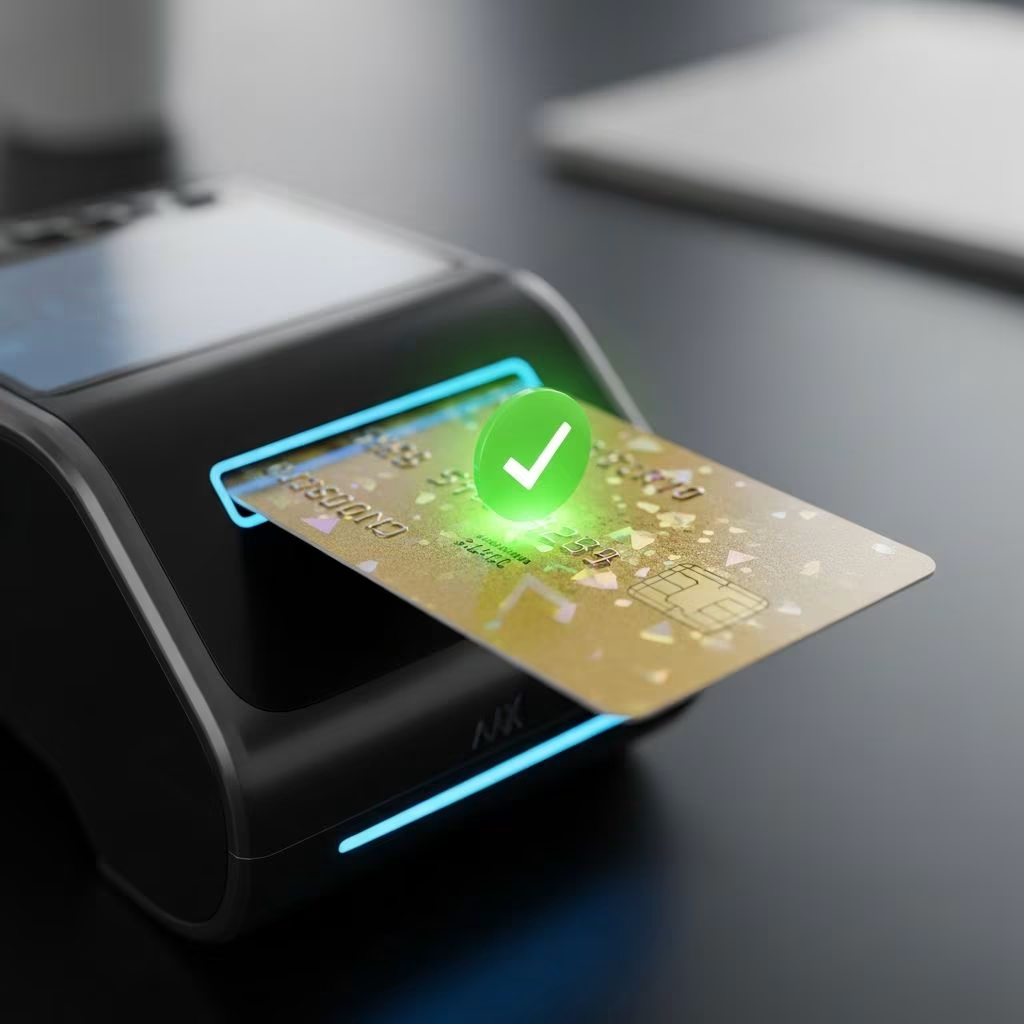
Determining whether your credit card is ready for transactions is crucial for avoiding disruptions in daily spending. Whether dealing with a newly issued card or one dormant for months, knowing its operational state empowers informed financial decisions. This comprehensive guide outlines practical verification techniques, underlying causes of inactivity, and proactive maintenance strategies.
Why Monitoring Card Activity Matters
Credit cards serve as vital tools for purchases, rewards accumulation, and credit building. An inactive card, however, can lead to declined transactions, potential fraud risks, or credit score impacts. Regular checks ensure uninterrupted access to credit lines and help detect issues early, such as expiration or issuer-imposed restrictions.
- Prevent Declines: Avoid embarrassment at point-of-sale by confirming usability beforehand.
- Protect Credit Health: Inactive accounts may signal to bureaus, influencing scores over time.
- Maximize Benefits: Active cards enable rewards earning and promotional perks.
Primary Methods to Confirm Card Usability
Several straightforward approaches exist to assess a card’s status, each suited to different scenarios like quick checks or detailed reviews.
Direct Contact with Issuer Support
The most reliable initial step involves reaching out to the card issuer via the dedicated helpline typically printed on the card’s reverse side. Customer service agents can instantly retrieve account details, including activation status, available balance, and any holds. This method often resolves issues on the spot, such as immediate reactivation for eligible dormant accounts.
Preparation tips include having your full name, account number, and security questions ready to expedite verification. Many issuers offer 24/7 support, with wait times rarely exceeding a few minutes during off-peak hours.
Digital Account Access
Most major issuers provide secure online portals and mobile applications for real-time status monitoring. Logging in reveals critical data like current balance, recent transactions, credit utilization, and explicit status indicators (e.g., “Active” or “Suspended”).
To proceed:
- Visit the issuer’s official website or app store.
- Enter credentials or initiate password recovery if needed.
- Navigate to account overview or statements section.
- Review for activity flags or upcoming billing details.
If login fails repeatedly, it may indicate deactivation, prompting a support call.
Test Transactions for Quick Insights
A practical, low-risk test involves attempting a small purchase, such as a nominal online payment or ATM inquiry. Approval confirms activity, while declinations signal potential issues—but note that limits, expirations, or fraud alerts can also trigger rejections.
| Method | Pros | Cons | Best For |
|---|---|---|---|
| Phone Call | Immediate answers, reactivation possible | Hold times | Urgent needs |
| Online Login | 24/7 access, detailed history | Requires credentials | Routine checks |
| Test Purchase | Real-world validation | Possible fees/declines | Quick confirmation |
Leveraging Credit Reports
Credit bureaus like Equifax, Experian, and TransUnion receive monthly updates from issuers. Free weekly reports via AnnualCreditReport.com list open accounts, statuses, and closure dates, offering a broader financial snapshot.
Look for:
- Open status with recent activity.
- Closure notations due to inactivity or delinquency.
- High utilization ratios indicating limits.
Common Triggers for Card Inactivity
Understanding deactivation reasons aids prevention and resolution. Issuers may suspend cards for various protective or compliance motives.
- Inactivity Periods: Prolonged non-use (often 12-24 months) prompts closure to mitigate fraud risk.
- Payment Delinquencies: Missed bills lead to suspensions until resolved.
- Suspicious Activity: Unusual patterns trigger temporary holds.
- Expiration: Cards auto-deactivate post-printed date.
- Credit Profile Changes: Score drops may result in limit reductions or closures.
Steps to Restore an Inactive Card
Reactivation feasibility depends on the cause. Begin with issuer contact; provide reasoning for dormancy and updated financials if requested.
If reopening fails:
- Apply for a new card from the same issuer for preserved history.
- Explore alternatives matching prior rewards or terms.
- Address underlying issues like payments before reapplying.
Best Practices for Long-Term Card Management
Maintain activity through periodic use, such as small recurring charges (e.g., streaming subscriptions). Set calendar reminders for expirations and monitor statements monthly. Enable alerts for balances, payments, and suspicious activity to stay proactive.
Frequently Asked Questions
How long can a credit card remain inactive before closure?
Typically 12-24 months, varying by issuer policy.
Does an inactive card hurt my credit score?
Closures shorten credit history and may raise utilization on remaining cards, potentially lowering scores.
Can I reactivate a closed account?
Often not, but requesting a new account may retain some history benefits.
Is checking status free?
Yes, via phone, online, or free credit reports.
What if my card is lost and inactive?
Report immediately for replacement; status checks aid fraud prevention.
Advanced Tips for Multi-Card Holders
With multiple cards, use portfolio trackers or issuer apps consolidating views. Prioritize high-reward cards for activity while minimizing fees on others. Regularly review aggregate credit utilization below 30% for score optimization.
Incorporate automation: Link cards to autopay for utilities or donate minimally to charities quarterly. This sustains activity without overspending.
References
- How Can I Check if a Credit Card Is Active? — American Express. 2023. https://www.americanexpress.com/en-us/credit-cards/credit-intel/check-if-credit-card-is-still-in-use/
- How Can I Check if a Credit Card is Active? — Chase Bank. 2023. https://www.chase.com/personal/credit-cards/education/basics/how-to-check-if-credit-card-is-active
- How To Check If Your Credit Card Is Active | Credit One Bank — YouTube (Credit One Bank). 2023-10-01. https://www.youtube.com/watch?v=BN7OFnl0KD0
- How To Check if Your Credit Card is Active — Credit One Bank. 2023. https://www.creditonebank.com/articles/how-to-check-if-your-credit-card-is-active
- Free Credit Reports — Consumer Financial Protection Bureau (via AnnualCreditReport.com). 2024. https://www.consumerfinance.gov/consumer-tools/credit-reports-and-scores/
This article is general information, not personal financial advice. Consider your own situation, or speak with a licensed adviser, before acting on it.


