

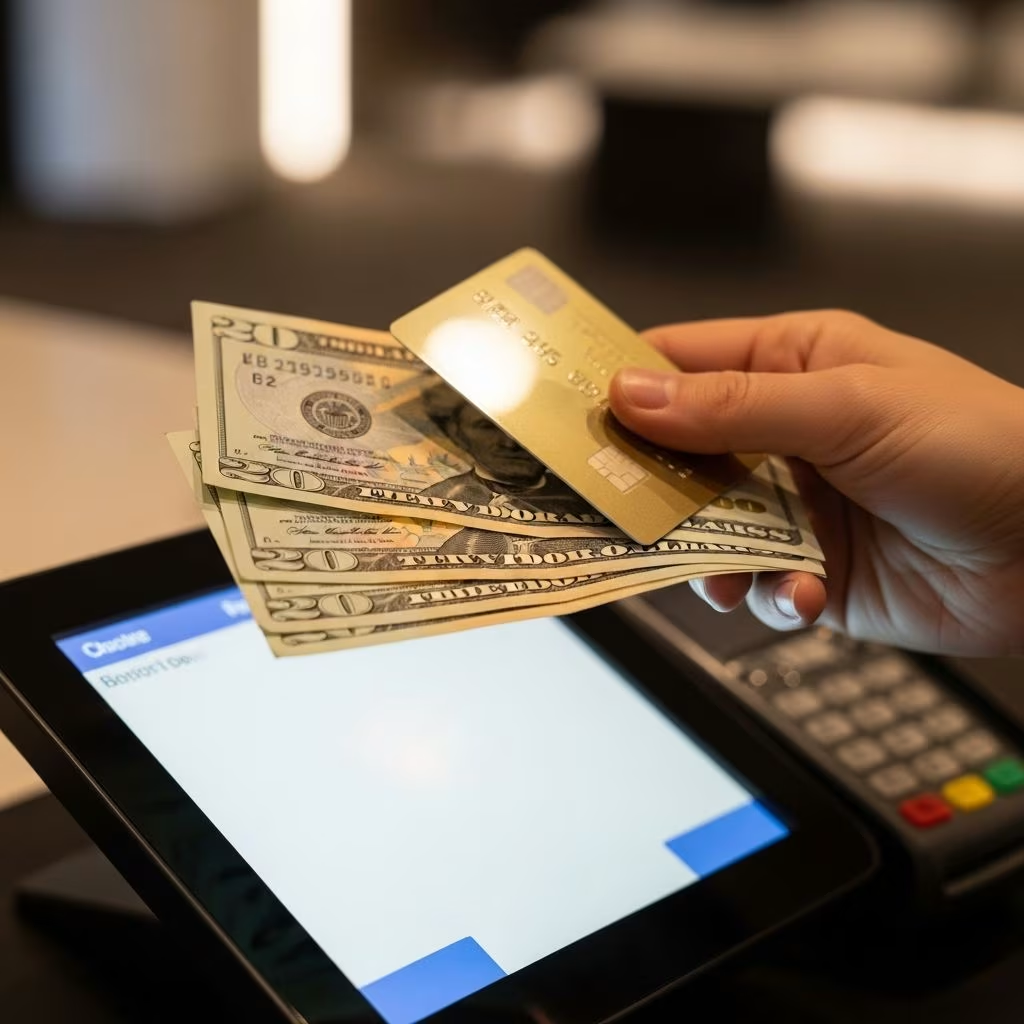
In an era dominated by digital transactions, many people still prefer the tangibility of physical cash for managing finances. If you’re wondering whether you can settle your credit card balance directly with bills and coins, the answer is yes—but not in the straightforward way you might imagine. Credit card issuers do not accept loose cash at their offices or via mail for liability reasons. Instead, reliable alternatives like money orders or bank deposits bridge this gap, allowing cash users to make on-time payments while avoiding digital pitfalls. This approach suits those without bank accounts, wary of online banking, or simply attached to cash-based budgeting.
Why Consider Cash for Credit Card Payments?
Opting for cash payments aligns with disciplined financial habits. Physical money enforces spending limits, reducing impulse buys compared to swiping a card, which can lead to overspending since the immediate cost isn’t visible. Cash transactions also sidestep interest accrual if you’re prone to carrying balances—paying exactly what you have prevents debt buildup. For unbanked individuals, this method offers independence from needing a checking account linked to autopay setups.
Moreover, cash avoids hidden fees tied to cards, such as overdraft charges on debit-linked payments or credit card interest averaging over 20% APR. It promotes better credit utilization by keeping balances low, as you only charge what you can immediately settle. However, this choice means forgoing card rewards like cashback or points, which can add up for frequent spenders.
Primary Methods to Pay Credit Cards Using Cash
Several proven channels convert cash into credit card payments securely. Each has unique steps, costs, and issuer compatibility—always verify with your card provider first.
1. Money Orders: The Most Reliable Option
Money orders, available at post offices, banks, or retailers like Walmart, let you exchange cash for a guaranteed payment instrument. They’re prepaid, traceable, and widely accepted by issuers like Chase or Citi.
- Steps to follow: Visit a provider, pay cash plus a fee ($1–$5 typically), fill out the money order with your card account number and issuer’s payment address.
- Mail it promptly to ensure timely processing—use certified mail for tracking.
- Pros: No bank account needed; protected against loss unlike cash.
- Cons: Fees add up for frequent use; processing takes 5–7 business days.
This method shines for larger payments, as most have limits up to $1,000 per order, combinable for bigger balances.
2. Bank or Credit Union Deposits
If you have access to a bank branch—even without an account—deposit cash and request a payment to your credit card. Major banks like those partnered with issuers facilitate this.
- Cash deposit at teller window, specifying the credit card account.
- Some offer ‘bill pay’ services where cash funds an electronic transfer.
- Fees: Often $4–$10 per transaction; free at your own bank.
Ideal for same-day crediting if done early, but confirm your issuer’s participating banks.
3. Retail Payment Services
Locations like Western Union, MoneyGram, or grocery stores (e.g., 7-Eleven) accept cash for bill payments. Search your issuer’s site for approved spots.
- Provide account details; pay cash fee ($3–$8).
- Instant electronic confirmation to issuer.
- Limits apply, often $500 max per transaction.
Convenient for urgent payments but watch for higher fees on small amounts.
4. Prepaid Debit Cards as a Workaround
Load cash onto a prepaid card (e.g., Visa gift cards), then pay online or over phone. Not pure cash, but bridges the gap.
- Activation fees: $3–$6.
- Best for one-off payments; track expiration dates.
Potential Fees and Costs Breakdown
No method is entirely free—budget for these extras to avoid surprises.
| Method | Typical Fee | Processing Time | Max Amount |
|---|---|---|---|
| Money Order | $1–$5 | 5–7 days | $1,000 |
| Bank Deposit | $4–$10 | 1–3 days | Varies |
| Retail Service | $3–$8 | Instant–1 day | $500 |
| Prepaid Card | $3–$6 + load fee | Instant | $500 |
Compare to credit card late fees ($30–$40) or interest—these are often cheaper for disciplined payers. Fees vary by location and amount; always ask upfront.
Step-by-Step Guide to Making a Cash Payment
- Check balance and due date: Log into your account or call issuer for exact amount.
- Select method: Money order for security; retail for speed.
- Gather details: Account number, payment address (from statement).
- Execute payment: Pay cash, retain receipts/proof.
- Confirm receipt: Monitor account online; allow 3–10 days.
- Repeat as needed: Set calendar reminders to avoid lapses.
Benefits and Drawbacks of Cash-Based Payments
Key Advantages:
- Builds discipline: Limits spending to available funds, aiding debt reduction.
- Universal access: No credit check or bank needed.
- Privacy: No digital trail for small transactions.
- Interest avoidance: Pay in full each cycle effortlessly.
Key Drawbacks:
- Fees erode savings: Cumulative costs for monthly payments.
- Miss rewards: No points/miles from cash methods.
- Time-intensive: Requires visits to locations.
- Credit building limited: Doesn’t report positively like card use.
Weigh these against your habits—cash excels for debt payoff phases.
Common Pitfalls and How to Avoid Them
Timing is critical: Mail payments 7–10 days early to beat due dates, as delays trigger fees and hurt scores. Track all receipts meticulously—lost money orders require affidavits and refunds take weeks. Beware scams; only use issuer-approved services. For large balances, split into multiple money orders to stay under limits. Finally, if fees burden you, consider opening a free checking account for cheaper ACH transfers.
Alternatives if Cash Isn’t Ideal
If convenience trumps tangibility:
- ACH from checking: Free, automatic.
- Debit card link: Simulates cash without interest.
- App payments: Venmo/Zelle if issuer supports.
Transitioning builds credit responsibly while earning perks.
Frequently Asked Questions (FAQs)
Can I hand cash directly to a credit card company representative?
No, issuers prohibit this for security. Use money orders or services instead.
How long does a money order take to post?
Typically 5–7 business days; confirm with your issuer.
Are there limits on cash payments?
Yes, per transaction—e.g., $1,000 for money orders. Check specifics.
Does paying with cash affect my credit score?
It prevents negative marks from late payments but doesn’t build history like card use.
Is it cheaper than online payments?
Often, if avoiding interest; fees make it comparable for small bills.
Final Thoughts on Mastering Cash Payments
Paying credit cards with cash demands planning but empowers control over debt. By leveraging money orders and services, you sidestep digital risks while maintaining on-time status. Combine with budgeting apps for envelopes simulating cash allocation. Over time, this fosters habits leading to financial freedom—potentially clearing balances faster than card-reliant peers accruing interest.
References
- The Advantages and Disadvantages of Paying with Cash — CreditRepair.com. 2023. https://www.creditrepair.com/blog/finance/pros-and-cons-of-paying-with-cash/
- Cash vs. Credit – What are the Pros and Cons? — WeCanHelp.ca. 2023. https://wecanhelp.ca/cash-purchases/
- Credit Card vs. Cash: Which to Use — Citi. 2025-01-15. https://www.citi.com/credit-cards/understanding-credit-cards/credit-card-vs-cash
- Pros and Cons of Credit Cards — Discover. 2024. https://www.discover.com/credit-cards/card-smarts/pros-of-credit-cards-vs-cash/
- Fair Credit Billing Act (FCBA) — Consumer Financial Protection Bureau (official .gov). Accessed 2026. https://www.consumerfinance.gov/rules-policy/regulations/1026/13/
This article is general information, not personal financial advice. Consider your own situation, or speak with a licensed adviser, before acting on it.


