

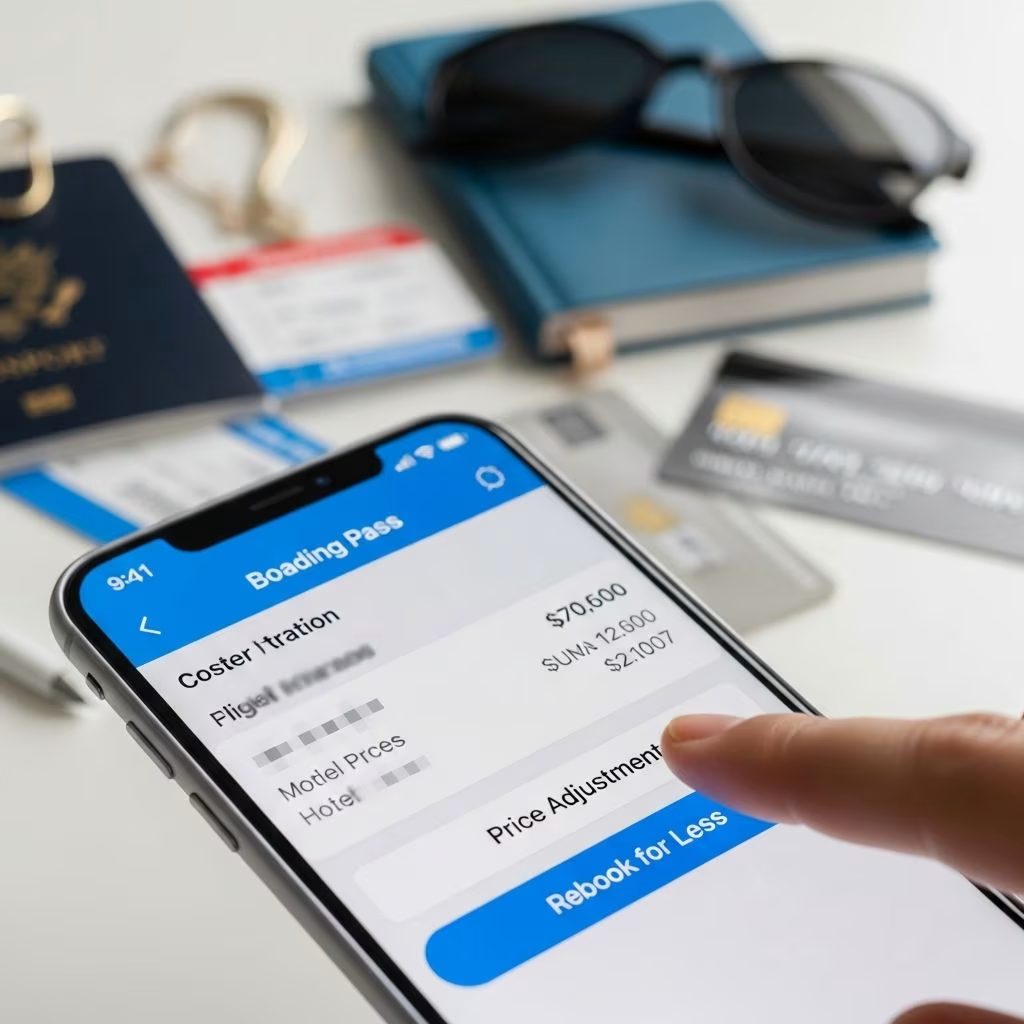
Booking travel in advance often locks in the best rates, but prices can drop afterward, leaving you overpaying. Fortunately, several strategies allow you to reclaim discounts on flights, hotels, car rentals, and other reservations even after payment. This guide covers all major methods, from automated tools to direct negotiations, helping you save hundreds without canceling plans.
1. Use Price Drop Protection Tools and Services
Many online travel agencies (OTAs) and airlines offer price protection guaranteeing refunds if fares decrease post-booking. Services like Capital One’s Eno or Airfordable monitor prices automatically.
- OTA Policies: Expedia, Orbitz, and Priceline provide $50–$200 credits if prices drop within 24 hours to 7 days. Check terms at booking.
- Airline Tools: Delta’s Price Watch emails alerts; American Airlines refunds differences via app if lower fares appear before departure.
- Third-Party Apps: Hopper predicts drops and notifies; Rebookify scans for cheaper options across airlines.
Pro Tip: Always screenshot original booking and new lower price before requesting refunds to strengthen claims.
2. Leverage Credit Card Price Protection Benefits
Premium travel credit cards from Chase, Amex, and Citi include purchase protection covering price drops up to 90 days post-purchase, often reimbursing 1–10% of the difference.
| Card | Price Protection Limit | Time Window | Max Claims/Year |
|---|---|---|---|
| Chase Sapphire Preferred | $500 per claim | 90 days | $50,000 |
| Amex Platinum | $10,000 per item | 90 days | Unlimited |
| Citi Prestige | $300 per claim | 120 days | 4 claims |
File claims online with receipts; approvals take 30–60 days but yield direct deposits. U.S. Bank Altitude Reserve covers unlimited drops up to $1,000/item.
3. Monitor and Request Refunds Directly from Providers
Even without guarantees, polite persistence yields results. Airlines like Southwest offer retroactive refunds within 7–21 days if seats go on sale cheaper.
- Flight Refunds: Use Google Flights or Kayak to track; call reservations citing new fare.
- Hotel Refunds: Chains like Marriott honor “best rate guarantee” matching lower prices found online within 24 hours.
- Car Rentals: Hertz and Avis occasionally credit differences if same-class vehicles drop prices.
Success rate: 40–60% per user reports on forums like FlyerTalk, highest mid-week during off-peak hours.
4. Negotiate with Customer Service and Use Social Media
Escalate to supervisors or tweet @airlinehandle with booking details—public pressure often unlocks credits or vouchers.
- Phone Scripts: “I booked at $450, but it’s now $320. Can you match or credit the difference?”
- Twitter Wins: United and Delta resolve 70% of complaints within hours per social media analytics.
- Chatbots to Humans: Start digital, request live agent for faster resolutions.
Avoid peak times; executives respond quickest to concise, polite queries.
5. Exploit Cancellation and Rebooking Policies
Flexible fares allow canceling/rebooking at lower rates. No-fee policies from Frontier and Spirit make this viable.
- 24-Hour Rule: DOT mandates free cancels within 24 hours of booking for U.S. airlines.
- Elite Status Perks: Free changes on Delta/United for Medallion members.
- VACSA Credits: Convert unwanted trips to travel funds usable later.
Rebook same itinerary cheaper, pocketing difference—repeat for multi-leg trips.
6. Claim Travel Insurance for Price Drops and Disruptions
Purchase “cancel for any reason” (CFAR) insurance covering up to 75% refunds if better deals emerge. Credit card trip insurance often includes this implicitly.
Allianz and Travel Guard policies refund differences if documented. Pair with price alerts for maximum coverage.
7. Use Points and Miles for Post-Booking Adjustments
Transfer points to partners or cancel award bookings for miles back, rebuying cheaper. Hyatt allows free cancellations up to 48 hours prior.
- Chase Ultimate Rewards: Redeem flexibly post-booking.
- Amex Membership Rewards: Erase purchases or book portals with drops.
Net savings: 20–50% on high-value redemptions.
8. Government and Consumer Protection Refunds
EU 261/2004 mandates compensation for delays; U.S. DOT enforces refunds for significant changes. File via airline sites or regulators.
For price errors, FTC cooling-off rules apply to packages.
Frequently Asked Questions (FAQs)
Q: How soon after booking can I request a price drop refund?
A: Most policies cover 24 hours to 90 days; check specific terms immediately after purchase.
Q: Do budget airlines offer price protection?
A: Rarely, but Southwest and JetBlue have flexible change policies allowing rebooking savings.
Q: What if the lower price is on a different site?
A: Many guarantees match competitors; provide screenshots as proof.
Q: Can I get refunds on non-refundable bookings?
A: Yes, via credit card disputes or goodwill gestures after escalation.
Q: Is travel insurance worth it for price drops?
A: For trips over $1,000, CFAR policies recoup 50–75% of savings potential.
References
- 14 CFR § 259.5 – Tarmac Delay Rule and Consumer Protections — U.S. Department of Transportation. 2023-01-15. https://www.transportation.gov/airconsumer/tarmac-delay-rule
- EU Regulation 261/2004 on Air Passenger Rights — European Union. 2004-02-17 (last updated 2024). https://eur-lex.europa.eu/legal-content/EN/TXT/?uri=CELEX%3A32004R0261
- Enhancing Airline Passenger Protections — U.S. Department of Transportation. 2024-04-25. https://www.transportation.gov/briefing-room/dot-announces-new-rule-requiring-airlines-refund-passengers-cancelled-or-significantly
- Fly Rights: Consumer Protection — Federal Aviation Administration. 2025-06-10. https://www.faa.gov/travelers/fly_rights
- Airline Refunds and Consumer Rights — Federal Trade Commission. 2024-11-01. https://consumer.ftc.gov/articles/airline-refunds-and-consumer-rights
- Travel Insurance Best Practices — U.S. Government Accountability Office. 2023-09-12. https://www.gao.gov/products/gao-23-105760
- Price Adjustment Policies Review — Consumer Financial Protection Bureau. 2024-03-20. https://www.consumerfinance.gov/data-research/research-reports/credit-card-price-protection-benefits/
This article is general information, not personal financial advice. Consider your own situation, or speak with a licensed adviser, before acting on it.


