

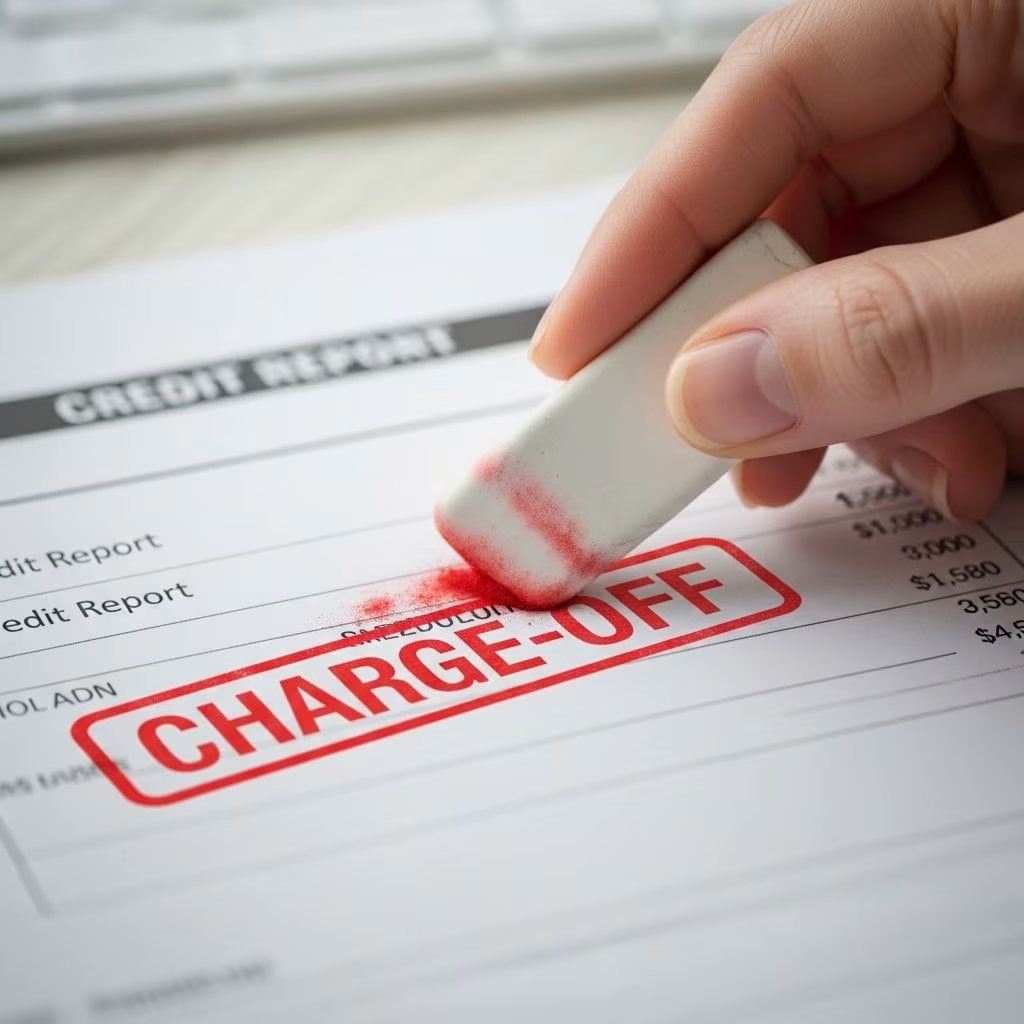
A charge-off on your credit report can feel intimidating, but it does not have to define your financial future. While removing an accurate charge-off is not always possible, there are strategic steps you can take to challenge inaccurate information, negotiate with creditors, and reduce the long-term damage to your credit profile.
This guide walks you through what a charge-off is, how it affects your credit, realistic options for removing or improving it, and how to rebuild your credit afterward.
What Is A Charge-Off?
A charge-off happens when a creditor or lender classifies your debt as unlikely to be collected after you have been seriously delinquent, typically for about 120–180 days, depending on the account type. For example, many credit card issuers must charge off revolving accounts that are 180 days past due under federal banking guidelines.
When an account is charged off:
- The creditor writes the debt off as a loss for accounting purposes.
- The account is usually closed to further use.
- The negative event is reported to the major credit bureaus.
- The creditor may continue to collect or sell the debt to a collection agency.
Importantly, a charge-off does not erase the debt. You still legally owe the money unless it is settled, discharged in bankruptcy, or otherwise resolved under the law.
Charge-Off vs. Collection Account
People often confuse charge-offs with collection accounts, but they are not identical. You can even have both a charge-off and a collection entry from the same original debt.
| Feature | Charge-Off | Collection Account |
|---|---|---|
| Who reports it? | Original creditor (bank, card issuer, lender) | Third-party debt collector or collection agency |
| What it represents | Creditor wrote off the debt as a loss after serious delinquency | Debt has been placed with or sold to a collector trying to recover it |
| Can both appear on your credit report? | Yes | Yes, often for the same original account |
| Impact on credit | Severe negative event, especially in early years | Also strongly negative; multiple collections can compound damage |
| Who you negotiate with | Original creditor if they still own the account | Collection agency if debt was sold/assigned |
Both types of entries are serious derogatory marks, but the strategy to address them depends on whether the original creditor or a collection agency currently owns the debt.
How Long Does A Charge-Off Stay On Your Credit Report?
Under the Fair Credit Reporting Act (FCRA), most negative information, including charge-offs, can be reported on consumer credit reports for up to seven years from the date of the first missed payment that led to the delinquency and eventual charge-off. This is sometimes called the date of first delinquency.
- The seven-year period typically does not restart when the debt is sold or transferred.
- Even if you later pay the charge-off, it usually remains on your reports until it ages off, although it may be updated to show as paid.
- Certain types of bankruptcies can be reported for longer than seven years, but standard consumer charge-offs follow the seven-year rule.
However, if information is inaccurate, incomplete, or not verifiable, you have the right to dispute it and request correction or removal.
Paid vs. Unpaid Charge-Offs
A charge-off on your credit report will typically be labeled as either paid (or settled) or unpaid. Both statuses are negative, but they are not viewed equally.
- Unpaid charge-off
- Shows the full balance is still outstanding.
- Signals ongoing financial risk to future lenders.
- May invite ongoing collection efforts, including potential lawsuits, depending on the statute of limitations in your state.
- Paid or settled charge-off
- Indicates you resolved the debt, either in full or for a negotiated amount.
- The negative mark remains but may be viewed more favorably in manual underwriting because the creditor has been repaid.
- May reduce collection calls and the risk of legal action.
From a scoring perspective, paying a charge-off often results in modest score improvement because the primary damage stems from the severe delinquency and the existence of the charge-off itself. However, for lenders reviewing your report manually, a paid charge-off generally looks more responsible than one left outstanding.
Can You Remove A Charge-Off From Your Credit Report?
Whether you can remove a charge-off depends on several factors, including accuracy, age, and the creditor’s policies.
In general:
- If the charge-off is inaccurate or cannot be verified, you can dispute it with the credit bureaus and request removal or correction.
- If the charge-off is accurate, removal is more difficult, but you may be able to negotiate with the creditor or collector for a more favorable outcome, such as updated reporting or, in some cases, deletion.
- As the charge-off ages, its impact on your credit score diminishes, especially after the first few years, even if it remains on your reports.
No one can guarantee removal of an accurate charge-off. Be cautious of any company that promises a sure-fire fix.
Steps To Remove An Accurate Charge-Off
If the charge-off entry is accurate, you can still take proactive steps to attempt removal or at least reduce its harm.
1. Confirm Who Owns The Debt
First, obtain your credit reports from all three major credit bureaus (Experian, Equifax, TransUnion) and confirm the details of the charge-off:
- Name of the creditor or collection agency reporting the account
- Account number and current status
- Balance reported as owed
- Date of first delinquency
The entity that currently owns the debt is the one you will need to negotiate with. If the debt has been sold, the original creditor may show a zero balance with a notation that it has been transferred or sold, while the collection agency shows the active balance.
2. Consider A Pay-For-Delete Agreement
A pay-for-delete agreement is an informal negotiation strategy in which you offer to pay all or part of the debt, and in exchange the creditor or collector agrees to request removal of the negative entry from your credit reports.
Important points about pay-for-delete:
- Creditors and collectors are not required by law to accept this type of arrangement.
- Some major creditors and bureaus discourage pay-for-delete because it can undermine the accuracy of credit reporting.
- If a creditor agrees, you should secure the terms in writing before making any payment.
Even if the creditor will not delete the entry, they may agree to update the status to “paid in full” or “settled,” which can still improve how future lenders view your report.
3. Get Any Agreement In Writing
Never rely solely on verbal promises. If you reach a settlement or pay-for-delete agreement:
- Request a written letter on company letterhead outlining:
- The agreed payment amount and due date(s)
- Confirmation that payment will satisfy the debt (no further amounts owed)
- Any promises regarding how the account will be reported to the credit bureaus
Keep copies of all letters, emails, and payment confirmations. If the creditor fails to update or delete the item as agreed, written documentation will help you dispute the reporting later with the credit bureaus.
4. Make The Agreed Payment Promptly
Once you receive written confirmation and review the terms carefully, make your payment according to the agreement.
- Use a traceable method (such as online bill pay, money order with receipt, or bank transfer) so you have proof of payment.
- Avoid giving collectors direct access to your checking account via automatic debits if you are uncomfortable; consider one-time payments instead.
After payment, monitor your credit reports over the next 30–60 days to see how the creditor reports the account.
How To Dispute An Inaccurate Charge-Off
If you believe the charge-off is incorrect—for example, it does not belong to you, the balance is wrong, the dates are inaccurate, or the account is reported after it should have aged off—you have the right to file a dispute with the credit bureaus under the FCRA.
1. Gather Documentation
Collect any records that support your claim, such as:
- Account statements or payment confirmations
- Letters or emails from the creditor
- Identity theft reports or police reports, if applicable
- Bank records showing payments or account closure
2. File Disputes With The Credit Bureaus
You can dispute errors with each credit bureau that reports the charge-off. The Federal Trade Commission (FTC) recommends that your dispute include:
- Your full name and address
- Clear identification of each item you dispute
- An explanation of why the information is inaccurate
- A request for correction or removal
- Copies (not originals) of documents supporting your position
Credit bureaus like Experian and Equifax provide online dispute portals that can expedite the process.
3. Wait For Investigation Results
Once a bureau receives your dispute, it generally must investigate within about 30 days, send your evidence to the furnisher (the creditor or collector), and report the results back to you.
- If the furnisher cannot verify the information, the bureau must delete or correct it.
- If the furnisher verifies the data, the charge-off may remain, but you can request that a brief statement of dispute be added to your file.
Check updated credit reports after the investigation period to ensure corrections have been made as promised.
Realistic Expectations: What You Can And Can’t Do
Managing a charge-off is about balancing ambition with realism.
- You likely can:
- Correct or remove inaccurate charge-off entries through disputes.
- Negotiate settlements or payment plans.
- Improve how the entry appears (for example, changing it to “paid” or “settled”).
- Rebuild your credit over time with positive habits.
- You likely cannot:
- Force removal of a fully accurate, properly reported charge-off purely because it is hurting your score.
- Legally remove multiple accurate charge-offs overnight.
- Count on credit repair companies to do something you could not legally do yourself.
How Charge-Offs Affect Your Credit Score
Charge-offs are considered major derogatory events and can significantly lower your credit score. Scoring models like FICO and VantageScore weigh factors such as payment history, amounts owed, and length of credit history when calculating your score.
A charge-off can:
- Cause a steep score drop, especially if your credit history was previously strong.
- Make it more difficult or expensive to qualify for new credit, including credit cards, auto loans, and mortgages.
- Influence landlord and utility decisions, since some use credit history when screening applications.
The effect is strongest in the first few years and gradually weakens as the account ages and you build newer, positive history.
Rebuilding Your Credit After A Charge-Off
Whether or not you can remove a charge-off, you can always work on rebuilding your credit profile.
- Bring other accounts current – Focus on eliminating any remaining late payments and keeping all active accounts current going forward.
- Lower your credit utilization – Aim to use less than about 30% of your revolving credit limits, and lower is often better.
- Consider secured or starter products – Secured credit cards or credit-builder loans, when used responsibly, can help demonstrate positive payment history over time.
- Avoid new delinquencies – On-time payment history is one of the most powerful drivers of improved credit scores.
- Monitor your credit reports – Regularly review your reports to ensure accuracy and track progress.
When To Seek Professional Help
You may want to consult a professional if:
- You feel overwhelmed by multiple charge-offs or collection accounts.
- You suspect identity theft or complex reporting errors.
- You are facing legal action from a creditor or collector.
Options include:
- Nonprofit credit counseling agencies – Can help you review your debts, create budgets, and consider repayment plans.
- Legal assistance – A consumer-law attorney can advise you on your rights under the FCRA and the Fair Debt Collection Practices Act (FDCPA) and represent you if necessary.
Frequently Asked Questions (FAQs)
Q: Can I remove a charge-off from my credit report without paying?
A: You may be able to remove or correct a charge-off without paying if the information is inaccurate, incomplete, or not verifiable and you successfully dispute it with the credit bureaus. However, attempting to remove a legitimate, accurate charge-off without resolving the debt can be risky and may expose you to ongoing collection efforts or legal action.
Q: Is it better to pay a charge-off in full or settle for less?
A: Paying in full is often viewed most favorably by future lenders, but settling for less can still improve your situation by reducing the balance to zero and stopping collections. Either way, the charge-off itself typically remains on your credit reports until it ages off, though the status will show that the debt is resolved.
Q: How long does it take to remove or update a charge-off after I pay?
A: Once you pay or settle a charge-off, creditors usually update the account within one or two reporting cycles, often 30–60 days. If you negotiated deletion or specific reporting terms, monitor your credit reports and be prepared to follow up with the creditor or dispute with the bureaus if changes do not appear.
Q: Can I work on removing multiple charge-offs at the same time?
A: Yes. You can simultaneously dispute inaccuracies on multiple accounts and negotiate settlements with different creditors or collection agencies. Just be realistic about what you can afford and organize your documentation carefully for each account.
Q: Do charge-offs affect my ability to get a mortgage or auto loan?
A: Charge-offs can make approval harder or lead to higher interest rates, particularly if they are recent or large. Some mortgage and auto lenders may require that past-due debts be paid or settled before approving a new loan, even if the charge-offs remain on your reports.
References
- Disputing Errors on Your Credit Reports — Federal Trade Commission. 2023-10-01. https://consumer.ftc.gov/articles/disputing-errors-your-credit-reports
- How to Dispute Credit Report Information — Experian. 2024-03-18. https://www.experian.com/blogs/ask-experian/credit-education/faqs/how-to-dispute-credit-report-information/
- File a Dispute on Your Equifax Credit Report — Equifax. 2024-02-10. https://www.equifax.com/personal/credit-report-services/credit-dispute/
- Understanding Charge-Offs and How to Manage Them Efficiently — LoanPro. 2023-06-15. https://loanpro.io/glossary/charge-offs
- How to Remove a Charge-Off from Your Credit Report — Lexington Law. 2023-12-05. https://www.lexingtonlaw.com/education/how-to-remove-charge-off
- How to Remove a Charge-Off From a Credit Report — MoneyLion. 2023-08-21. https://www.moneylion.com/learn/how-to-remove-charge-off-from-credit-report/
- CHARGE IT OFF – Comprehensive Guide on Removing Charge-Offs — R23 Law. 2024-01-05. https://www.r23law.com/articles/charge-off-guide
This article is general information, not personal financial advice. Consider your own situation, or speak with a licensed adviser, before acting on it.


