

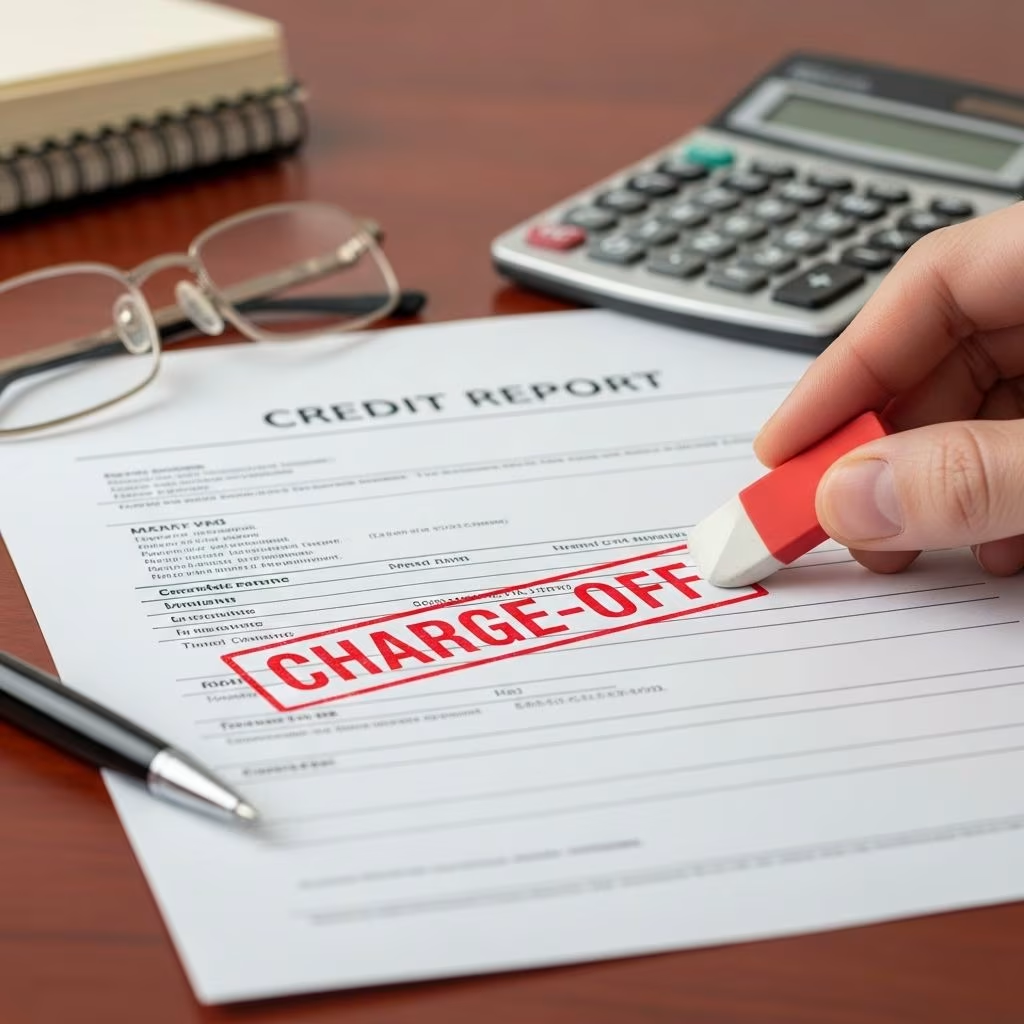
How to Remove a Charge-Off from Your Credit Report
A charge-off on your credit report can significantly damage your credit score and make it difficult to obtain loans, credit cards, or favorable interest rates. However, you have several options available to potentially remove this negative mark from your credit history. Understanding your rights under the Fair Credit Reporting Act (FCRA) and knowing the proper steps to take can help you improve your financial situation. This comprehensive guide will walk you through the most effective strategies for removing charge-offs from your credit reports.
Understanding Charge-Offs and Your Rights
Before attempting to remove a charge-off, it’s important to understand what it means and what rights you have. A charge-off occurs when a creditor writes off an account as a loss after you fail to make payments for an extended period, typically around 180 days or six months. This notation stays on your credit report for seven years from the original delinquency date, significantly impacting your creditworthiness.
The Fair Credit Reporting Act (FCRA) grants you the right to dispute any inaccurate or incomplete information on your credit reports, including charge-offs. However, if the charge-off information is accurate, removing it becomes more challenging. Importantly, simply paying off a charge-off will not automatically remove it from your credit report—it will only be marked as “paid” rather than “unpaid,” which has minimal impact on your credit score. Despite these challenges, there are legitimate strategies you can employ to potentially get charge-offs removed from your credit history.
Step 1: Validate the Debt
The first crucial step in attempting to remove a charge-off is to validate the debt. Before pursuing any removal strategy, you need to confirm that the debt is legitimate and that you actually owe it. Request verification from the creditor or debt collector by sending a written request asking them to provide proof of the debt.
When validating the debt, ensure you have the following information:
- The original creditor’s name and contact information
- Your account number associated with the debt
- The total amount owed
- The date you became delinquent
- Any documentation showing the debt assignment history
Validating the debt serves two purposes: it confirms whether the charge-off is legitimate, and if the debt collector cannot provide proper documentation, you may have grounds to dispute the charge-off. This foundational step is essential before moving forward with any removal strategy.
Step 2: Negotiate a Pay-for-Delete Agreement
One of the most effective methods for removing a charge-off from your credit report is negotiating a pay-for-delete agreement with the creditor or debt collector. This arrangement involves offering to pay a lump-sum settlement amount in exchange for the complete removal of the charge-off from your credit reports.
How Pay-for-Delete Works
With a pay-for-delete agreement, you negotiate with the debt holder to settle the account for less than the full amount owed. In exchange for this lump-sum payment, the creditor agrees to remove the charge-off notation from your credit reports entirely. This approach benefits both parties: you get the negative mark removed, and the creditor recovers some of the debt that was written off.
Steps to Negotiate Successfully
Begin by contacting the collection agency or original creditor to discuss settlement options. Present a realistic offer based on your financial situation and the age of the debt. Older debts and those with lower balances are often easier to negotiate. Once you reach an agreement on a settlement amount, request that the terms be provided in writing before making any payment.
Your written agreement should include:
- Your complete account number and contact information
- The debt collector’s name and contact information
- The exact settlement amount you have agreed to pay
- A clear statement that the payment will be accepted as “payment in full”
- Explicit language stating that the account will be removed from all credit reports once payment is received
- The payment method and deadline
Never make a payment without having this agreement in writing. While creditors are not legally obligated to honor pay-for-delete requests, many will agree when approached professionally. Having written documentation protects you and ensures both parties understand the terms.
Step 3: Dispute Errors with Credit Bureaus
If the charge-off on your credit report contains inaccurate information, you have the right to dispute it with the credit bureaus. Even if the charge-off itself is accurate, errors in the details—such as incorrect dates, amounts, or account information—can be grounds for removal or correction.
How to File a Dispute
Start by obtaining your free credit reports from AnnualCreditReport.com, the only federally authorized source for free annual credit reports. Carefully review all three reports (from Equifax, Experian, and TransUnion) and identify any inaccuracies related to the charge-off.
The dispute process involves these steps:
- Pull your complete credit reports from all three bureaus
- Identify specific errors or inaccuracies in the charge-off information
- Gather documentation to support your dispute, such as payment receipts, correspondence with the creditor, or evidence of identity theft
- File your dispute with the appropriate credit bureau, either online or by mail
- Include copies of supporting documents with your dispute letter
- Keep copies of everything you send for your records
The Investigation Process
Once you file a dispute, the credit bureau typically has 30 days to investigate your claim and contact the creditor who reported the information. The creditor must then prove the accuracy of the charge-off within this timeframe. If the creditor cannot verify the information or provide adequate documentation, the charge-off must be removed or corrected on your credit report.
You can file disputes online through each bureau’s website, by phone, or by mail. Online filing is typically the fastest and most convenient method. Be specific about what information is inaccurate and explain why you believe it should be corrected or removed.
Step 4: Request a Goodwill Deletion
If you’ve exhausted other options and the charge-off remains on your credit report, consider requesting a goodwill deletion directly from your creditor. With this approach, you contact the creditor and ask them to voluntarily remove or modify the negative information as a gesture of goodwill.
When to Use Goodwill Deletion
Goodwill deletion requests are most effective when:
- You have a long history of on-time payments before the delinquency occurred
- The charge-off resulted from temporary financial hardship, such as job loss, medical emergency, or death in the family
- You have already paid the charge-off in full or settled for a lower amount
- The charge-off is relatively recent (within the last few years)
- You have maintained a positive relationship with the creditor
How to Request Goodwill Deletion
Write a professional letter or email to the creditor’s customer service department explaining your situation. Be honest about what caused you to miss payments, emphasize your positive payment history before the delinquency, and ask if they would consider removing the charge-off as a goodwill gesture. While creditors are not legally obligated to comply, many will help loyal customers who have experienced legitimate hardship.
In your goodwill letter, you might ask them to delete the missed payments rather than the entire charge-off, as this can still significantly improve your credit score. Keep your request professional, concise, and genuine. Include any relevant documentation, such as proof of payment or settlement.
Understanding Paid vs. Unpaid Charge-Offs
It’s important to understand the difference between paid and unpaid charge-offs on your credit report. When you pay a charge-off in full, it will be updated to show “paid” status. While this looks better than “unpaid,” the charge-off notation itself remains on your report and continues to negatively impact your credit score, though to a lesser extent than an unpaid charge-off.
Future lenders who perform thorough underwriting will see that you have a charge-off on your report, even if it’s marked as paid. However, demonstrating that you eventually paid the debt shows responsibility and may make some lenders more willing to work with you. A settled charge-off—where you pay less than the full amount—typically has a similar impact as a paid charge-off on your credit report.
Timeline for Charge-Off Removal
Under normal circumstances, a charge-off will remain on your credit report for seven years from the date of original delinquency. However, there are situations where charge-offs may be removed earlier:
- When you successfully dispute inaccurate information with the credit bureaus
- When a creditor agrees to remove it after you settle or pay the debt
- When you file for bankruptcy (though this has its own credit implications)
- When applicable state-specific consumer protection laws are invoked
- When the creditor made an error in reporting the charge-off
The age of the charge-off also affects how heavily it impacts your credit score. While it remains on your report for seven years, its negative impact diminishes over time, particularly after two to three years have passed.
Key Considerations and Best Practices
When attempting to remove a charge-off, keep these important considerations in mind:
- Get Everything in Writing: Never rely on verbal agreements with creditors or collectors. Always request written confirmation of any arrangement, especially pay-for-delete agreements.
- Know Your Rights: Familiarize yourself with the Fair Credit Reporting Act and the Fair Debt Collection Practices Act to protect yourself during negotiations.
- Monitor Your Progress: After filing disputes or making agreements, regularly check your credit reports to ensure changes are being made as promised.
- Verify Before Paying: Always validate the debt and ensure the creditor has authority to collect before making any payments.
- Consider Professional Help: If you’re uncomfortable navigating this process alone, consider working with a reputable credit repair company or attorney specializing in credit disputes.
Frequently Asked Questions
Q: Will paying off a charge-off remove it from my credit report?
A: No. Paying off a charge-off will change its status to “paid,” but it will not remove the notation from your credit report. The charge-off will remain for seven years from the original delinquency date, though its impact on your credit score will be less severe than an unpaid charge-off.
Q: How long does a charge-off stay on my credit report?
A: A charge-off typically remains on your credit report for seven years from the date of original delinquency. After seven years, it should automatically fall off your report.
Q: Can a creditor refuse a pay-for-delete agreement?
A: Yes. While pay-for-delete agreements are legal under the Fair Credit Reporting Act, creditors are not obligated to agree to them. However, many will negotiate, especially if the debt is old or the balance is low.
Q: What should I do if a debt collector won’t validate the debt?
A: If a collector cannot provide proper debt validation, you may have grounds to dispute the charge-off. Document the collector’s failure to respond to your validation request and use this in your dispute with the credit bureaus.
Q: How much time do I have to dispute a charge-off?
A: There is no statute of limitations on disputing inaccurate information on your credit report. You can file disputes at any time, though they are most effective when the charge-off is relatively recent.
Q: Will disputing a charge-off hurt my credit score?
A: No. Filing a dispute does not negatively impact your credit score. In fact, if your dispute is successful and the charge-off is removed, your score will likely improve.
Conclusion
Removing a charge-off from your credit report requires persistence, strategic planning, and knowledge of your consumer rights. While there’s no guarantee that any single method will work, employing multiple strategies—validating the debt, negotiating pay-for-delete agreements, disputing inaccuracies, and requesting goodwill deletion—increases your chances of success. Remember that even if you cannot remove the charge-off entirely, paying it off or settling it will reduce its negative impact on your credit score and demonstrate financial responsibility to future lenders. Start by assessing your specific situation and choosing the approaches most likely to work for you. With determination and the right strategy, you can work toward rebuilding your credit and financial future.
References
- Steps to Remove a Charge-Off from Your Credit Report — InCharge Debt Solutions. Accessed November 2025. https://www.incharge.org/debt-relief/debt-management/remove-a-charge-off/
- How to Remove a Charge-Off from Your Credit Report — Lexington Law. December 5, 2023. https://www.lexingtonlaw.com/education/how-to-remove-charge-off
- Disputing Errors on Your Credit Reports — Consumer Advice, Federal Trade Commission. Accessed November 2025. https://consumer.ftc.gov/node/77447
- How to Dispute Credit Report Information — Experian. Accessed November 2025. https://www.experian.com/blogs/ask-experian/credit-education/faqs/how-to-dispute-credit-report-information/
- File a Dispute on Your Equifax Credit Report — Equifax. Accessed November 2025. https://www.equifax.com/personal/credit-report-services/credit-dispute/
- How Do I Dispute an Error on My Credit Report? — Consumer Financial Protection Bureau. Accessed November 2025. https://www.consumerfinance.gov/ask-cfpb/how-do-i-dispute-an-error-on-my-credit-report-en-314/
This article is general information, not personal financial advice. Consider your own situation, or speak with a licensed adviser, before acting on it.


