

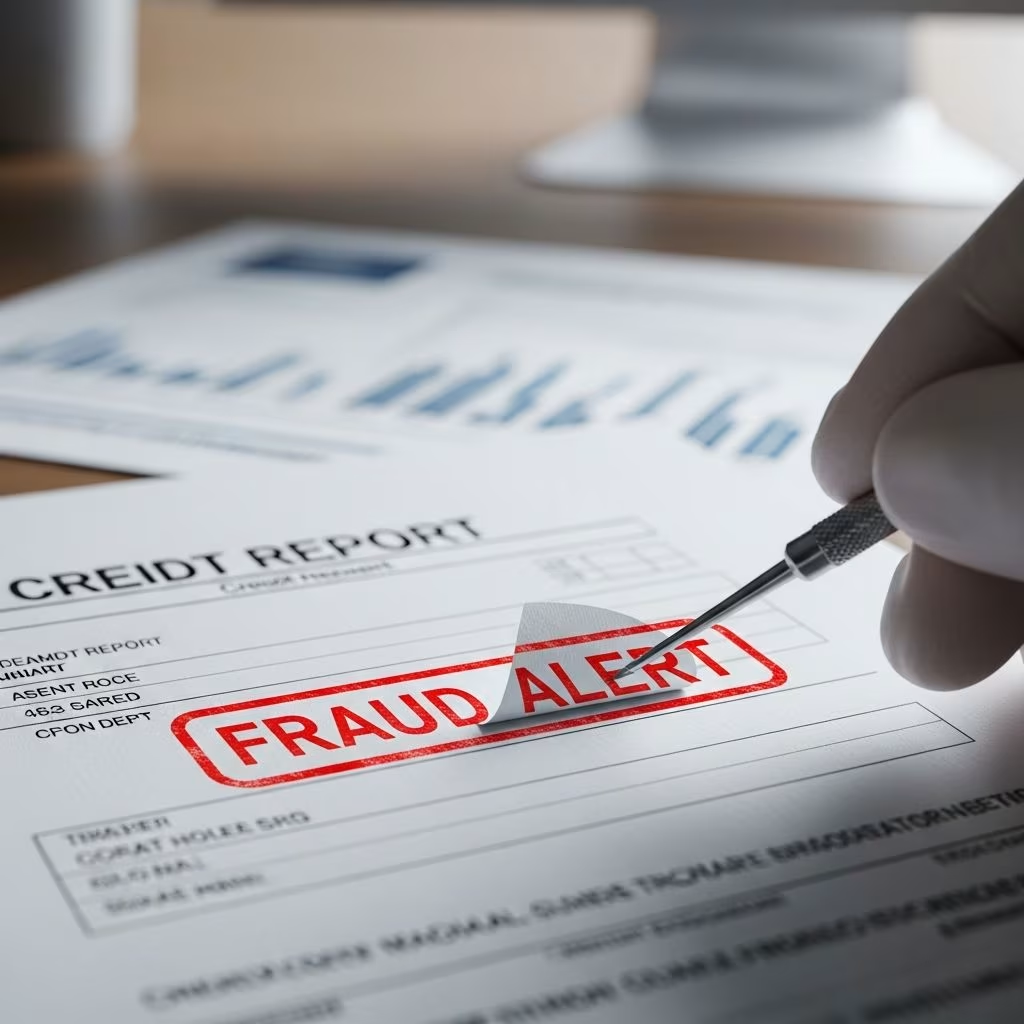
Fraud alerts serve as vital safeguards on your credit reports, signaling creditors to verify your identity before approving new accounts. Placed after suspected identity theft or fraud risk, these alerts last one year for initial types or seven years for extended ones. While they expire automatically, many consumers opt to remove them earlier for smoother credit applications.
This comprehensive guide explains the removal process across the three major credit bureaus—Experian, Equifax, and TransUnion. Unlike adding an alert, where one bureau notifies the others, removal requires individual contact with each. We’ll cover reasons for removal, detailed steps, required documents, and alternatives like credit freezes.
Understanding Fraud Alerts and Their Duration
Fraud alerts come in three main varieties: initial (one year), active duty military (one year), and extended (seven years, for confirmed identity theft victims). They prompt extra verification from lenders, protecting against unauthorized accounts without blocking access entirely.
- Initial Fraud Alert: Free, lasts 365 days, renewable.
- Active Duty Alert: For military personnel, also one year.
- Extended Fraud Alert: Seven years, includes two free credit reports annually.
These alerts appear on your credit files at all three bureaus when requested from one, but removal demands separate actions per bureau. Automatic expiration means no action is needed if you’re content waiting, but proactive removal aids in scenarios like home buying or job applications where delays could hinder progress.
When Should You Consider Lifting a Fraud Alert?
Retaining a fraud alert is wise during active fraud risks, but circumstances change. Common reasons to remove include:
- Resolution of the original fraud issue, such as closing fraudulent accounts or confirming no further threats.
- Rate shopping for mortgages, auto loans, or insurance, where repeated verifications slow processes.
- Applying for multiple credits, like credit cards or rentals, needing quick approvals.
- Switching to advanced protections, such as credit freezes or monitoring services.
Assess your situation: if fraud risks persist, extend or renew instead. Monitor reports regularly via free weekly access at AnnualCreditReport.com to spot issues early.
Step-by-Step Guide: Removing Alerts from Experian
Experian offers the most flexible removal options: online, phone, or mail. Start at their Fraud Alert Center for efficiency.
Online Removal
- Visit Experian’s Fraud Alert Center and select “Remove a fraud alert.”
- Complete the identity verification form, providing personal details like name, SSN, and addresses.
- Upload the form via their secure portal after a brief upload setup.
Phone Removal
Call 888-397-3742. Verify identity with a representative who will process the request immediately.
Mail Removal
Submit a written request with:
- Full name, SSN, DOB, past two years’ addresses.
- Copies of government ID (driver’s license) and utility bill/bank statement showing name and address.
Mail to: Experian, P.O. Box 9554, Allen, TX 75013. Expect processing within days to weeks.
Post-removal, check your Experian report online for free to confirm.
Equifax Fraud Alert Removal Process
Equifax prioritizes phone and mail for removals, emphasizing identity verification.
Phone Option
Dial 888-836-6351 (8 a.m. to midnight ET, daily). Provide details for live verification; alerts lift promptly.
Mail Submission
Send a written request plus ID documents to: Equifax Information Services LLC, P.O. Box 105069, Atlanta, GA 30348-5069.
Acceptable proofs include government ID and address validators like bills or statements. Reference their ID list for compliance. Equifax notifies by mail upon completion.
Note: For automatic fraud alerts, additional steps may apply via 800-525-6285.
TransUnion Removal Instructions
TransUnion streamlines online removal through their portal.
- Navigate to TransUnion’s Fraud Alert page.
- Log in or create an account at the Service Center.
- Follow prompts to request removal, verifying identity digitally.
No phone or mail details are prominently listed, making online the primary method. Contact them directly if issues arise.
Comparison of Removal Methods Across Bureaus
| Bureau | Online | Phone | Mail Address | Key Documents |
|---|---|---|---|---|
| Experian | Yes (Fraud Alert Center) | 888-397-3742 | P.O. Box 9554, Allen, TX 75013 | ID, utility bill |
| Equifax | No | 888-836-6351 | P.O. Box 105069, Atlanta, GA 30348-5069 | Gov ID, address proof |
| TransUnion | Yes (Service Center) | N/A primary | Contact site | Digital verification |
This table highlights differences; always verify current processes on official sites.
Fraud Alert vs. Credit Freeze: Which to Choose?
Many remove alerts to adopt credit freezes, which block most new account openings entirely. Freezes don’t expire automatically and require individual bureau actions for both freezing and thawing.
- Fraud Alert: Verification required; easier access for legit inquiries.
- Credit Freeze: Full block; ideal for high-risk scenarios. Lift temporarily online/phone/mail per bureau.
Per FTC guidelines, contact one bureau to initiate alerts, but all for freezes. Experian notes freezes as permanent until unfrozen, unlike alerts.
Post-Removal Best Practices
After lifting alerts:
- Monitor reports weekly via AnnualCreditReport.com.
- Consider identity theft protection services.
- Update passwords and enable two-factor authentication.
- File FTC identity theft reports if fraud occurred (IdentityTheft.gov).
Block fraudulent info via credit bureaus with theft reports and proofs.
Frequently Asked Questions (FAQs)
Do fraud alerts affect credit scores?
No, they don’t impact scores but may delay approvals.
Can I remove an alert from one bureau only?
Yes, but it remains on others unless removed separately.
How long does removal take?
Online/phone: immediate to days; mail: 1-2 weeks.
Is there a fee to remove?
No, removal is free.
What if I suspect ongoing fraud after removal?
Re-add immediately or freeze credit.
Protecting Your Credit Long-Term
Beyond alerts, layer defenses: regular monitoring, secure shredding, and alerts for changes. In 2026, digital tools from bureaus enhance real-time protection. Stay vigilant—fraud evolves, but informed actions keep finances secure.
References
- Simple Steps on How to Remove a Fraud Alert — Iris Identity Protection. 2023. https://www.irisidentityprotection.com/blog/simple-steps-on-how-to-remove-a-fraud-alert
- How to Remove a Fraud Alert From Your Credit Report — Experian. 2023. https://www.experian.com/blogs/ask-experian/removing-a-fraud-alert-from-your-credit-report/
- How can I remove a fraud alert or active duty alert? — Equifax. 2023. https://www.equifax.com/personal/help/article-list/-/h/a/remove-fraud-active-duty-alert/
- How to Deactivate Equifax Automatic Fraud Alert — Equifax. 2023. https://www.equifax.com/personal/help/article-list/-/h/a/deactivate-automatic-fraud-alert/
- Place a Fraud Alert — Experian. 2023. https://www.experian.com/help/fraud-alert/
- What do I do if I think I have been a victim of identity theft? — Consumer Financial Protection Bureau (.gov). 2023. https://www.consumerfinance.gov/ask-cfpb/what-do-i-do-if-i-think-i-have-been-a-victim-of-identity-theft-en-31/
- Credit Freezes and Fraud Alerts — Federal Trade Commission (.gov). 2023. https://consumer.ftc.gov/articles/credit-freezes-and-fraud-alerts
This article is general information, not personal financial advice. Consider your own situation, or speak with a licensed adviser, before acting on it.


